





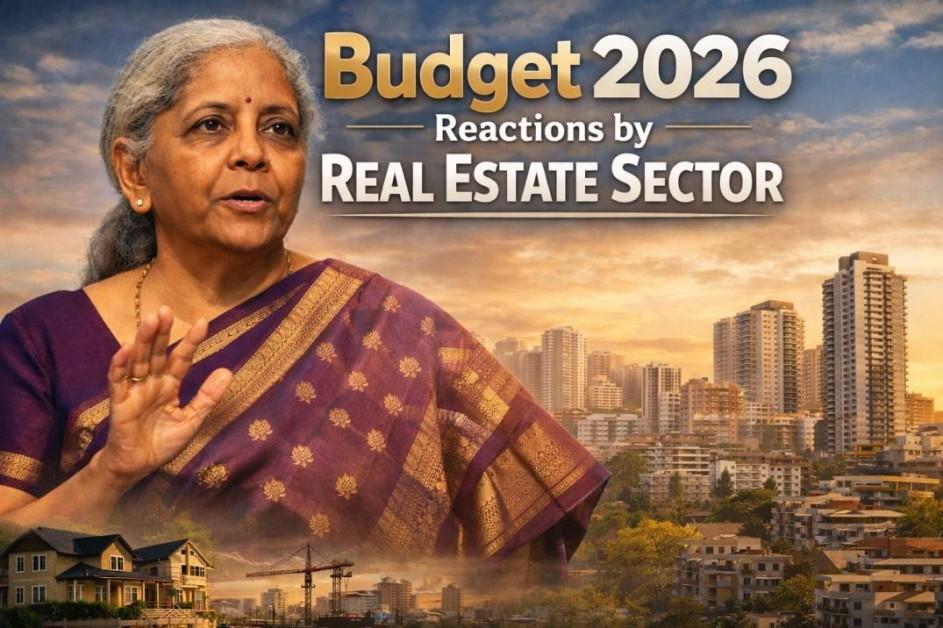
Real Estate Sector
1. Ruchit Mehta, Partner, Mehta Realty
From a real estate standpoint, Budget 2026 is neutral at best. Homebuyers were expecting meaningful relief, but the government has chosen to maintain status quo by rolling forward the same tax and policy norms from the previous budget. With residential sales already strong and personal finance remaining largely unchanged, the assumption appears to be that the sector no longer needs support. Any near-term boost will now depend purely on market sentiment, equity performance, and buyer confidence rather than policy intervention
2. Bhavesh Shah, Joint Managing Director, Today Group
Budget 2026 reflects a sense of stability and confidence in India’s real estate market. The absence of disruptive policy changes provides continuity and clarity for both buyers and developers. While there were no direct affordability incentives, the sustained focus on infrastructure spending is a strong positive, as connectivity and urban development continue to shape housing demand. Going ahead, buyer confidence, interest-rate trends, and overall economic stability will play a larger role in driving the market. Developers who focus on timely delivery, quality, and trust will be well-positioned to benefit, particularly in infrastructure-led locations such as Navi Mumbai and Panvel.
3. Hardik Pandit, Director of APICES Studio Pvt. Ltd.
While Budget 2026 didn’t deliver specific incentives for conventional real estate or homebuyers, it introduced a strategic long-term tax holiday for foreign cloud firms using Indian data centres — a policy designed to draw global digital infrastructure investments till 2047. From an architectural and urban planning standpoint, this represents a meaningful shift: designing resilient, energy-efficient, high-availability facilities will become a defining element of the built environment in cities like Mumbai. This isn’t just about floors and roofs — it’s about positioning Mumbai as a digital infrastructure hub with world-class data centre architecture that supports power, cooling and connectivity at scale.
4. Sanjay Daga CEO and Managing Anex Advisory
Looking at the Budget through the lens of redevelopment and urban housing, the real test isn’t in one-off announcements, it’s in how policy, infrastructure spend and clarity of execution create confidence over time. Real estate players have been asking for measures around housing affordability, rental assets and streamlined approvals, and the government’s emphasis on macro stability and capital outlay gives a structural backdrop for that dialogue. But for cities like Mumbai, where redevelopment projects are multi-year undertakings, long-term policy stability, sustained connectivity investment, and administrative clarity are the signals that truly move the needle.
5. Aditya N. Shah, Joint Managing Director, Mayfair Housing
There is nothing materially new in Budget 2026 for real estate or homebuyers, as existing tax structures and policy frameworks remain unchanged. However, the sector is entering this phase from a position of strength. If capital markets stay buoyant and consumer sentiment improves, housing demand could continue on its current trajectory—making this a budget that relies on market confidence rather than fiscal stimulus to drive real estate growth.
6. Mr. Parthh K Mehta, CMD, Paradigm Realty
Budget 2026 offers little for the real estate sector to celebrate. There are no fresh incentives for homebuyers, no enhancements in deductions, and no policy recalibration—only a continuation of last year’s framework. While personal finance remains stable and housing demand has already shown resilience, the absence of targeted real estate measures is a clear miss. The government seems to be betting on market momentum, sentiment driven by equity performance, and organic demand rather than policy-led stimulus.
7. Chintan Sheth Chairman and Managing Director, Sheth Realty
Finance Minister Nirmala Sitharaman has presented Indians with a Budget that proposes strengthening of India’s urban transformation backbone through sustained investment in building quality infrastructure. The clear focus on connectivity, quality, and long-term growth is seen with the increase in public capex to Rs 12.2 lakh crore. With the proposed expansion of high-speed rail and urban infrastructure, this will significantly elevate the appeal of various micro-markets. The introduction of the Infrastructure Risk Guarantee Fund is a progressive move that enhances confidence across the development cycle, enabling timely execution of high-quality projects. Equally important is the push for domestic manufacturing of advanced infrastructure equipment from elevators to safety systems which will raise construction standards. It will improve reliability, bring down costs and align Indian real estate with global benchmarks. These measures collectively support developers like Sheth Realty in pushing boundaries, redefining premium living, and delivering lifestyle experiences that are truly world-class
8. Suhan Shetty, Industrialist and Founder of Rubics Group
Budget 2026-27 introduces strategic measures designed to make home-ownership more desirable and stimulate holistic growth for the real estate sector. These include the establishment of an Infrastructure Risk Guarantee Fund, which will improve access to capital for large-scale projects that, in turn, drive real estate development. Further, the proposal to recycle significant real estate assets held by Central Public Sector Enterprises (CPSEs) through Real Estate Investment Trusts (REITs) will unlock existing land resources for more productive use. The budget's focus on strengthening domestic manufacturing of high-value, technologically advanced equipment promises to directly reduce construction input costs and project timelines, benefiting both developers and end-users.
9. Mr. Anuj Goradia, Director of Dosti Realty
The Union Budget has yet again reinforced the government’s long-term commitment to infrastructure-led growth and is a strong positive for the real estate sector across segments. The sharp increase in public capex to Rs 12.2 lakh crore, along with the continued focus on high-speed rail corridors and infrastructure development in Tier II and Tier III cities, will significantly enhance urban connectivity and liveability. These are key drivers for residential demand and large-scale township developments. The proposed Infrastructure Risk Guarantee Fund is a welcome step that will improve lender confidence and ease financing during the construction phase, enabling developers to execute projects with greater efficiency. The added push for domestic manufacturing of high-value, technology-advanced infrastructure equipment such as elevators and fire-fighting systems will help reduce costs, improve quality, and ensure timely project delivery. We see the expansion of REITs as a further strengthening of capital recycling and transparency, creating a healthier, more sustainable ecosystem for real estate development in India.
 Post Budget Real Estate quotes FAQs
POST A COMMENT (0)
All Comments (0)
Replies (0)