





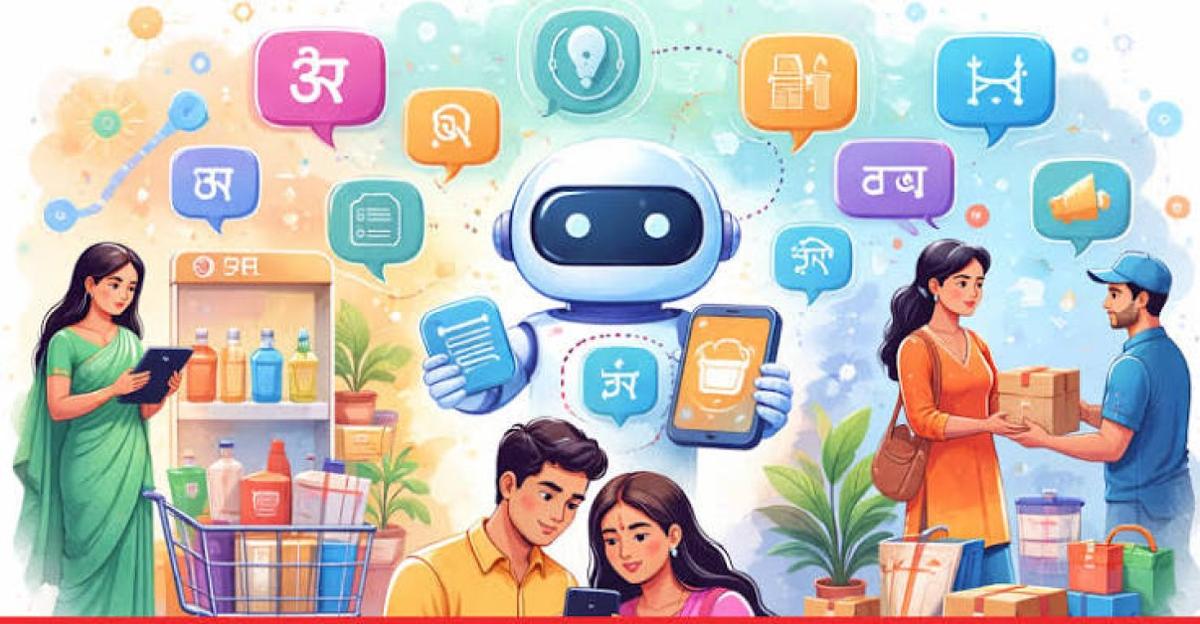
AI-Powered Recommendations Begin Reshaping Customer Discovery for Indian D2C Brands
India's direct-to-consumer brands are confronting a new challenge in digital commerce: customers are increasingly allowing artificial intelligence to decide which products and brands they should consider before they ever visit a company website.
AI-driven recommendation engines already determine a growing share of what shoppers see inside ecommerce marketplaces, while generative-AI assistants are increasingly being used to compare products, evaluate alternatives and answer questions such as which skincare product, protein supplement, appliance or fashion brand best matches an individual's requirements.
The shift threatens to rewrite a customer-acquisition model that Indian D2C companies spent the past decade mastering.
Brands previously competed primarily for visibility through:
Google search,
Instagram,
influencers,
marketplaces,
and performance advertising.
They now have another audience to convince:
the AI systems deciding which brands to recommend.
Recent research suggests the change is already meaningful. NielsenIQ said at its 2026 India Insight Summit that 92% of urban Indian shoppers surveyed had used at least one AI tool during shopping activity over the previous month. (The Economic Times)
For D2C companies, the implication is significant.
The next competition for customer discovery may not begin with a person typing a brand name into Google.
It may begin with a question asked to an AI assistant.
AI Is Becoming Part of the Shopping Journey

Indian consumers increasingly use artificial intelligence for tasks including:
finding products,
comparing alternatives,
understanding specifications,
checking suitability,
and receiving personalised recommendations.
A consumer does not necessarily need to know which brands exist before beginning the search.
They can simply ask:
“What is the best sunscreen for oily skin under ₹1,000?”
or:
“Which Indian protein brand has no added sugar?”
The AI system can produce a shortlist immediately.
That shortlist can dramatically influence which companies enter the customer's consideration set.
This Changes Traditional Brand Discovery
Traditional ecommerce discovery often followed a relatively predictable pattern.
A consumer would:
search Google,
browse marketplaces,
watch YouTube reviews,
or discover a product through social media.
The customer then visited product pages and compared alternatives manually.
Generative AI compresses that process.
Instead of opening multiple websites, a shopper can ask one question and receive a synthesised answer.
That reduces the number of brands the consumer may investigate independently.
AI Can Become the New Digital Shelf
In physical retail, brands compete for shelf placement.
In ecommerce, they compete for:
search rankings,
marketplace positions,
advertisements,
and recommendation feeds.
AI creates another type of shelf.
But this shelf may contain only a handful of recommendations.
If an AI assistant recommends three brands from a category containing 50 competitors, the remaining 47 may effectively become invisible to that customer.
Indian D2C Brands Face an AI Visibility Gap
Early research suggests many established D2C brands are not consistently appearing in generative-AI recommendations.
A 2026 analysis by Reckona AI tested 25 well-known Indian D2C brands across electronics, personal care and apparel and reported that 16 were absent from the AI discovery scenarios it examined. (reckonaai.com)
The study included brands with significant consumer recognition.
That creates an important distinction.
A brand can be:
well known on Instagram,
highly visible on marketplaces,
and successful in paid advertising
while still having weak visibility inside AI-generated answers.
Brand Awareness Does Not Automatically Become AI Awareness
Traditional marketing builds human recognition.
AI systems evaluate different signals.
A customer might recognise a brand because of:
television advertising,
celebrity endorsements,
Instagram campaigns,
or packaging.
AI systems generally depend on information available through digital sources they can process.
These can include:
brand websites,
marketplaces,
publisher articles,
reviews,
comparison pages,
forums,
and other accessible sources.
A large advertising budget therefore does not automatically ensure AI visibility.
Third-Party Proof Is Becoming More Important
A separate 2026 study examining 23 Indian health and nutrition D2C brands found that AI recommendation engines frequently relied on evidence outside brands' own websites.
The research found marketplaces, YouTube, Reddit, editorial roundups, review pages and category-comparison sources repeatedly influencing how brands appeared in AI-generated recommendations. (Pallix)
That has major consequences for digital marketing.
Companies can control their own websites.
They cannot completely control what the wider internet says about them.
Reviews Could Become Machine-Readable Reputation
Consumers have relied on reviews for years.
AI can potentially amplify their importance.
Instead of a shopper manually reading 100 reviews, an AI system can summarise recurring opinions.
It may identify:
frequent complaints,
product strengths,
quality concerns,
or value perceptions.
A brand's accumulated digital reputation can therefore influence AI recommendations even when the shopper never reads an individual review.
Marketplace Presence Matters
Many Indian D2C brands began by selling directly through their own websites.
Most eventually expanded onto marketplaces.
That decision may become even more important in an AI-discovery environment.
Marketplaces contain structured information about:
pricing,
ratings,
availability,
and customer feedback.
Those signals can provide AI systems with additional evidence when evaluating products.
Ecommerce Platforms Already Use AI Recommendations at Scale
Generative AI is only one side of the transformation.
Recommendation algorithms operating inside ecommerce platforms are already shaping enormous volumes of purchases.
Meesho said in June that more than 75% of orders on its platform originate from AI-powered personalised product feeds generated by its PRISM recommendation engine. (Business Standard)
That demonstrates how consumer discovery can shift from intentional search toward algorithmic recommendation.
The shopper does not necessarily ask for a particular product.
The platform predicts what they may want.
Discovery Is Moving From Search to Recommendation
Search begins with customer intent.
Recommendation can create intent.
This distinction is commercially important.
A shopper searching “running shoes” already plans to buy running shoes.
A recommendation engine might show someone a pair of running shoes before they have consciously decided to shop for them.
That allows algorithms to influence both:
what consumers buy,
and when they begin shopping.
Personalisation Makes the Digital Store Different for Every Customer
Traditional ecommerce websites largely displayed the same storefront to everyone.
AI increasingly changes that.
Different customers can receive:
different products,
different rankings,
different offers,
and different recommendations.
The digital shelf effectively becomes personalised.
For D2C brands, there may no longer be one universally visible storefront.
Every shopper can encounter a different one.
Consumer Data Becomes More Valuable
Recommendation systems become stronger when they understand customer behaviour.
Useful signals can include:
previous purchases,
browsing history,
price preferences,
product categories,
and engagement.
Platforms possessing large amounts of behavioural data therefore gain an advantage.
They can predict which products individual consumers are most likely to purchase.
This Gives Large Platforms Significant Power
D2C companies originally emerged partly because the internet allowed brands to reach customers directly.
AI recommendations could shift some power back toward platforms.
If consumers increasingly discover products through:
marketplace recommendations,
social algorithms,
or AI assistants,
those systems become new gatekeepers.
A brand may technically own its website but still depend on external algorithms to generate discovery.
Social Media Remains a Major Discovery Channel
AI is not replacing social media overnight.
Meta and the Retailers Association of India reported in early 2026 that social platforms influence a large share of Indian retail discovery and purchasing decisions, with short-form video and creators playing major roles in how consumers encounter products. (About Facebook)
The emerging customer journey is therefore not:
AI replacing social.
It is more likely:
social discovery + creator validation + AI evaluation + digital purchase.
Consumers Can Discover on Instagram and Verify With AI
Imagine someone watches a creator recommend a skincare product.
Instead of immediately buying it, the customer asks an AI assistant:
“Is this product actually good for sensitive skin?”
The AI may compare it with competitors.
That creates a new stage between discovery and conversion.
Marketing creates awareness.
AI may influence validation.
AI Could Reduce the Power of Influencer Hype
Influencer marketing can generate significant attention.
But AI-powered comparison may make customers more analytical.
A shopper can ask an assistant to compare:
ingredients,
price,
reviews,
and alternatives
before buying.
That could reduce the effectiveness of campaigns built primarily around attention without strong underlying product evidence.
Strong Products May Gain an Advantage
This could ultimately benefit companies with genuinely competitive products.
If AI recommendations increasingly incorporate:
ratings,
technical information,
independent reviews,
and comparative evidence,
brands cannot rely solely on advertising visibility.
Product quality becomes a more machine-detectable competitive advantage.
Structured Product Information Will Matter More
AI systems need information they can understand.
D2C websites traditionally optimise product pages mainly for:
humans,
Google,
and conversion.
They may increasingly need to make information easier for AI systems to interpret.
That includes clearly presenting:
ingredients,
specifications,
sizes,
use cases,
pricing,
and limitations.
Poorly structured information can reduce a brand's ability to appear accurately in AI-generated answers.
Vague Marketing Copy Could Become a Disadvantage
A product page saying:
“Experience revolutionary wellness powered by nature”
may sound appealing.
But it provides little factual information.
AI systems work better when companies provide clear facts.
For example:
ingredients,
quantity,
certifications,
recommended use,
and price.
The rise of AI discovery could therefore encourage more factual ecommerce content.
Generative Engine Optimisation Is Emerging
Marketers are beginning to use terms such as:
Generative Engine Optimisation
and:
Answer Engine Optimisation.
The idea is similar to SEO but targets AI-generated answers rather than conventional search-result rankings.
Traditional SEO asks:
“How do we rank first on Google?”
AI optimisation asks:
“How do we become one of the brands an AI recommends?”
GEO Will Not Simply Replace SEO
Search engines remain extremely important.
Product searches will continue.
Marketplaces will remain major discovery channels.
Social platforms will continue generating demand.
AI adds another layer.
D2C marketing teams may therefore need to manage several discovery systems simultaneously.
Brand Mentions Across the Web Could Become Strategic Assets
If AI engines rely heavily on independent sources, D2C companies may need broader digital visibility.
Relevant exposure can include:
editorial reviews,
expert comparisons,
YouTube content,
consumer discussion,
marketplace reviews,
and credible industry coverage.
The objective is not merely obtaining backlinks.
It is creating enough reliable third-party information for an AI system to understand what the brand represents.
Trust Could Become a Ranking Signal
AI assistants need to recommend products without exposing users to obvious scams or poor-quality goods.
Trust signals may therefore become increasingly important.
These can include:
consistent company information,
credible reviews,
recognised certifications,
and reliable product data.
Brands with contradictory claims across the web may struggle.
AI Could Punish Inconsistent Information
Suppose a product's official site states one ingredient list.
A marketplace shows another.
Older review pages contain outdated pricing.
AI systems may encounter conflicting information.
This can reduce recommendation confidence.
D2C companies therefore need stronger control over product-data consistency across distribution channels.
Product Data Is Becoming Marketing Infrastructure
Historically, product databases were considered mainly operational systems.
AI commerce changes that.
Accurate product information determines whether digital systems can:
understand,
categorise,
compare,
and recommend
a product.
Data quality therefore becomes part of customer acquisition.
Conversational Commerce Is Expanding
AI product discovery is also moving directly into brand-controlled channels.
Retail technology company Fynd said its conversational AI system had processed more than 4.3 million customer interactions across retail by April 2026, enabling natural-language product discovery across web, apps and messaging channels. (Fynd)
This suggests D2C companies can use AI not only to appear in external recommendations but also to improve discovery within their own stores.
Customers Can Shop by Conversation
Traditional ecommerce navigation requires customers to know how to search.
Conversational commerce changes the interface.
A shopper can say:
“I need a wedding outfit under ₹8,000 that works for an evening event.”
The system can interpret several requirements at once.
This can be easier than manually applying filters.
AI Can Reduce Choice Overload
Ecommerce created enormous assortment.
That became both an advantage and a problem.
Customers can choose from thousands of products but may struggle to identify the right one.
AI recommendations can narrow the decision.
The best system does not necessarily show more products.
It shows fewer, more relevant products.
Recommendation Quality Can Increase Conversion
A shopper presented with relevant choices is more likely to purchase.
AI-led traffic may therefore become more valuable than broad traffic because the consumer arrives after a more specific recommendation process.
For D2C brands, the emerging objective may shift from generating the maximum possible clicks toward winning highly qualified AI-referred customers.
D2C Customer Acquisition Economics Could Change
Indian D2C companies have historically spent heavily on:
Meta advertising,
Google advertising,
and influencers.
As digital advertising became more competitive, customer-acquisition costs increased.
AI discovery creates another potential source of traffic.
If consumers begin discovering brands organically through AI assistants, companies appearing consistently in those recommendations may acquire customers without paying for every click.
But AI Visibility Cannot Be Purchased as Easily
Paid search offers predictable mechanics.
A brand bids on a keyword.
The advertisement appears.
Generative AI recommendations are less directly controllable.
That can make the channel attractive to strong brands but frustrating for marketing teams accustomed to paid acquisition.
Advertising Will Eventually Enter AI Commerce
AI discovery is unlikely to remain entirely advertising-free.
Commerce platforms have strong incentives to monetise high-intent product recommendations.
The industry may eventually develop:
sponsored recommendations,
AI shopping ads,
or agent-commerce commissions.
Brands will then need to distinguish organic recommendation from paid placement.
Gen Z Could Accelerate the Shift
Google and Deloitte expect Gen Z to account for a large share of India's future online spending and highlighted demand for digital-led discovery and hyper-personalised commerce. (Deloitte)
Younger consumers are already comfortable moving between:
social media,
AI tools,
creator content,
and ecommerce.
That behaviour could accelerate the decline of linear shopping journeys.
The Funnel Is Becoming a Loop
Traditional marketing described a funnel:
awareness,
consideration,
purchase.
Modern digital commerce is less orderly.
A consumer might:
discover a product on Instagram,
ask AI about it,
read marketplace reviews,
watch YouTube,
return to AI,
and finally buy through quick commerce.
Discovery and validation occur repeatedly.
D2C Brands Need to Be Present Across the Entire Evidence Network
This creates a strategic change.
A strong D2C brand may need:
an accurate website,
strong marketplace listings,
positive customer reviews,
credible third-party coverage,
creator visibility,
and structured data.
No single channel guarantees discovery.
The internet surrounding the brand becomes part of the brand itself.
Smaller Brands Could Potentially Compete More Effectively
AI recommendations may also create opportunities.
A smaller company cannot always outspend a large competitor in advertising.
But if it has:
better reviews,
more relevant products,
and stronger specialist credibility,
an AI assistant may still recommend it.
This could give high-quality niche brands greater visibility.
Large Advertising Budgets May Become Less Protective
Established brands historically benefited from massive media spending.
AI-driven comparison can weaken that advantage.
If a consumer asks specifically for:
“best value”
or:
“best ingredients”
the system may favour a lesser-known competitor.
That increases competitive pressure.
Category Leadership Could Become Prompt-Specific
A company may not need to be the most recognised brand in an entire category.
It might dominate specific AI questions.
For example:
best shampoo for hard water,
best protein for beginners,
best mattress for back sleepers,
or best formal shirts under ₹2,000.
Long-tail customer needs may therefore become more valuable.
Product Positioning Needs Greater Precision
Generic positioning becomes harder when AI compares many products.
Brands need clear answers to:
Who is this product for?
What problem does it solve?
How is it different?
What evidence supports the claim?
The clearer those answers are, the easier it becomes for humans and machines to understand the brand.
Unsupported Claims Could Become Riskier
AI can compare claims with outside sources.
If a brand says:
“India's best skincare product”
without meaningful evidence, the claim may carry little weight.
More specific and verifiable claims can become more useful.
This could push D2C marketing toward greater evidence and transparency.
AI Recommendations Could Influence Product Development
If brands can analyse what customers repeatedly ask AI systems, those queries become market research.
Companies may discover demand for:
specific ingredients,
price bands,
sizes,
or features.
That information can influence new product development.
Search Data Once Played This Role
Google keyword data historically revealed consumer intent.
AI prompts can provide an even richer signal because they are often conversational.
Instead of searching:
“protein powder”
a customer may ask:
“Which protein powder is easiest to digest for a beginner under ₹2,000?”
That contains much more commercial information.
Recommendation Analytics Could Become New Marketing Category
Brands increasingly need tools to measure:
whether AI systems mention them,
how often competitors appear,
which attributes AI associates with them,
and which sources influence those answers.
This is creating an emerging market for AI-visibility analytics.
Marketing dashboards may eventually track AI share of recommendation alongside:
search rankings,
social reach,
and marketplace share.
Measurement Will Be Difficult
Traditional digital marketing offers relatively clear metrics.
Brands can measure:
impressions,
clicks,
and conversion.
AI recommendations are less transparent.
A company may not know exactly how many times it was recommended inside an assistant.
New attribution methods will therefore be necessary.
AI Traffic Could Be Small but High Intent
Even if generative-AI referrals initially represent a small share of website traffic, those visitors may arrive with stronger purchase intent.
A consumer who has already asked an AI to compare products has moved further through the decision process.
Brands should therefore evaluate:
conversion quality,
not only traffic volume.
Retailers Are Already Moving Toward Hyper-Personalisation
AI's impact extends beyond external assistants.
Indian retailers increasingly use recommendation systems to tailor customer journeys based on individual preferences and behaviour. Industry coverage in 2026 shows AI being deployed across personalisation, seller support, demand forecasting and shopping assistance. (The Times of India)
For D2C brands, personalised onsite merchandising could become standard rather than optional.
Every Customer Could Eventually See a Different Store
A beauty brand might show one customer:
acne products.
Another customer sees:
anti-ageing products.
A third sees:
haircare.
AI can reorder the storefront according to predicted intent.
This increases relevance while reducing the need for customers to browse entire catalogues.
Virtual Try-On Adds Another Discovery Layer
AI recommendations can also be combined with visual tools.
Indian retailers are increasingly experimenting with virtual try-on and AI fashion advisers that allow customers to receive personalised recommendations before purchasing. (The Times of India)
Similar technology can eventually spread to D2C:
fashion,
beauty,
eyewear,
and accessories.
AI Could Move From Recommending to Buying
The next development is agentic commerce.
Instead of asking an AI what to buy, consumers may eventually allow an agent to complete the purchase.
A user might say:
“Buy my usual protein powder if it is below ₹2,000.”
The AI could compare sellers and execute the transaction.
That would radically change brand discovery.
Brands May Eventually Need to Sell to Machines
Traditional product marketing assumes the buyer is human.
Agentic commerce introduces software as an intermediary.
The AI agent may evaluate:
price,
reviews,
availability,
delivery,
and customer preferences.
The product selected may therefore be determined partly through machine-readable data rather than emotional advertising.
Brand Equity Will Still Matter
This does not mean branding disappears.
Consumers may tell an AI:
“Only recommend brands I trust.”
They may prefer premium labels or familiar companies.
Brand reputation can therefore influence machine-mediated commerce.
The difference is that AI becomes another interpreter of that reputation.
D2C Brands Need a Dual Strategy
Indian consumer companies increasingly need to optimise for two audiences:
people
and
algorithms.
Humans respond to:
storytelling,
design,
emotion,
and identity.
Algorithms respond strongly to:
structured information,
evidence,
context,
and consistency.
Successful brands will need both.
Conclusion
AI-powered recommendations are beginning to reshape how Indian consumers discover D2C brands, creating one of the most important changes in digital customer acquisition since the rise of social media and ecommerce marketplaces.
The shift is happening on two fronts.
Inside large ecommerce platforms, AI recommendation engines increasingly determine which products shoppers encounter. Meesho, for example, says more than 75% of its orders now originate from AI-powered personalised feeds. (Business Standard)
Outside marketplaces, consumers are increasingly asking generative-AI assistants which brands and products they should consider. Recent research suggests many Indian D2C companies remain inconsistently represented in those answers, even when they possess meaningful consumer awareness. (Pallix)
This creates a new competitive environment.
Brands can no longer think only about ranking on Google, buying social-media traffic or securing prominent marketplace placement.
They increasingly need to ensure that AI systems can understand:
what they sell,
who their products are designed for,
why customers trust them,
and how they compare with alternatives.
That means accurate product data, credible third-party coverage, consistent marketplace information, authentic customer reviews and clear positioning are becoming part of the customer-acquisition infrastructure.
The longer-term shift could be even larger.
As conversational shopping develops into agentic commerce, AI may move from recommending products to actively selecting and purchasing them on behalf of consumers.
For Indian D2C brands, the next digital shelf is therefore not simply another ecommerce marketplace.
It is the recommendation layer created by artificial intelligence—and companies that become visible, credible and understandable within that layer could gain an increasingly powerful advantage in how the next generation of consumers discovers what to buy.
 AI Recommendations Reshape Customer Discovery for Indian D2C Brands FAQs
POST A COMMENT (0)
All Comments (0)
Replies (0)