





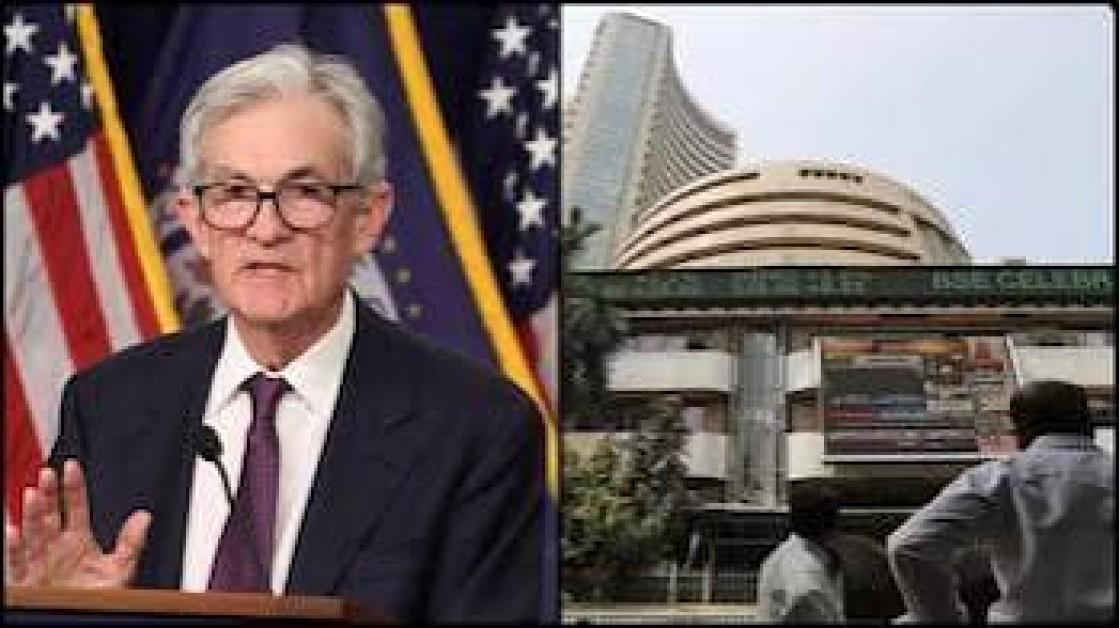
Indian Shares Rise Ahead of U.S. Federal Reserve Policy Decision
Indian equity markets rose sharply on July 29 as investors increased exposure to information technology and other beaten-down sectors before the U.S. Federal Reserve’s policy announcement.
The Nifty 50 gained 1.1% to close at 24,250.20, while the BSE Sensex advanced 1.16% to 77,654.60. The session marked the Nifty’s strongest daily percentage increase since June 12. (Reuters)
The rally came despite continued volatility across Asian markets and a sharp increase in international crude oil prices. Investors remained focused on whether the Federal Reserve would leave interest rates unchanged and what its policy statement would indicate about inflation and possible future tightening.
IT Stocks Lead the Market Recovery

Information technology stocks emerged as the strongest drivers of the Indian market rally.
The Nifty IT index rose 2.3%, extending its four-session increase to 9.1%. The sector had previously experienced substantial selling as investors assessed whether artificial intelligence could disrupt traditional IT services and pressure future revenue growth. (Reuters)
The latest rebound suggests that investors are selectively returning to IT companies following steep corrections in several major stocks.
Indian IT companies remain sensitive to U.S. economic conditions because a significant portion of their revenue comes from overseas clients, particularly large American corporations.
Sensex and Nifty Gain More Than 1%
The broader market recovery was supported by strong participation across sectors.
Fourteen of the 16 major sectoral indices advanced during the session, while broader small-cap and mid-cap indices also recorded gains. (Reuters)
Market breadth remained positive, indicating that the rally extended beyond a limited number of large index stocks.
The strength across sectors reflected improving risk appetite, selective buying after recent declines and expectations that the Federal Reserve would avoid an immediate interest-rate increase.
Federal Reserve Decision Becomes the Main Global Trigger
The U.S. Federal Reserve’s policy decision remained the most important international event for investors.
Markets largely expected the central bank to keep interest rates unchanged, although traders continued to assign some probability to a 25-basis-point increase. Investors were also pricing in the possibility of at least one rate increase before the end of 2026. (Reuters)
The policy statement and comments from Federal Reserve leadership were expected to provide signals regarding:
-
Inflation risks
-
Future interest-rate increases
-
Economic growth
-
Labour-market conditions
-
Energy-price pressures
-
Financial-market stability
-
Timing of future policy action
-
Global economic uncertainty
Even when rates remain unchanged, guidance regarding future decisions can significantly influence international equity, bond and currency markets.
Why the Federal Reserve Matters for Indian Equities
Federal Reserve policy affects Indian financial markets through global liquidity, currency movements and foreign institutional investment.
Higher U.S. interest rates can increase the attractiveness of dollar-denominated investments, potentially encouraging foreign investors to reduce exposure to emerging markets.
A more hawkish Federal Reserve can therefore affect:
-
Foreign portfolio flows
-
Indian equity valuations
-
Bond yields
-
The rupee
-
Corporate borrowing costs
-
Technology spending
-
Commodity prices
-
Investor risk appetite
A stable or less aggressive policy outlook can provide support to emerging-market assets, including Indian shares.
Foreign Investors Return as Buyers
Foreign investor activity provided another positive signal for the market.
Foreign investors had purchased more than $1 billion of Indian shares during July after four consecutive months of net selling, according to Reuters. (Reuters)
The change in positioning suggests that international investors may be selectively returning to Indian equities as valuations become more attractive and concerns intensify around crowded artificial-intelligence trades in other Asian markets.
Continued foreign inflows would provide support to both equity-market sentiment and the Indian rupee.
India Benefits From Limited Direct AI-Market Exposure
Indian equities gained while several major Asian markets faced sharp declines linked to concerns surrounding highly valued semiconductor and artificial-intelligence companies.
South Korean and Japanese markets came under pressure as investors reconsidered whether substantial AI-related capital expenditure would generate sufficient returns.
India has fewer large listed companies directly exposed to semiconductor manufacturing and AI infrastructure, providing some insulation from the regional technology sell-off.
This relative difference may have encouraged investors to rotate toward Indian equities during the session.
Rupee Strengthens Alongside Equities
The Indian rupee also strengthened as the stock-market rally improved sentiment and traders reduced bearish positions before the Federal Reserve decision.
The currency closed at 95.6475 against the U.S. dollar, gaining 0.2% and touching its strongest level since July 10 during the session. (Reuters)
State-owned banks also sold dollars intermittently, helping offset demand linked to the monthly derivatives expiry.
A stronger rupee can improve foreign investor confidence, although its future direction will remain sensitive to oil prices, dollar movements and Federal Reserve guidance.
Higher Crude Oil Prices Remain a Major Risk
The equity rally took place even as Brent crude oil climbed more than 3.5% to around $87.10 per barrel amid renewed geopolitical tensions in the Middle East. (Reuters)
Higher oil prices remain a significant concern for India because the country imports most of its crude requirements.
Sustained increases can affect:
-
Inflation
-
Corporate margins
-
Transportation costs
-
The current-account deficit
-
The rupee
-
Government finances
-
Consumer spending
-
Interest-rate expectations
The impact of higher crude prices could limit market gains if the increase becomes prolonged.
Large-Cap Stocks Support the Rally
Several large companies contributed to the benchmark gains.
Larsen & Toubro advanced after reporting higher quarterly profit supported by strong order inflows. Hindustan Unilever also rebounded as analysts maintained confidence in its growth outlook following recent earnings-related weakness. (Reuters)
The combination of company-specific earnings developments and broader global positioning helped strengthen market momentum.
Domestic Earnings Season Influences Stock Selection
The Indian market remains in the middle of the Q1 FY27 corporate earnings season, making company results an important driver of stock-specific movement.
Investors are examining:
-
Revenue growth
-
Profitability
-
Operating margins
-
Management guidance
-
Demand conditions
-
Capital expenditure
-
Export performance
-
Cost pressures
Strong results can attract buying even when broader global conditions remain uncertain, while weak earnings may lead to sharp corrections in individual shares.
Market Volatility Could Remain Elevated
The Federal Reserve announcement could trigger volatility across global assets, particularly if the policy decision or commentary differs from market expectations.
A surprise rate increase or strongly hawkish communication could pressure equities and emerging-market currencies.
Alternatively, an unchanged decision accompanied by balanced guidance could provide support to risk assets.
Indian investors will also continue monitoring geopolitical developments and crude-oil movements, which remain significant sources of uncertainty.
Risks to Monitor
Despite the strong session, several risks could influence Indian equities over the coming days.
These include:
-
Hawkish Federal Reserve guidance
-
Future U.S. rate increases
-
Higher crude oil prices
-
Geopolitical escalation
-
Foreign investor selling
-
Rupee volatility
-
Weak corporate earnings
-
Elevated market valuations
-
Global technology-sector corrections
-
Domestic inflation risks
Investors may therefore remain selective rather than treating the rally as evidence that all market risks have eased.
What Investors Should Watch
Key indicators to monitor include:
-
Federal Reserve policy guidance
-
U.S. inflation trends
-
Foreign portfolio flows
-
Nifty IT performance
-
Crude oil prices
-
Rupee movements
-
Indian corporate earnings
-
Domestic institutional activity
-
Global bond yields
-
Market volatility
The market’s reaction after the Federal Reserve decision will provide a clearer indication of whether the latest gains can be sustained.
Outlook
Indian equities have demonstrated resilience by gaining more than 1% despite weakness across several Asian technology markets and higher crude prices.
The rebound in IT stocks, improved foreign investor participation and broad-based domestic buying supported the market ahead of the Federal Reserve announcement.
However, the near-term outlook will depend heavily on the U.S. central bank’s policy message, global energy prices and the remaining Q1 FY27 corporate results.
A stable interest-rate outlook could extend the recovery, while hawkish guidance or renewed geopolitical escalation could quickly restore volatility.
Conclusion
Indian shares rose strongly ahead of the U.S. Federal Reserve’s policy decision, with the Sensex and Nifty gaining more than 1% as information technology stocks led the recovery.
The rally reflected bargain buying, improved foreign investor interest and India’s limited direct exposure to the sell-off in AI-linked Asian stocks.
At the same time, investors remain cautious because higher crude oil prices, geopolitical tensions and uncertainty over future U.S. interest rates continue to present meaningful risks.
The Federal Reserve’s guidance will now play an important role in determining the next direction for Indian equities, the rupee and foreign capital flows.
 Indian Shares Rise as Investors Await Federal Reserve Decision FAQs
POST A COMMENT (0)
All Comments (0)
Replies (0)