





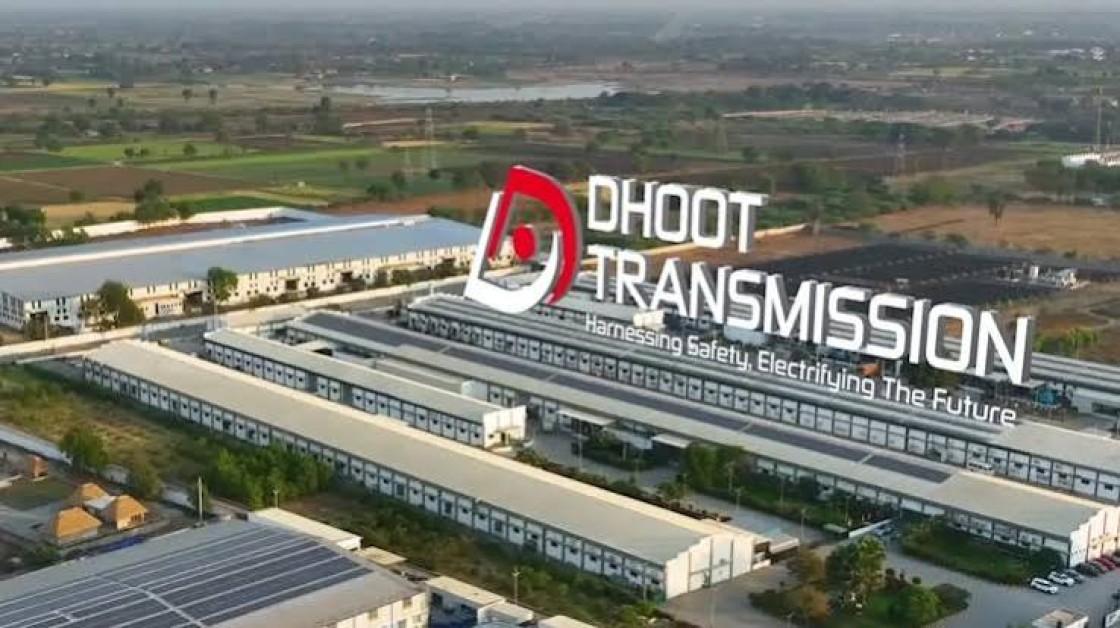
Dhoot Transmission IPO Draws Investor Attention After Strong ₹829–₹871 Issue Subscription
Dhoot Transmission's ₹3,066.89 crore initial public offering has attracted strong investor demand, with the issue closing heavily oversubscribed after three days of bidding and attention now shifting to share allotment and the company's stock-market debut.
The automotive components manufacturer's IPO was open from August 10 to August 12 at a price band of ₹829 to ₹871 per equity share. The issue was subscribed about 75 times overall by the end of bidding, according to market data reported on August 13. (India Today)
Qualified institutional buyers provided the strongest demand, making the IPO one of the more closely watched mainboard offerings in India's active August primary-market calendar.
Dhoot Transmission IPO Closes Around 75 Times Subscribed

The public issue received bids far exceeding the number of shares available.
Final reported subscription stood at approximately 75.06 times overall. (India Today)
Demand varied considerably across investor categories.
The qualified institutional buyer portion, excluding anchor investors, was subscribed approximately 209 times, while the non-institutional investor category was subscribed about 53 times and the retail portion roughly 8.3 times. (India Today)
The numbers indicate particularly strong institutional participation.
Institutional Investors Lead Demand
High subscription from qualified institutional buyers is significant because this category includes institutions such as:
-
Mutual funds
-
Insurance companies
-
Foreign institutional investors
-
Alternative investment funds
-
Other large financial institutions
Institutional investors typically conduct extensive analysis before committing large amounts of capital to IPOs.
Their participation does not guarantee post-listing performance, but it can provide an important signal about demand during the book-building process.
Anchor Investors Commit ₹918 Crore Ahead of IPO
Dhoot Transmission had already attracted significant institutional interest before public bidding began.
The company raised approximately ₹918.27 crore from 72 anchor investors by allocating more than 1.05 crore shares at ₹871 apiece, the upper end of the IPO price band. (The Economic Times)
Anchor participation provided the company with institutional backing before the issue formally opened to other investors.
IPO Size Stands at ₹3,066.89 Crore
Dhoot Transmission's IPO was sized at approximately ₹3,066.89 crore.
The offering included a fresh issue designed to raise up to ₹1,400 crore alongside an offer for sale by existing shareholders. (Dhoot Transmission)
This distinction is important for investors.
Money raised through the fresh issue goes to the company and can be deployed toward corporate objectives, while proceeds from the offer-for-sale component accrue to selling shareholders.
Fresh Issue Provides Growth Capital
Dhoot Transmission plans to use fresh capital for purposes including balance-sheet strengthening and manufacturing expansion.
IPO documents outline plans connected with debt reduction and expansion of manufacturing capacity, including facilities in Tamil Nadu and Haryana. (Sushil Finance)
Using IPO proceeds to reduce debt can potentially improve:
-
Interest costs
-
Cash flow
-
Balance-sheet flexibility
-
Future borrowing capacity
Capital expenditure can simultaneously support expansion if customer demand continues growing.
Price Band Was Fixed at ₹829–₹871
The company priced the IPO between ₹829 and ₹871 per equity share. (The Economic Times)
The minimum application lot was 17 shares, putting the minimum investment at ₹14,807 at the upper end of the band.
IPO pricing is important because it determines the valuation at which new public shareholders enter the company.
Strong subscription alone does not determine whether that valuation will remain attractive after listing.
Allotment Becomes Next Major Event
With bidding completed on August 12, investors are now focused on the share-allotment process.
Allotment was expected to be finalised on August 13 under the current IPO timetable. (mint)
Investors who do not receive shares will have blocked application funds released according to the applicable settlement schedule.
Successful applicants will subsequently receive shares in their demat accounts before listing.
Listing Expected on August 17
Dhoot Transmission's shares are expected to list on the BSE and NSE on August 17, subject to completion of the allotment and settlement process. (TradingView)
The listing will provide the first public-market valuation test for the company.
Strong IPO subscription can create positive expectations, but opening-day share prices remain influenced by broader market conditions and investor sentiment.
Grey Market Premium Signals Optimism but Carries Risk
Unofficial grey-market activity has indicated expectations of a premium listing.
Reports on August 13 cited a grey market premium around ₹276 per share, equivalent to roughly 32% over the upper issue price of ₹871. (mint)
However, grey market prices are unofficial, unregulated and can change rapidly.
They should not be treated as a reliable guarantee of actual listing performance.
Dhoot Transmission Operates in Automotive Components
Dhoot Transmission manufactures a broad range of electrical and electronic components used across automotive and other applications.
Its portfolio includes:
-
Wiring harnesses
-
Sensors
-
Controllers
-
Electronic control modules
-
Automotive switches
-
Cables
-
Connectors
-
Terminals
The company serves vehicle categories ranging from two-wheelers and three-wheelers to commercial vehicles, off-road equipment and other applications. (Dhoot Transmission)
Wiring Harnesses Remain Important Product Category
Wiring harnesses form an essential electrical architecture inside modern vehicles.
They connect systems including:
-
Lighting
-
Sensors
-
Engine electronics
-
Infotainment
-
Safety systems
-
Controls
As vehicles incorporate more electronics, the complexity and value of electrical systems can increase.
This creates opportunities for suppliers capable of designing and manufacturing sophisticated vehicle electrical architecture.
Vehicle Electrification Changes Component Demand
Electric vehicles require a different electrical architecture from conventional internal-combustion vehicles.
EVs can create demand for specialised:
-
High-voltage wiring
-
Controllers
-
Connectors
-
Sensors
-
Electronic modules
-
Power management components
Auto-component suppliers able to adapt their portfolios to electrification may gain exposure to long-term structural changes in mobility.
Electronics Content Per Vehicle Is Increasing
Even conventional vehicles increasingly contain more electronics.
Features such as:
-
Advanced driver assistance
-
Connected systems
-
Digital dashboards
-
Automatic climate control
-
Infotainment
-
Safety electronics
require additional sensors, controllers and wiring.
This can increase the addressable market for companies supplying electronic automotive components.
Two-Wheeler Market Provides Large Addressable Base
India is one of the world's largest two-wheeler markets.
Large domestic production creates substantial demand for component manufacturers serving motorcycles and scooters.
The transition toward electric two-wheelers also creates new product requirements.
Suppliers capable of serving both conventional and electric platforms can potentially benefit as the market evolves.
Customer Diversification Is Important
Automotive component businesses can become vulnerable if they depend excessively on a small number of vehicle manufacturers.
Investors therefore generally examine:
-
Customer concentration
-
Long-term supplier relationships
-
Platform exposure
-
Product diversification
A diversified customer base can reduce the impact of weak production at any individual automobile manufacturer.
Manufacturing Scale Can Create Competitive Advantages
Auto components are highly sensitive to quality, cost and delivery performance.
Large manufacturers can benefit from:
-
Procurement scale
-
Automation
-
Manufacturing efficiency
-
Engineering capabilities
-
Multi-location production
Vehicle manufacturers are generally reluctant to change suppliers frequently for safety-critical or deeply integrated components.
Strong execution can therefore create relatively durable customer relationships.
Expansion Could Support Future Revenue Growth
The fresh issue provides Dhoot Transmission with capital to expand its manufacturing footprint.
Additional capacity can allow the company to support both existing customer programmes and new contracts.
However, investors will need to monitor whether capital expenditure results in sufficient utilisation and returns.
Manufacturing expansion creates value only if future demand supports the additional capacity.
Debt Reduction Could Strengthen Financial Flexibility
Using part of the fresh proceeds for deleveraging can reduce interest expenses.
A stronger balance sheet can provide additional flexibility for:
-
Capital expenditure
-
Research and development
-
Acquisitions
-
Working capital
-
New technology investment
For manufacturing businesses facing a changing automotive landscape, financial flexibility can become particularly valuable.
Bain Capital Is an Important Existing Investor
Dhoot Transmission has received backing from Bain Capital through BC Asia Investments.
The IPO includes an offer-for-sale component involving existing shareholders, including the Bain-linked promoter shareholder. (Dhoot Transmission)
Private equity-backed IPOs are often watched closely because investors assess both the company's future growth plans and the extent to which existing financial sponsors are monetising holdings.
Offer for Sale Does Not Fund Company
A substantial OFS can increase the overall size of an IPO without providing corresponding capital to the operating company.
For investors, this makes it important to distinguish between:
Fresh issue: capital entering Dhoot Transmission.
Offer for sale: existing shareholders selling part of their ownership.
The long-term impact on the business therefore depends more directly on how effectively the ₹1,400 crore fresh issue is deployed.
Auto Components Sector Benefits From Manufacturing Expansion
India's automotive component industry is benefiting from several structural trends:
-
Higher domestic vehicle production
-
Increasing localisation
-
Export opportunities
-
Electric vehicles
-
More electronics per vehicle
-
Global supply-chain diversification
International vehicle manufacturers are also looking to diversify sourcing networks, potentially creating additional opportunities for Indian suppliers.
Exports Could Expand Addressable Market
Automotive components manufactured in India can serve both domestic and international customers.
Export growth can provide manufacturers with:
-
Geographic diversification
-
Larger volumes
-
Foreign-currency revenue
-
Global customer relationships
However, exports also expose businesses to currency, trade and international demand cycles.
IPO Comes During Active Primary-Market Period
Dhoot Transmission entered the market during a busy week for Indian IPOs, alongside several other large public offerings.
The active calendar tests how much capital domestic and institutional investors are willing to deploy across multiple simultaneous issues.
Strong subscription despite competing offerings suggests meaningful investor appetite for Dhoot Transmission.
Heavy Oversubscription Makes Retail Allotment Competitive
With the retail category subscribed more than eight times, many individual applicants are unlikely to receive shares.
In heavily oversubscribed IPOs, allocation is governed by applicable SEBI rules and the number of valid applications.
Applicants should therefore distinguish between successful IPO demand and their probability of actually receiving an allocation.
Strong QIB Demand Stands Out
The most striking feature of the subscription data is the scale of institutional demand.
A QIB subscription exceeding 200 times suggests the number of shares sought by institutional investors substantially exceeded the allocation available to them. (India Today)
This can support positive sentiment going into listing.
However, investors should remember that subscription multiples reflect bidding demand rather than a guarantee of sustained secondary-market buying.
Valuation Will Matter After Listing
Once the shares begin trading, attention will move from IPO subscription statistics toward operating fundamentals.
Investors will increasingly evaluate Dhoot Transmission based on:
-
Revenue growth
-
Profit margins
-
Cash generation
-
Debt
-
Return on capital
-
Customer concentration
-
EV exposure
-
Capacity utilisation
The market will then determine whether the company's growth prospects justify the valuation implied by the issue price.
Auto Industry Cyclicality Remains a Risk
Automotive component suppliers depend heavily on vehicle production.
A slowdown in automobile demand can reduce orders across the supply chain.
Potential risks include:
-
Higher interest rates
-
Weak consumer demand
-
Commodity inflation
-
Export slowdown
-
Production cuts
Diversification across customers, products and vehicle categories can help reduce these risks but cannot eliminate industry cyclicality.
Technology Transition Creates Execution Risk
The move toward electric and software-defined vehicles creates opportunities but also challenges.
Suppliers need to continually invest in:
-
Engineering
-
Electronics
-
New materials
-
Product development
-
Manufacturing technology
Companies unable to keep pace with technological change risk losing relevance as vehicle architectures evolve.
Dhoot Transmission's future performance will therefore depend partly on how effectively it adapts its product portfolio.
What Investors Should Watch Next
Following the close of the IPO, investors should monitor:
-
Final allotment
-
Final issue price
-
August 17 listing
-
Listing-day valuation
-
Debt reduction
-
Manufacturing expansion
-
Automotive demand
-
EV-related revenue
-
Customer additions
-
Quarterly financial performance
Once listed, the company's operating performance will become more important than IPO subscription numbers.
Outlook
Dhoot Transmission's strong IPO subscription reflects substantial investor interest in a company positioned at the intersection of automotive manufacturing, vehicle electronics and electrification.
The ₹3,066.89 crore offering closed around 75 times subscribed, with institutional investors providing particularly strong demand. (India Today)
Fresh capital should give the company additional capacity to strengthen its balance sheet and invest in manufacturing growth.
The next major test comes when its shares begin trading and public-market investors determine how much value to assign to those growth prospects.
Conclusion
Dhoot Transmission has completed one of the more closely watched IPO subscriptions of August 2026, attracting demand far above the shares available in its ₹3,066.89 crore offering.
The issue closed approximately 75 times subscribed, led by exceptionally strong qualified institutional buyer participation, while retail and non-institutional investors also sought several times the shares reserved for them. (India Today)
With bidding complete, attention has shifted to allotment and the expected August 17 stock-market listing.
Beyond the initial market excitement, Dhoot Transmission's longer-term investment case will depend on its ability to use fresh capital effectively, reduce leverage, expand manufacturing capacity and capture rising demand for electronic and electrical content across conventional and electric vehicles.
 Dhoot Transmission IPO Draws Strong Demand After ₹3,067 Crore Issue Closes 75 Times Subscribed FAQs
POST A COMMENT (0)
All Comments (0)
Replies (0)