





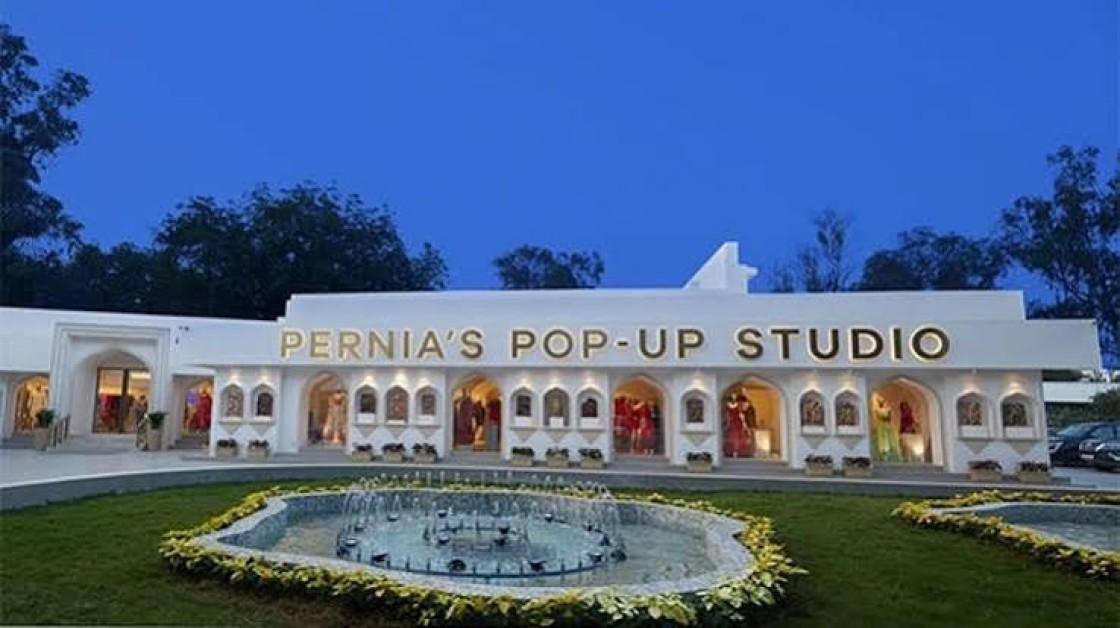
Purple Style Labs Opens ₹680 Crore IPO as Pernia’s Pop-Up Shop Parent Bets on India’s Luxury Wedding Market
Purple Style Labs, the parent company of luxury fashion platform Pernia’s Pop-Up Shop, has opened its ₹680 crore initial public offering, placing a public-market bet on the continued expansion of India’s luxury wedding and occasion-wear industry.
The IPO opened for subscription on August 31, 2026 and will close on September 2, with a price band of ₹546 to ₹575 per share. The offering consists entirely of newly issued shares, meaning there is no offer-for-sale component and the capital raised will go to the company rather than existing shareholders.
At the upper end of the price band, Purple Style Labs is seeking a post-issue market capitalisation of approximately ₹4,604 crore.
The IPO arrives as the company attempts to build Pernia’s Pop-Up Shop into a scaled luxury-fashion platform serving affluent Indian and international customers across digital channels and physical experience centres.
Its central growth thesis is closely linked to India's large wedding economy.
Purple Style Labs founder, whole-time director and chief executive officer Abhishek Agarwal has estimated that luxury currently represents around 5% of India’s ₹2 lakh crore wedding and occasion-wear market, equivalent to roughly ₹10,000 crore. He expects the luxury share to expand to about 9% as the overall market grows to ₹3.7 lakh crore, potentially taking the luxury segment to nearly ₹33,000 crore within five years.
That expansion provides the strategic backdrop for the public issue.
Purple Style Labs IPO Is Entirely a Fresh Issue

The ₹680 crore IPO is:
100% fresh capital.
There is no OFS.
That means promoters and existing shareholders are not selling shares through the public issue itself.
This structure is commercially significant because Purple Style Labs remains in an expansion phase.
The business needs capital for:
store and office commitments,
marketing,
brand-building,
and general corporate purposes.
Rather than primarily providing liquidity to existing investors, the IPO is designed to fund the next stage of the company’s operations.
Price Band Is ₹546–₹575 Per Share
Purple Style Labs has set the IPO price band at:
₹546 to ₹575 per equity share.
The face value is:
₹10 per share.
The retail lot size is:
26 shares.
At the upper end of ₹575, the minimum investment for one retail lot is:
₹14,950.
The issue is scheduled to close on September 2, followed by allotment and an expected listing on the BSE and NSE on September 7, 2026, subject to the final timetable.
Purple Style Labs Raised ₹306 Crore From Anchor Investors
Ahead of the public issue, Purple Style Labs raised approximately:
₹306 crore
from anchor investors.
The company allotted around 53.22 lakh equity shares at ₹575 each to 10 anchor investors.
Participants included institutions such as:
ICICI Prudential Mutual Fund,
Aditya Birla Sun Life Insurance,
ITI Mutual Fund,
Jupiter India Fund,
Morgan Stanley Asia,
and:
Bank of America-linked investment entities.
The anchor allocation provided institutional participation before the public bidding period began.
IPO Proceeds Will Primarily Fund Lease Liabilities
The largest identified use of proceeds is:
₹371.13 crore
to be invested in the company’s wholly owned subsidiary PSL Retail toward lease liabilities associated with:
Experience Centres
and:
back-end offices in India.
Another:
₹138.90 crore
has been earmarked for:
sales and marketing expenditure.
The remaining proceeds will be used for:
general corporate purposes.
This use of funds provides insight into Purple Style Labs’ operating model.
The company is not simply an online marketplace.
It is building an omnichannel luxury-retail platform that increasingly depends on physical experience centres alongside digital sales.
Experience Centres Are Central to the Luxury Strategy
Luxury fashion is difficult to sell entirely online.
Customers purchasing high-value wedding garments often want:
fittings,
alterations,
fabric inspection,
styling advice,
and personalised service.
Physical locations therefore play a different role from conventional high-volume retail stores.
Purple Style Labs describes them as:
Experience Centres.
As of March 31, 2026, the company operated:
14 Experience Centres globally.
That included:
12 in India,
one in:
London,
and one in:
New York.
Pernia’s Pop-Up Shop Is the Core Consumer Brand
Purple Style Labs operates the luxury fashion platform:
Pernia’s Pop-Up Shop.
The company has built the platform around curated Indian designer fashion across:
womenswear,
menswear,
jewellery,
accessories,
kidswear,
and particularly:
wedding and occasion wear.
The platform had 1,109 active designer brands as of March 31, 2026, including names such as Seema Gujral, Anushree Reddy, Amit Aggarwal and Rohit Gandhi & Rahul Khanna.
Earlier public descriptions also indicated a catalogue extending across more than 2 lakh products.
This creates a model closer to a curated luxury-fashion marketplace than a single-brand retailer.
The Company’s Advantage Is Designer Aggregation
India’s luxury fashion market remains fragmented.
Many designers operate through:
individual stores,
studio networks,
social media,
or limited digital distribution.
Pernia’s Pop-Up Shop attempts to bring hundreds of those brands into one destination.
That reduces discovery friction for consumers.
Instead of contacting individual designers separately, shoppers can compare:
styles,
categories,
price points,
and occasions
within one platform.
This aggregation can be particularly valuable for wedding shoppers, who may purchase multiple outfits across several functions.
Weddings Are a Natural High-Value Category
Wedding fashion has characteristics that make it attractive for luxury retailers.
Consumers often purchase:
several outfits,
high-value jewellery,
accessories,
and coordinated clothing for family members.
The customer journey can therefore generate a significantly higher transaction value than ordinary apparel retail.
Indian weddings also frequently involve:
multiple ceremonies
spread across:
several days.
For luxury-fashion platforms, that expands the number of purchasing occasions within a single customer event.
India’s Luxury Wedding Market Is Still a Small Part of the Whole
According to Agarwal’s estimates, the luxury segment currently represents approximately:
5%
of India’s broader wedding and occasion-wear market.
That relatively small share is part of Purple Style Labs’ growth argument.
If rising incomes and wealth cause more families to move from:
mass-market clothing
toward:
designer and premium fashion,
the luxury segment could grow faster than the overall wedding market.
The company is positioning itself to capture that premiumisation.
Luxury Wedding Segment Could Reach Nearly ₹33,000 Crore
Purple Style Labs expects the overall Indian wedding and occasion-wear market to grow from roughly:
₹2 lakh crore
to:
₹3.7 lakh crore
over the next five years.
If luxury fashion increases its share to around 9%, the addressable luxury category could rise to nearly:
₹33,000 crore.
That represents a more than threefold expansion from the roughly ₹10,000 crore luxury opportunity implied today.
The forecast is management’s industry view rather than a guaranteed market outcome.
But it explains why Purple Style Labs is investing heavily in physical locations and marketing ahead of profitability.
Premiumisation Is Driving the Strategic Thesis
The broader consumer trend behind the IPO is:
premiumisation.
As household wealth increases, some consumers spend a greater portion of discretionary income on:
luxury travel,
premium jewellery,
designer fashion,
and high-end experiences.
Wedding spending is particularly resilient among affluent households because weddings often function as:
family events,
social milestones,
and public expressions of status.
Purple Style Labs is trying to capture the fashion component of that spending.
The Business Also Targets Global Indian Consumers
The company does not depend only on domestic buyers.
Its platform serves customers across markets including:
the United States,
United Kingdom,
Middle East,
Australia,
and India.
International demand is important because Indian weddings increasingly span global locations.
Affluent diaspora customers may seek Indian designer products while living overseas.
A digitally enabled multi-brand platform can serve these customers without requiring a large physical-store network in every country.
International Revenue Adds Diversification
Recent reporting indicates that around:
16% of Purple Style Labs’ revenue
comes from international markets including the US and UK.
This provides geographic diversification.
But it also creates exposure to:
currency movements,
tariffs,
cross-border logistics,
and international trade policy.
The company has already cited temporary US tariff-related effects as one factor affecting its international business and gross margins.
New York Store Marks a Major International Expansion
Purple Style Labs opened a New York store in:
March 2026.
Agarwal said the US business had already generated more than:
₹100 crore annually online
before the physical location opened.
That illustrates the company’s omnichannel strategy.
Rather than opening stores first and then building digital demand, it can identify strong online markets and use physical locations to deepen customer engagement.
Physical Retail Can Strengthen High-Ticket Purchases
For high-value wedding fashion, a physical store can solve several problems.
Customers can:
try products,
receive tailoring assistance,
inspect craftsmanship,
and speak with stylists.
This can improve conversion for purchases that may be too expensive or personalised for a purely digital transaction.
The company has described its customer experience as intentionally:
human-led
rather than heavily automated.
Purple Style Labs Is Not Betting Heavily on AI
Unlike many companies preparing for public markets in 2026, Purple Style Labs is not making artificial intelligence a central investment theme.
Management has said the company has:
no plans for significant AI investment
and has not earmarked IPO proceeds specifically for AI.
Its argument is that luxury fashion depends heavily on:
curation,
personalised service,
tailoring,
and human interaction.
This creates a different technology strategy from mass-market e-commerce platforms.
The Company Uses an In-House ERP System
Purple Style Labs relies on an:
in-house enterprise resource planning system
to coordinate operations.
Technology still matters to the business.
But the focus appears to be on enabling:
inventory,
orders,
designer relationships,
and omnichannel operations
rather than replacing the human luxury-shopping experience.
Purple Style Labs Reduced Its Designer Count
The company has deliberately reduced its brand portfolio from approximately:
1,900 designers
to about:
1,100 active brands.
Management has described this as:
“trimming of the long tail.”
The strategy reflects a shift from maximising catalogue breadth toward focusing on brands that produce stronger customer demand and economic value.
That can improve:
curation,
inventory efficiency,
marketing productivity,
and customer discovery.
More Brands Do Not Automatically Mean Better Economics
Marketplace businesses often pursue rapid supplier growth.
Luxury is different.
An excessively large catalogue can create:
choice overload,
inconsistent quality,
and operational complexity.
Curating fewer, stronger designer relationships may increase the platform’s ability to:
merchandise effectively
and:
drive repeat sales.
This is especially important where each designer may have different fulfilment and manufacturing timelines.
Inventory Model Is Relatively Asset-Light
Purple Style Labs characterises its model as:
asset-light.
The company carries broad assortment rather than very deep inventory.
In many cases, customers can place:
backorders
with payments collected upfront.
This can reduce some inventory risk compared with conventional fashion retailers that purchase large volumes of finished products months in advance.
However, the expanding physical network still creates significant lease commitments.
Lease Liabilities Are a Major Balance-Sheet Issue
The fact that ₹371.13 crore of IPO proceeds is being allocated toward lease liabilities demonstrates the financial importance of the Experience Centre network.
Physical stores can help drive luxury sales.
But they also create:
fixed costs,
long-duration lease obligations,
staff expenses,
and operating risk.
If a location underperforms, those costs do not disappear immediately.
The IPO therefore partly strengthens the financial structure supporting this expansion.
FY26 Revenue Rose to ₹557.84 Crore
Purple Style Labs reported revenue from operations of:
₹557.84 crore in FY26.
That compares with:
₹489.91 crore in FY25
and:
₹504.37 crore in FY24.
FY26 therefore represented a return to revenue growth after a modest decline in FY25.
The year-on-year increase from FY25 was approximately:
13.9%.
GMV Reached ₹721.56 Crore
Gross merchandise value increased to:
₹721.56 crore in FY26
from:
₹588.31 crore in FY25.
That represents growth of approximately:
22.7%.
GMV measures the value of merchandise transacted through the platform and is useful for understanding the scale of customer spending.
But GMV should not be confused with reported revenue.
Average Order Value Rose Sharply
Purple Style Labs’ average order value increased approximately:
34.6%
to:
₹75,504.88 in FY26.
That figure demonstrates the unusually high-ticket nature of the platform.
Most mainstream fashion e-commerce businesses operate at far lower average transaction values.
Pernia’s focus on:
designer fashion,
bridal wear,
and occasion wear
creates a very different customer profile.
FY26 Orders Reached 95,565
The company recorded:
95,565 orders
during FY26
and served:
66,713 customers.
The combination of a relatively small customer base and high average order value reinforces the luxury positioning.
The model is not designed to compete on mass-market transaction volume.
Its economics depend more heavily on:
customer value,
repeat buying,
and premium basket sizes.
Repeat Customers Contribute Around 30% of Revenue
Recent reporting indicates that approximately:
30% of revenue
comes from repeat customers.
Repeat purchasing is important in luxury retail because acquiring affluent customers can be expensive.
Once a customer trusts:
fit,
service,
delivery,
and authenticity,
repeat purchases can materially improve customer economics.
This is especially relevant for families that may have recurring wedding and festive occasions.
Marketing Remains a Major Growth Requirement
Purple Style Labs plans to spend:
₹138.90 crore
from IPO proceeds on sales and marketing.
That amount shows the importance of customer acquisition and brand-building.
Luxury platforms still compete for attention against:
individual designer brands,
department stores,
Instagram commerce,
traditional boutiques,
and international luxury retailers.
Marketing therefore remains a substantial part of the growth strategy.
Revenue Growth Has Not Yet Produced Profitability
The central financial challenge is that Purple Style Labs remains:
loss-making.
Its consolidated loss after tax widened to:
₹285.40 crore in FY26
from:
₹188.38 crore in FY25.
That deterioration occurred despite higher revenue.
This creates one of the biggest questions surrounding the IPO.
Can Purple Style Labs convert growth into sustainable profitability?
EBITDA Also Declined in FY26
The company's EBITDA fell to:
₹30.37 crore
in FY26
from:
₹41.99 crore
in FY25.
The EBITDA margin declined from approximately:
8.57%
to:
5.44%.
That means operating profitability weakened even as revenue recovered.
For a growing luxury retailer, investors will likely watch whether scale eventually produces stronger margins.
Management Attributes Margin Pressure to Several Factors
Agarwal has attributed part of the gross-margin decline to:
a GST-related change,
temporary pressure in international operations linked to US tariffs,
and:
the company's consolidation after rapid expansion.
Management has said historical gross margins have been above:
40%.
It expects margins to recover as these factors normalise.
That remains an expectation rather than a guaranteed outcome.
Total Equity Was Negative at FY26-End
The company’s consolidated total equity stood at approximately:
negative ₹52.3 crore
as of March 31, 2026.
This is another reason the fresh capital raise is strategically important.
The IPO substantially increases the equity capital available to the company.
However, future balance-sheet strength will depend on whether the business can eventually generate:
positive earnings
and:
operating cash flow.
Cash Flow Remains a Key Risk
Public-market investors will need to look beyond revenue growth.
A retailer expanding through leased physical locations may require substantial cash for:
rent,
employee costs,
marketing,
technology,
and working capital.
If operating cash generation does not improve, additional growth can increase rather than reduce funding requirements.
This is why profitability and cash conversion are likely to become important post-listing metrics.
Promoter Stake Will Dilute After the Issue
Recent reporting indicates promoter ownership is expected to decline from approximately:
26.3%
to:
22.7%
after the new shares are issued.
This dilution occurs because the IPO consists entirely of fresh equity.
The promoter is not selling through the IPO.
Instead, the total number of shares increases, reducing the percentage ownership of existing shareholders.
Founder Sold Shares in a Prior Secondary Transaction
The company's prospectus disclosures also show that Agarwal sold approximately:
₹45 crore
of personal shareholding through secondary transactions in August 2025 at:
₹500 per share.
That price was below the IPO floor price of ₹546.
The transaction occurred roughly a year before the public offering and is separate from the IPO itself.
Such historical transactions form part of the disclosures investors may examine when assessing valuation.
The Company Has Several High-Profile Investors
Purple Style Labs has attracted investors from:
business,
finance,
sports,
and entertainment.
Publicly disclosed shareholders have included:
Shah Rukh Khan,
Salman Khan and members of his family,
Sachin Tendulkar,
Madhuri Dixit,
Mahesh Babu,
and prominent market investors such as:
Akash Bhanshali,
Madhusudan Kela,
and Mukul Mahavir Agrawal.
Celebrity ownership can create visibility.
But the business ultimately needs to justify its valuation through financial performance rather than shareholder recognition.
IPO Valuation Is About ₹4,604 Crore at the Top End
At:
₹575 per share,
Purple Style Labs is seeking an implied market capitalisation of approximately:
₹4,604 crore.
Relative to FY26 revenue from operations of ₹557.84 crore, that represents a substantial sales multiple.
Because the company remains loss-making, conventional price-to-earnings valuation cannot meaningfully be applied.
Investors therefore need to evaluate the company primarily through:
growth,
market opportunity,
revenue scale,
future margin potential,
and cash-flow prospects.
Public-Market Investors Are Showing Caution So Far
As of 11:30 AM on September 1, the second day of bidding, the IPO had been subscribed approximately:
16%.
Retail investors were leading demand, with their portion approximately:
72% subscribed at that point.
Institutional and non-institutional participation remained more limited during the early part of Day 2.
The bidding period remains open until September 2, meaning final demand may differ substantially from these interim figures.
Grey-Market Premium Has Also Moderated
Informal grey-market indications had weakened by September 1.
The issue's grey-market premium was reported at around:
1%
after being closer to:
5% earlier.
Grey-market prices are unofficial and can change rapidly.
They are not a reliable measure of fundamental value.
But the decline reflects relatively cautious near-term sentiment around the issue.
The IPO Tests Public Appetite for Luxury Retail
The offering is significant beyond Purple Style Labs itself.
India has seen many public-market listings across:
technology,
consumer goods,
financial services,
and manufacturing.
Luxury fashion remains a much smaller public-market category.
The IPO therefore tests whether investors are willing to assign high valuations to:
premium consumption
and:
designer-fashion aggregation.
Luxury Retail Has Different Economics From Mass Fashion
Mass fashion companies generally compete on:
price,
inventory turnover,
store productivity,
and transaction volume.
Luxury retailers compete more heavily on:
curation,
exclusivity,
service,
brand perception,
and customer relationships.
This creates different cost structures.
A luxury retailer may have:
lower transaction volumes
but:
much higher average order values.
The key is ensuring that high gross margins compensate for expensive:
stores,
staff,
marketing,
and personalised service.
Wedding Demand Can Be Resilient, but Not Risk-Free
Luxury weddings can provide relatively resilient demand among affluent families.
But the segment is not immune from economic cycles.
Spending can be influenced by:
wealth creation,
equity markets,
property markets,
consumer confidence,
and discretionary income.
Luxury consumption can slow sharply when high-income households become more cautious.
The company's concentration on premium customers therefore provides pricing power but does not eliminate macroeconomic risk.
Luxury Consumers Expect High Service Standards
At an average order value above ₹75,000, customers expect a very different experience from mainstream e-commerce.
They may require:
alterations,
styling support,
delivery coordination,
personal assistance,
and after-sales service.
A single failed high-value order can damage customer trust significantly.
Scaling this service without losing quality is one of the operational challenges for Purple Style Labs.
Designer Relationships Are Also Critical
The company does not manufacture most of the products itself.
Its platform depends on relationships with:
independent designers.
That creates a different kind of supply-chain risk.
Purple Style Labs needs designers to:
deliver on time,
maintain quality,
and support growing order volumes.
This can be particularly challenging in wedding fashion, where many garments involve:
handwork,
customisation,
and long production cycles.
Wedding Orders Are Time-Sensitive
A wedding garment is unlike ordinary fashion.
The customer cannot easily accept a major delay.
If an outfit is required for a wedding on a fixed date, late delivery can make the product effectively worthless for its intended purpose.
This increases the importance of:
production visibility,
logistics,
alterations,
and designer coordination.
Operational reliability therefore becomes a core part of the brand proposition.
Scale Could Improve Negotiating Power
As Pernia’s Pop-Up Shop becomes larger, it may gain more leverage with designers.
A major distribution platform can provide:
sales volume,
international exposure,
marketing,
and access to affluent customers.
That can make the platform increasingly important to independent designers.
If network effects strengthen, Purple Style Labs may be able to improve:
commercial terms,
exclusive collections,
and customer choice.
But Designers Can Also Sell Directly
The platform faces a structural challenge.
Many designer brands can reach customers through:
Instagram,
their own websites,
and independent boutiques.
This lowers the barriers to direct selling.
Purple Style Labs therefore needs to offer both sides enough value.
For consumers:
convenience and curation.
For designers:
distribution and customer access.
If either side sees insufficient value, the platform's economics can weaken.
Global Expansion Offers Growth but Raises Complexity
London and New York provide access to high-value diaspora markets.
But international operations also create:
higher rents,
labour costs,
tax complexity,
logistics challenges,
and currency exposure.
A physical store in New York has very different economics from one in India.
International expansion therefore needs to produce sufficiently large transaction values to justify the operating cost.
The Luxury Wedding Thesis Is Attractive but Execution-Heavy
Purple Style Labs' market thesis is straightforward.
India's wedding economy is enormous.
Wealth is rising.
Premiumisation is increasing.
Indian designer fashion is gaining global visibility.
Affluent customers want omnichannel service.
But converting those tailwinds into profitable growth requires disciplined execution.
The company needs to demonstrate that:
higher revenue
can eventually generate:
higher margins
rather than simply higher operating costs.
The IPO Creates a Public Benchmark for the Business
Once listed, Purple Style Labs will be evaluated every quarter.
Investors will track metrics such as:
revenue growth,
GMV,
average order value,
repeat customers,
store productivity,
international performance,
EBITDA margin,
cash flow,
and net losses.
That scrutiny can force greater financial discipline.
It can also make it easier to raise future capital if the company demonstrates consistent progress.
Conclusion
Purple Style Labs' ₹680 crore IPO represents a significant public-market test for India's emerging luxury-fashion and wedding-retail industry.
The parent of Pernia’s Pop-Up Shop is raising the entire amount through fresh shares, with a ₹546–₹575 price band and an implied valuation of approximately ₹4,604 crore at the upper end.
The company plans to deploy ₹371.13 crore toward lease liabilities for its Experience Centres and back-end offices, while another ₹138.90 crore will fund sales and marketing.
Its strategic opportunity is substantial.
Management expects India's luxury wedding and occasion-wear market to potentially expand from roughly ₹10,000 crore today to almost ₹33,000 crore within five years, driven by growth in the wider wedding market and increasing premiumisation.
Purple Style Labs has already built meaningful scale.
FY26 revenue from operations reached ₹557.84 crore, GMV rose to ₹721.56 crore, and average order value increased to more than ₹75,500.
But the financial risks are equally clear.
The company remains loss-making, with its FY26 consolidated loss widening to ₹285.40 crore, while EBITDA fell to ₹30.37 crore and total equity remained negative at year-end.
The IPO therefore rests on a classic growth-versus-profitability question.
Purple Style Labs has built a recognisable luxury platform in a potentially fast-growing market.
The next challenge is proving that higher luxury consumption, larger customer baskets and international expansion can eventually translate into:
stronger margins,
positive cash generation,
and sustainable shareholder value.
 Purple Style Labs Opens ₹680 Crore IPO as Pernia’s Pop-Up Shop Targets India’s Luxury Wedding Market FAQs
POST A COMMENT (0)
All Comments (0)
Replies (0)