





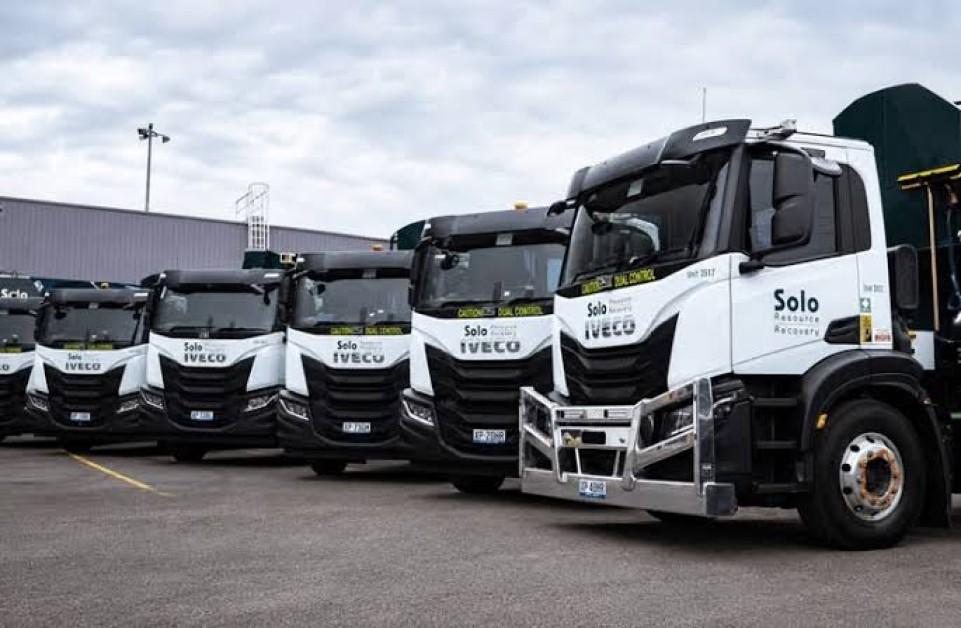
Tata Motors Opens €3.82 Billion Iveco Tender Offer as Global Commercial-Vehicle Deal Enters Execution Phase
Tata Motors has opened the shareholder acceptance period for its approximately €3.82 billion all-cash tender offer for Iveco Group, moving one of the Indian automaker's most significant international commercial-vehicle transactions from regulatory preparation into the execution phase.
The recommended voluntary tender offer is being made through:
TML CV Holdings B.V.
for all issued common shares of Iveco Group.
The offer price has been fixed at:
€14.10 per common share in cash
on a:
cum-dividend basis.
The acceptance period opens on:
September 7, 2026
and is scheduled to close on:
October 26, 2026.
The transaction is intended ultimately to give Tata Motors control of:
100% of Iveco's common shares
and facilitate the company's:
delisting from Euronext Milan.
The tender offer has received unanimous support from Iveco's board, while its largest shareholder, Exor N.V., has irrevocably committed its approximately 27.06% economic stake, representing about 43.19% of voting rights, to the transaction.
The opening of the offer therefore marks the point at which the proposed combination moves directly into the hands of Iveco shareholders.
Tata Motors Starts Iveco Shareholder Acceptance Period

The formal shareholder acceptance window begins on:
September 7.
Iveco investors will now be able to tender their shares into the Tata Motors offer during the acceptance period.
The offer is currently scheduled to remain open until:
October 26, 2026.
Subject to completion mechanics and applicable conditions, payment to shareholders tendering during the main acceptance period is expected after the offer closes.
The transaction follows months of preparation since Tata Motors first announced its intention to acquire Iveco.
Offer Values Iveco at Approximately €3.82 Billion
The all-cash transaction values Iveco's common shares at approximately:
€3.82 billion.
Tata Motors is offering:
€14.10 per share.
The offer represents a full-company acquisition rather than a strategic minority investment.
If completed as planned, Iveco will become part of Tata Motors' wider commercial-vehicle business.
The strategic objective is to create a substantially larger global commercial-vehicle group with increased:
geographic reach,
scale,
technology capability,
product breadth,
and investment capacity.
TML CV Holdings Is Making the Offer
The transaction is being executed through:
TML CV Holdings B.V.
The Dutch entity is part of Tata Motors' commercial-vehicle structure and serves as the formal offeror for the transaction.
Using a dedicated acquisition vehicle is common in large cross-border transactions.
It allows the buyer to structure:
financing,
ownership,
regulatory compliance,
and post-deal integration
within an entity specifically designed for the acquisition.
Iveco Board Unanimously Recommends Offer
Iveco's board has provided:
full and unanimous support
for the transaction.
The board has recommended that shareholders accept Tata Motors' offer.
This endorsement is strategically important because the transaction is structured as a:
recommended tender offer
rather than a hostile acquisition.
Management and board support can significantly reduce execution uncertainty by aligning the target company's leadership with the transaction.
It also creates a clearer integration environment if the deal is completed.
Exor Provides Major Shareholder Support
The transaction also has support from:
Exor N.V.
Exor is the investment company controlled by the Agnelli family and is Iveco's largest shareholder.
It has irrevocably committed to tender its approximately:
27.06% stake
in Iveco.
Because of Iveco's voting structure, that holding represents approximately:
43.19% of the company's voting rights.
This gives Tata Motors substantial committed shareholder support before the broader tender process is completed.
Exor Commitment Reduces Execution Risk
Exor's participation is particularly significant because nearly half of Iveco's voting rights are effectively already aligned with the transaction.
Large cross-border tender offers can face uncertainty when major shareholders remain undecided.
That risk is materially lower here.
Exor's irrevocable commitment provides Tata Motors with:
a significant acceptance base,
greater transaction visibility,
and stronger confidence around shareholder support.
The remaining challenge is achieving the minimum acceptance level required under the offer conditions.
Offer Has 95% Acceptance Threshold
The transaction is structured around an acceptance threshold of:
95% of Iveco's common shares.
However, this threshold may be reduced to:
80%
if relevant post-offer resolutions are approved by shareholders at Iveco's extraordinary general meeting.
This provides Tata Motors with two potential routes toward completing the acquisition and taking Iveco private.
The precise post-offer mechanism will depend on the final percentage of shares tendered.
Iveco EGM Scheduled for October 16
Iveco shareholders are scheduled to meet at an:
Extraordinary General Meeting on October 16, 2026.
The meeting will consider resolutions connected with the transaction and potential post-offer restructuring.
These resolutions become particularly important if Tata Motors acquires:
more than 80%
but less than:
95%
of Iveco's common shares.
In that scenario, Tata Motors intends to pursue a post-offer structure designed to consolidate ownership and enable delisting.
Post-Offer Demerger and Liquidation Could Be Used
If Tata Motors secures between:
80% and 95%
of the shares, and the relevant shareholder resolutions are approved, the buyer intends to proceed with:
a post-offer demerger and liquidation mechanism.
This structure is designed to allow the acquisition process to reach full control even if the tender offer itself does not initially reach the 95% threshold.
Such back-end transaction structures are commonly used in European takeover processes when the buyer's strategic objective is complete ownership and delisting.
Delisting Iveco Is Central to Transaction
Tata Motors is not seeking merely to become Iveco's controlling listed shareholder.
The objective is ultimately to acquire:
all common shares
and remove Iveco from:
Euronext Milan.
Delisting would allow the combined businesses to operate without maintaining two separately traded commercial-vehicle companies.
It could simplify:
capital allocation,
strategic planning,
technology investment,
and operational integration.
However, delisting requires the relevant ownership and legal conditions to be satisfied.
Consob Has Approved Offer Document
The tender process follows approval of the offer document by:
Consob,
Italy's securities-market regulator.
Consob approval was a critical procedural step before the offer could formally move into the shareholder acceptance phase.
The transaction has also received the required competition, foreign direct investment and Foreign Subsidies Regulation clearances.
That means much of the regulatory work required for the acquisition has already been completed.
Regulatory Phase Largely Completed
Cross-border acquisitions of this scale require approvals across multiple regulatory frameworks.
The Tata-Iveco transaction has required reviews relating to areas including:
competition,
foreign investment,
and European subsidy regulation.
With these approvals secured, execution risk is now shifting away from regulators and toward:
shareholder acceptance,
transaction mechanics,
and final completion.
That represents a significant milestone.
Tata Motors Uses Fully Committed Bridge Financing
Tata Motors' commercial-vehicle business has arranged:
fully committed bridge financing
for the transaction.
The financing commitment involves:
Morgan Stanley Bank, N.A.,
Morgan Stanley Senior Funding, Inc.,
and:
MUFG Bank, Ltd.
Bridge financing provides acquisition certainty by ensuring funds are available to complete the transaction.
The buyer can subsequently determine the longer-term capital structure through refinancing or other funding arrangements.
Financing Certainty Is Critical for Tender Offers
A cash tender offer requires the bidder to demonstrate that it can fund the purchase if shareholders accept.
This becomes particularly important when the transaction value runs into several billion euros.
Fully committed financing reduces the risk that the acquisition could fail because funding is unavailable at closing.
For Iveco shareholders, it provides confidence that the:
€14.10-per-share consideration
is backed by committed financial arrangements.
Deal Would Combine Two Complementary Commercial-Vehicle Businesses
Tata Motors and Iveco have positioned the transaction around:
complementarity.
The companies have relatively limited overlap across important geographic and industrial areas.
Tata Motors has a powerful position in:
India
and several emerging commercial-vehicle markets.
Iveco has strong operations in:
Europe
and additional international regions.
Combining the businesses can therefore expand market coverage without requiring both companies to compete heavily in identical territories.
Combined Business Could Generate Around €21 Billion Revenue
The companies have indicated that the combined commercial-vehicle business would generate approximately:
€21 billion in annual revenue.
That would create substantially greater scale than either business has independently.
Scale matters increasingly in the global automotive sector because manufacturers need to invest heavily in:
electrification,
alternative fuels,
connected vehicles,
software,
autonomous systems,
and manufacturing technology.
A larger revenue base can provide greater capacity to fund these investments.
Combined Vehicle Volumes Could Exceed 590,000 Units
The combined Tata Motors-Iveco commercial-vehicle group is expected to sell more than:
590,000 vehicles annually.
That scale would position the business as a significantly larger participant in the global commercial-vehicle industry.
Volume creates advantages across:
procurement,
engineering,
platform development,
supplier negotiations,
manufacturing,
and distribution.
However, scale creates value only if integration is executed effectively.
Iveco Gives Tata Motors Deeper European Presence
One of the clearest strategic benefits for Tata Motors is:
Europe.
Iveco has an established commercial presence across major European markets.
It sells:
light commercial vehicles,
medium and heavy trucks,
buses,
special vehicles,
and related mobility products.
Acquiring Iveco would give Tata Motors an immediate commercial and industrial platform in Europe that would be difficult to build organically.
Iveco Has Broad Commercial-Vehicle Portfolio
Iveco Group operates across several specialised automotive businesses.
Its portfolio includes:
commercial vehicles,
buses,
powertrain technologies,
and specialised defence and mobility platforms.
Its brands and operations give the company exposure to different segments of the transportation market.
For Tata Motors, that breadth can complement its existing commercial-vehicle portfolio.
The transaction therefore extends beyond gaining truck volumes.
It provides access to:
technology,
engineering,
distribution,
brands,
and manufacturing capabilities.
Defence Business Is Outside Core Acquisition Perimeter
A critical element of the original transaction structure involved Iveco's defence activities.
The proposed Tata Motors acquisition was designed around Iveco's commercial-vehicle operations rather than simply absorbing every existing activity without restructuring.
This separation helps keep the strategic rationale focused on:
commercial mobility.
It also reduces complications that could arise from combining sensitive defence assets with an international automotive buyer.
Geographic Complementarity Is Major Strategic Rationale
Tata Motors' domestic strength is concentrated in India.
Iveco's strongest position is in Europe.
This gives the transaction geographic logic.
Instead of attempting to build European scale from zero, Tata Motors acquires an established business with:
customers,
dealers,
factories,
brands,
and market knowledge.
Iveco gains association with a larger industrial group with major exposure to one of the world's most important commercial-vehicle markets.
India and Europe Offer Different Growth Profiles
The geographic combination also creates diversification.
India offers:
long-term infrastructure growth,
urbanisation,
logistics expansion,
and rising freight demand.
Europe offers:
a large installed commercial-vehicle market,
higher-value vehicle categories,
advanced emissions regulation,
and strong demand for next-generation propulsion technologies.
A combined company would therefore operate across markets with different economic and product cycles.
Future Technology Investment Is Central to Deal
Commercial vehicles are undergoing a profound technology transition.
Manufacturers are investing in:
battery-electric trucks,
hydrogen,
alternative fuels,
advanced diesel technology,
connectivity,
fleet-management systems,
and autonomous driving.
These technologies require substantial capital expenditure and research investment.
Tata Motors has argued that the greater scale created through Iveco can improve the combined group's ability to invest in this transition.
Commercial Vehicles Face Decarbonisation Challenge
Heavy transport is among the most difficult sectors to decarbonise.
Passenger cars can increasingly shift toward battery-electric powertrains.
Heavy trucks face additional constraints involving:
range,
payload,
charging time,
infrastructure,
and operating economics.
Manufacturers are therefore exploring several technologies simultaneously.
A larger combined engineering base gives Tata Motors and Iveco more resources to pursue multiple technological pathways.
Iveco Brings Alternative-Powertrain Experience
Iveco has invested significantly in:
natural gas,
electric mobility,
hydrogen,
and other lower-emission commercial-vehicle technologies.
These capabilities can complement Tata Motors' own work across electric and alternative-powertrain vehicles.
Technology sharing can become one of the most important long-term benefits of the combination.
However, the companies will need to determine how platforms, research programmes and regional product strategies should be integrated.
Tata Motors Gains International Scale Beyond India
Tata Motors is already a global automotive company through its broader portfolio.
However, its commercial-vehicle business remains particularly associated with India and selected international markets.
Iveco would transform that position.
The acquisition could create a genuinely multinational commercial-vehicle platform with substantial operations across:
India,
Europe,
Latin America,
and other international regions.
That changes both Tata Motors' scale and strategic profile.
Deal Comes as Tata Commercial-Vehicle Sales Accelerate
The tender offer arrives during a period of strong recent commercial-vehicle sales for Tata Motors.
The company reported total commercial-vehicle sales across domestic and international markets of:
44,411 units in August 2026.
That represented approximately:
49% year-on-year growth
from:
29,863 units
in August 2025.
The performance gives Tata Motors additional operating momentum as it undertakes the Iveco acquisition process.
International Commercial-Vehicle Sales Surge
Tata Motors' international commercial-vehicle sales rose even more sharply during August.
International volumes reached:
7,792 units
compared with:
2,382 units
a year earlier.
That represented approximately:
227% year-on-year growth.
Although one month of sales does not establish a long-term trend, the increase reinforces Tata Motors' strategic focus on expanding the commercial-vehicle business beyond India.
Iveco Also Entered 2026 With Revenue Growth
Iveco reported stronger revenue performance in the second quarter of 2026, supported by higher volumes in Europe.
However, profitability reflected planned investments in:
quality
and other operational priorities.
This means Tata Motors is acquiring a business with meaningful industrial scale but also one that requires continued investment.
The strategic case therefore rests partly on whether the combined group can improve efficiency while simultaneously funding future technologies.
Transaction Is Larger Than Simple Market Expansion
The deal should not be viewed only as Tata Motors entering Europe.
It is potentially a broader restructuring of the company's global commercial-vehicle position.
The acquisition could affect:
manufacturing networks,
supplier relationships,
product development,
capital allocation,
technology roadmaps,
and international sales strategies.
The scale means integration decisions will influence the combined business for many years.
Integration Will Be Major Post-Closing Challenge
Completing the tender offer is only the first stage.
Large industrial acquisitions create significant integration challenges.
Tata Motors will need to manage:
different corporate cultures,
manufacturing systems,
regional organisations,
supplier networks,
technology platforms,
and labour structures.
Europe also has sophisticated employee-representation and industrial-relations frameworks.
Successful integration will therefore require a balance between operational coordination and preservation of Iveco's established identity.
Tata Motors Says It Respects Iveco Heritage and Brands
Tata Motors Commercial Vehicles Managing Director and CEO Girish Wagh has emphasised the company's respect for Iveco's:
heritage,
people,
and brands.
That positioning is important.
Iveco is a long-established European industrial company with deep relationships across:
customers,
dealers,
employees,
suppliers,
and governments.
Attempting to integrate the business too aggressively could disrupt those relationships.
Preserving brand equity while capturing strategic synergies will be an important balancing act.
Iveco Brand Could Remain Strategically Important
The Iveco name has significant recognition across the European commercial-vehicle market.
That makes the brand itself an important asset.
Tata Motors does not need to replace Iveco with its own corporate identity to capture value from the transaction.
Maintaining strong regional brands can allow the group to preserve established customer relationships while sharing technology and resources behind the scenes.
This multi-brand model is common across large global automotive groups.
Deal Could Improve Procurement Scale
Procurement represents another potential source of value.
Commercial vehicles require large quantities of:
steel,
electronics,
batteries,
engines,
transmissions,
tyres,
and other components.
A larger combined group can negotiate with suppliers across greater volumes.
This can potentially improve:
pricing,
supply security,
and access to technology.
However, realising procurement synergies requires coordination across different vehicle platforms and supplier bases.
Global Supply Chains Become More Resilient With Diversification
The geographic spread of Tata Motors and Iveco could also improve supply-chain resilience.
Recent automotive disruptions have demonstrated the risks of depending heavily on individual:
countries,
suppliers,
or production regions.
A larger manufacturing network across multiple geographies can provide greater flexibility.
It can also create opportunities to source certain components across both businesses where technically appropriate.
Cross-Selling Could Create Revenue Opportunities
Beyond cost synergies, there may be revenue opportunities.
Tata Motors could potentially use Iveco's network to expand selected products or technologies into European and international markets.
Iveco could potentially access Tata Motors' strong commercial footprint in India and other markets.
Not every product will transfer easily because regulatory and customer requirements differ.
But shared distribution and market access can create opportunities over time.
Tender Offer Now Becomes Main Execution Focus
With regulatory clearances largely secured, the next major issue is shareholder participation.
The tender process will reveal how much of Iveco's remaining shareholder base accepts the:
€14.10 cash offer.
Exor's committed stake gives Tata Motors a strong starting point.
But reaching the relevant threshold remains essential to the buyer's plan for complete ownership and delisting.
This makes the period through October 26 critical to the transaction.
October Will Be Crucial Month
Two important dates fall in October.
Iveco's extraordinary general meeting is scheduled for:
October 16.
The main tender acceptance period closes on:
October 26.
The outcomes of these processes will determine which legal route Tata Motors uses to complete full ownership.
If required under the transaction structure, an additional reopening period may follow the initial acceptance process.
Payment Expected After Acceptance Period
Shareholders tendering their shares during the primary acceptance period are expected to receive payment after the offer closes, subject to the official transaction timetable and conditions.
The mechanics are intended to move the transaction toward completion by:
late October
or:
early November 2026.
This aligns broadly with the timetable Iveco had previously communicated.
Transaction Marks Major Step for Tata Motors CV Strategy
The Iveco acquisition represents one of the most consequential strategic moves for Tata Motors' commercial-vehicle business in years.
The company already holds a dominant position in India's commercial-vehicle market.
Its next challenge is building much greater international scale.
Iveco offers an established route to that objective.
Rather than gradually adding individual markets, Tata Motors is attempting to acquire an entire international commercial-vehicle platform.
Deal Could Reposition Tata Motors Among Global CV Groups
If successfully completed and integrated, the transaction could materially change Tata Motors' position within global commercial vehicles.
A combined business with approximately:
€21 billion of annual revenue
and:
more than 590,000 annual vehicle sales
would have the scale to compete more directly with established global groups.
The competitive landscape includes major manufacturers operating across:
Europe,
North America,
Asia,
and emerging markets.
Scale alone will not guarantee success.
But it significantly changes Tata Motors' strategic capabilities.
Conclusion
Tata Motors' €3.82 billion tender offer for Iveco Group has entered its most important execution phase, with shareholder acceptance opening on September 7, 2026.
Through TML CV Holdings B.V., Tata Motors is offering €14.10 per Iveco common share in cash, with the main acceptance period scheduled to run until October 26.
The transaction has already cleared major regulatory hurdles, received the unanimous recommendation of Iveco's board and secured an irrevocable commitment from Exor, which owns approximately 27.06% of Iveco's common shares and 43.19% of voting rights.
The strategic objective is ambitious.
Tata Motors and Iveco together could create a commercial-vehicle business generating approximately €21 billion in annual revenue and selling more than 590,000 vehicles a year, with complementary positions across India, Europe and other international markets.
The offer now moves from regulatory preparation to shareholder execution.
If Tata Motors secures the required ownership thresholds and completes the planned delisting, the transaction could fundamentally reshape the international profile of its commercial-vehicle business and create one of the most significant India-Europe automotive combinations in recent years.
 Tata Motors Opens €3.82 Billion Iveco Tender Offer at €14.10 Per Share FAQs
POST A COMMENT (0)
All Comments (0)
Replies (0)