





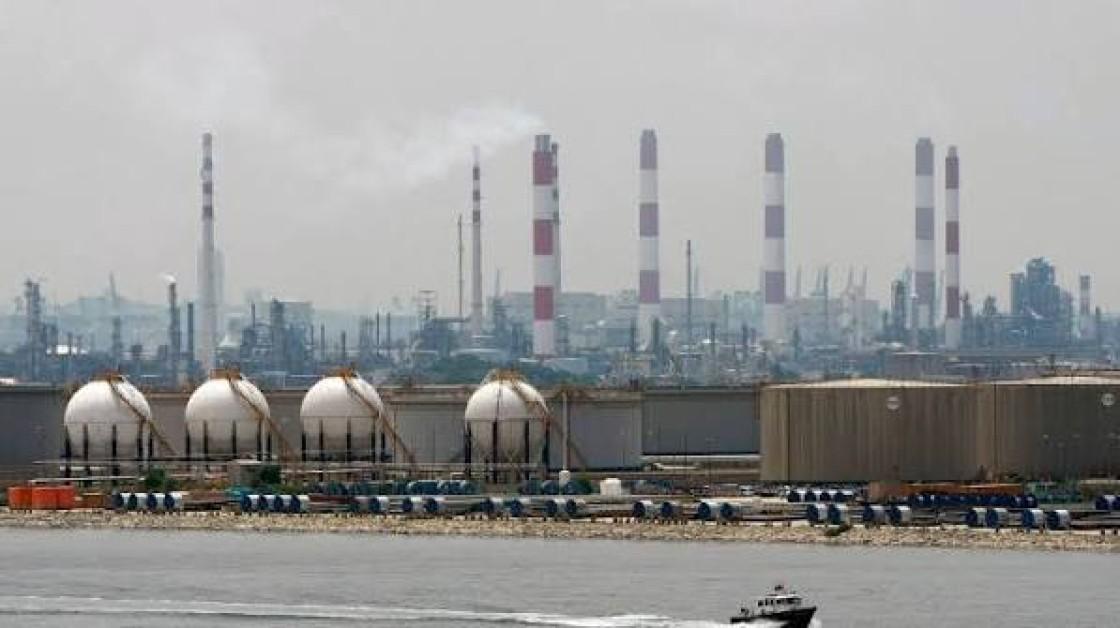
Singapore Raises 2026 Economic Growth Forecast as AI-Linked Electronics Demand Strengthens
Singapore has raised its 2026 economic growth forecast to 4.5%-5.5% after stronger-than-expected expansion in the second quarter and continued global investment in artificial intelligence supported demand for semiconductors, electronics and related trade activity. (Reuters)
The revised outlook marks a substantial upgrade from the government's previous 2%-4% forecast and reinforces Singapore's position as one of the Asian economies benefiting most directly from the global AI infrastructure investment cycle. (Reuters)
Singapore's economy expanded 5.9% year-on-year in the second quarter of 2026, while growth across the first half reached 6.1%, according to the latest government figures. (Reuters)
Singapore Lifts 2026 Growth Forecast to 4.5%-5.5%

The Ministry of Trade and Industry raised its full-year 2026 GDP growth forecast to between 4.5% and 5.5%, reflecting stronger economic momentum than policymakers had previously anticipated. (Reuters)
The upgrade follows robust activity across several externally oriented sectors, with global investment in artificial intelligence supporting demand for technology products.
The revised outlook reflects strength across areas including:
-
Electronics manufacturing
-
Semiconductors
-
Wholesale trade
-
Finance
-
Technology-related exports
-
Construction
For investors, Singapore's stronger growth outlook provides another indicator of how AI capital expenditure is spreading beyond large U.S. technology companies into Asian manufacturing and trade hubs.
Second-Quarter GDP Growth Reaches 5.9%
Singapore's economy expanded 5.9% from a year earlier during the second quarter.
That followed similarly strong growth earlier in the year and pushed first-half expansion to 6.1%. (Reuters)
The performance exceeded expectations that geopolitical tensions and trade uncertainty would produce a more significant slowdown.
Singapore's resilience is particularly notable because its economy is highly exposed to international trade and global technology cycles.
AI Investment Drives Electronics Demand
Artificial intelligence has become a major driver of semiconductor and computing infrastructure demand.
Large technology companies continue investing heavily in:
-
AI data centres
-
Accelerators
-
Servers
-
Memory chips
-
Networking hardware
-
Cloud infrastructure
These investments create demand across global electronics supply chains.
Singapore benefits because it is deeply integrated into semiconductor manufacturing, electronics production, logistics and regional trade networks.
Semiconductor Cycle Supports Manufacturing
Semiconductors remain one of Singapore's most strategically important manufacturing industries.
AI computing requires large volumes of advanced chips, memory and supporting electronic components.
Strong demand can benefit businesses involved in:
-
Chip manufacturing
-
Semiconductor equipment
-
Electronics components
-
Precision engineering
-
Testing
-
Packaging
-
Logistics
A stronger global semiconductor cycle can therefore contribute significantly to Singapore's industrial output.
Electronics Exports Strengthen
Singapore's export outlook has also improved alongside stronger technology demand.
The forecast for non-oil domestic exports has been raised to growth of 14%-16% for 2026, reflecting strength in electronics and other externally oriented sectors. (Reuters)
Export performance is particularly important for Singapore because international trade represents a major component of economic activity.
Stronger exports can support:
-
Manufacturing
-
Logistics
-
Wholesale trade
-
Shipping
-
Financial services
The improving outlook therefore extends beyond semiconductor producers themselves.
AI Boom Creates Wider Economic Spillovers
The impact of the artificial intelligence investment cycle is not confined to factories.
Higher electronics activity can create spillovers across:
-
Transportation
-
Warehousing
-
Finance
-
Professional services
-
Construction
-
Energy infrastructure
-
Data centres
Singapore's role as a regional business and financial hub allows it to participate across multiple stages of this value chain.
Data Centres Add Another Growth Driver
Artificial intelligence requires increasingly large computing facilities.
Singapore has historically been an important data-centre market in Southeast Asia because of its connectivity, infrastructure and business environment.
Continued AI investment could support demand for:
-
Data-centre construction
-
Electrical infrastructure
-
Cooling systems
-
Networking
-
Cloud services
-
Cybersecurity
However, the sector must also manage constraints involving energy, land and sustainability.
Construction Adds Domestic Support
Singapore's stronger outlook is not being driven exclusively by electronics.
Construction activity has also contributed to economic resilience, providing an additional domestic source of growth. (Reuters)
Infrastructure and building activity can support employment and demand across engineering, materials and related services.
This helps diversify the expansion beyond trade-sensitive industries.
Singapore Remains Highly Exposed to Global Trade
Despite the upgraded forecast, Singapore remains vulnerable to changes in global economic conditions.
Its small, open economy depends heavily on international trade, investment and financial flows.
Key external risks include:
-
Global recession
-
Trade restrictions
-
Technology spending slowdown
-
Supply-chain disruption
-
Geopolitical tensions
-
Energy-price shocks
A sharp decline in international demand could therefore quickly affect growth.
AI Investment Sustainability Becomes Key Risk
The strength of current economic momentum also increases Singapore's exposure to the AI investment cycle.
If global technology companies reduce spending on data centres or computing infrastructure, semiconductor and electronics demand could weaken.
The Monetary Authority of Singapore has highlighted the sustainability of AI-related investment as one of the risks to monitor. (Reuters)
This makes technology capital expenditure an increasingly important macroeconomic indicator for Singapore.
Middle East Risks Remain Relevant
Singapore entered 2026 facing concerns about disruption from geopolitical tensions in the Middle East.
As a major trading and energy hub, the country can be affected by:
-
Oil-price volatility
-
Shipping disruptions
-
Higher freight costs
-
Supply-chain delays
-
Inflation
The economic impact has so far been less severe than previously feared, contributing to the government's improved outlook. (Reuters)
Inflation Could Still Increase
Singapore's stronger growth outlook does not eliminate inflation concerns.
Consumer inflation was running at 1.6% in June, while policymakers continue monitoring energy costs and demand pressures. (Reuters)
Stronger economic growth can support household incomes and business activity, but persistent inflation could complicate monetary policy.
Monetary Policy Remains Important
The Monetary Authority of Singapore manages monetary conditions primarily through the Singapore dollar exchange rate rather than a conventional policy interest rate.
Its policy decisions therefore remain important for:
-
Inflation
-
Currency strength
-
Import prices
-
Financial conditions
-
Export competitiveness
Investors will monitor whether stronger growth and inflation pressures lead to further policy adjustments.
Singapore Benefits From Global AI Capital Expenditure
One of the most important features of the current expansion is the scale of global investment in AI infrastructure.
Major technology companies have committed enormous sums to:
-
Data centres
-
GPUs
-
Networking
-
Cloud capacity
-
AI software
-
Power infrastructure
Singapore is positioned to capture indirect benefits because many components of this investment cycle flow through Asian manufacturing and supply-chain networks.
Financial Services Could Benefit
Stronger regional trade and investment activity can also support Singapore's financial sector.
The city-state remains a major centre for:
-
Banking
-
Wealth management
-
Asset management
-
Trade finance
-
Insurance
-
Foreign exchange
Higher technology investment and cross-border capital flows can create additional business for financial institutions.
Singapore Dollar Remains in Focus
A stronger growth outlook can influence expectations for the Singapore dollar.
Currency performance depends on multiple factors, including:
-
MAS policy
-
Inflation
-
Global risk sentiment
-
U.S. interest rates
-
Trade activity
-
Capital flows
Singapore's strong external position generally provides resilience, though global market volatility can still affect currency movements.
Export-Oriented Companies Could Benefit
Businesses connected with electronics and global trade may benefit disproportionately from the upgraded economic outlook.
Potential beneficiaries include companies exposed to:
-
Semiconductors
-
Precision engineering
-
Electronics
-
Logistics
-
Shipping
-
Data centres
-
Industrial services
Investors will look for evidence that stronger macroeconomic conditions translate into higher corporate earnings.
Labour Market Could Remain Resilient
Faster economic growth can also support employment.
Technology, manufacturing, construction and financial services may continue creating demand for skilled workers.
However, Singapore faces structural constraints including a relatively tight labour market and high wage costs.
Productivity growth will therefore remain important for maintaining competitiveness.
AI Could Support Productivity Beyond Electronics
Artificial intelligence may eventually contribute to Singapore's economy through more than hardware demand.
Businesses are adopting AI across:
-
Finance
-
Logistics
-
Healthcare
-
Government
-
Professional services
-
Manufacturing
If adoption increases productivity, AI could become a longer-term economic driver rather than only a cyclical source of electronics demand.
What Investors Should Watch
Several indicators will determine whether Singapore can deliver growth near the upper end of its revised forecast:
-
Semiconductor exports
-
Electronics production
-
Global AI capital expenditure
-
Non-oil domestic exports
-
Construction activity
-
Inflation
-
MAS policy
-
Global trade
-
Energy prices
-
China and U.S. demand
The durability of AI-linked electronics demand will remain particularly important.
Outlook
Singapore's upgraded 4.5%-5.5% GDP growth forecast reflects an economy benefiting significantly from the current global AI investment cycle.
Strong electronics demand, higher exports and resilient domestic activity have helped growth outperform earlier expectations despite geopolitical uncertainty. (Reuters)
The outlook remains favourable, but Singapore's deep integration with global technology and trade also means a slowdown in AI infrastructure spending could quickly become an economic headwind.
Conclusion
Singapore's decision to raise its 2026 growth forecast to 4.5%-5.5% highlights the widening economic impact of global artificial intelligence investment.
Semiconductor and electronics demand is supporting manufacturing and exports, while construction and other domestic activity add further momentum.
For investors, the development provides another indication that the AI boom is influencing not only technology-company earnings but also trade, manufacturing and national economic growth across Asia.
Singapore's next challenge will be determining whether this momentum can persist if global AI spending eventually normalises.
 Singapore Raises 2026 GDP Growth Forecast as AI-Linked Electronics Demand Strengthens FAQs
POST A COMMENT (0)
All Comments (0)
Replies (0)