





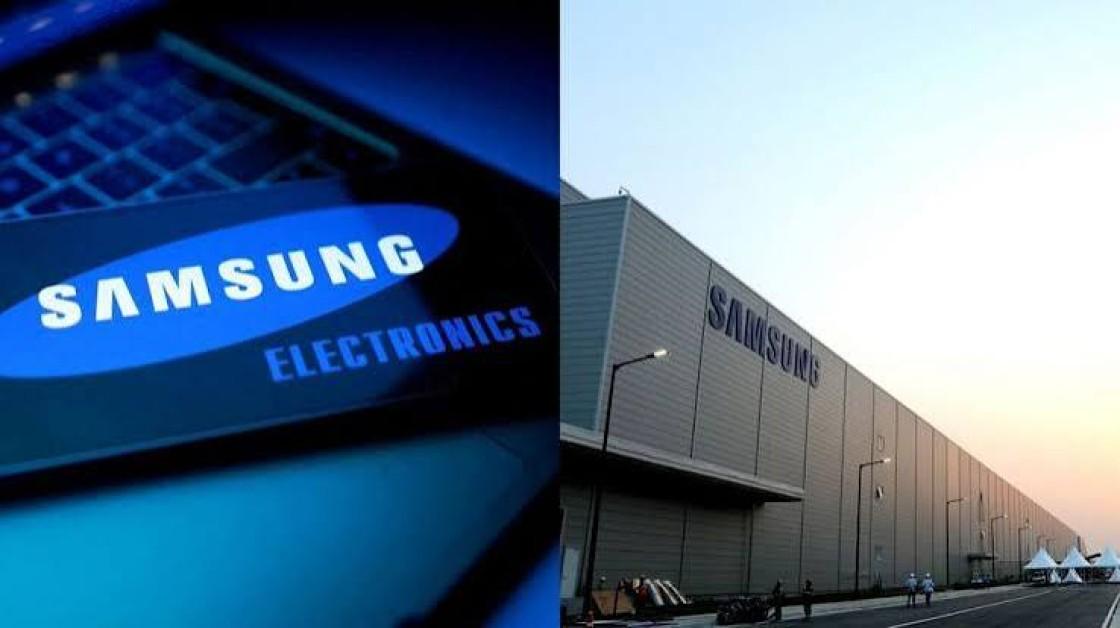
Samsung India Begins Layoffs as Rising Component Costs Pressure Consumer-Electronics Margins
Samsung India Electronics has begun cutting jobs across parts of its consumer-electronics operations as surging memory-chip prices, higher raw-material costs, weaker demand and intense competition put pressure on sales and profit margins.
The workforce reduction is currently concentrated in the company's:
television and home-appliance businesses.
Around 80–100 executives have reportedly been asked to leave in batches, with the restructuring affecting employees across several levels of the organisation.
Those impacted reportedly include:
director-level executives,
team leads,
branch managers,
and area managers.
The development comes at a challenging point for consumer-electronics manufacturers. Component costs are climbing just as companies are competing aggressively for Indian consumers, leaving manufacturers with less room to absorb higher expenses without affecting prices or profitability.
Memory-chip prices have more than doubled, adding another major cost pressure for electronics companies already dealing with currency movements and elevated input expenses.
For Samsung, the situation also highlights a less obvious consequence of the global artificial-intelligence investment boom. Rapid demand for advanced memory used in AI infrastructure is reshaping semiconductor production priorities and contributing to tighter conditions across parts of the broader electronics supply chain.
Samsung India Cuts 80–100 Jobs

Samsung India's current workforce rationalisation is primarily affecting its television and home-appliance operations.
Approximately:
80–100 executives
have reportedly been asked to leave so far.
Rather than announcing one large workforce reduction, the company has been implementing the cuts in batches.
Samsung's domestic electronics sales organisation has roughly:
550–600 executives,
excluding its substantially larger smartphone sales organisation.
The restructuring could eventually extend further.
As much as 25% of the sales and marketing workforce in the electronics business could potentially be affected, including some off-roll workers employed through manpower agencies.
The ultimate scale of the exercise, however, will depend on Samsung's operating requirements and market conditions.
Memory-Chip Prices Have More Than Doubled
One of the biggest pressures facing Samsung's India operations is the sharp increase in:
memory-chip prices.
Prices have reportedly more than doubled as global semiconductor markets undergo another significant shift in demand.
Memory is an essential component across numerous electronic products and systems, including:
smartphones,
computers,
televisions,
connected appliances,
and data-centre infrastructure.
The artificial-intelligence boom has dramatically increased demand for high-performance memory technologies used in AI servers.
Chip manufacturers are consequently directing substantial investment and production resources toward:
high-bandwidth memory,
advanced server memory,
and other AI-related semiconductor products.
That shift can tighten supply conditions elsewhere in the electronics industry.
For consumer-electronics manufacturers, the consequences can be straightforward:
higher component costs
and:
greater pressure on product margins.
AI Infrastructure Boom Is Reshaping the Memory Market
The current situation shows how quickly the expansion of AI infrastructure can influence industries well beyond software companies and data centres.
AI computing systems require enormous quantities of:
processors,
memory,
storage,
networking equipment,
and power infrastructure.
High-bandwidth memory has become particularly valuable because advanced AI accelerators require extremely fast access to large quantities of data.
Semiconductor manufacturers therefore have powerful economic incentives to allocate capacity and investment toward these higher-value products.
The difficulty is that semiconductor manufacturing capacity can't be expanded overnight.
Building new fabrication, packaging and testing facilities can require:
billions of dollars,
specialised equipment,
highly skilled workers,
and several years of construction and qualification.
Until additional capacity becomes available, competition for semiconductor supply can keep prices elevated across parts of the electronics industry.
Weaker Rupee Adds Another Cost Pressure
Samsung India is also exposed to:
currency movements.
A weaker Indian rupee increases the local-currency cost of imported components and other inputs priced internationally.
That matters because even electronic products assembled or manufactured domestically can rely heavily on global supply chains for:
semiconductors,
display components,
memory,
sensors,
specialised electronic parts,
and manufacturing equipment.
Currency depreciation can therefore raise production costs even when final assembly takes place in India.
Manufacturers are then left with several difficult choices.
They can:
absorb higher costs,
raise consumer prices,
reduce promotional spending,
improve sourcing efficiency,
or restructure operations.
Samsung appears to be pursuing several cost-management measures simultaneously.
Samsung Consolidates Some Branch Operations
The workforce restructuring is occurring alongside efforts to simplify Samsung India's organisational structure.
The company has reportedly been consolidating some regional branches.
Combining offices can eliminate overlapping functions in areas such as:
sales,
administration,
regional management,
distribution coordination,
and marketing.
While this can reduce operating expenses, it can also make some positions redundant.
The broader objective appears to be creating a leaner organisation capable of operating effectively in an environment where consumer-electronics margins are becoming harder to protect.
Smartphone Division Is Not Currently Part of Layoffs
Samsung's smartphone organisation has so far remained outside the immediate workforce reductions.
That's an important distinction because mobile phones represent the company's largest business in India.
Smartphones account for roughly:
three-fourths of Samsung India's revenue.
A strong festive-season recovery in smartphone sales could therefore have a substantial effect on the company's overall Indian performance.
Samsung is consequently expected to watch smartphone demand closely before making further decisions regarding that business.
Conditions in the broader Indian smartphone market, however, have become challenging.
Industry estimates indicate that smartphone volumes have declined by around:
11–12% year on year.
This creates additional pressure for manufacturers competing simultaneously on:
pricing,
specifications,
distribution,
promotions,
and premium positioning.
Samsung Faces Intense Smartphone Competition in India
India remains one of the world's most important smartphone markets, but competition is exceptionally intense.
Samsung competes against major manufacturers across virtually every important price segment.
In premium smartphones, the company faces particularly strong competition from:
Apple.
In affordable and mid-range devices, competition comes from multiple Chinese smartphone manufacturers offering increasingly sophisticated products at aggressive prices.
Samsung has historically maintained a broad portfolio spanning:
entry-level smartphones,
mid-range devices,
premium flagships,
and foldable phones.
That gives the company access to several consumer segments, but it also creates significant pressure around:
pricing,
inventory,
marketing,
and channel management.
Samsung Has Raised Prices on Some Smartphones
Higher component costs have already begun influencing consumer pricing.
Samsung has reportedly increased prices on some smartphone models by approximately:
5–10%.
Repeated price increases create a difficult balancing act.
Passing higher costs on to consumers can protect margins.
But higher prices can also weaken demand, particularly in price-sensitive segments.
Retail industry representatives have reported a substantial decline in consumer footfall following repeated price increases across the market.
That makes cost control increasingly important.
Manufacturers can't indefinitely rely on higher retail prices to compensate for every increase in component costs, particularly when consumers have numerous competing brands and devices to choose from.
Television and Home-Appliance Businesses Face Margin Pressure
The immediate workforce reductions are focused primarily on Samsung's:
television
and:
home-appliance businesses.
Samsung remains a major participant in India's television market, including the premium segment.
However, televisions have become increasingly competitive as manufacturers battle across:
screen technologies,
display sizes,
smart-TV software,
pricing,
and online distribution.
The home-appliance market presents another competitive challenge.
Samsung competes with established domestic and international manufacturers across:
refrigerators,
washing machines,
air conditioners,
microwave ovens,
and other household appliances.
Competition has intensified as companies expand manufacturing capacity and introduce increasingly premium products.
Higher raw-material and component costs become particularly difficult to manage when competitive pressure limits how much of those increases manufacturers can pass on to customers.
Home Appliances Are Samsung India's Second-Largest Business
Samsung India's financial scale helps put the restructuring into perspective.
The company reported approximately:
₹1.1 lakh crore in revenue during FY25,
representing growth of around:
12% year on year.
Home appliances accounted for approximately:
11% of sales,
making the category Samsung India's second-largest business after smartphones.
The company also reported FY25 net profit of approximately:
₹11,287 crore,
up around:
38% from the previous year.
The current restructuring therefore doesn't necessarily point to a financially distressed company.
Instead, it demonstrates how large corporations can move proactively to control expenses when management anticipates:
margin compression,
slower demand,
or structural changes in important markets.
More Workforce Rationalisation Could Follow
The current layoffs may not represent the end of Samsung India's restructuring.
Another round of manpower rationalisation could reportedly occur:
after Diwali.
The television and home-appliance operations are expected to remain the primary focus.
Samsung has also been considering closer integration between its television and home-appliance sales organisations.
Combining those operations could reduce:
management layers,
duplicated functions,
regional overhead,
and administrative expenses.
Similar restructuring strategies have become increasingly common among large multinational companies seeking to simplify organisational structures and protect profitability.
India's Electronics Industry Faces a Cost Challenge
Samsung's restructuring reflects pressures affecting the wider consumer-electronics industry.
Manufacturers are simultaneously dealing with:
rising semiconductor costs,
higher metal prices,
currency volatility,
intense price competition,
changing consumer demand,
and rapidly evolving technology.
Artificial intelligence is creating another unusual dynamic.
Some of the semiconductor industry's most attractive opportunities are increasingly connected to:
AI accelerators,
high-bandwidth memory,
data-centre processors,
and advanced networking equipment.
Capital and manufacturing capacity are therefore being redirected toward these markets.
Consumer-electronics manufacturers may consequently have to compete harder for certain components or accept higher procurement costs.
Local Manufacturing Becomes Increasingly Strategic
The changing cost environment could strengthen the case for deeper electronics manufacturing and component localisation in India.
Domestic assembly alone can't completely protect manufacturers from global semiconductor or commodity-price shocks.
Greater localisation across:
electronic components,
printed circuit boards,
display systems,
battery technologies,
semiconductor packaging,
and eventually semiconductor manufacturing
could reduce some exposure to international supply-chain disruptions.
India has already been attempting to expand its domestic electronics and semiconductor ecosystem through manufacturing incentives and large-scale investments.
Current industry pressures demonstrate why supply-chain localisation can have strategic value beyond simply reducing imports.
It can also help companies build greater resilience against global component shortages, currency fluctuations and sudden shifts in international manufacturing priorities.
Samsung's India Strategy Enters a Cost-Control Phase
Samsung remains one of India's largest consumer-electronics companies and continues to operate across smartphones, televisions and household appliances.
The current restructuring is therefore better understood as a recalibration of costs and organisational structure rather than a withdrawal from the Indian market.
The company is trying to balance:
market share,
pricing,
operating costs,
distribution,
and profitability
during a period of unusually strong component inflation.
What happens next will depend partly on whether consumer demand strengthens during India's important festive shopping period.
A meaningful rebound could provide relief.
Persistent component inflation combined with weak sales, however, could require additional cost measures across parts of the business.
Conclusion
Samsung India's decision to reduce its workforce across television and home-appliance operations highlights the growing pressure that higher component costs are placing on the consumer-electronics industry.
With 80–100 executives reportedly affected, the company is attempting to streamline operations as memory-chip prices more than double, raw-material expenses rise and consumer demand remains under pressure.
Samsung's smartphone business has so far been protected from the immediate layoffs, reflecting its central role in the company's Indian operations. However, weaker industry volumes and higher handset prices mean the segment is also operating in a challenging environment.
The larger story extends beyond Samsung.
AI infrastructure investment is reshaping global semiconductor demand, while currency movements and commodity inflation are increasing costs for electronics manufacturers.
For companies competing in India's highly price-sensitive consumer market, protecting profitability may increasingly require a combination of localisation, supply-chain efficiency, organisational restructuring and tighter cost control.
 Samsung India Layoffs Begin as Chip Costs and Weak Demand Pressure Margins FAQs
POST A COMMENT (0)
All Comments (0)
Replies (0)