





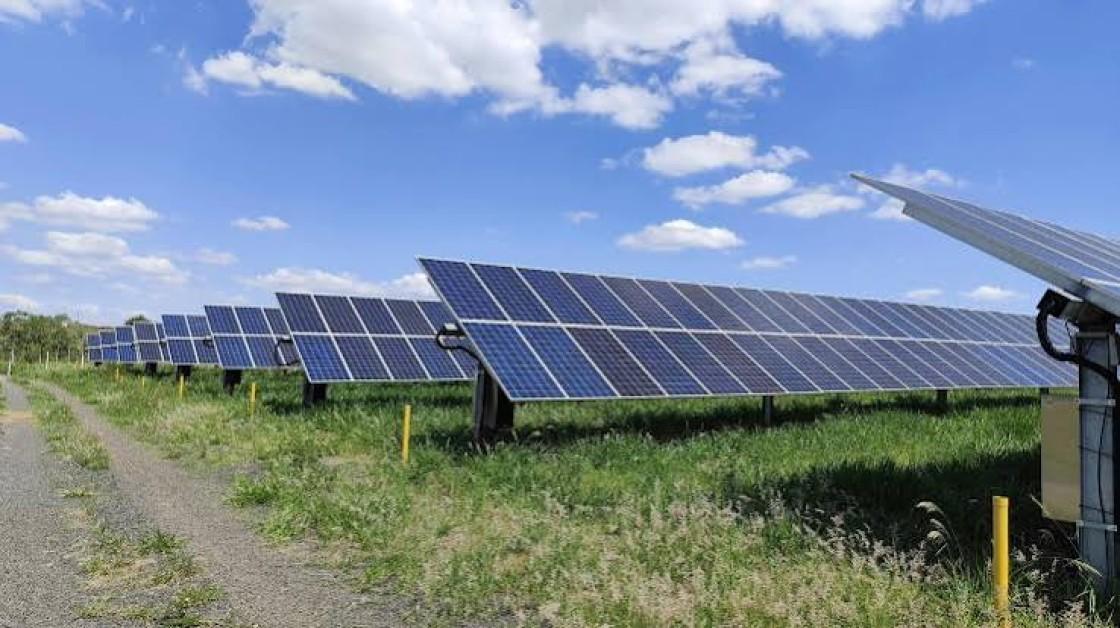
Purvah Green Power to Acquire Welspun New Energy for About ₹2,500 Crore, Expanding Renewable Portfolio
Purvah Green Power is set to acquire Welspun New Energy for approximately ₹2,500 crore, marking a significant expansion of its renewable-energy portfolio as the company accelerates its presence in India's rapidly growing clean-power market.
The proposed transaction gives Purvah Green Power access to an established portfolio of renewable-energy assets and strengthens its strategy of scaling through a combination of:
organic project development
and:
strategic acquisitions.
The transaction also highlights continued consolidation across India's renewable-energy sector, where utilities, infrastructure groups and specialist clean-energy platforms are competing to build larger portfolios of solar, wind and hybrid power assets.
For Purvah Green Power, the acquisition represents another step toward creating a sizeable renewable-energy business capable of serving India's expanding demand for low-carbon electricity.
Purvah Green Power Moves to Acquire Welspun New Energy

The proposed acquisition values Welspun New Energy at approximately:
₹2,500 crore.
Through the transaction, Purvah Green Power will strengthen its position in the renewable-power sector by adding assets and development opportunities associated with the Welspun New Energy platform.
The acquisition provides a faster route to scale than relying exclusively on building new renewable projects from the ground up.
Developing renewable-energy capacity organically can require several stages, including:
land acquisition,
grid connectivity,
regulatory approvals,
power-purchase agreements,
equipment procurement,
project financing,
and construction.
Acquiring an existing platform can allow a buyer to obtain projects, development capabilities and infrastructure within a significantly shorter strategic timeframe.
Deal Strengthens Purvah Green Power's Renewable Strategy
Purvah Green Power operates as the renewable-energy arm of the CESC group and has been expanding its clean-energy ambitions as India's electricity sector undergoes a structural transition.
The company is building a portfolio spanning multiple renewable technologies and customer segments.
The Welspun New Energy acquisition can support that strategy by increasing the scale of the platform and broadening its pipeline of renewable projects.
Scale is becoming increasingly important in the renewable-energy industry.
Larger platforms can potentially benefit from:
stronger equipment procurement,
greater access to financing,
portfolio diversification,
centralised operations and maintenance,
technology investments,
and improved participation in large renewable-energy tenders.
The acquisition therefore has strategic implications beyond the immediate capacity being purchased.
CESC Group Accelerates Clean-Energy Expansion
Purvah Green Power's expansion forms part of a wider transformation within the CESC group.
CESC has traditionally been associated with electricity generation and distribution, particularly through its established power businesses.
However, India's energy market is increasingly moving toward renewable generation as utilities, industrial customers and governments pursue cleaner sources of electricity.
Purvah Green Power provides the group with a dedicated vehicle for participating in that transition.
Building a larger renewable portfolio can diversify the group's generation mix while positioning it for future electricity demand from businesses seeking lower-carbon power.
Why Welspun New Energy Is Strategically Important
Renewable-energy acquisitions are increasingly about more than purchasing operational generating capacity.
A renewable platform can include:
operating projects,
projects under construction,
development-stage assets,
land arrangements,
grid-connectivity rights,
power-purchase agreements,
engineering capabilities,
and specialised project-development teams.
These elements can significantly shorten the time required for an acquirer to build scale.
Welspun New Energy therefore represents a strategic platform opportunity for Purvah Green Power rather than simply a financial investment.
Integrating the acquired business can provide Purvah with additional capabilities and a stronger foundation for future expansion.
₹2,500 Crore Deal Reflects Growing Renewable M&A Activity
India's renewable-energy market has become an increasingly active area for mergers and acquisitions.
Large utilities, infrastructure investors, global energy companies and domestic conglomerates are seeking portfolios capable of generating long-term growth.
Several factors are supporting this activity.
India continues to expand its renewable-generation capacity.
Corporate buyers are increasingly procuring clean electricity.
Energy-intensive industries are seeking to reduce emissions.
Battery storage is becoming more important.
Hybrid renewable projects combining different generation technologies are expanding.
At the same time, developers need substantial amounts of capital to build projects at scale.
These conditions create opportunities for consolidation as companies with access to capital acquire projects or entire renewable platforms from developers seeking to recycle investment.
Renewable Energy Requires Significant Capital
Building large renewable portfolios requires substantial investment.
Capital is needed not only for solar modules and wind turbines but also for:
land,
transmission infrastructure,
substations,
energy-storage systems,
engineering,
construction,
grid connections,
and long-term maintenance.
Acquisitions can further increase capital requirements.
Purvah Green Power's decision to pursue a transaction of approximately ₹2,500 crore therefore demonstrates the scale of investment increasingly required to compete in India's renewable-energy sector.
Financing structure will remain an important element in determining the economics of the acquisition and the returns generated by the expanded portfolio.
Acquisition Can Accelerate Portfolio Growth
One of the principal advantages of acquiring an existing renewable-energy company is speed.
A new solar or wind project can take considerable time to progress from initial development to commercial operation.
Acquiring existing projects can allow a company to increase its portfolio more rapidly.
For Purvah Green Power, this means the Welspun New Energy transaction could accelerate progress toward its broader renewable-capacity ambitions.
The strategy can also reduce dependence on winning every project through competitive bidding.
Instead, the company can combine:
new project development,
competitive tenders,
partnerships,
and acquisitions.
That provides multiple pathways for expansion.
India Creates Large Long-Term Renewable Opportunity
The transaction takes place against the backdrop of India's long-term energy transition.
The country has established an objective of reaching:
500 GW of non-fossil-fuel electricity capacity by 2030.
Meeting that ambition requires substantial investment across renewable generation, transmission networks, storage and related infrastructure.
Electricity demand is also expected to continue expanding as economic growth, manufacturing, urbanisation, digital infrastructure and electrification increase power consumption.
Renewable-energy developers therefore face the dual opportunity of serving:
India's growing electricity requirements
and:
the transition toward cleaner generation.
Companies capable of building large, diversified portfolios could play an increasingly important role in that transformation.
Corporate Demand Creates Another Growth Market
Commercial and industrial customers are becoming important drivers of renewable-energy demand.
Large companies increasingly seek renewable electricity to reduce energy costs, meet sustainability commitments and lower the carbon intensity of their operations.
This has created opportunities for renewable developers beyond traditional government-backed utility projects.
Developers can supply electricity through:
open-access arrangements,
group captive structures,
corporate power-purchase agreements,
and dedicated renewable projects.
A larger renewable platform gives Purvah Green Power greater flexibility to pursue opportunities across these different customer categories.
Competition for Quality Renewable Assets Is Increasing
India's clean-energy market now includes a diverse group of participants.
Traditional power companies are expanding into renewables.
Global infrastructure funds are investing in operating assets.
Large Indian conglomerates are building renewable platforms.
Oil and gas companies are diversifying into low-carbon energy.
Independent power producers are expanding solar, wind, hybrid and storage portfolios.
As more capital enters the sector, established renewable assets with contracted revenues and strong counterparties can become increasingly attractive acquisition targets.
That competition can influence valuations and make disciplined capital allocation critical.
Purvah Green Power will therefore need to ensure that the strategic benefits of the Welspun New Energy acquisition translate into sustainable financial returns.
Integration Will Be the Next Major Test
Completing an acquisition is only the first stage of creating value.
Purvah Green Power will subsequently need to integrate the acquired portfolio into its broader renewable platform.
Important priorities could include:
operational integration,
financing optimisation,
project execution,
power-sale arrangements,
procurement,
technology systems,
and development pipeline management.
Successful integration could allow the company to capture economies of scale while creating a more diversified renewable-energy portfolio.
The ability to execute projects under development will also be important because future portfolio growth depends on converting pipeline capacity into operating assets.
Renewable Consolidation Could Continue
India's renewable-energy industry remains fragmented despite the emergence of several large platforms.
The enormous amount of capital required to achieve national clean-energy targets could encourage further consolidation.
Developers with strong pipelines but limited access to capital may become acquisition targets.
At the same time, larger companies may increasingly use acquisitions to gain:
operating capacity,
new technologies,
regional presence,
development teams,
and access to customers.
Purvah Green Power's proposed Welspun New Energy transaction fits within this broader pattern.
It demonstrates how established power groups can use acquisitions to accelerate their transition from conventional electricity businesses toward diversified clean-energy platforms.
Conclusion
Purvah Green Power's planned acquisition of Welspun New Energy for approximately ₹2,500 crore represents a significant step in the company's renewable-energy expansion strategy.
The transaction can provide Purvah with additional assets, development capabilities and a stronger platform for future growth while accelerating the CESC group's broader shift toward clean electricity.
The deal also reflects a larger transformation taking place across India's power industry.
Renewable-energy companies increasingly need scale, capital, diversified project pipelines and strong execution capabilities to compete effectively.
For Purvah Green Power, the strategic opportunity now lies in successfully integrating Welspun New Energy and using the enlarged platform to capture a greater share of India's expanding renewable-power market.
 Purvah Green Power to Acquire Welspun New Energy for About ₹2,500 Crore FAQs
POST A COMMENT (0)
All Comments (0)
Replies (0)