





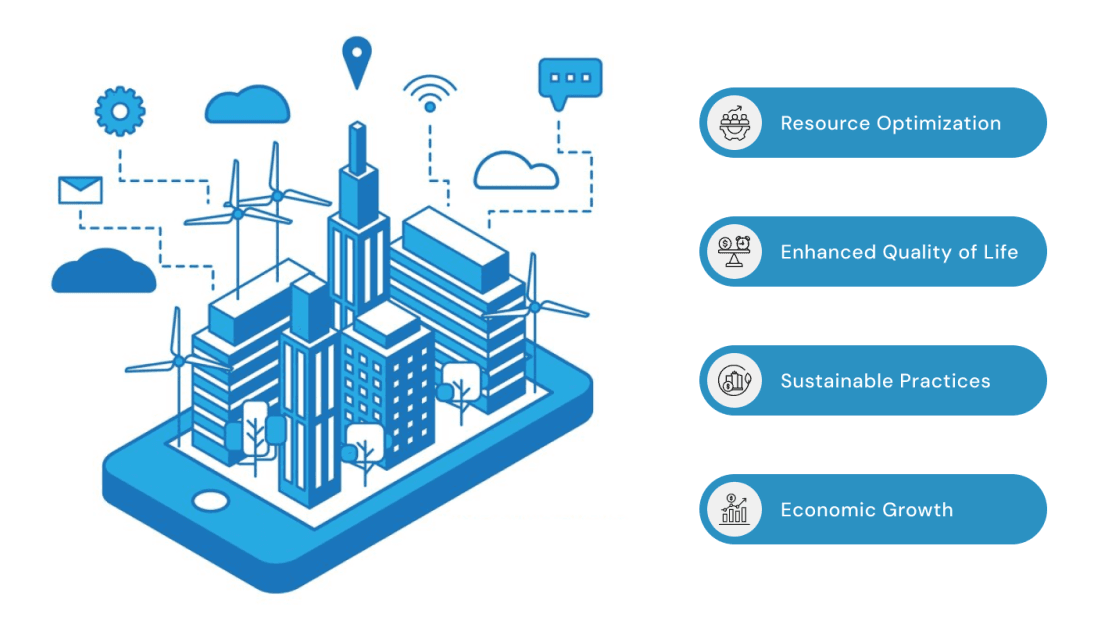
IoT in Construction: Driving Smart Infrastructure
and Smart City Growth
The construction industry is undergoing one of the most significant transformations in its history, driven by digital innovation and data integration. Among the technologies fueling this revolution, the Internet of Things (IoT) stands out as a game-changer. As smart cities and smart infrastructure projects become central to global development strategies, IoT is emerging as the backbone of modern construction practices.
IoT in construction connects physical assets, equipment, workers, and environments through sensors and smart devices, enabling real-time data collection and intelligent decision-making. This shift is not only optimizing resource use but also ensuring safer, faster, and more sustainable project delivery.
The Rise of IoT in Construction
Historically, construction has been one of the slowest industries to digitize, plagued by inefficiencies, cost overruns, and safety risks. However, with urban populations rising and the need for resilient infrastructure growing, governments and private players alike are pushing for smarter construction models.
Smart city initiatives—whether in India, the U.S., Europe, or the Middle East—are heavily reliant on IoT-based solutions for planning, monitoring, and executing projects. From tracking materials to predictive maintenance of critical assets, IoT is redefining how buildings, roads, and infrastructure systems are designed and sustained.
Key Applications of IoT in Construction
1. Asset Tracking and Equipment Monitoring
Construction sites often deal with heavy machinery and valuable assets spread across large areas. IoT sensors enable GPS-based tracking of equipment, ensuring assets are used efficiently and reducing theft or misplacement. Telematics solutions also provide insights into fuel consumption, idle time, and machine performance.
2. Predictive Maintenance
IoT-powered predictive maintenance reduces downtime and costly breakdowns. By continuously monitoring machinery health, sensors detect early signs of wear and tear, allowing teams to schedule timely repairs. This not only extends asset life but also keeps projects on track.
3. Drones and Remote Monitoring
Drones integrated with IoT systems provide real-time aerial surveillance, site mapping, and progress monitoring. Combined with sensor data, drones help project managers monitor safety compliance, track material movement, and inspect hard-to-reach areas without manual intervention.
4. Worker Safety and Wearables
IoT-enabled wearables such as smart helmets, vests, and wristbands monitor worker location, fatigue levels, and exposure to hazardous environments. Real-time alerts prevent accidents, while aggregated safety data informs better site management strategies.
5. Smart Sensors for Environmental Monitoring
Air quality, noise, vibration, and structural integrity can all be tracked using IoT sensors. For urban smart city projects, these sensors ensure construction activities adhere to environmental regulations and minimize disruptions to surrounding communities.
6. Building Information Modeling (BIM) Integration
IoT devices integrated with BIM platforms create a digital twin of construction projects. This enables stakeholders to monitor project progress in real-time, test scenarios, and optimize workflows, leading to more efficient execution.
IoT in Smart Infrastructure and Smart Cities
Smart cities are not just about digital amenities—they require intelligent infrastructure at their core. IoT technologies in construction play a central role in creating connected buildings, energy-efficient transport systems, and resilient utilities.
For instance, smart roads embedded with IoT sensors can monitor traffic density and structural conditions. Similarly, smart grids integrated into construction projects enable optimized energy distribution. Urban infrastructure that “talks back” through IoT ensures long-term sustainability and reduced operational costs.
Benefits of IoT Adoption in Construction
-
Enhanced Efficiency – Automated monitoring reduces delays and optimizes resource allocation.
-
Improved Safety – Real-time alerts prevent accidents, making sites safer for workers.
-
Cost Savings – Predictive maintenance and asset tracking reduce operational costs.
-
Data-Driven Insights – IoT analytics improve decision-making and future project planning.
-
Sustainability – Energy-efficient and environmentally compliant construction aligns with global ESG goals.
Challenges Facing IoT in Construction
Despite its potential, IoT adoption in construction faces barriers:
-
High Implementation Costs – Initial investments in IoT infrastructure can be expensive.
-
Data Security Risks – IoT devices generate massive amounts of sensitive data vulnerable to cyberattacks.
-
Integration Issues – Many contractors struggle to integrate IoT with legacy systems and workflows.
-
Skill Gaps – Construction workers and managers need training to leverage IoT technologies effectively.
Global Market Trends and Outlook
The global IoT in construction market is expected to witness exponential growth, projected to surpass USD 25–30 billion by 2030, according to industry reports. Regions leading this transformation include:
-
North America – driven by smart infrastructure investment and construction tech startups.
-
Asia-Pacific – rapid urbanization and government-led smart city missions in India, China, and Southeast Asia.
-
Middle East – mega smart city projects like Saudi Arabia’s NEOM integrating IoT construction at scale.
The market will also see a rise in IoT-powered SaaS solutions, enabling mid-sized contractors to adopt these technologies without heavy upfront costs.
Future Outlook: The Digital Construction Era
The next decade will see IoT evolve from site monitoring tools to fully integrated digital ecosystems. With the rise of AI, 5G, blockchain, and digital twins, construction IoT will enable predictive, autonomous, and fully connected construction sites.
-
AI-powered predictive analytics will foresee risks before they occur.
-
5G networks will enable faster data transmission across vast construction zones.
-
Blockchain will ensure secure data sharing among stakeholders.
-
Digital twins will become the standard for managing complex infrastructure projects.
Conclusion
IoT in construction is no longer an experimental concept—it is fast becoming a cornerstone of modern infrastructure and smart city development. From asset tracking and predictive maintenance to drones, wearables, and environmental monitoring, IoT is revolutionizing how projects are executed and sustained.
As global investments in smart infrastructure accelerate, IoT will play a pivotal role in building safer, more efficient, and more sustainable cities. While challenges such as high costs and cybersecurity concerns remain, the benefits far outweigh the hurdles. The construction industry, once lagging in technology adoption, is now standing at the forefront of a digital revolution—powered by IoT.
 Related News
POST A COMMENT (0)
All Comments (0)
Replies (0)