





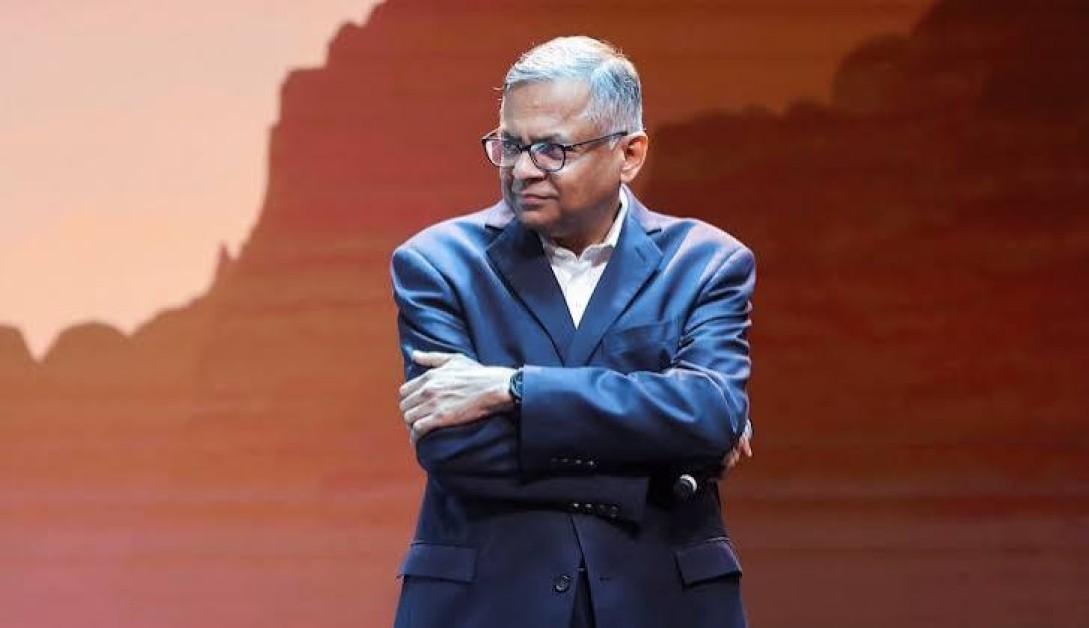
N Chandrasekaran to Step Down as Tata Sons Chairman After Tensions With Controlling Tata Trusts
N Chandrasekaran will step down as chairman of Tata Sons when his current term ends on February 20, 2027, setting up one of India's most consequential corporate succession processes after months of unresolved differences involving the holding company's board and its controlling shareholder, Tata Trusts.
Chandrasekaran announced on August 12 that he would not offer himself for another term after a proposed five-year extension failed to secure unanimous backing on the Tata Sons board. The disagreement has unfolded amid wider tensions involving the potential listing of Tata Sons, losses at Air India, the planned exit of minority shareholder Shapoorji Pallonji Group and board representation. (Reuters)
The development does not mean Chandrasekaran is leaving immediately. He is expected to remain chairman until February 2027, providing several months for the group to identify a successor and manage the transition.
Tata Trusts Begins Succession Process

Attention has now moved quickly toward succession.
Tata Trusts has begun the process of identifying Chandrasekaran's successor, placing the governance of India's largest diversified business group under intense scrutiny. (Reuters)
The next chairman will inherit responsibility for a group operating across technology, automobiles, steel, aviation, consumer products, hotels, financial services, electronics and several emerging industries.
The appointment therefore carries consequences far beyond Tata Sons itself.
Why Chandrasekaran Decided Not to Seek Another Term
Chandrasekaran's current five-year term expires in February 2027.
A further five-year extension had been recommended, but the proposal did not receive the unanimous board support required to move forward.
With the disagreement unresolved for approximately six months, Chandrasekaran decided not to seek reappointment and asked the board to begin succession planning. (The Wall Street Journal)
His reasoning places institutional continuity at the centre of the decision.
Tata Group has several major strategic projects underway, making uncertainty over leadership increasingly difficult to sustain.
Tata Trusts Controls Tata Sons
Understanding the leadership dispute requires understanding Tata's unusual ownership structure.
Tata Sons is the principal holding company of the Tata Group.
Tata Trusts collectively owns approximately 66% of Tata Sons, giving the charitable trusts controlling influence over the holding company. (Reuters)
This creates an unusual corporate structure:
Tata Trusts → Tata Sons → Tata Group operating companies
The chairman of Tata Sons manages the central holding company, while Tata Trusts exercises substantial influence through its controlling ownership.
Noel Tata Moves to Centre of Group Governance
The transition significantly increases the importance of Noel Tata.
Noel Tata became chairman of Tata Trusts following Ratan Tata's death in 2024 and has since emerged as one of the most influential figures shaping the group's governance.
His role will be particularly important in two major decisions now facing Tata:
the selection of the next Tata Sons chairman and the future of Tata Sons' listing. (Reuters)
Leadership Tensions Have Been Building for Months
The disagreement over Chandrasekaran's future did not develop in isolation.
Differences between Tata Sons leadership and Tata Trusts have reportedly emerged over several strategic matters.
These include:
-
Tata Sons' potential stock-market listing
-
Air India's financial performance
-
Loss-making or capital-intensive new businesses
-
Shapoorji Pallonji Group's planned exit
-
Board representation
-
Capital allocation
These issues touch the fundamental question of how the group should balance growth, financial discipline and shareholder interests. (Reuters)
Tata Sons Listing Is a Major Point of Debate
One of the most consequential disagreements concerns whether Tata Sons should become publicly listed.
Tata Sons has historically remained privately held.
However, its regulatory classification has created pressure around a possible listing.
A public listing would fundamentally change the governance and financial structure of the holding company.
It could introduce:
-
Public shareholders
-
Market valuation
-
Greater disclosure
-
Analyst scrutiny
-
Additional governance requirements
For an institution with Tata Sons' unusual ownership structure, such a transformation would have far-reaching implications.
Tata Trusts Has Resisted Listing
Tata Trusts has opposed a public listing of Tata Sons, making the issue an important strategic fault line.
Noel Tata is now positioned to play a significant role in determining how the group approaches the matter after Chandrasekaran's departure. (Reuters)
The debate is not simply about raising capital.
It concerns the future ownership and governance architecture of the Tata Group itself.
Shapoorji Pallonji Stake Adds Complexity
The Shapoorji Pallonji Group owns a significant minority position in Tata Sons and has sought ways to monetise that investment as part of its broader debt-management strategy.
A listing could potentially create liquidity for minority shareholders.
Keeping Tata Sons private makes such an exit structurally more complicated.
The minority shareholder question therefore intersects directly with the listing debate.
Air India Has Become Another Strategic Issue
Air India represents one of the largest transformation projects undertaken during Chandrasekaran's tenure.
Tata Group regained control of the airline in 2022 and began an extensive turnaround programme involving:
-
Fleet renewal
-
Network expansion
-
Technology
-
Service improvements
-
Organisational restructuring
But the airline continues to require significant capital and remains financially challenging.
Air India's losses have been among the matters questioned during Tata's internal strategic discussions. (Reuters)
Air India’s Transformation Is Enormous in Scale
The group's aviation ambitions extend well beyond a conventional corporate turnaround.
Air India is pursuing a multiyear fleet modernisation programme involving hundreds of aircraft.
Its transformation therefore requires enormous capital commitments before the complete financial benefits can materialise.
The next Tata Sons chairman will inherit responsibility for overseeing this investment cycle.
Tata Digital Is Another Capital-Intensive Bet
Tata has also invested substantially in building digital businesses.
These initiatives form part of the group's effort to create stronger consumer-facing digital ecosystems.
Like aviation, however, digital businesses can require substantial upfront investment.
This creates a broader capital-allocation question:
How long should a conglomerate fund strategically important businesses before demanding stronger financial returns?
That question will remain relevant under the next chairman.
Semiconductor Investment Raises the Stakes Further
Tata Group is simultaneously building a major semiconductor business.
Its investments include semiconductor manufacturing and electronics infrastructure designed to position Tata within India's developing chip ecosystem.
These projects require billions of dollars and long investment horizons.
They also carry strategic importance for India's efforts to develop domestic electronics and semiconductor manufacturing.
Leadership continuity therefore matters significantly.
Chandrasekaran Has Led Tata Since 2017
Chandrasekaran became chairman of Tata Sons in 2017 after previously leading Tata Consultancy Services.
His appointment followed the highly contentious removal of Cyrus Mistry.
Chandrasekaran was the first non-Parsi professional executive to become Tata Sons chairman.
His tenure subsequently became associated with both portfolio restructuring and a new investment cycle across the conglomerate.
Tata Group Expanded Under Chandrasekaran
During Chandrasekaran's leadership, Tata undertook several major strategic initiatives.
These included:
-
Reacquiring Air India
-
Expanding electronics manufacturing
-
Entering semiconductor manufacturing
-
Accelerating electric-vehicle investment
-
Building digital businesses
-
Strengthening consumer businesses
The group simultaneously continued relying heavily on established businesses such as TCS, Tata Motors, Tata Steel and Titan.
TCS Remains Central to Tata Economics
Tata Consultancy Services remains one of the group's most important assets.
Its profitability and dividends provide substantial financial strength to Tata Sons.
However, the global technology industry is undergoing major disruption as artificial intelligence changes software-development and IT-services economics.
The next Tata chairman will therefore need to oversee both high-growth new businesses and structural change within the group's traditional profit engines.
Jaguar Land Rover Adds Another Major Challenge
Tata Motors' Jaguar Land Rover business remains strategically important to the group.
The luxury automaker operates in a global automotive industry undergoing major changes involving:
-
Electrification
-
Software
-
Chinese competition
-
Supply chains
-
Luxury demand
Managing these transitions while maintaining profitability will remain an important strategic responsibility.
Tata’s Portfolio Has Become More Capital Intensive
One of the biggest changes during Chandrasekaran's tenure has been the increasing capital intensity of Tata's growth strategy.
Businesses such as:
Software services
can generate substantial cash with relatively limited physical investment.
Businesses such as:
Airlines + Semiconductor fabs + Electronics manufacturing + Automotive production
require enormous capital.
This changes the financial-management requirements at Tata Sons.
Capital Allocation Will Be Central for the Next Chairman
The next chairman will need to determine how much capital should continue flowing toward each strategic initiative.
Every rupee invested in one business is unavailable elsewhere.
Tata Sons therefore needs to balance:
-
Growth
-
Debt
-
Dividends
-
Acquisitions
-
New investments
-
Shareholder expectations
Capital allocation could become one of the defining responsibilities of Chandrasekaran's successor.
Tata Trusts Also Depends on Tata Sons Economics
Tata's structure creates another important consideration.
Tata Trusts uses income generated through its Tata Sons ownership to support philanthropic activities.
The financial performance and dividend capacity of Tata Sons therefore have consequences beyond conventional shareholder returns.
This reinforces the need to balance aggressive investment with sustainable cash generation.
Governance Separation Is Fundamental to Tata Structure
Tata's governance model separates ownership influence from operational leadership.
Tata Trusts controls Tata Sons.
Tata Sons, in turn, holds strategic stakes in the group's operating companies.
The system can work effectively when there is alignment between the Trusts and the Tata Sons chairman.
When strategic disagreements become prolonged, however, the same structure can create uncertainty.
Tata Has Faced Leadership Conflict Before
The current transition inevitably recalls the group's previous leadership dispute involving Cyrus Mistry.
Mistry was removed as Tata Sons chairman in 2016 following disagreements with the board and Tata Trusts.
The dispute subsequently produced years of litigation and public controversy.
Chandrasekaran was appointed in the aftermath.
The latest transition is different because Chandrasekaran is expected to serve through the end of his term, allowing time for an organised succession.
Orderly Transition Will Be Critical
Chandrasekaran has specifically asked for the succession process to begin early enough to ensure a proper handover.
That is important for an organisation as large and decentralised as Tata.
A prolonged leadership vacuum could create uncertainty for:
-
Employees
-
Investors
-
Lenders
-
Suppliers
-
Joint-venture partners
-
Governments
A clearly managed succession would reduce those risks.
Tata Trusts Has Already Moved on Succession
The succession process is no longer theoretical.
Tata Trusts has begun work on identifying the next chairman following Chandrasekaran's decision. (The Times of India)
The governance process is particularly important because the next chairman will need credibility with both the operating businesses and the controlling Trusts.
That combination narrows the field considerably.
Internal Versus External Candidate Becomes Key Question
Tata will need to decide whether its next chairman should come from inside the group or outside it.
An internal candidate would bring:
-
Knowledge of Tata culture
-
Existing relationships
-
Understanding of group businesses
-
Faster transition
An external candidate could bring:
-
Different experience
-
Fresh strategic thinking
-
Greater independence
No confirmed successor has been announced.
Speculation around individual candidates should therefore be treated cautiously until the formal process advances.
Tata Group Companies Remain Independently Managed
The leadership transition at Tata Sons does not mean the group's listed operating companies suddenly lose management continuity.
Major Tata businesses have their own:
-
Boards
-
CEOs
-
Management teams
-
Governance structures
This decentralisation provides operational stability during changes at the holding-company level.
Nevertheless, Tata Sons remains highly influential in long-term strategy and capital allocation.
Markets React to Leadership Uncertainty
The announcement produced selling pressure across several Tata Group stocks.
Investors reacted to uncertainty surrounding succession and the strategic direction of the conglomerate, with major listed Tata companies declining following the announcement. (The Straits Times)
Such reactions do not necessarily imply investors expect operational deterioration.
Markets generally apply a higher uncertainty premium when leadership transitions emerge unexpectedly.
Tata Brand Remains Larger Than Any Individual Leader
One advantage Tata possesses is institutional depth.
The group has operated since the nineteenth century and has survived multiple generations of leadership.
Its businesses employ more than one million people globally and operate across more than 100 countries. (Tata)
That scale reduces dependence on any single executive.
The succession still matters enormously, but Tata's operating institutions provide significant continuity.
Noel Tata’s Influence Will Be Closely Watched
As chairman of Tata Trusts, Noel Tata is positioned to play a central role in the transition.
His business background includes leadership roles at Tata International and Trent, where Tata developed major retail businesses including Westside and Zudio. (Reuters)
His growing influence raises an important governance question:
How will Tata balance the authority of its controlling Trusts with the operational independence required by the next Tata Sons chairman?
The answer could shape the group's leadership model for years.
Listing Decision Could Define the Next Era
The succession and listing questions are increasingly connected.
A new Tata Sons chairman could inherit an unresolved regulatory and shareholder debate over whether the holding company should remain private.
A listing would represent one of the most significant corporate transactions in Indian history.
Remaining private would preserve the existing ownership structure but require alternative solutions to regulatory and minority-shareholder issues.
Strategic Projects Cannot Wait for Succession
The group continues operating while the leadership search proceeds.
Major projects involving aviation, semiconductors, electronics, automobiles and digital businesses require ongoing decisions.
That creates urgency around identifying a successor early enough for an orderly transition.
A chairman appointed too close to February 2027 would have limited time to absorb the complexity of the portfolio.
Corporate Governance Becomes Central Investor Issue
The episode also raises broader questions about governance within promoter-controlled or trust-controlled business groups.
Investors generally seek clarity regarding:
-
Decision-making authority
-
Board independence
-
Succession
-
Capital allocation
-
Minority shareholder interests
Tata's reputation for institutional governance means the succession process will be watched particularly closely.
What Investors Should Watch
The coming months put several developments in focus:
-
Announcement of the succession committee
-
Potential chairman candidates
-
Tata Trusts' role in selection
-
Tata Sons listing decision
-
Shapoorji Pallonji stake resolution
-
Air India financial performance
-
Semiconductor capital expenditure
-
Tata Digital strategy
-
Governance arrangements
-
Chandrasekaran's transition through February 2027
The identity of the successor will matter, but the governance framework surrounding that person may prove equally important.
Outlook
Chandrasekaran's decision creates a major leadership transition but not an immediate management vacuum.
He is expected to remain Tata Sons chairman until February 20, 2027, providing approximately six months for the group to manage succession. (Reuters)
Tata Trusts has already begun the process of selecting his successor, while Noel Tata is emerging as a central figure in both the succession and Tata Sons listing debates. (Reuters)
The next chairman will inherit a group with enormous strengths but equally substantial strategic commitments.
The challenge will be balancing institutional continuity with financial discipline as Tata navigates one of the largest investment cycles in its history.
Conclusion
N Chandrasekaran's decision not to seek another term as Tata Sons chairman marks the approaching end of a decade-long leadership period for India's largest conglomerate.
He will remain in office until February 20, 2027, but the succession process is already underway after months of unresolved disagreement surrounding his reappointment and wider strategic issues involving Tata Trusts. (Reuters)
The transition comes at an unusually important moment.
Tata is simultaneously transforming Air India, investing heavily in semiconductor and electronics manufacturing, navigating disruption in technology and automobiles, and confronting the unresolved question of whether Tata Sons should remain privately held.
The next chairman will therefore inherit much more than a collection of established companies.
The role will require balancing the authority of Tata Trusts, the independence of Tata Sons, the interests of minority shareholders and the capital requirements of some of India's most ambitious corporate investments.
How Tata manages that succession could shape the strategic direction of the group well beyond February 2027.
 N Chandrasekaran to Exit Tata Sons as Tata Trusts Begin Search for New Chairman FAQs
POST A COMMENT (0)
All Comments (0)
Replies (0)