





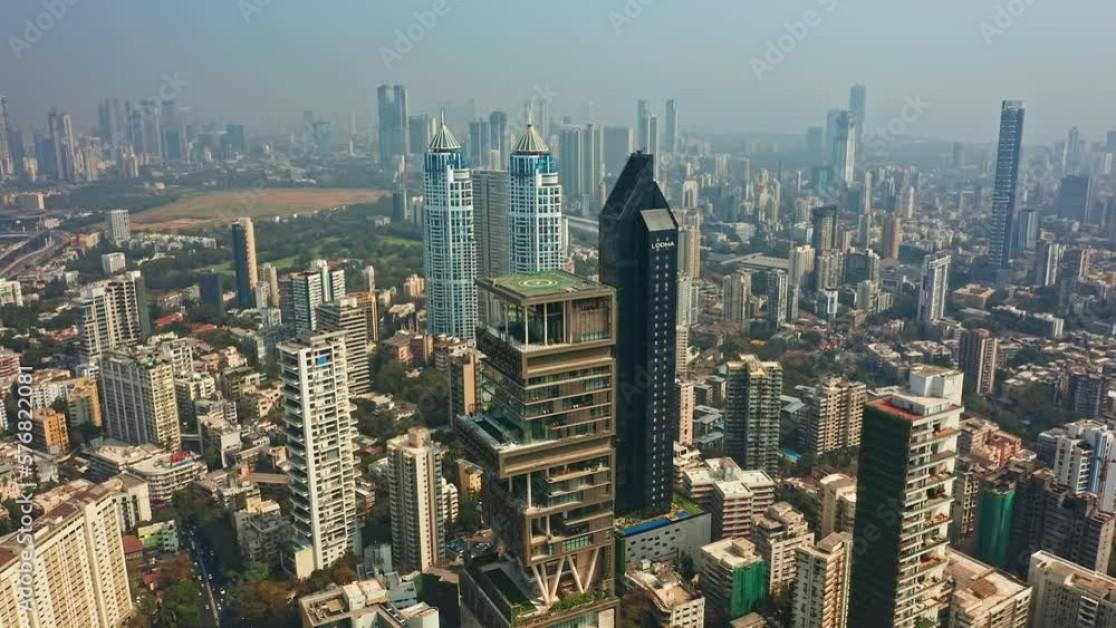
A Defining Moment for India’s Economic Trajectory
The major business announcements reshaping the Indian economy in 2026 mark a pivotal shift in how the country is positioning itself in the global economic order. These developments go far beyond routine corporate disclosures or policy tweaks—they represent a coordinated push toward long-term structural transformation.
At a time when global markets are grappling with uncertainty, supply chain realignments, and geopolitical tensions, India’s economic narrative is being rewritten through decisive investments, ambitious reforms, and strategic partnerships. The scale and intent behind these announcements signal a clear direction: India is not just aiming for growth, but for sustained economic leadership.
The convergence of public policy, private capital, and global interest is creating a new growth framework—one that is increasingly driven by manufacturing, technology, infrastructure, and financial deepening.
The Policy Backbone: Structural Reforms Accelerating Growth
A central driver of these transformative announcements is the government’s policy framework, which continues to prioritize capital expenditure, industrial expansion, and ease of doing business.
The Union Budget has reinforced this trajectory with record capital spending, ensuring that infrastructure remains the backbone of economic expansion. Roads, railways, logistics corridors, and urban infrastructure are being scaled up at an unprecedented pace, creating a multiplier effect across industries.
Simultaneously, targeted policy initiatives are reshaping critical sectors:
- Expansion of production-linked incentives across electronics, pharmaceuticals, and advanced manufacturing
- Strategic push toward semiconductor self-reliance through dedicated funding and ecosystem development
- Simplification of compliance frameworks to attract foreign and domestic investment
- Focused support for MSMEs through credit access and digital integration
According to industry estimates, these policy moves are gradually shifting India from a consumption-heavy economy to a more balanced model anchored in production and exports.
Investment Wave: Capital Flows Reflecting Global Confidence
A defining feature of recent business announcements is the surge in both domestic and foreign investments. Global corporations are increasingly viewing India as a strategic growth destination, not just a market.
Large-scale investments are being directed toward:
- Manufacturing facilities
- Renewable energy projects
- Technology and digital infrastructure
- Consumer and retail expansion
This influx of capital is being driven by multiple factors:
- Stable macroeconomic fundamentals
- A large and growing consumer base
- Policy consistency and reform momentum
- Supply chain diversification strategies
Market analysts suggest that India is benefiting significantly from the global “China-plus-one” strategy, as companies seek to reduce overdependence on single manufacturing hubs.
At the same time, domestic conglomerates are also stepping up investments, particularly in infrastructure, energy transition, and digital ecosystems, reinforcing the broader investment cycle.
Trade and Global Integration: Expanding Economic Influence
India’s economic transformation is also being shaped by its evolving global trade strategy. Recent agreements and negotiations indicate a clear intent to deepen international integration.
Trade partnerships are being expanded across multiple regions, opening new avenues for exports and investment flows. These agreements are not only reducing tariff barriers but also enhancing market access for Indian goods and services.
The strategic importance of these deals lies in their ability to:
- Diversify export markets
- Strengthen supply chain resilience
- Enhance competitiveness of Indian industries
India is increasingly positioning itself as a reliable partner in global trade, particularly at a time when traditional trade dynamics are being redefined.
Infrastructure Expansion: Building the Growth Engine
Infrastructure development remains one of the most critical pillars of India’s economic transformation. Recent announcements highlight a continued emphasis on large-scale projects that improve connectivity and efficiency.
Key areas of focus include:
- Industrial corridors and smart manufacturing zones
- Expansion of logistics and warehousing networks
- Modernization of ports and airports
- Urban infrastructure and smart city initiatives
These investments are designed to reduce logistical costs, improve supply chain efficiency, and enhance overall productivity.
According to market estimates, infrastructure spending is generating a strong multiplier effect, stimulating demand across sectors such as cement, steel, engineering, and construction.
Technology and Innovation: The Next Frontier
Another major theme emerging from recent announcements is the growing emphasis on technology and innovation as core drivers of economic growth.
India is rapidly building capabilities in:
- Artificial intelligence and machine learning
- Semiconductor manufacturing
- Digital public infrastructure
- Fintech and digital payments
Significant investments are being directed toward research, development, and digital infrastructure, positioning India as a global hub for innovation.
The expansion of high-performance computing capabilities and digital ecosystems is expected to accelerate growth in sectors ranging from healthcare to financial services.
As per recent reports, India’s digital economy is projected to contribute a significantly larger share to GDP over the next decade, underscoring the importance of technology-led growth.
Data, Trends & Numbers: The Economic Indicators
The impact of these announcements is reflected in key economic indicators, which continue to demonstrate resilience.
- GDP growth is projected in the range of 6.5% to 7.5%
- Capital expenditure remains at historically high levels as a percentage of GDP
- Manufacturing and construction sectors are showing steady expansion
- Services exports continue to grow at a robust pace
At the same time, certain challenges persist:
- Export volatility in select sectors
- Inflationary pressures linked to global commodity prices
- Uneven recovery across rural and urban demand
These trends highlight a nuanced economic landscape—one that is strong at the macro level but still evolving at the micro level.
Expert Insights: Interpreting the Strategic Shift
Industry experts view the current wave of announcements as part of a broader structural shift in India’s growth model.
According to market analysts:
- India is entering a new investment cycle driven by both public and private sector participation
- The focus is shifting toward high-value manufacturing and innovation-led growth
- Policy continuity is playing a crucial role in sustaining investor confidence
There is also a growing consensus that India’s economic trajectory is becoming more predictable and stable, which is critical for long-term investment planning.
Experts emphasize that the next phase of growth will depend on execution efficiency, policy implementation, and global economic conditions.
Global Comparison: India’s Position in a Changing World
In comparison to other major economies, India stands out for its growth momentum and structural potential.
While developed markets are experiencing slower growth due to high interest rates and economic uncertainties, India continues to benefit from:
- Strong domestic consumption
- Favorable demographics
- Policy-driven investment growth
Emerging markets, particularly in Asia, are also competing for investment flows, but India’s scale and reform trajectory provide a distinct advantage.
This positioning is making India an increasingly attractive destination for global capital.
Risks and Challenges: Navigating Uncertainty
Despite the positive outlook, several risks could influence the trajectory of India’s economic transformation.
Global challenges include:
- Geopolitical tensions affecting trade routes and energy prices
- Slowing global demand impacting exports
- Financial market volatility
Domestic challenges include:
- Execution delays in large-scale projects
- Structural issues in the informal sector
- Employment generation and skill development gaps
There are also concerns around elevated valuations in certain sectors, which could lead to market corrections if earnings fail to keep pace.
Future Outlook: The Road Ahead for India Inc.
Looking forward, the outlook for the Indian economy remains optimistic but measured.
Key expectations include:
- Continued momentum in infrastructure and manufacturing investments
- Expansion of technology-driven sectors
- Strengthening of financial systems and credit growth
- Gradual improvement in consumption patterns
Market analysts suggest that India is transitioning from a cyclical recovery phase to a more sustainable, long-term growth cycle.
The success of this transition will depend on the ability to maintain policy momentum, manage risks, and execute projects efficiently.
Announcements That Signal a Structural Transformation
The major business announcements reshaping the Indian economy are not just milestones—they are indicators of a deeper transformation underway.
These developments reflect a strategic alignment between government policy, corporate investment, and global economic trends. Together, they are creating a foundation for sustained growth, enhanced competitiveness, and greater global integration.
As India continues on this path, the significance of these announcements will extend far beyond immediate market reactions. They represent the building blocks of a future-ready economy—one that is capable of navigating uncertainty while capitalizing on emerging opportunities.
For investors, businesses, and policymakers, the message is clear: India’s economic story is entering a new phase, defined by ambition, resilience, and long-term vision.
 Related News
POST A COMMENT (0)
All Comments (0)
Replies (0)