





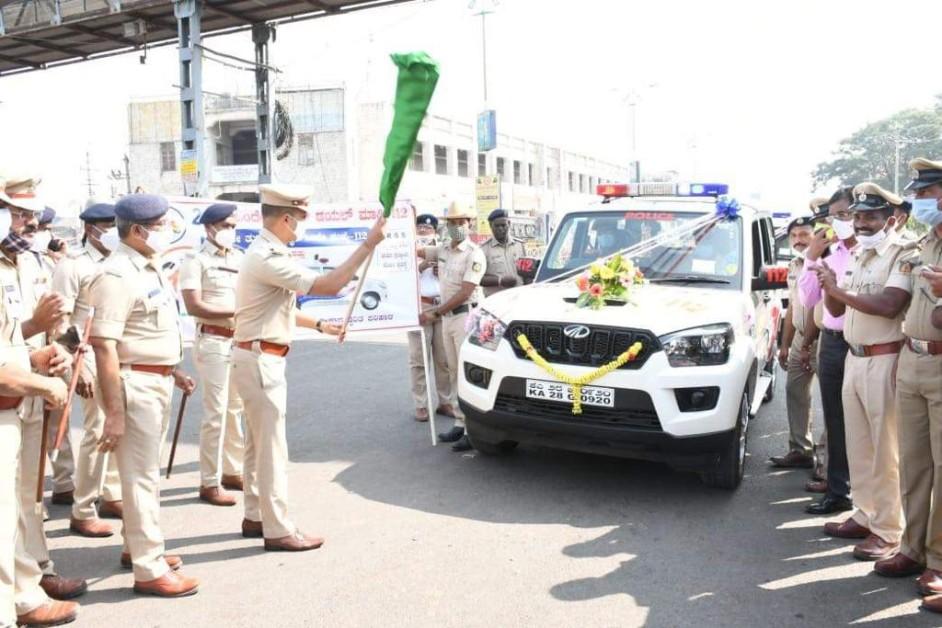
Madhya Pradesh Unveils ‘Dial-112’ Integrated
Emergency Service, Aiming for Faster, Unified
Crisis Response
The Madhya Pradesh government has taken a significant leap toward enhancing public safety and crisis management with the launch of its new Dial-112 integrated emergency response service. This ambitious system consolidates a range of critical services—including police assistance, fire and rescue, ambulance, women’s helpline, cybercrime reporting, and disaster management—into a single, easy-to-remember number. The initiative was formally announced by Chief Minister Mohan Yadav, who emphasized that this reform would help save lives by dramatically reducing response times.
Alongside this, the Chief Minister is spearheading a parallel effort to boost the state’s economic profile through the ‘Made in MP – Wear Across the World’ investment drive. This program seeks to position Madhya Pradesh as a major textile and apparel production hub for both domestic and international markets.
The Vision Behind Dial-112
Until now, Madhya Pradesh, like many Indian states, had multiple helpline numbers for different emergencies. Citizens often faced confusion about which number to call in specific situations, leading to delays in receiving help. Dial-112 seeks to eliminate that confusion by offering a single point of contact for a variety of emergencies.
Under the new framework:
-
Police, fire, and ambulance services will be connected via a centralized control room.
-
Women in distress can seek immediate help without needing to remember a separate helpline like 1090 or 181.
-
Victims of cybercrime will be able to get prompt guidance and referral to the cyber unit.
-
Disaster relief coordination will be handled more efficiently, especially during floods, earthquakes, or industrial accidents.
This integration aims to create a seamless, technology-enabled response system where the caller’s location, emergency type, and other critical data are instantly shared with the nearest available responder.
Technology and Infrastructure
The Dial-112 system is supported by a state-of-the-art command and control center in Bhopal, equipped with:
-
GPS-enabled dispatch units for quick location tracking.
-
Real-time mapping of emergencies to nearest response teams.
-
AI-assisted call classification to direct cases to the correct department instantly.
-
Secure digital records of all calls for accountability and follow-up.
Field responders, such as police patrols and ambulances, will carry mobile data terminals linked directly to the control room, allowing them to receive live updates while on the move.
Benefits for Citizens
One of the most significant advantages of Dial-112 is speed. In critical incidents—like cardiac arrest, house fires, or active crimes—seconds can mean the difference between life and death. By centralizing dispatch operations, the Madhya Pradesh government hopes to reduce average emergency response time to under 10 minutes in urban areas and under 20 minutes in rural zones.
Other expected benefits include:
-
Better coordination between departments, reducing bureaucratic delays.
-
Increased safety for women, with quicker response to harassment and assault cases.
-
Simplified public awareness, as people will no longer need to remember multiple emergency numbers.
-
Enhanced rural outreach, as the service is being designed to cover even the most remote villages.
Challenges Ahead
While the Dial-112 initiative is being welcomed by many, its success will depend on implementation quality. Some of the anticipated challenges include:
-
Staffing & Training – Recruiting and training enough call center staff and field responders to handle large volumes of calls, especially during peak crisis periods.
-
Infrastructure Gaps – Extending reliable communication and GPS tracking to rural areas with limited connectivity.
-
Public Awareness – Educating citizens about the new number so they use it correctly and avoid prank or non-urgent calls that could clog the system.
-
Inter-department Coordination – Ensuring that different agencies—police, fire, health, disaster management—work seamlessly together without turf wars or procedural bottlenecks.
Linking Emergency Services to Economic Ambitions
Interestingly, Chief Minister Mohan Yadav’s launch of Dial-112 is happening in parallel with his ‘Made in MP – Wear Across the World’ investment push. The roundtable he is hosting aims to attract domestic and international textile manufacturers to set up operations in Madhya Pradesh.
This program focuses on:
-
Leveraging Madhya Pradesh’s cotton-growing capacity.
-
Providing logistics and export incentives for apparel companies.
-
Creating jobs for local youth, especially women, in garment manufacturing.
-
Marketing MP-made textiles globally as high-quality yet competitively priced.
By promoting public safety alongside economic growth, the state leadership hopes to create a holistic development narrative—a safe environment for citizens and investors alike.
Public Response
The launch of Dial-112 has received mixed but generally positive feedback. Citizens welcome the idea of a single emergency number, especially for life-threatening situations. Social media reactions have been largely supportive, with many people tagging friends and family to spread awareness.
However, some skeptics caution that such systems often suffer from teething troubles—including delayed responses, technical glitches, and insufficient staffing—unless carefully monitored. Experts recommend a trial phase with continuous performance audits before declaring the service fully operational.
National Context
Madhya Pradesh is not the first Indian state to roll out a unified emergency number. The national government has been encouraging states to adopt 112 as a standard, and states like Uttar Pradesh and Himachal Pradesh already operate similar systems. However, MP’s integration of cybercrime and women’s safety into the same platform is relatively forward-thinking.
The hope is that success in Madhya Pradesh could serve as a model for other states, potentially leading to a nationwide harmonized system.
Looking Ahead
The true test of Dial-112 will come during its first high-pressure, multi-department crisis. If it can deliver fast, coordinated, and effective responses in such moments, it will justify the investment and planning behind it. Continuous upgrades—such as integrating drones for disaster assessment or AI-based predictive policing—could further enhance its capabilities.
For now, Chief Minister Mohan Yadav’s government is framing this as a cornerstone of both public safety and public confidence, signaling that Madhya Pradesh is ready to embrace modern governance tools.
 Related News
POST A COMMENT (0)
All Comments (0)
Replies (0)