





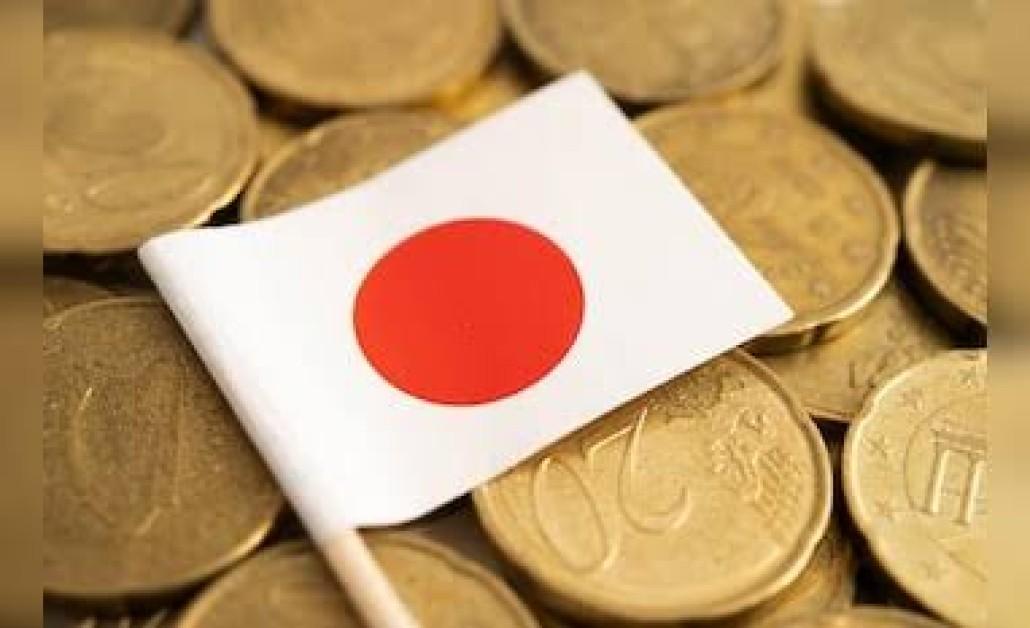
Japan’s Economy Expands Faster Than Expected as Exports and Business Investment Support Growth
Japan's economy expanded faster than expected in the latest quarter, supported by resilient exports and stronger business investment even as household consumption remained subdued. The better-than-anticipated performance provides some reassurance for policymakers navigating persistent inflation, trade uncertainty and the Bank of Japan's gradual move toward monetary normalisation. Corporate capital expenditure continued to support activity, while overseas demand helped offset weakness in parts of the domestic economy. The latest growth figures suggest Japan is maintaining economic momentum, although the outlook remains sensitive to global trade conditions, consumer purchasing power and future interest-rate decisions.
Japan’s GDP Growth Exceeds Market Expectations

The latest economic data indicate that Japan entered the second half of 2026 with stronger momentum than many economists had anticipated.
Economy Maintains Positive Growth
Japan's gross domestic product expanded during the latest reporting period, outperforming consensus expectations.
The result is significant because the world's fourth-largest economy continues to face several structural and cyclical challenges.
An ageing population limits long-term labour-force expansion.
Higher living costs have pressured household purchasing power.
Global trade uncertainty has created risks for exporters.
At the same time, the Bank of Japan has begun moving away from the exceptionally loose monetary conditions that characterised much of the previous decade.
Against this backdrop, stronger-than-expected GDP growth demonstrates that corporate activity and external demand are providing meaningful support.
Exports Provide Important Contribution
Exports were one of the major drivers of economic expansion.
Japan remains deeply integrated into global manufacturing supply chains.
Automobiles, machinery, electronics, industrial equipment and specialised components are important export categories.
Demand from international customers therefore has a substantial influence on Japanese economic activity.
Strong exports can support factory production, corporate profits and employment.
They can also encourage companies to increase investment when businesses expect overseas demand to remain resilient.
However, export dependence also exposes Japan to changes in global trade policy and economic conditions in major markets.
Business Investment Strengthens Domestic Activity
Corporate capital expenditure provided another important source of growth.
Companies Continue Investing in Capacity
Japanese businesses have been increasing investment in factories, equipment, technology and other productive assets.
Capital expenditure can strengthen an economy in both the short and long term.
In the immediate period, investment creates demand for construction, machinery and professional services.
Over longer periods, modern equipment and technology can improve productivity.
This is particularly important for Japan because demographic pressures are reducing the available workforce.
Companies increasingly need automation and digital technologies to maintain output with fewer employees.
Automation Becomes Strategic Priority
Japan has long been a global leader in industrial automation and robotics.
Labour shortages are making these technologies even more important.
Manufacturers can use automated production systems to reduce dependence on manual labour.
Retailers can introduce self-service technologies.
Logistics businesses can automate warehouses.
Artificial intelligence can improve administrative productivity.
Investment in these technologies can help compensate for demographic constraints.
If corporate capital expenditure remains strong, it could support a more productivity-driven phase of Japanese economic growth.
Exports Remain Central to Japan’s Economic Performance
Japan's industrial economy has historically depended heavily on international demand.
Automobile Industry Remains Major Export Engine
Japanese automakers have enormous global operations.
Toyota, Honda, Nissan, Mazda and other manufacturers sell vehicles across major international markets.
Automobile exports therefore contribute significantly to industrial production and trade.
The sector is simultaneously navigating a major technological transition.
Electric vehicles, hybrid systems, software-defined vehicles and autonomous-driving technologies are changing competitive dynamics.
Japanese manufacturers need to invest heavily while maintaining profitability in their existing businesses.
Strong overseas demand can provide the cash flow required to finance this transition.
Machinery and Electronics Support Trade
Japan also possesses globally competitive industrial machinery and electronics businesses.
Japanese companies supply semiconductor manufacturing equipment, factory automation systems, precision components and advanced materials.
Many of these products occupy critical positions within global supply chains.
Demand for artificial intelligence infrastructure and semiconductor manufacturing can create additional opportunities for Japanese suppliers.
This provides Japan with indirect exposure to global technology investment even when final products are manufactured elsewhere.
Trade Risks Remain Significant
The positive GDP performance does not eliminate uncertainty surrounding Japan's export outlook.
US Trade Policy Remains Important
The United States is one of Japan's most important trading partners.
Changes in American tariffs can therefore affect Japanese manufacturers directly.
Automobiles are particularly sensitive because vehicles represent a major component of Japanese exports to the US market.
Higher tariffs can reduce competitiveness unless manufacturers absorb part of the cost through lower margins.
Companies can also respond by increasing local production inside the United States.
However, changing manufacturing footprints requires substantial capital and time.
Trade policy therefore remains an important risk to Japan's economic outlook.
Global Protectionism Could Reshape Supply Chains
Trade barriers are increasing across several major economies.
Governments are using tariffs, subsidies and industrial policies to encourage domestic manufacturing.
This creates both risks and opportunities for Japanese companies.
Businesses with global production networks can move some manufacturing closer to customers.
Japanese companies already operate factories throughout North America, Europe and Asia.
This provides flexibility.
However, duplicated production networks can increase costs.
Companies need to balance supply-chain resilience against manufacturing efficiency.
Household Consumption Remains a Weak Point
While exports and investment supported growth, domestic consumers continued to face pressure.
Inflation Has Reduced Purchasing Power
Japanese households have experienced higher prices for food, energy and other essential goods.
When wages fail to increase as quickly as prices, real purchasing power declines.
Consumers then have less money available for discretionary spending.
This can weaken demand across retail, restaurants, travel and other service industries.
Private consumption represents a large portion of economic activity.
Sustainable long-term growth therefore cannot depend indefinitely on exports and business investment alone.
Stronger household spending would make the expansion more balanced.
Real Wage Growth Is Critical
Nominal wage increases do not automatically improve household living standards.
What matters is whether wages rise faster than inflation.
Japan's annual wage negotiations have produced significant salary increases in recent years.
Large corporations have generally been able to offer substantial raises.
The challenge is ensuring that wage growth spreads across smaller businesses, which employ a large share of Japanese workers.
If real wages begin rising consistently, consumer confidence and spending could improve.
Bank of Japan Faces Delicate Policy Decision
Stronger economic growth gives the central bank additional room to continue normalising monetary policy.
Japan Has Moved Away From Negative Rates
The Bank of Japan ended its negative interest-rate policy in 2024, marking a historic shift after years of extraordinary monetary stimulus.
The central bank has subsequently moved cautiously toward higher rates.
Policymakers want inflation to remain sustainably near their target while avoiding unnecessary damage to economic growth.
Stronger GDP data can support the argument for gradual monetary tightening.
However, weak consumption and global trade risks encourage caution.
The Bank of Japan therefore needs to balance inflation control with economic stability.
Higher Rates Affect Companies and Households
Interest-rate increases influence borrowing costs throughout the economy.
Companies may face higher costs when financing investments.
Households can experience higher mortgage rates.
Government debt-servicing costs can also increase.
At the same time, higher rates can benefit savers and financial institutions.
Banks can potentially earn stronger margins between deposits and loans.
The overall economic impact depends on how quickly rates increase and how businesses and consumers respond.
Yen Movements Continue to Influence Economy
Japan's currency plays an important role in both exports and inflation.
Weak Yen Supports Exporter Earnings
A weaker yen can benefit Japanese exporters because overseas revenues become more valuable when converted back into the domestic currency.
Companies producing goods in Japan can also become more price competitive internationally.
This can support corporate profits.
However, many large Japanese manufacturers now operate substantial overseas production capacity.
The relationship between currency movements and export competitiveness is therefore more complex than in previous decades.
Currency Weakness Raises Import Costs
Japan imports large quantities of energy and raw materials.
A weaker yen increases the domestic cost of those imports.
Businesses may pass higher costs to consumers.
This contributes to inflation.
Food prices can also be affected because Japan imports substantial agricultural and processed food products.
The yen therefore creates a policy trade-off.
Currency weakness can help exporters while simultaneously reducing household purchasing power.
Corporate Japan Is Increasing Investment
The stronger capital-expenditure figures reflect broader changes in corporate behaviour.
Companies Hold Significant Financial Resources
Japanese corporations have historically accumulated substantial cash reserves.
For years, policymakers encouraged businesses to deploy more of this capital toward investment, wages and shareholder returns.
Corporate governance reforms have gradually increased pressure on companies to use balance sheets more efficiently.
Businesses are now investing more aggressively in growth areas.
Semiconductors, digitalisation, automation and clean energy are attracting significant capital.
This can increase productivity and create new domestic demand.
Semiconductor Investment Is Expanding
Japan is attempting to rebuild its position within the global semiconductor industry.
Government incentives have supported major manufacturing projects.
TSMC has expanded production capacity in Kumamoto through its Japan Advanced Semiconductor Manufacturing operations.
Domestic initiatives are also targeting advanced chip production.
Semiconductor factories require enormous investment in facilities, equipment and supply chains.
These projects can generate economic activity beyond the factories themselves.
Materials companies, equipment suppliers, construction businesses and logistics providers can all benefit.
Tourism Provides Additional Economic Support
International tourism has become increasingly important to Japan's service economy.
Visitor Spending Supports Domestic Businesses
Japan has experienced strong inbound tourism supported partly by the relatively weak yen.
International visitors spend money on hotels, restaurants, transportation, retail and entertainment.
This creates demand across sectors that are not directly connected to manufacturing exports.
Tourism can therefore diversify Japan's external income.
It also distributes economic activity across destinations outside the largest industrial centres.
Regional areas can benefit when visitors travel beyond Tokyo, Osaka and Kyoto.
Overtourism Creates New Challenges
Rapid tourism growth also creates pressure.
Popular destinations can experience congestion.
Local residents may face crowded public transportation and rising accommodation costs.
Governments therefore need to balance economic benefits with sustainable tourism management.
Investment in transport infrastructure and visitor management can help spread demand across additional destinations.
Labour Shortages Remain Structural Challenge
Japan's demographic profile creates one of the country's most important long-term economic constraints.
Working-Age Population Continues to Decline
Japan has one of the world's oldest populations.
A shrinking working-age population means fewer employees are available across many industries.
Construction, healthcare, hospitality, logistics and manufacturing have all experienced labour shortages.
This can constrain economic growth even when demand remains strong.
Businesses may be unable to expand because they cannot recruit enough workers.
The problem cannot be solved through monetary or fiscal policy alone.
Productivity Growth Becomes Essential
With fewer workers, Japan needs to produce more output per employee.
Technology can help.
Automation can replace repetitive tasks.
Artificial intelligence can reduce administrative workloads.
Digital platforms can improve business efficiency.
Companies can also redesign workplaces to increase participation among women, older workers and other underrepresented groups.
Selective immigration provides another potential source of labour.
A combination of these approaches will likely be required.
Stronger Growth Could Support Japanese Equities
Economic performance has implications for financial markets.
Corporate Earnings Benefit From Resilient Demand
Export growth can support revenues for major manufacturers.
Business investment benefits industrial companies and equipment suppliers.
Tourism supports consumer and service businesses.
Together, these factors can strengthen corporate earnings.
Japanese equities have attracted greater international investor attention as governance reforms encourage companies to improve capital efficiency and shareholder returns.
Economic growth provides an additional supportive factor.
Interest Rates Could Create Sector Rotation
Higher interest rates affect industries differently.
Banks and insurers can benefit from improved investment yields and lending margins.
Highly leveraged companies can face greater financing costs.
Exporters remain sensitive to currency movements.
Investors therefore need to evaluate the composition of economic growth rather than simply focusing on headline GDP.
A gradual shift toward more normal monetary conditions could reshape sector leadership within Japanese markets.
Japan’s Growth Matters for Asia
Japan remains one of Asia's largest economies and a major source of investment across the region.
Japanese Companies Operate Extensive Asian Networks
Japanese manufacturers have production facilities across Southeast Asia and India.
They also maintain extensive supplier relationships throughout the region.
Stronger Japanese corporate investment can therefore create opportunities beyond the domestic economy.
Automotive, electronics and industrial companies may expand overseas capacity as part of their growth strategies.
Japanese banks and trading houses also provide capital for major infrastructure and corporate projects across Asia.
India Could Benefit From Japanese Investment
India has become an increasingly important destination for Japanese capital.
Japanese companies operate across automobiles, electronics, industrial machinery, logistics and infrastructure.
Major infrastructure cooperation includes transport projects such as the Mumbai-Ahmedabad high-speed rail corridor.
India's expanding manufacturing base also creates opportunities for Japanese suppliers seeking diversification outside established production centres.
If Japanese corporations continue increasing capital expenditure, India could capture part of that investment through manufacturing and infrastructure partnerships.
Outlook Depends on Balanced Domestic Recovery
Japan's latest GDP performance is encouraging, but sustainable expansion will require broader support.
Consumption Needs to Strengthen
Exports can fluctuate with international demand.
Business investment can also slow when companies become uncertain about future conditions.
Household consumption provides a more stable domestic foundation.
For consumption to strengthen sustainably, real wages need to improve.
Workers need income growth that exceeds inflation.
Greater purchasing power can then support retail, services and housing demand.
This would reduce Japan's dependence on external economic conditions.
Productivity Will Determine Long-Term Potential
Japan cannot rely on population growth to expand its economy.
Future performance will increasingly depend on productivity.
Investment in automation, artificial intelligence, advanced manufacturing and digital infrastructure can help.
Corporate reforms can improve capital allocation.
Labour-market changes can increase participation.
If these initiatives succeed, Japan could maintain economic growth despite demographic decline.
The current strength in business investment provides an encouraging signal in that direction.
Conclusion
Japan's economy expanding faster than expected demonstrates the resilience of its corporate and export sectors at a time of significant global and domestic uncertainty.
Exports and business investment provided important support to growth, while continued capital expenditure suggests Japanese companies remain willing to invest in technology, automation and productive capacity.
However, the recovery remains uneven. Household consumption continues to face pressure from inflation, while trade tensions and currency volatility create risks for businesses and consumers.
The latest Japan economy growth figures also give the Bank of Japan additional evidence to consider as it gradually normalises monetary policy.
For sustained expansion, Japan will need stronger real wages, improved household spending and continued productivity gains. If corporate investment remains robust while consumer purchasing power recovers, the economy could develop a more balanced foundation for growth despite the country's long-term demographic challenges.
 Japan Economy Grows Faster as Exports and Investment Rise FAQs
POST A COMMENT (0)
All Comments (0)
Replies (0)