





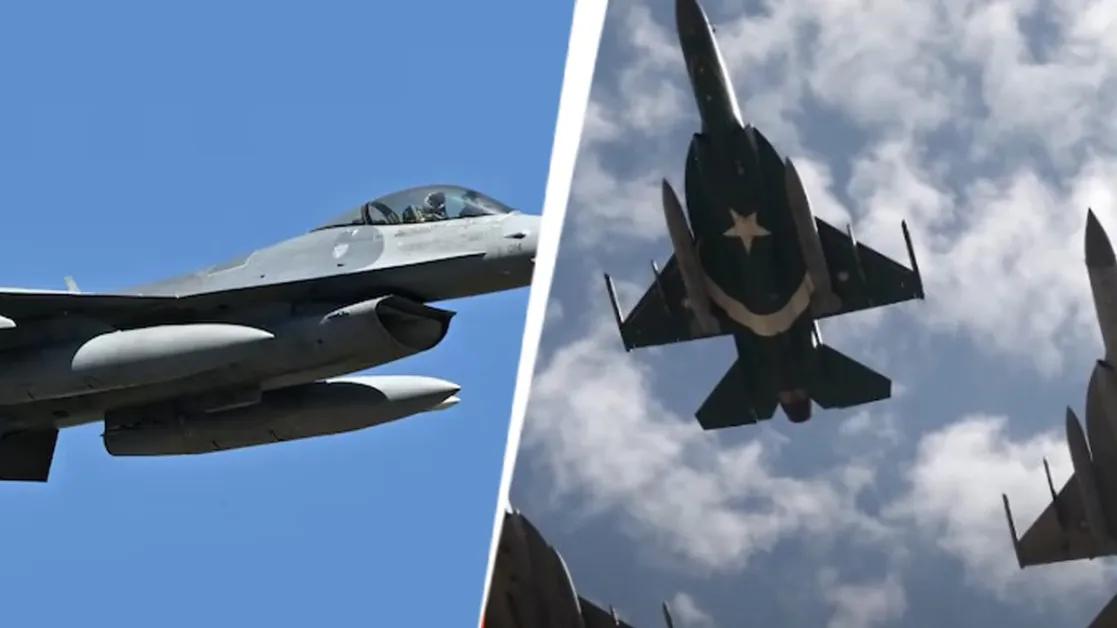
In a major military development, Indian air defence forces have reportedly shot down three Pakistani fighter jets—a U.S.-made F-16 and two China-Pakistan manufactured JF-17s—near the Line of Control (LoC). The engagement, which occurred early this morning, marks one of the most significant escalations in Indo-Pak tensions in recent years, and is already being described as a critical turning point in the rapidly developing situation along the western frontier.
Top government sources have confirmed the aerial confrontation, stating that India’s integrated air defence systems successfully neutralized the hostile targets after detecting suspicious manoeuvres within contested airspace. The Pakistani aircraft, reportedly engaged in aggressive forward movement, were intercepted with surface-to-air missile systems and fighter squadrons already on standby.
The F-16 fighter jet was reportedly brought down over Pakistan-occupied territory, while the two JF-17s were downed on either side of the LoC. While there is no official word on the fate of the Pakistani pilots, unverified reports suggest that search and recovery operations have been initiated by the Pakistan Air Force near the crash sites.
The Indian Ministry of Defence has not yet issued a formal statement but has confirmed a “state of heightened preparedness” across all air bases in northern and western commands. The Indian Air Force (IAF) is also reportedly monitoring any retaliatory responses with real-time satellite and drone surveillance systems.
This comes just hours after advisories were issued in border states including Punjab, Haryana, and Jammu & Kashmir. Civilian air traffic has been suspended over several key northern corridors, and emergency control rooms are being set up in cities like Amritsar, Jammu, and Srinagar.
Military experts note that the downing of an F-16 is particularly significant, given that Pakistan has often used these high-performance jets in key strategic operations. The JF-17s, jointly developed with China, are also integral to Pakistan’s modern air fleet, and their loss represents a considerable tactical setback.
Political reactions have begun pouring in, with leaders across party lines praising the precision and readiness of Indian defence forces. National Security Advisor Ajit Doval is reportedly in continuous contact with all three service chiefs and the Prime Minister’s Office, overseeing the response matrix hour by hour.
This aerial engagement could have broad diplomatic repercussions as well. Global powers including the United States and China are closely monitoring the situation, especially given their respective roles in the development and supply of the aircraft involved.
As India asserts its air dominance and sends a clear message of deterrence, citizens across the country are being asked to remain alert but calm. Defence analysts caution that while this is a tactical win, the situation remains fluid and calls for strategic restraint and continuous surveillance.
 Related News
POST A COMMENT (0)
All Comments (0)
Replies (0)