





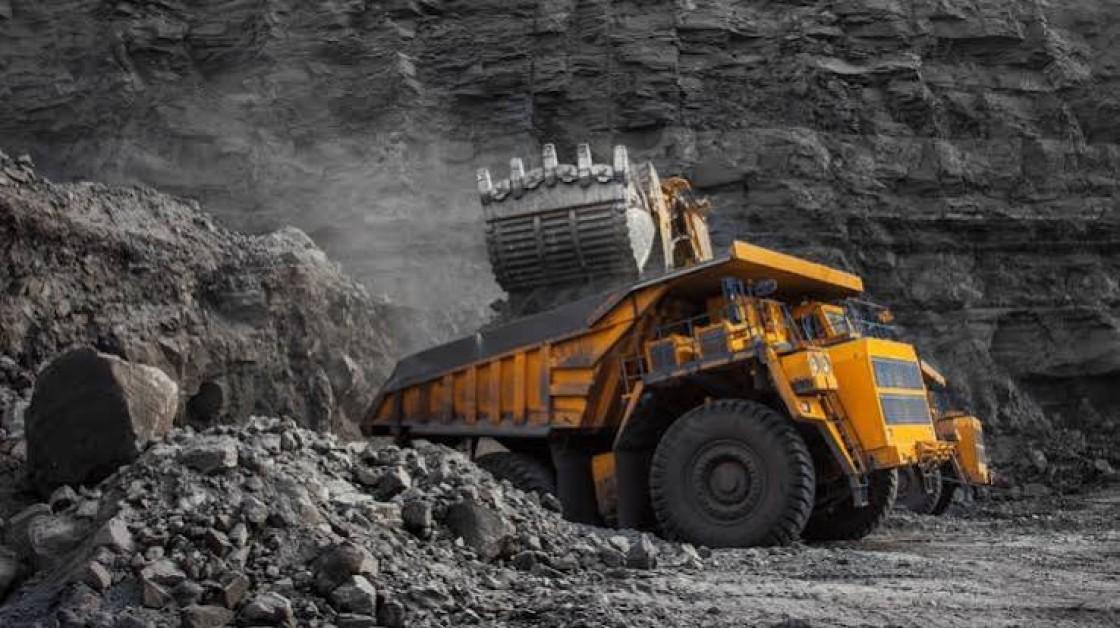
Coal India Sets Up Singapore Subsidiary CIL Global to Pursue Overseas Critical-Mineral Assets
State-owned Coal India Ltd has established a wholly owned subsidiary in Singapore named CIL Global Resources Pte Ltd, creating a dedicated international platform to pursue critical-mineral assets outside India as the world's largest coal producer broadens its strategy beyond its traditional fossil-fuel business.
The new subsidiary marks an important step in Coal India's diversification as India seeks more secure access to minerals required for electric vehicles, renewable-energy infrastructure, electronics, advanced manufacturing and other strategic industries.
Singapore provides Coal India with an internationally recognised base from which it can evaluate, structure and potentially execute investments in mining projects and mineral assets across multiple jurisdictions.
The move also reflects a larger transformation in India's resource strategy.
For decades, Coal India's central role was straightforward: supply coal to the domestic economy.
Its future portfolio could become substantially broader.
Coal India Establishes CIL Global Resources in Singapore

Coal India has incorporated CIL Global Resources Pte Ltd as a wholly owned overseas subsidiary.
The Singapore-based entity is intended to support the acquisition and development of mineral assets outside India.
The company can provide Coal India with a dedicated corporate vehicle for:
international acquisitions,
strategic partnerships,
and mineral investments.
That structure could become increasingly important as Coal India evaluates opportunities across different resource-rich countries.
Critical Minerals Are Central to the Strategy
The subsidiary is not simply an international extension of Coal India's domestic coal operations.
Its strategic focus is tied to the growing importance of critical minerals.
These resources can include minerals such as:
lithium,
cobalt,
nickel,
copper,
and rare-earth elements,
depending on the specific industrial application and government classification.
Many are essential inputs for technologies central to the global energy and digital transition.
India Wants More Secure Mineral Supply Chains
India's demand for critical minerals is expected to increase as the country expands manufacturing across:
electric vehicles,
batteries,
renewable energy,
electronics,
and defence.
Domestic mineral resources alone may not be sufficient to satisfy every requirement.
Overseas assets can therefore provide another layer of supply security.
Coal India's international platform could help support that strategy.
Critical Minerals Have Become Strategic Resources
Minerals once viewed primarily as industrial commodities are increasingly treated as strategic assets.
A modern economy depends on them for:
energy systems,
communications,
transportation,
and advanced manufacturing.
Supply disruptions can therefore affect entire industries.
Governments around the world are responding by attempting to secure diversified mineral supply chains.
Lithium Is Essential for Battery Manufacturing
Lithium is one of the most visible critical minerals because of its importance in rechargeable batteries.
Lithium-ion batteries power:
electric vehicles,
consumer electronics,
and energy-storage systems.
As India expands EV and battery manufacturing, access to lithium becomes increasingly important.
This has encouraged Indian companies and government-backed entities to explore overseas opportunities.
Copper Is Equally Important to Electrification
Copper receives less attention than lithium but is fundamental to the energy transition.
Electric systems require enormous amounts of conductive material.
Copper is used across:
electric vehicles,
power grids,
motors,
and renewable-energy installations.
The expansion of electricity infrastructure therefore increases long-term copper demand.
Rare Earths Support Advanced Technologies
Rare-earth elements are used in specialised components including high-performance permanent magnets.
These magnets can be important for:
electric motors,
wind turbines,
and electronics.
Global rare-earth supply chains are geographically concentrated.
That concentration has increased concern about supply security.
Diversifying access is therefore a strategic priority for many countries.
Cobalt and Nickel Matter to Some Battery Chemistries
Certain lithium-ion battery chemistries rely on cobalt and nickel.
These materials can improve characteristics such as:
energy density,
and performance.
Battery technology continues evolving, which can change the relative importance of individual minerals.
A diversified mineral strategy therefore reduces dependence on predicting one specific technology pathway.
Coal India Already Has Mining Expertise
Coal India's strongest advantage is its experience operating enormous mining businesses.
The company understands:
resource evaluation,
mine development,
and large-scale extraction.
Although mining lithium or copper differs substantially from mining coal, many organisational capabilities remain relevant.
This gives Coal India a foundation from which to diversify.
Critical-Mineral Mining Requires New Capabilities
However, Coal India cannot simply apply its coal operating model unchanged.
Different minerals require different:
geological expertise,
processing technologies,
and commercial knowledge.
The company may therefore need partnerships with specialist miners and technology providers.
CIL Global can provide a platform for building those relationships internationally.
Singapore Offers Strategic Location
Singapore is one of Asia's most important centres for:
commodities,
finance,
and international business.
Many global resource companies maintain regional operations there.
For Coal India, a Singapore entity can provide proximity to:
financial institutions,
trading companies,
and international mining investors.
This can simplify deal-making across Asia and other regions.
Singapore Is Major Commodity-Trading Hub
Global mineral supply chains involve much more than extraction.
Resources may move through:
traders,
processors,
and manufacturers
before reaching the final customer.
Singapore's commodity ecosystem gives companies access to expertise across financing, risk management and trading.
That could become valuable if Coal India's international mineral business expands.
Overseas Subsidiary Can Simplify Transactions
Cross-border mining investments can involve complicated corporate structures.
A dedicated overseas subsidiary can make it easier to:
hold investments,
enter joint ventures,
and manage international contracts.
Instead of conducting every transaction directly through the Indian parent company, CIL Global can become the central vehicle for international resource investments.
Coal India Is Diversifying Beyond Coal
The creation of CIL Global also reflects a fundamental strategic question facing Coal India.
Coal remains essential to India's energy system today.
But the global energy transition is gradually changing long-term demand patterns.
A company with enormous mining capability therefore has an incentive to expand into minerals required by the next generation of energy infrastructure.
Coal Will Remain Important in Near Term
Diversification does not mean Coal India is abandoning its core business.
India continues to depend heavily on coal for electricity generation.
Power demand is also increasing.
Coal India therefore remains responsible for supplying large volumes of domestic fuel.
The strategic challenge is managing today's coal requirements while preparing for tomorrow's resource economy.
Critical Minerals Provide Natural Diversification Path
For a mining company, minerals represent a more natural diversification route than moving into completely unrelated industries.
Coal India already possesses experience in:
geology,
mine planning,
and project execution.
Critical minerals allow it to use parts of that capability in new commodity markets.
This could create a second long-term growth platform.
Energy Transition Requires More Mining, Not Less
The transition from fossil fuels to cleaner technologies is sometimes described as a move away from extraction.
In reality, renewable and electrified systems require enormous quantities of minerals.
Solar panels need materials.
Wind turbines need metals.
Electric vehicles need batteries.
Power grids require copper and other inputs.
The energy transition therefore changes what the world mines rather than eliminating mining.
EV Growth Is Increasing Mineral Demand
India wants electric vehicles to represent a larger share of future transportation.
That requires expansion across:
battery manufacturing,
charging infrastructure,
and electrical equipment.
Each of these industries depends on mineral inputs.
Secure raw-material access therefore becomes part of industrial policy.
Battery Manufacturing Needs Supply Security
India is attempting to build domestic battery-cell manufacturing capacity.
Factories alone are not enough.
Manufacturers need reliable access to:
lithium,
and other battery materials.
Without secure supply, domestic production can remain dependent on volatile international markets.
Overseas mineral investments can help reduce this vulnerability.
Renewable Energy Also Depends on Minerals
India has ambitious renewable-energy expansion plans.
Solar and wind capacity requires extensive:
metals,
electrical infrastructure,
and energy-storage systems.
Critical-mineral security therefore connects directly with the country's energy-transition objectives.
Resource policy and energy policy are becoming increasingly intertwined.
Electronics Manufacturing Creates Additional Demand
India is also expanding domestic electronics and semiconductor manufacturing.
These industries rely on complex mineral supply chains.
Not every material needs to be mined domestically.
But diversified international access can reduce vulnerability to supply disruptions.
CIL Global could eventually become part of this broader resource-security architecture.
Defence Manufacturing Adds Strategic Dimension
Critical minerals also have defence applications.
Advanced systems can require specialised metals and rare-earth materials.
Dependence on concentrated foreign suppliers can therefore create national-security risks.
Governments increasingly treat critical-mineral policy as part of strategic planning rather than ordinary commodity procurement.
China Dominates Parts of Critical-Mineral Supply Chain
One reason mineral security has become urgent is the concentration of processing capacity.
China has a dominant position across several critical-mineral supply chains, particularly in areas such as rare-earth processing.
Other countries are attempting to diversify.
India faces the same strategic challenge.
Owning or partnering in overseas mines can provide greater control over upstream supply.
Mining Alone Does Not Guarantee Supply Security
Owning a mineral resource is only the first step.
Raw ore often requires:
processing,
and refining
before manufacturers can use it.
For some critical minerals, processing is even more geographically concentrated than mining.
Coal India's strategy may therefore eventually need to extend beyond mine ownership toward partnerships across the processing chain.
CIL Global Could Form Joint Ventures
Mining projects are capital-intensive and technically complex.
Coal India does not necessarily need to own every project outright.
CIL Global could pursue:
joint ventures,
minority investments,
and strategic partnerships.
This approach can reduce risk while providing access to specialised expertise.
Resource-Rich Countries Offer Potential Opportunities
Critical-mineral opportunities are spread across several regions.
Countries in:
Africa,
Latin America,
and Australia
possess significant deposits of minerals relevant to energy-transition technologies.
Each jurisdiction presents different political, regulatory and infrastructure conditions.
A dedicated international team can evaluate these opportunities more systematically.
Australia Is Major Critical-Mineral Market
Australia is one of the world's most important mining jurisdictions.
It possesses substantial resources across:
lithium,
nickel,
rare earths,
and other minerals.
Its established regulatory environment and mining infrastructure make it attractive to international investors.
Indian companies have already explored partnerships in the country.
Latin America Is Important for Lithium and Copper
South America contains some of the world's most significant lithium and copper resources.
Argentina, Chile and other countries are important to global supply chains.
Indian companies seeking long-term access to battery and electrification materials may therefore consider investments in the region.
The challenge is selecting projects with strong economics and manageable geopolitical risk.
Africa Holds Significant Mineral Resources
African countries possess major reserves across numerous critical minerals.
The continent therefore represents another potential area for Indian investment.
However, projects can involve substantial:
infrastructure,
regulatory,
and political risks.
Successful investment requires long-term partnerships with host governments and local communities.
Acquiring Existing Assets Could Accelerate Entry
Coal India could pursue exploration-stage projects.
But acquiring stakes in existing mines or advanced projects can provide faster access to production.
The trade-off is price.
Operational assets generally command higher valuations because geological and development risks are lower.
CIL Global will need disciplined investment criteria.
Mineral Prices Can Be Highly Volatile
Critical does not automatically mean profitable.
Lithium prices, for example, can move sharply when supply and demand expectations change.
Mining companies investing at the top of a commodity cycle can suffer significant losses.
Coal India therefore needs to separate strategic importance from financial attractiveness when evaluating acquisitions.
Long-Term Contracts Could Reduce Risk
One strategy is to combine mine investment with long-term offtake agreements.
An offtake agreement gives a buyer rights to purchase a portion of future production.
This can provide:
supply certainty for buyers,
and revenue visibility for miners.
Coal India could potentially use such structures alongside direct equity investments.
Indian Manufacturers Could Become Offtake Partners
If Coal India secures overseas mineral production, Indian battery, automobile or industrial companies could potentially become long-term customers.
This would connect upstream resource acquisition directly with domestic manufacturing.
Such integration could strengthen India's overall industrial supply chain.
Government Policy Supports Critical-Mineral Development
India has increasingly placed critical minerals at the centre of economic and industrial policy.
The government has identified minerals considered important for energy security, advanced manufacturing and strategic industries.
Policy measures have included:
domestic exploration,
mineral auctions,
and overseas resource partnerships.
Coal India's move fits within this broader national effort.
National Critical Mineral Mission Provides Strategic Context
India's National Critical Mineral Mission is intended to strengthen the country's capabilities across the mineral value chain.
The strategy includes:
exploration,
mining,
processing,
and recycling.
Overseas acquisitions represent another important component because some minerals are more abundant outside India.
Large state-owned companies can play an important role in securing those assets.
KABIL Has Already Pursued Overseas Minerals
India already has a government-backed overseas mineral initiative through Khanij Bidesh India Ltd, commonly known as KABIL.
KABIL was established by state-owned mining and metals companies to identify and acquire strategic mineral assets abroad.
Coal India's creation of CIL Global adds another large public-sector player to India's international mineral strategy.
Multiple Indian Companies Could Pursue Different Assets
India's mineral requirements are too large and diverse for one company to handle alone.
Different state-owned and private companies can pursue opportunities according to their capabilities.
Coal India brings enormous mining scale.
Other companies may provide:
processing expertise,
and downstream manufacturing demand.
Coordinating these capabilities could improve India's negotiating position internationally.
Private Indian Companies Are Also Seeking Resources
Indian private-sector groups are increasingly interested in mineral supply security.
Automobile, battery, renewable-energy and metals companies all depend on stable raw-material access.
Competition for attractive global assets could therefore intensify.
Coal India will compete not only with international miners but potentially with other Indian investors.
Global Competition for Minerals Is Increasing
The United States, European Union, China, Japan and South Korea are all seeking secure critical-mineral supply chains.
Governments are supporting:
mining,
and strategic partnerships.
India is entering a market where attractive resources are already heavily contested.
Speed and disciplined execution will therefore matter.
Governments May Prefer Strategic Partnerships
Resource-rich countries increasingly want more than foreign companies simply extracting ore.
They may seek:
local processing,
jobs,
and technology transfer.
Coal India will need to structure investments that create value for host economies.
Long-term relationships could become more important than simply offering the highest purchase price.
ESG Standards Will Be Important
International mining projects face close scrutiny around environmental and social impacts.
Investors need to manage:
water use,
land rehabilitation,
and community relationships.
Coal India will need robust environmental, social and governance standards when expanding internationally.
Poor execution could create both financial and reputational risks.
Critical-Mineral Mining Has Environmental Costs
Clean technologies depend on minerals, but extracting those minerals is not environmentally neutral.
Mining can disturb ecosystems.
Processing can require substantial energy and water.
Responsible mineral strategy therefore needs to consider the entire lifecycle.
The energy transition does not eliminate environmental trade-offs.
Recycling Could Eventually Reduce Import Dependence
India's future mineral strategy will not rely entirely on new mines.
Used:
batteries,
electronics,
and industrial equipment
contain valuable materials.
Recycling can recover some of these resources.
As India's stock of EVs and batteries grows, recycling could become an increasingly important domestic source of critical minerals.
Coal India Could Eventually Enter Mineral Processing
If the company's diversification progresses, upstream mining may be only the first stage.
Processing can capture additional value.
It can also provide greater supply-chain control.
However, refining critical minerals requires specialised technology and substantial investment.
Any expansion would therefore need careful commercial evaluation.
Trading Could Become Another Capability
A Singapore-based entity also creates potential opportunities in commodity trading.
CIL Global could eventually participate in purchasing and supplying minerals even when Coal India does not own the underlying mine.
Trading can provide market intelligence and customer relationships.
However, it also introduces price and counterparty risks requiring specialised expertise.
Singapore Can Help Attract International Talent
International mining transactions require professionals experienced in:
geology,
finance,
and commodity markets.
Singapore's global business environment can make it easier to recruit specialised talent.
This could help Coal India build capabilities that are not traditionally central to its domestic coal operations.
Financing Overseas Mines Requires Expertise
Mining projects can require billions of dollars over their lifetime.
Financing structures may include:
equity,
project debt,
and strategic investors.
A Singapore-based company can work closely with international banks and commodity-finance institutions.
This could improve Coal India's flexibility when pursuing larger transactions.
Foreign-Exchange Risk Must Be Managed
International mineral investments expose Coal India to multiple currencies.
Project costs may be denominated in:
US dollars,
Australian dollars,
or local currencies.
Commodity prices may also fluctuate independently.
Effective hedging and treasury management will therefore be essential.
Political Risk Is Equally Important
Mining assets cannot be moved.
Once capital is invested, the project remains exposed to the host country's:
tax policies,
and political environment.
Changes in government policy can significantly alter project economics.
Coal India will need sophisticated country-risk assessment before committing capital.
Resource Nationalism Is Growing
As critical minerals become more strategically valuable, governments may demand a larger share of their economic benefits.
Policies can include:
higher royalties,
export restrictions,
or domestic-processing requirements.
Investors need to anticipate these possibilities.
Long-term mineral strategies must therefore account for political as well as geological risk.
Coal India's Balance Sheet Provides Scale
Coal India generates substantial cash from its core coal business.
That financial strength gives it the ability to evaluate large mineral investments.
Few Indian mining companies possess comparable scale.
If capital is allocated carefully, this could become a significant competitive advantage in international resource markets.
Shareholders Will Expect Financial Discipline
Strategic importance does not eliminate the need for returns.
Coal India is a listed company.
Investors will examine whether overseas acquisitions generate acceptable returns on capital.
Management therefore needs to balance national resource-security objectives with commercial discipline.
Diversification Could Change Coal India's Valuation Story
Investors primarily value Coal India as a coal producer.
A successful critical-mineral portfolio could gradually change that perception.
The company could become a broader resources group exposed to both:
traditional energy,
and energy-transition commodities.
That diversification could influence its long-term investment profile.
Transition Strategy Can Extend Corporate Relevance
Coal India's existing business remains highly profitable, but global energy systems are evolving.
Companies built around fossil fuels need credible long-term strategies.
Moving into minerals required by electrification provides one pathway.
Rather than abandoning mining, Coal India can redirect part of its expertise toward commodities with potentially stronger long-term growth.
Execution Will Determine Whether Strategy Works
Creating CIL Global is relatively straightforward.
Finding attractive mineral assets is much harder.
Coal India will need to:
identify quality deposits,
negotiate competitive transactions,
and manage operations across unfamiliar jurisdictions.
The success of the strategy will ultimately depend on these execution capabilities.
First Acquisition Will Be Closely Watched
The market will pay particular attention to CIL Global's first significant investment.
That transaction will reveal:
which minerals Coal India prioritises,
which geographies it prefers,
and how much capital it is willing to deploy.
It will also provide the first real test of the company's international diversification strategy.
Conclusion
Coal India's establishment of CIL Global Resources Pte Ltd in Singapore represents a significant step in the state-owned miner's evolution from a predominantly domestic coal producer toward a broader international resources company.
The strategic logic is closely connected to India's changing industrial requirements.
Electric vehicles need battery materials.
Renewable-energy systems require metals and specialised minerals.
Power-grid expansion needs copper.
Advanced manufacturing and defence depend on secure access to strategically important resources.
India cannot assume that every required mineral will be available domestically.
Overseas ownership, partnerships and offtake arrangements therefore provide another route toward resource security.
Coal India enters this market with important advantages: enormous mining experience, financial scale and government backing.
But critical-mineral investment also introduces new challenges involving unfamiliar geology, international regulation, commodity-price volatility, processing technology and geopolitical risk.
Singapore gives Coal India a strong platform from which to build those capabilities.
The larger significance of CIL Global is therefore not simply the creation of another subsidiary.
It represents an attempt to reposition one of India's most important fossil-fuel companies for a future in which national energy security will increasingly depend not only on how much coal India can produce, but also on how securely it can obtain the minerals required for electrification, batteries and advanced manufacturing.
 Coal India Sets Up Singapore Arm CIL Global for Overseas Critical Minerals FAQs
POST A COMMENT (0)
All Comments (0)
Replies (0)