





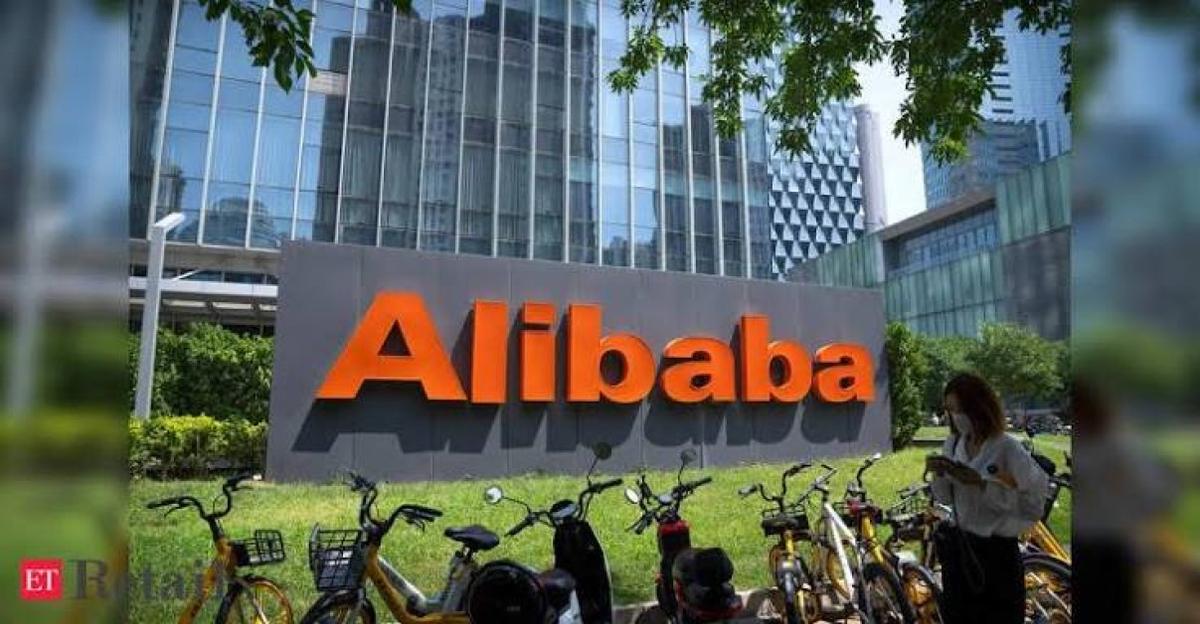
Alibaba Quarterly Profit Plunges 75% as Heavy AI Infrastructure Spending Weighs on Earnings
Alibaba Group reported a sharp 75% year-on-year decline in quarterly net profit as the Chinese technology giant accelerated spending on artificial-intelligence infrastructure, chips and cloud capacity even as revenue and AI-related businesses continued expanding.
Revenue for the April-June 2026 quarter increased about 9% from a year earlier, while Alibaba Cloud and AI services delivered much faster growth. Cloud and AI revenue rose 45% to approximately 48.44 billion yuan, underscoring strong demand for computing infrastructure and model-as-a-service products.
The earnings pressure came from the other side of the AI equation: capital expenditure surged 75% to roughly 67.68 billion yuan as Alibaba purchased additional chips and expanded data-centre infrastructure.
Alibaba has already deployed around half of the 380 billion yuan it previously committed to AI and cloud infrastructure through 2029, making the company one of the most aggressive investors in China's artificial-intelligence race.
Quarterly Profit Drops 75%

Alibaba's June-quarter net profit fell by roughly three-quarters compared with the same period a year earlier.
The scale of the decline attracted investor attention because top-line performance remained comparatively strong.
The result demonstrates that revenue growth and earnings growth can move in opposite directions when a company is investing heavily ahead of expected future demand.
Revenue Still Rises About 9%
Alibaba's overall quarterly revenue increased approximately 9%.
That indicates that the company's core businesses continued expanding despite weak consumer conditions in parts of China and intense competition across technology and ecommerce.
The larger issue for shareholders is therefore not a collapse in demand.
It is the cost of Alibaba's investment programme.
AI and Cloud Revenue Jumps 45%
The strongest part of the quarter came from Alibaba's cloud and artificial-intelligence operations.
Revenue in this area increased approximately 45% to 48.44 billion yuan.
That growth reflects rising demand from companies seeking access to:
AI models,
cloud computing,
high-performance infrastructure,
and related enterprise technology.
The performance provides evidence that Alibaba's AI investments are generating commercial demand even before the infrastructure programme reaches maturity.
Alibaba Is Spending Aggressively to Compete in AI
The company is committing enormous amounts of capital to artificial intelligence.
Its spending includes:
data centres,
advanced processors,
networking,
proprietary chips,
and model development.
The objective is to build enough computing capacity to support both Alibaba's own applications and external cloud customers.
Capital Expenditure Rises 75%
Quarterly capital expenditure reached approximately 67.68 billion yuan, up about 75% year on year.
Rising chip procurement costs were a major contributor.
AI accelerators remain expensive, while the global race to secure advanced computing capacity has intensified demand.
For Alibaba, this creates a large upfront cash requirement before future AI revenue fully materialises.
Company Has Already Spent Half of Planned AI Budget
Alibaba previously committed approximately 380 billion yuan, or roughly $56 billion, to AI and cloud infrastructure through 2029.
By the June quarter, it had already deployed around half of that planned amount.
That pace is significant.
It suggests Alibaba is front-loading investment rather than spreading spending evenly across the entire period.
Eddie Wu Defends Long-Term AI Strategy
Chief Executive Eddie Wu continues to position artificial intelligence as one of Alibaba's most important strategic priorities.
Management argues that the current spending cycle is necessary to establish technological and infrastructure leadership.
Alibaba expects the economics of its AI investment to improve over time as utilisation increases and proprietary hardware reduces costs.
Alibaba Targets AI Capex Break-Even Within Three Years
Management has indicated that it expects its current AI infrastructure investment to reach break-even within approximately three years under present assumptions.
That timeline gives investors a clearer benchmark.
The company is effectively asking shareholders to tolerate weaker near-term profit in exchange for potentially stronger long-term earnings.
The strategy will ultimately be judged by whether AI revenue grows rapidly enough to validate that expectation.
Proprietary Chips Could Improve Margins
Alibaba is increasingly deploying its own semiconductors inside data centres.
The strategic logic is straightforward.
Commercial AI processors can be extremely expensive.
At enormous scale, designing proprietary chips can reduce the cost of computing.
Custom Hardware Can Lower Dependence on External Suppliers
Using more in-house silicon could help Alibaba reduce reliance on third-party accelerators.
It could also improve:
energy efficiency,
availability,
and unit economics.
This becomes increasingly important as AI inference volumes expand.
AI Infrastructure Is Becoming Physical Business
The quarter illustrates how artificial intelligence has moved far beyond software.
Large-scale AI requires physical infrastructure.
Companies need:
buildings,
electricity,
cooling,
processors,
and networking.
That makes AI significantly more capital intensive than conventional internet software.
Alibaba's falling profit is therefore part of a broader global technology trend.
Cloud Growth Provides Early Evidence of Monetisation
One of the most important positive signals is that demand is already translating into higher cloud revenue.
If Alibaba were spending billions without corresponding customer growth, investor concern would be much greater.
Instead, the cloud and AI business is expanding far faster than the company overall.
The question is whether that revenue can eventually produce margins high enough to justify the capital investment required.
Model-as-a-Service Is Growing
Alibaba increasingly offers AI models through its cloud platform.
Businesses can access large models without building their own infrastructure.
This creates a recurring revenue opportunity.
Customers can pay for:
compute,
model usage,
storage,
and enterprise services.
Alibaba therefore has several ways to monetise one underlying AI infrastructure investment.
Qwen Remains Central to Alibaba’s AI Strategy
The Qwen family of models is one of Alibaba's most important AI assets.
The company has invested heavily in both proprietary and open-source development around Qwen.
Open-source adoption can expand the ecosystem around Alibaba's models even when direct model revenue is limited.
Model Adoption Can Support Cloud Demand
Developers using Qwen may eventually purchase Alibaba Cloud infrastructure.
This means open models can function as distribution tools for higher-value cloud services.
The strategy resembles broader platform economics seen elsewhere in technology.
Chinese AI Competition Is Intensifying
Alibaba faces substantial domestic competition.
Tencent, Baidu and several specialised AI companies are also spending heavily on models, infrastructure and talent.
This makes slowing investment difficult.
A company that cuts spending aggressively risks losing technological ground.
The result is an industry-wide capital race.
Baidu Is Also Under Earnings Pressure
Baidu recently reported weaker profit and revenue performance while continuing to invest in artificial intelligence.
Its AI-related operations are growing, but advertising weakness and ongoing technology spending have pressured earnings.
That demonstrates that Alibaba's profitability challenge is not unique.
China's largest technology companies are increasingly absorbing short-term financial pain to preserve AI competitiveness.
Tencent Is Investing Heavily Too
Tencent has also committed significant capital to AI infrastructure.
The company has the advantage of large cash-generating businesses across gaming, advertising and digital services.
Like Alibaba, it can use those established businesses to finance long-term AI development.
This creates an advantage over smaller AI startups that depend heavily on external financing.
Smaller AI Companies Face Greater Financial Pressure
Frontier AI development is becoming extraordinarily expensive.
Training the most advanced models can require enormous computing budgets.
Large technology companies can fund those costs internally.
Smaller companies may need repeated equity or debt financing.
This could gradually consolidate the AI market around firms with strong balance sheets.
Alibaba’s Ecommerce Business Still Provides Funding Base
Alibaba's core commerce operations remain critical to the AI strategy.
They provide the scale and cash generation needed to fund infrastructure investment.
This is an important competitive advantage.
The company does not need its AI business to become fully profitable immediately because other operating units can support the investment cycle.
AI Could Strengthen Ecommerce Operations
Alibaba is not investing in AI only to sell cloud computing.
It can also use the technology internally.
Potential applications include:
product recommendations,
advertising,
merchant tools,
customer service,
and logistics.
If AI improves conversion or merchant productivity, the technology can create value across the broader group.
Advertising Could Benefit From Better AI
Alibaba's commerce platforms generate large amounts of consumer data.
AI can help merchants target products more effectively.
Better recommendations can increase sales.
More effective advertising can increase merchant spending.
This provides another route through which AI investment can produce returns.
Logistics Can Also Become More Efficient
Artificial intelligence can improve:
routing,
demand forecasting,
inventory positioning,
and warehouse operations.
At Alibaba's scale, modest logistics improvements can create substantial cost savings.
This means AI profitability should not be measured only through direct cloud revenue.
Indirect productivity gains also matter.
Profit Decline Shows Timing Mismatch
The core financial challenge is a timing mismatch.
Alibaba is spending today.
Revenue arrives over several years.
This is typical of infrastructure businesses.
The company needs to build capacity before customers can use it.
That means current earnings can understate the long-term value if utilisation eventually becomes high.
The opposite is also true: excess capacity can destroy returns if demand disappoints.
Utilisation Will Determine Returns
A data centre operating near capacity can generate attractive economics.
An underused facility still incurs:
depreciation,
power,
and maintenance.
Alibaba therefore needs enough sustained AI demand to keep its infrastructure productive.
Cloud growth suggests this is happening so far, but the scale of future capacity expansion raises the bar significantly.
Depreciation Will Keep Affecting Earnings
Capital expenditure does not disappear from financial statements after the cash is spent.
Servers and data-centre assets are depreciated over time.
This means today's investment can create accounting expenses for several years.
Even if capex eventually slows, depreciation from the current investment wave could continue weighing on reported profit.
AI Infrastructure Has Shorter Technology Cycles
One risk is that computing hardware can become obsolete quickly.
A new generation of processors can deliver significantly better performance.
That means Alibaba needs to extract economic value from hardware before it loses competitiveness.
This makes utilisation and refresh cycles particularly important.
Proprietary Chips Could Reduce Obsolescence Risk
Internal chip development gives Alibaba more control over upgrade schedules.
It can design hardware around specific workloads rather than waiting entirely for external suppliers.
This can potentially improve the return on infrastructure investment.
But chip development itself carries substantial engineering risk.
US Export Controls Complicate Chip Strategy
Chinese AI companies have faced restrictions on access to some advanced US semiconductor technologies.
That has increased pressure on domestic companies to develop alternative hardware.
Alibaba's proprietary semiconductor strategy therefore has both economic and geopolitical importance.
Reducing dependence on restricted technology can improve long-term resilience.
China Is Building Domestic AI Supply Chain
Alibaba's spending fits within a larger Chinese effort to create greater self-sufficiency across:
semiconductors,
AI models,
cloud infrastructure,
and software.
This can generate opportunities for Chinese chipmakers and equipment suppliers.
It also means large technology companies may continue investing heavily even when near-term returns are weak.
AI Is Becoming Strategic National Competition
Artificial intelligence is increasingly viewed not simply as a commercial product but as strategic infrastructure.
Governments see AI capability as important to:
economic competitiveness,
defence,
and technological independence.
This broader context can encourage companies to prioritise long-term capability over short-term margins.
Alibaba Shares Fall After Earnings
Alibaba's US-listed shares declined approximately 4.6% following the results.
The reaction suggests investors were disappointed by the extent of earnings pressure despite strong revenue performance.
Markets are increasingly demanding evidence that AI investment will eventually translate into cash returns.
Earnings Per ADS Misses Expectations
Alibaba's earnings per American Depositary Share fell short of market expectations.
That contributed to the negative share-price reaction.
Investors are becoming less willing to reward growth alone when capital spending is rising sharply.
The market increasingly wants both technological leadership and financial discipline.
AI Spending Is Becoming Profitability Test Across Big Tech
Alibaba's quarter mirrors the broader global technology debate.
Microsoft, Alphabet, Amazon and Meta are also spending enormous amounts on data centres and AI hardware.
Investors everywhere are asking the same question:
When does this spending begin producing sufficient profit?
Alibaba provides one of the clearest examples of the trade-off.
Cloud Revenue Growth Is Encouraging but Not Enough
A 45% increase in cloud and AI revenue is substantial.
But investors need more than top-line acceleration.
They need evidence of improving:
margins,
cash flow,
and return on invested capital.
If AI revenue grows rapidly while infrastructure costs grow even faster, shareholder value can remain under pressure.
Free Cash Flow Will Become Critical Metric
Alibaba's AI strategy ultimately needs to be evaluated through cash generation.
Revenue and accounting profit provide part of the picture.
Free cash flow shows how much money remains after capital investment.
Large AI capex can depress free cash flow even during strong revenue growth.
This is likely to become one of the most important investor metrics.
Debt Capacity Gives Alibaba Flexibility
Alibaba's scale and financial resources provide flexibility to finance the investment cycle.
The company can tolerate short-term profit volatility better than smaller competitors.
But balance-sheet capacity is not unlimited.
Investors will still expect capital to earn attractive long-term returns.
Asset Sales Can Help Fund AI Investment
Alibaba has been simplifying its portfolio and disposing of some non-core assets.
Capital released from less strategic businesses can be redirected toward AI and cloud infrastructure.
This allows management to concentrate resources on areas it believes have greater long-term growth potential.
Corporate Restructuring Supports Focus
Alibaba has reorganised operations into fewer major business units.
The aim is to streamline decision-making and improve capital allocation.
A more focused structure could make it easier to direct investment toward core priorities such as AI, cloud and commerce.
The success of that reorganisation will become clearer over future quarters.
AI Profitability Depends on Pricing
Even strong demand can generate poor economics if prices fall too quickly.
Competition among cloud companies and model providers can put downward pressure on AI service pricing.
Alibaba therefore needs to reduce computing costs at least as fast as market prices decline.
Proprietary chips and software optimisation can help.
Open-Source Models Increase Pricing Pressure
Alibaba actively supports open-source AI through Qwen.
That strategy helps expand adoption.
But open models can also make it harder to charge premium prices for model access.
Alibaba therefore needs to monetise infrastructure and enterprise services around the model ecosystem.
The model itself may function as a gateway rather than the primary profit centre.
Inference Could Become Bigger Opportunity
Training large models receives substantial attention.
But inference — running those models for users — may eventually represent the larger recurring market.
Alibaba's enormous consumer and enterprise ecosystem gives it significant potential inference demand.
If costs fall sufficiently, high-volume inference can become a powerful source of revenue.
Consumer AI Could Expand Monetisation
Alibaba is also developing consumer-facing AI products.
These can create additional engagement and potentially support commerce activity.
A consumer AI assistant connected to Alibaba's retail ecosystem could help users:
search,
compare,
and purchase products.
This could create a direct link between AI and transaction revenue.
Enterprise Customers Need Clear ROI
Alibaba Cloud's long-term growth depends partly on corporate adoption.
Businesses will not continue spending indefinitely merely because AI is fashionable.
They need measurable benefits.
Applications that improve:
automation,
software development,
and customer service
are more likely to generate durable cloud demand.
Chinese Businesses Face Same AI Profitability Test
Alibaba's customers are also examining return on investment.
A manufacturer using AI needs cost savings.
A retailer needs higher conversion.
A bank needs better risk management.
If enterprise customers fail to achieve economic benefits, cloud demand could slow.
Alibaba's infrastructure returns therefore depend partly on downstream customer profitability.
Power Consumption Adds Hidden Cost
AI data centres consume large amounts of electricity.
That increases operating expenses.
It also creates pressure around power availability.
Alibaba needs to secure enough electricity to support expanding computing infrastructure.
Energy efficiency therefore becomes directly tied to AI profitability.
Data-Centre Location Could Affect Economics
Large AI facilities can potentially be located in areas where power and land are cheaper.
China has invested in transferring computing workloads toward western regions with greater energy availability.
Alibaba can potentially use this infrastructure strategy to reduce costs.
Network latency and customer requirements still influence where certain workloads are processed.
AI Investment Could Boost Chinese Semiconductor Demand
Alibaba's capex benefits suppliers throughout the technology ecosystem.
Demand rises for:
processors,
memory,
networking,
and data-centre equipment.
This means Alibaba's profitability pressure can simultaneously create revenue opportunities for upstream suppliers.
The AI investment cycle redistributes earnings across the technology supply chain.
Investors Will Watch Capex Pace Closely
The company has already spent roughly half of its multi-year AI investment commitment.
If spending continues at the current pace, Alibaba could exceed its original timetable.
That raises an important question.
Management may decide the opportunity is large enough to invest even more.
If so, near-term profitability could remain under pressure longer than initially expected.
Three-Year Break-Even Target Becomes Key Benchmark
Alibaba's expectation that AI capex can reach break-even within roughly three years gives shareholders a timeline against which to judge execution.
If cloud growth remains strong and computing costs decline, the target may become credible.
If spending continues rising without corresponding cash generation, investor scepticism will grow.
China Consumer Weakness Adds Another Challenge
Alibaba's AI investment is occurring while parts of China's consumer economy remain under pressure.
Weak property markets and cautious household spending have affected advertising and ecommerce activity across the technology sector.
That means Alibaba cannot rely entirely on strong domestic consumption to offset AI costs.
Cloud growth therefore becomes even more strategically important.
International Cloud Expansion Could Help
Alibaba can also seek growth outside China.
Emerging markets across Asia and other regions are increasing cloud and AI adoption.
International expansion provides additional revenue opportunities.
But competition with Amazon, Microsoft and Google remains intense.
Geopolitical concerns can also complicate expansion in some markets.
Alibaba’s AI Strategy Is High-Risk, High-Reward
The company is making a classic strategic bet.
Invest heavily before the market fully matures.
Accept weaker current profit.
Attempt to emerge with a dominant position when demand reaches scale.
If the strategy succeeds, current earnings pressure may look temporary.
If demand or margins disappoint, the spending could prove excessive.
Conclusion
Alibaba's 75% plunge in quarterly net profit provides one of the clearest examples yet of how expensive the global artificial-intelligence race has become.
The company generated approximately 9% overall revenue growth during the April-June quarter, while cloud and AI revenue surged 45% to around 48.44 billion yuan.
But capital expenditure jumped roughly 75% to 67.68 billion yuan as Alibaba accelerated purchases of AI chips and expansion of data-centre infrastructure.
The company has already deployed around half of the 380 billion yuan it planned to invest in AI and cloud through 2029.
Management argues that this investment can reach break-even within roughly three years, supported by fast-growing customer demand and increasing use of proprietary semiconductors to reduce computing costs.
That puts Alibaba at the centre of the defining financial question facing global technology companies in 2026.
AI demand is real.
Cloud revenue is growing rapidly.
But infrastructure is extraordinarily expensive.
Alibaba now needs to demonstrate that the scale of future AI monetisation will justify the profits and cash flow being sacrificed today.
The next phase of the company's AI strategy will therefore be judged less by model benchmarks and more by a traditional financial measure: whether hundreds of billions of yuan invested in computing infrastructure can ultimately produce attractive and sustainable returns on capital.
 Alibaba Profit Plunges 75% as AI Infrastructure Spending Surges FAQs
POST A COMMENT (0)
All Comments (0)
Replies (0)