





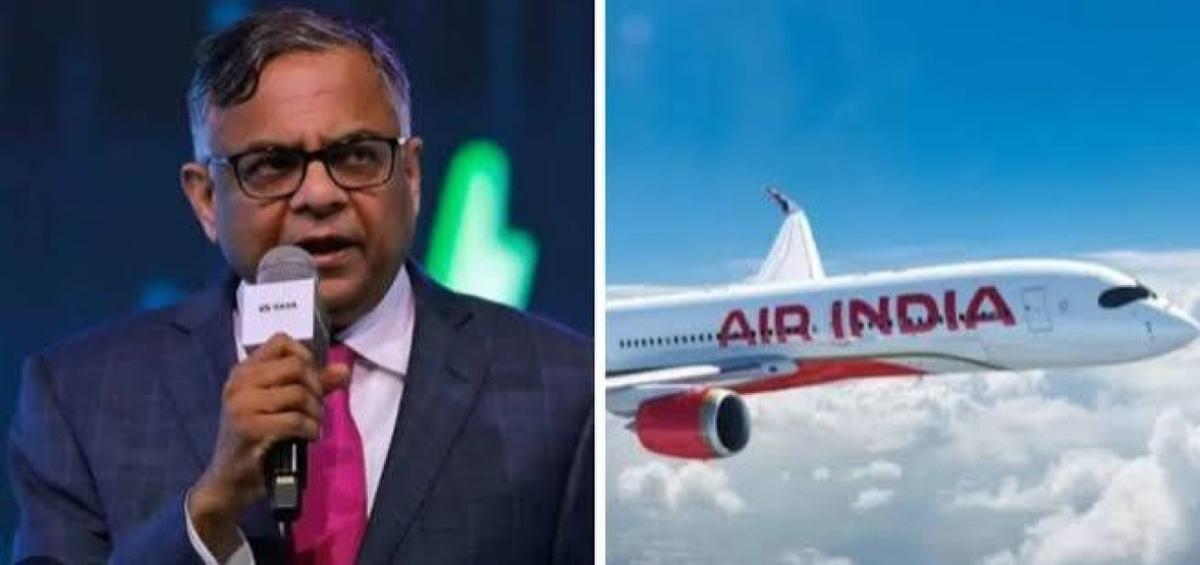
Air India Turnaround Could Take Up to a Decade, Says Tata Sons Chairman
Air India's transformation could take between five and 10 years to complete, according to Tata Sons Chairman N Chandrasekaran, underscoring the scale of the long-term effort required to rebuild the airline into a globally competitive aviation business.
The extended timeline reflects the complexity of modernising a large legacy carrier while continuing daily operations across domestic and international markets. Tata Group is simultaneously investing in aircraft, technology, customer service, maintenance capabilities, employee training and the integration of its aviation businesses.
The comments suggest that Air India's progress will need to be evaluated over several years rather than through individual quarterly or annual financial results.
Tata Group Takes a Long-Term View

Chandrasekaran's five-to-10-year estimate highlights that Air India's turnaround is not a conventional short-term restructuring.
The airline returned to Tata Group ownership after years of underinvestment, leaving the new owners with significant operational, financial and organisational challenges.
The transformation involves:
-
Replacing and refurbishing aircraft
-
Modernising technology systems
-
Improving customer service
-
Strengthening operational reliability
-
Integrating airline businesses
-
Recruiting and training employees
-
Expanding technical capabilities
-
Building a stronger international network
Each of these initiatives requires substantial capital, management attention and time.
Fleet Modernisation Remains Central
Aircraft renewal is one of the most important parts of the turnaround.
Newer aircraft can improve fuel efficiency, reliability and passenger experience while allowing Air India to expand capacity across domestic and long-haul routes.
However, aircraft procurement is a multi-year process. Delivery schedules depend on global manufacturers, engine suppliers and complex aviation supply chains.
Air India must therefore manage an interim period in which new aircraft arrive gradually while older planes continue operating.
Existing Aircraft Also Require Upgrades
The airline cannot depend entirely on new aircraft deliveries to improve the customer experience.
Refurbishing the existing fleet remains equally important.
Cabin upgrades can include:
-
New seats
-
Improved in-flight entertainment
-
Better cabin interiors
-
Premium-class enhancements
-
Updated connectivity
-
New lighting
-
Refreshed passenger amenities
-
Modern onboard technology
These investments are particularly important on international routes where Air India competes with established global carriers.
Technology Overhaul Is a Major Task
Airline operations depend on complex digital systems supporting reservations, revenue management, crew scheduling, maintenance, customer service and flight operations.
Air India inherited several legacy systems that require modernisation.
Upgrading technology can help the airline improve:
-
Booking reliability
-
Customer communication
-
Operational planning
-
Revenue optimisation
-
Maintenance management
-
Employee productivity
-
Digital services
-
Data-driven decision-making
Technology transformation is therefore as important as fleet renewal.
Vistara Integration Adds Scale and Complexity
The merger of Vistara into Air India is a central part of Tata Group's aviation strategy.
The integration creates a larger full-service airline with a broader network, more aircraft and a bigger customer base.
However, combining two airlines requires alignment across:
-
Employees
-
Aircraft
-
Routes
-
Technology systems
-
Loyalty programmes
-
Service standards
-
Operating procedures
-
Corporate culture
Successful integration could create meaningful scale, but the process itself adds complexity to the turnaround.
Air India Express Forms the Low-Cost Arm
Tata Group is also developing Air India Express as its principal low-cost carrier.
This creates a two-brand structure in which Air India serves the full-service market and Air India Express focuses on price-sensitive domestic and short-haul international travel.
The model can improve market coverage, but both airlines must maintain distinct customer propositions and sustainable economics.
Coordination across networks, aircraft and distribution will be important.
Customer Experience Remains the Most Visible Test
Passengers will ultimately judge the transformation through the quality and reliability of their travel experience.
Key indicators include:
-
On-time performance
-
Cabin quality
-
Baggage handling
-
Customer support
-
Food and beverage service
-
Airport experience
-
Digital booking
-
Service consistency
Air India must translate investment into improvements that customers can see and feel.
Without visible progress in these areas, the broader corporate turnaround may struggle to change public perception.
Financial Losses Highlight the Challenge
Air India and Air India Express have continued to report substantial losses while Tata Group invests in the transformation.
Airline turnarounds are financially difficult because companies must spend heavily before all operational benefits become visible.
Profitability is influenced by:
-
Aviation fuel prices
-
Ticket yields
-
Load factors
-
Aircraft utilisation
-
Maintenance expenses
-
Employee costs
-
Financing costs
-
Foreign exchange movements
-
Geopolitical disruptions
-
Competitive pricing
Even small changes in these variables can significantly affect airline earnings.
Geopolitical Risks Add Pressure
International aviation has faced growing disruption from geopolitical tensions and airspace restrictions.
When airlines are forced to take longer routes, operating costs can rise through higher fuel consumption, additional crew requirements and greater aircraft utilisation.
For Air India, which is expanding its international operations, these disruptions can complicate network planning and financial recovery.
The airline must therefore improve internal efficiency while managing external risks beyond its control.
India's Aviation Growth Supports the Strategy
Despite near-term challenges, India's long-term aviation fundamentals remain attractive.
Growth is supported by:
-
Rising household incomes
-
Expanding middle-class travel
-
Increasing business activity
-
International tourism
-
Airport infrastructure investment
-
Regional connectivity
-
Demand for direct international routes
-
India's growing global economic role
These trends explain why Tata Group remains committed to a long-term turnaround despite substantial costs and losses.
Direct International Routes Offer Opportunity
A stronger Air India could capture more passengers travelling between India and major international markets.
Historically, many travellers have used foreign hubs to connect between India and destinations across North America, Europe and other regions.
Expanding direct routes could help Air India retain more of this traffic while supporting the development of Indian airports as larger global aviation hubs.
This opportunity is strategically important, but it requires modern aircraft, reliable operations and strong service quality.
Workforce Transformation Is Also Required
Air India's turnaround is not limited to aircraft and technology.
The airline also needs to build a modern organisational culture capable of delivering consistent service and operational discipline.
Priority areas include:
-
Employee training
-
Leadership development
-
Performance management
-
Technical skills
-
Customer-service standards
-
Safety culture
-
Workforce integration
-
Talent recruitment
Changing organisational behaviour across a large workforce can take several years, reinforcing the need for a long-term timetable.
What Investors and the Industry Should Watch
The turnaround should be assessed through measurable operational and financial improvements.
Important indicators include:
-
Aircraft deliveries
-
Fleet refurbishment
-
On-time performance
-
Customer satisfaction
-
International expansion
-
Cost efficiency
-
Revenue growth
-
Loss reduction
-
Integration progress
-
Cash requirements
The pace at which losses narrow will become increasingly important as investment continues.
Risks to Monitor
Several risks could delay or complicate the turnaround.
These include:
-
Aircraft delivery delays
-
Supply-chain constraints
-
High fuel prices
-
Geopolitical disruption
-
Integration challenges
-
Customer-service failures
-
Technology implementation risks
-
Strong competition
-
Financing requirements
-
Continued operating losses
Managing these risks will determine whether the five-to-10-year transformation remains on track.
Outlook
Chandrasekaran's assessment that Air India's turnaround could take up to a decade reflects the reality that rebuilding a major global airline requires sustained investment and operational discipline.
The airline has made progress across fleet planning, technology, network development and organisational restructuring, but significant work remains.
India's expanding aviation market provides a strong long-term opportunity, particularly if Air India can capture more international traffic and improve its domestic position.
However, the transformation will ultimately be judged by whether operational improvements translate into consistent service, stronger financial performance and sustainable profitability.
Conclusion
Air India's turnaround is one of the most ambitious corporate transformation projects underway in Indian aviation.
Tata Sons Chairman N Chandrasekaran's five-to-10-year estimate makes clear that the group views the process as a long-term rebuilding effort rather than a rapid financial repair.
Fleet modernisation, technology upgrades, employee development, airline integration and customer-experience improvements must all progress together.
The opportunity is substantial because India is one of the world's fastest-growing aviation markets. Yet the scale of investment and operational complexity means the path to sustainable profitability will remain demanding.
For Air India, success will depend on whether Tata Group can maintain consistent execution over many years while preserving financial discipline and delivering visible improvements to passengers.
 Air India Turnaround May Take Up to a Decade, Tata Chairman Says FAQs
POST A COMMENT (0)
All Comments (0)
Replies (0)