





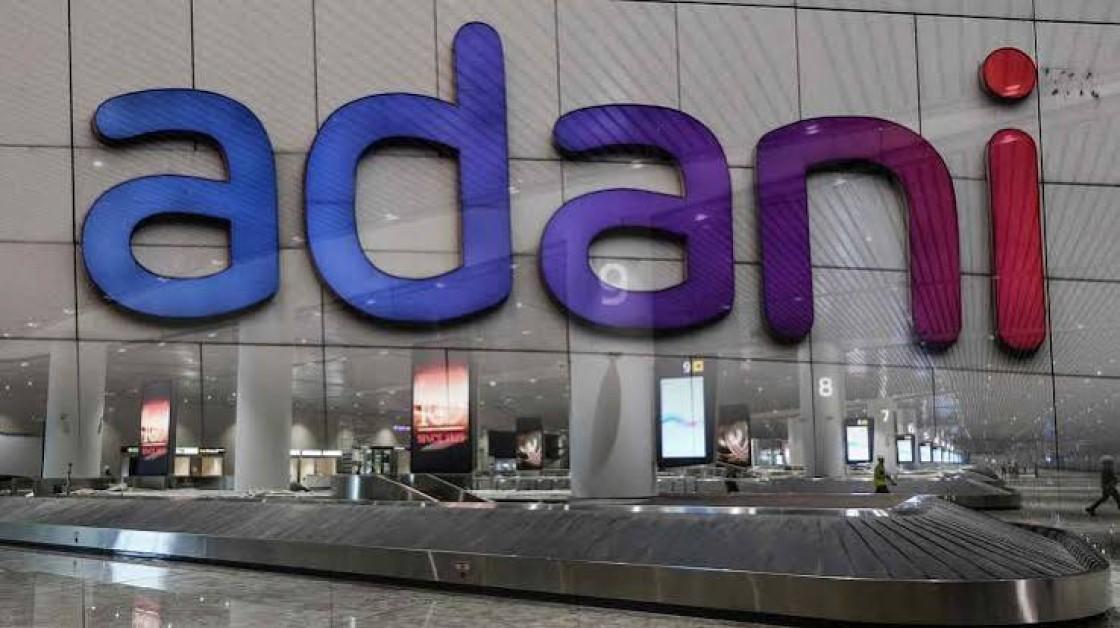
Adani Airports to Raise About $1 Billion From Temasek, BlackRock, Alpha Wave and Premji Invest
Adani Airport Holdings Limited has entered into binding agreements to raise ₹9,825 crore, or about $1 billion, in primary equity from a consortium comprising Alpha Wave Global, Premji Invest, Temasek and BlackRock-managed funds, providing fresh capital for one of India's largest private airport platforms as it accelerates infrastructure, airport-city and non-aeronautical expansion.
The transaction values Adani Airport Holdings Limited, or AAHL, at approximately $18 billion on a pre-money equity basis, creating a significant external institutional valuation benchmark for the airport business of Adani Enterprises.
The investors will subscribe to newly issued AAHL shares through three tranches. After completion of all three tranches, the consortium will collectively own approximately 5.54% of the airport company, while Adani Enterprises will remain its controlling shareholder.
The final tranche is expected to be completed by July 2027, subject to applicable approvals and other customary conditions.
The capital will be directed toward three major areas: expanding and modernising AAHL's airport infrastructure, developing approximately 22 million square feet of mixed-use Adani Airport City projects in the first phase, and scaling businesses such as ground handling and passenger-facing services.
AAHL expects these investments to increase the platform's capacity to approximately 200 million passengers annually, significantly expanding the scale of a network that already operates eight Indian airports.
Adani Airports Signs Binding Agreements for ₹9,825 Crore

AAHL announced the transaction on:
September 9, 2026.
The company has entered into a:
Share Subscription Agreement
and a:
Shareholders' Agreement
with the investor consortium.
The fundraising totals:
₹9,825 crore, or approximately $1 billion.
Importantly, this is a primary equity transaction.
The investors are subscribing to new AAHL shares, meaning the capital will flow directly into the airport company to fund expansion rather than representing only a secondary sale by an existing shareholder.
Temasek, BlackRock, Alpha Wave and Premji Invest Join the Deal
The investment consortium brings together four major institutional investment platforms:
Alpha Wave Global, Premji Invest, Temasek and funds managed by BlackRock.
Their participation provides AAHL with long-duration institutional capital as India's aviation market enters another period of airport capacity expansion.
It also gives Adani Airports a new group of external institutional shareholders alongside controlling parent Adani Enterprises.
The individual investment amounts for each participant have not been publicly disclosed.
AAHL Gets $18 Billion Pre-Money Valuation
The transaction values Adani Airport Holdings at approximately:
$18 billion before the investment.
This pre-money valuation is strategically important because AAHL is currently an unlisted subsidiary of Adani Enterprises.
The fundraising therefore creates an independent institutional valuation reference for the airport platform.
After including approximately $1 billion of fresh capital, the implied post-money valuation would be around $19 billion, subject to the precise transaction structure and final completion.
Investors to Collectively Own Around 5.54%
Following completion of all three investment tranches, the consortium will collectively hold approximately:
5.54% of AAHL.
Adani Enterprises will continue to control the airport company.
The structure allows the parent to bring external capital into AAHL without relinquishing control of a business that has become one of the most important components of its infrastructure portfolio.
It also gives institutional investors direct exposure to India's airport-growth story rather than requiring them to invest only through the broader Adani Enterprises platform.
Investment Will Be Completed in Three Tranches
The $1 billion investment will not arrive through a single transaction.
The new shares will be subscribed to in:
three tranches.
The final tranche is expected to be completed by:
July 2027.
The phased structure allows the capital infusion to align with the airport platform's development programme and transaction conditions.
Completion remains subject to customary conditions precedent, including applicable regulatory approvals.
Adani Airports Will Use Capital to Expand Infrastructure
The first major use of proceeds will be:
airport infrastructure expansion and modernisation.
Airport capacity is capital intensive.
Expansion can require investment in terminals, airside infrastructure, baggage systems, passenger-processing technology, security infrastructure and associated facilities.
As passenger volumes increase, airports must continually expand these systems to prevent capacity constraints.
AAHL intends to use the new institutional capital to support that investment across its portfolio.
Capacity Target Rises Toward 200 Million Passengers
The investments are expected to increase AAHL's airport capacity to approximately:
200 million passengers annually.
That would substantially expand the scale of the platform.
The company already manages eight airports and has established a significant position in Indian aviation.
Increasing passenger-handling capacity gives AAHL the ability to participate in long-term growth in domestic and international air travel without relying exclusively on existing infrastructure.
AAHL Operates Eight Airports Across India
Adani Airport Holdings currently manages:
eight airports.
Its portfolio includes major aviation gateways such as:
Mumbai International Airport,
Ahmedabad,
Lucknow,
Mangaluru,
Jaipur,
Guwahati,
Thiruvananthapuram,
and Navi Mumbai.
The portfolio gives the company exposure to several of India's largest metropolitan and regional aviation markets.
Mumbai and Navi Mumbai are particularly important because together they create the potential for a major multi-airport system serving one of India's largest urban economies.
Adani Airports Handles More Than 23% of India’s Passenger Traffic
According to the company, AAHL's network serves:
more than 23% of India's total passenger traffic.
That makes the platform one of the country's largest private airport operators.
Its scale also creates opportunities beyond conventional aeronautical revenue.
Large passenger volumes can support businesses spanning:
retail,
food and beverage,
advertising,
parking,
lounges,
ground handling,
commercial property,
and passenger services.
The new capital is designed partly to accelerate these adjacent revenue streams.
Airport Cities Become a Major Part of the Strategy
A significant element of AAHL's expansion plan involves:
Adani Airport City developments.
The company plans approximately:
22 million square feet of mixed-use development in the first phase.
Airport-city development extends the economics of an airport beyond terminals and runways.
Land surrounding major airports can support commercial activities such as offices, hotels, retail, logistics, entertainment and other mixed-use developments.
This can create recurring revenue that is less directly dependent on aircraft movements.
Airport City Model Can Increase Non-Aeronautical Revenue
The airport-city strategy reflects a model already used by several major international airport operators.
A conventional airport earns revenue from activities such as:
landing charges,
passenger fees,
aircraft parking,
and aviation services.
An integrated airport ecosystem can generate additional income from:
retail,
real estate,
hospitality,
parking,
advertising,
food and beverage,
and other commercial services.
The more revenue generated outside core aviation charges, the more diversified the airport's economics can become.
Ground Handling Is Another Expansion Area
AAHL also plans to use part of the proceeds to scale its:
ground handling business.
Ground handling covers essential services required while aircraft are at airports.
These can include baggage handling, ramp services, aircraft support and other operational functions.
Expanding into adjacent aviation services allows an airport operator to capture a larger portion of economic activity occurring across its network.
The company has identified this as one of its important non-aeronautical growth opportunities.
Passenger-Facing Businesses Will Also Receive Investment
The fundraising will support expansion of:
passenger-facing businesses.
Modern airports increasingly compete on the overall traveller experience rather than infrastructure alone.
Passengers interact with airports through:
digital services,
retail,
lounges,
food and beverage,
parking,
transport connections,
and other amenities.
Improving these services can increase both customer satisfaction and commercial revenue per passenger.
Institutional Investment Creates External Valuation Benchmark
One of the most important financial implications of the transaction is the valuation benchmark it establishes.
AAHL has grown rapidly within Adani Enterprises, but its value has historically been embedded within the parent company's broader portfolio.
An approximately:
$18 billion pre-money valuation
from a consortium of institutional investors gives the market a more explicit reference for the airport business.
This can help investors evaluate the contribution of airports to Adani Enterprises' overall enterprise value.
Primary Capital Reduces Dependence on Parent Funding
The structure also gives AAHL access to its own external equity capital.
Large airport projects require substantial investment over long periods.
Funding everything through the parent company can compete with capital requirements across Adani Enterprises' other incubating businesses.
Bringing institutional investors directly into AAHL creates another source of growth capital.
That can support airport expansion while preserving capital flexibility at the parent level.
Deal Follows Adani Enterprises’ ₹15,000 Crore QIP
The airport transaction follows another major fundraising by Adani Enterprises.
In July 2026, AEL completed a:
₹15,000 crore qualified institutional placement.
The company described it as India's largest QIP by a non-financial corporate.
Together, the AEL QIP and AAHL equity investment demonstrate the group's access to substantial pools of institutional capital as it funds businesses spanning infrastructure, airports, energy and other emerging sectors.
Two Transactions Bring More Than ₹24,000 Crore of Equity Capital
Combined, the July QIP and the airport fundraising represent more than:
₹24,800 crore
of equity capital.
The ₹15,000 crore parent-level QIP was followed by approximately ₹9,825 crore of primary equity committed directly to the airport subsidiary.
The two transactions serve different purposes, but together they expand the capital available across Adani Enterprises and its airport platform.
For infrastructure businesses with large development pipelines, equity capital can also provide a stronger foundation for future debt financing.
Adani Enterprises Shares Rise After Announcement
Investors responded positively to the airport fundraising announcement.
Adani Enterprises shares rose strongly during September 9 trading, outperforming a broader Indian equity market that was under pressure.
The stock gained more than 5% during the session as investors reacted to the transaction and the valuation benchmark established for AAHL.
The share-price reaction indicates that the market viewed the external investment as strategically significant for the parent company.
India's Aviation Market Provides Long-Term Growth Opportunity
The investment is ultimately a bet on the expansion of:
Indian aviation.
India has a large population but air-travel penetration remains relatively low compared with many mature aviation markets.
Rising incomes, urbanisation, tourism, business travel and improving regional connectivity can increase passenger volumes over the long term.
Airlines are simultaneously expanding fleets and route networks.
That creates pressure for corresponding investment in:
terminals,
runways,
airport systems,
and passenger services.
Airport Capacity Must Keep Pace With Airline Expansion
Airlines cannot expand indefinitely without adequate airport capacity.
Congested airports can constrain:
flight frequencies,
new routes,
aircraft utilisation,
and passenger growth.
India therefore needs substantial airport investment alongside airline fleet expansion.
AAHL's plan to reach capacity of approximately 200 million passengers annually positions the company to capture a significant portion of that infrastructure requirement.
Navi Mumbai Strengthens Adani’s Airport Portfolio
Navi Mumbai International Airport is strategically important to AAHL's long-term scale.
The new airport is designed to relieve capacity pressure in the Mumbai metropolitan region and create additional aviation infrastructure for one of India's largest economic centres.
Its development also creates opportunities for surrounding:
commercial,
logistics,
hospitality,
and real-estate activity.
The combination of Mumbai International Airport and Navi Mumbai gives AAHL a particularly strong position in western India's aviation market.
Airports Are Becoming Broader Consumer Platforms
The transaction also highlights how airport economics are evolving.
An airport is no longer viewed only as:
transport infrastructure.
Large airports increasingly function as:
consumer,
retail,
commercial,
hospitality,
logistics,
and real-estate ecosystems.
Millions of passengers passing through the same location create a valuable consumer audience.
AAHL's investment in airport cities and passenger-facing businesses is designed to monetise this broader opportunity.
Commercial Monetisation Can Improve Airport Economics
Aeronautical revenue is often influenced by regulatory frameworks and traffic volumes.
Commercial revenue provides another growth engine.
As passenger numbers rise, airports can potentially increase revenue through:
premium retail,
lounges,
restaurants,
advertising,
parking,
digital services,
and other offerings.
City-side development adds another layer by monetising land around airports.
The strategy therefore seeks to increase both passenger capacity and revenue generated from each airport ecosystem.
Temasek Investment Adds Long-Term Institutional Capital
Temasek's participation is notable because the Singapore investment company is known for taking long-duration positions across major industries.
Its investment gives it direct exposure to Indian aviation infrastructure through AAHL.
Temasek already has significant experience investing across transportation, financial services, technology and consumer businesses.
Its participation alongside other global investors broadens the institutional shareholder base supporting Adani Airports' next development phase.
BlackRock-Managed Funds Join Investor Consortium
Funds managed by BlackRock are also participating in the transaction.
BlackRock is one of the world's largest asset managers, investing across public and private markets for institutional and individual clients.
Its participation through managed funds adds another major global institutional name to AAHL's shareholder base.
For Adani Airports, attracting capital from large global investment platforms can support both financing and external validation of the business model.
Premji Invest Brings Domestic Long-Term Capital
Premji Invest is another significant participant.
The investment office associated with Azim Premji has backed businesses across technology, financial services, healthcare, consumer sectors and other areas.
Its participation gives the transaction a major domestic institutional component alongside international investors.
Premji Invest has described Indian aviation as being at an important inflection point supported by demographics, rising consumer aspirations and policy development.
Alpha Wave Global Completes the Consortium
Alpha Wave Global is also part of the investor group.
The investment firm has deployed capital across technology, growth businesses and other sectors internationally, including significant investments in India.
Its participation reinforces the mix of domestic and global capital supporting AAHL.
The four-investor consortium therefore gives Adani Airports access to institutions with different investment backgrounds while concentrating them around a common long-term infrastructure thesis.
Transaction Could Influence Future Airport Financing
The deal could have broader implications for Indian infrastructure financing.
Airport projects traditionally rely heavily on:
sponsor equity,
bank financing,
and debt markets.
Direct institutional equity investment creates another funding route.
If large investors continue allocating capital to airport platforms, infrastructure operators may have greater flexibility in financing future expansion without relying disproportionately on leverage.
That could become increasingly important as India builds more capital-intensive transport infrastructure.
AAHL Wants to Build a Global-Scale Airport Platform
Adani Airport Holdings has set an ambitious long-term objective.
Chief Executive Arun Bansal has said the company intends to build the capabilities required to scale AAHL into one of the world's largest airport platforms.
Achieving that ambition will require more than acquiring airports.
The company will need to expand:
passenger capacity,
operational capabilities,
commercial revenue,
technology,
service quality,
and city-side development.
The $1 billion equity investment provides additional capital for that next phase.
Conclusion
Adani Airport Holdings has entered into binding agreements to raise ₹9,825 crore, or approximately $1 billion, from a consortium comprising Alpha Wave Global, Premji Invest, Temasek and BlackRock-managed funds.
The primary equity transaction values AAHL at approximately $18 billion before the investment, providing an important external institutional valuation benchmark for Adani Enterprises' airport business.
The investors will subscribe to new shares across three tranches and collectively own approximately 5.54% of AAHL after completion, while Adani Enterprises will remain the controlling shareholder. The final tranche is expected by July 2027.
The capital will support airport modernisation, expansion toward approximately 200 million passengers of annual capacity, development of about 22 million square feet of mixed-use Airport City projects in the first phase, and growth of ground handling and other non-aeronautical businesses.
Coming after Adani Enterprises' ₹15,000 crore QIP in July, the transaction also demonstrates the group's continued ability to attract substantial institutional equity for its expansion plans.
For AAHL, the significance extends beyond the $1 billion itself. The deal brings major long-term investors directly into the airport platform as the company attempts to transform its eight-airport network into a broader aviation, consumer-services and airport-city infrastructure ecosystem.
 Adani Airports to Raise $1 Billion From Temasek, BlackRock and Other Investors FAQs
POST A COMMENT (0)
All Comments (0)
Replies (0)