




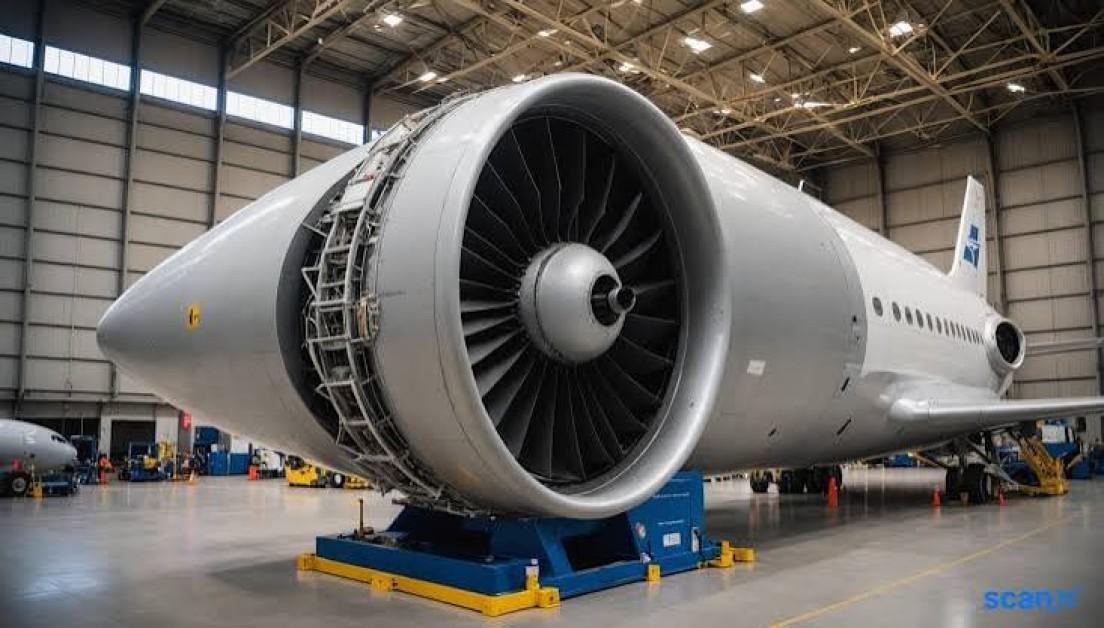
GE Aerospace Earnings Put Global Aircraft-Engine Demand Under Scrutiny
GE Aerospace is scheduled to report its third-quarter 2026 financial results on Tuesday, October 20, with investors focusing on aircraft-engine deliveries, commercial aviation demand, aftermarket services and the company's ability to sustain profitability amid continuing aerospace supply-chain challenges.
The US aerospace manufacturer is expected to release its results before the opening of Wall Street trading, followed by a management conference call.
The announcement will cover the three months ended September 30, 2026.
GE Aerospace is a major supplier of commercial and military aircraft propulsion systems, including engines, components and related maintenance services.
Its financial performance is closely linked to aircraft production schedules, airline fleet utilisation, engine maintenance requirements and defence procurement activity.
Investors will assess whether the company has maintained strong demand for its commercial engines and services while managing production constraints.
The results will also provide an important indication of operating conditions across the global aerospace manufacturing industry.
GE Aerospace Q3 2026 Earnings: Key Areas to Watch
|
Indicator |
Details |
|---|---|
|
Company |
GE Aerospace |
|
Stock exchange |
New York Stock Exchange |
|
Trading symbol |
GE |
|
Reporting period |
July–September 2026 |
|
Scheduled earnings date |
October 20, 2026 |
|
Main business |
Commercial and defence aircraft propulsion |
|
Principal commercial engine programmes |
LEAP, GEnx and GE90 |
|
Major joint venture |
CFM International |
|
Key revenue driver |
Aircraft engines and aftermarket services |
|
Main investor focus |
Engine deliveries, service revenue and margins |
|
Important operational issue |
Aerospace supply-chain capacity |
|
Strategic priority |
Increasing production and servicing installed engines |
The announcement will be particularly relevant to investors tracking the recovery and expansion of global commercial aviation.
Aircraft-Engine Demand Remains a Central Earnings Driver

Demand for aircraft engines is closely connected to production activity at major commercial aircraft manufacturers.
Airlines require new aircraft to expand fleets, replace older equipment and improve fuel efficiency.
Aircraft manufacturers depend on engine suppliers to meet delivery schedules.
GE Aerospace participates in this market through its own engine programmes and its CFM International joint venture.
CFM International, jointly owned by GE Aerospace and Safran Aircraft Engines, manufactures the LEAP engine family.
LEAP engines power selected versions of the Airbus A320neo and Boeing 737 MAX aircraft families.
Demand for these aircraft supports engine production requirements.
However, converting demand into revenue depends on manufacturing capacity and delivery schedules.
Investors will assess whether GE Aerospace increased engine shipments during the September quarter.
LEAP Engine Deliveries Attract Investor Attention
The LEAP engine programme is among the most important commercial aviation products associated with GE Aerospace.
The engines are designed to provide improved fuel efficiency compared with earlier-generation aircraft propulsion systems.
They are used extensively in narrowbody aircraft, which represent a significant portion of global airline fleets.
Demand for LEAP engines is influenced by aircraft production at Airbus and Boeing.
Investors will examine quarterly delivery volumes and management commentary concerning future production.
Higher deliveries can support revenue growth.
However, manufacturing efficiency and component availability also influence profitability.
The company's ability to increase production without compromising quality or reliability remains essential.
CFM International Plays a Major Role in Commercial Aviation
CFM International is a joint venture between GE Aerospace and Safran Aircraft Engines.
The partnership manufactures commercial aircraft engines and provides associated services.
Its product portfolio includes the LEAP and CFM56 engine families.
The CFM56 has a substantial installed base across commercial aviation.
Although production of newer aircraft increasingly uses LEAP engines, the existing CFM56 fleet continues to generate maintenance demand.
This combination of new-engine production and services provides an important business model.
Engine manufacturers can earn revenue when equipment is delivered and throughout its operational life.
Investors will assess how both activities contributed to GE Aerospace's quarterly performance.
Aftermarket Services Could Support Profitability
Aircraft-engine maintenance and repair services are a major source of revenue for GE Aerospace.
Commercial engines require regular inspections, component replacement and maintenance throughout their operating lives.
These services are necessary to maintain safety and reliability.
The aftermarket business can provide recurring revenue linked to aircraft utilisation and maintenance schedules.
It also has different profitability characteristics from the sale of new engines.
Investors will examine whether services revenue continued growing during the third quarter.
Strong airline activity can increase engine utilisation and support demand for maintenance.
However, the timing of shop visits and the availability of spare parts can influence quarterly performance.
Airline Fleet Utilisation Influences Service Revenue
Airline fleet utilisation is an important indicator for aircraft-engine service providers.
When aircraft operate more frequently, their engines accumulate flight hours and cycles.
This can increase future maintenance requirements.
Global passenger traffic has supported demand for commercial aviation services.
Airlines are also extending the operating lives of some existing aircraft as manufacturers work through delivery backlogs.
This can create additional maintenance opportunities.
However, service revenue depends on contractual arrangements and the timing of maintenance events.
GE Aerospace's earnings will provide insight into how these trends affected its business.
Aerospace Supply Chains Remain Under Pressure
Supply-chain constraints continue to influence aircraft and engine manufacturing.
Aerospace production requires specialised materials, precision components and highly regulated manufacturing processes.
Suppliers must meet strict quality and certification requirements.
Production disruptions can affect engine deliveries and maintenance schedules.
Manufacturers may also face higher costs associated with labour, materials and logistics.
GE Aerospace has been working to increase production capacity and improve supplier performance.
Investors will assess whether these initiatives supported stronger deliveries during the quarter.
The company's ability to manage supply-chain challenges will remain important for meeting customer demand.
Manufacturing Capacity Becomes a Key Operational Priority
Aircraft-engine production involves complex manufacturing processes.
Components must meet demanding technical and safety standards.
Increasing output therefore requires coordination across suppliers, factories and quality-control systems.
GE Aerospace has invested in expanding manufacturing capabilities.
These investments are intended to support higher engine production and improve operational efficiency.
However, additional capacity can require significant expenditure before it contributes fully to revenue.
Investors will examine whether production improvements are translating into higher deliveries and stronger operating performance.
Management commentary concerning supplier readiness and manufacturing productivity will also be important.
Commercial Engines and Services Segment in Focus
GE Aerospace's Commercial Engines and Services business is central to its financial performance.
The segment includes commercial engine production, spare parts and maintenance services.
Demand is influenced by aircraft manufacturing and airline operations.
The business benefits from a substantial installed base of engines operating worldwide.
That installed base can generate service requirements over many years.
However, profitability depends on product mix, service activity and manufacturing costs.
Investors will assess revenue growth and operating margins within the segment.
The results will provide information about the company's ability to balance new-engine investment with recurring aftermarket earnings.
Defence and Propulsion Technologies Add Business Diversification
GE Aerospace also supplies propulsion systems and related technologies for military aircraft.
Its defence operations serve government and military customers.
Demand depends on procurement programmes, defence budgets and long-term contracts.
Military engine programmes can provide revenue diversification beyond commercial aviation.
However, defence projects may involve complex development schedules and contractual requirements.
Investors will examine the performance of the company's Defence and Propulsion Technologies segment.
The results may provide insight into military engine demand and programme execution.
The contribution of defence operations can help balance changes in commercial aviation activity.
GE Aerospace's Second-Quarter Results Set the Benchmark
GE Aerospace entered the September quarter after reporting strong financial performance during Q2 2026.
The company recorded second-quarter adjusted revenue of approximately $10.2 billion.
Adjusted earnings per share reached approximately $1.85.
The results reflected continued demand for commercial engines and services.
Management also raised its full-year 2026 financial guidance.
The second-quarter performance established a strong benchmark for the latest earnings announcement.
Investors will assess whether the company maintained similar operating momentum.
Any change in full-year guidance could influence market expectations.
Full-Year 2026 Guidance Will Be Closely Watched
GE Aerospace previously raised its 2026 financial outlook.
The company projected adjusted revenue growth in the low-to-mid teens.
It also increased expectations for adjusted earnings per share and free cash flow.
Investors will examine whether management maintains or revises these forecasts.
Guidance provides an indication of expected operating conditions during the remaining months of the year.
However, actual results can be affected by delivery timing, production costs and service activity.
A stronger outlook could indicate confidence in demand and execution.
A weaker forecast could raise concerns about supply-chain constraints or profitability.
The October 20 announcement will therefore be important for evaluating the company's near-term financial direction.
Analysts Expect Double-Digit Earnings Growth
Market estimates ahead of the announcement indicate expectations for GE Aerospace to report adjusted earnings of approximately $2.01–$2.02 per share.
Revenue forecasts range from approximately $12.7 billion to $12.9 billion, depending on the estimate.
These projections imply double-digit year-on-year revenue growth and an increase of approximately 21% in adjusted earnings per share.
However, analyst estimates are not reported financial results.
The company's actual performance will depend on engine shipments, services activity, costs and other operating factors.
Investors will also compare the results with expectations already reflected in GE Aerospace's share price.
Strong Order Backlog Supports Revenue Visibility
GE Aerospace entered the third quarter with a backlog exceeding $210 billion.
The backlog includes commitments associated with commercial engines, services and defence programmes.
A substantial backlog can provide visibility into future demand.
However, orders do not immediately translate into revenue.
Revenue recognition depends on product deliveries, service performance and contractual arrangements.
The company's ability to execute against its backlog will therefore remain important.
Investors will assess whether GE Aerospace is converting demand into higher output and stronger cash generation.
First-Half Engine Deliveries Increased 31%
GE Aerospace reported a 31% increase in total engine deliveries during the first half of 2026.
LEAP engine deliveries increased 41% over the same period.
The growth demonstrated progress in manufacturing output and supplier performance.
The company also reported stronger material deliveries from priority suppliers.
These improvements supported higher commercial engine revenue.
However, sustaining production growth requires continued coordination across the supply chain.
The September-quarter results will show whether the company maintained the momentum established during the first half.
Commercial Services Revenue Shows Strong Momentum
GE Aerospace's commercial services business delivered substantial growth during the first half of 2026.
Services revenue increased 32%, supported by higher maintenance activity.
The company also reported record internal engine shop-visit output during the second quarter.
Stronger maintenance demand reflects the size and utilisation of its installed engine fleet.
Service revenue can provide greater visibility than new equipment sales because engines require maintenance throughout their operating lives.
However, quarterly growth can vary depending on the timing of shop visits and spare-parts deliveries.
Investors will examine whether services activity remained strong in the September quarter.
LEAP Durability Improvements Could Support Long-Term Performance
GE Aerospace and Safran have continued developing improvements for the LEAP engine family.
The LEAP-1B durability kit received certification during the second quarter of 2026.
The upgraded technology is designed to improve engine time-on-wing, with the company targeting approximately twice the durability under relevant operating conditions.
Time-on-wing measures how long an engine can operate before requiring certain maintenance interventions.
Improving durability can reduce disruption for airline customers and support long-term product competitiveness.
However, the commercial impact will depend on implementation and operational performance.
GE Aerospace expects broader introduction of the upgraded components beginning in 2027.
Aircraft Production at Boeing and Airbus Remains Important
Boeing and Airbus are major customers for commercial aircraft propulsion systems.
Their production schedules influence demand for new engines.
The Boeing 737 MAX uses LEAP-1B engines, while selected Airbus A320neo-family aircraft use LEAP-1A engines.
Aircraft manufacturers have been working to increase production while addressing supply-chain constraints.
Higher aircraft output can support engine deliveries.
However, manufacturing delays or changes in aircraft certification schedules can affect the timing of orders and shipments.
GE Aerospace's earnings will provide insight into whether its production network is keeping pace with customer requirements.
Defence Orders Provide Additional Growth Opportunities
GE Aerospace's defence business has secured contracts across military aircraft programmes.
Recent developments include engine selections associated with the Turkish HÜRJET advanced jet trainer and the United Kingdom's New Medium Helicopter programme.
The company is also developing advanced propulsion technologies for future military applications.
These programmes can provide long-term opportunities.
However, defence revenue depends on procurement schedules, contract execution and programme funding.
The September-quarter results will provide an indication of current demand and operating performance.
Investors will also monitor management commentary concerning future defence orders.
Research and Development Remains a Strategic Priority
GE Aerospace continues investing in propulsion technologies intended to improve efficiency and performance.
The company's development activities include advanced engine architectures and hybrid-electric propulsion systems.
Its collaboration with NASA on electrified powertrain technology has reached ground-testing milestones.
These programmes may influence future aircraft propulsion systems.
However, research and development requires sustained investment, and commercial applications can take years to emerge.
Investors will assess how the company balances technology investment with near-term profitability and cash generation.
Free Cash Flow Will Be Closely Watched
Free cash flow is an important measure of GE Aerospace's financial performance.
It reflects the company's ability to generate cash after capital expenditure.
Strong cash generation can support manufacturing investment, research and development, shareholder returns and other corporate priorities.
However, cash flow may vary depending on customer payments, inventory and production activity.
The company reported a 31% increase in free cash flow during the first half of 2026.
Investors will assess whether this performance continued during the September quarter.
Cash conversion will remain particularly important as GE Aerospace expands production and invests in manufacturing capacity.
Industrial Productivity Influences Profit Margins
GE Aerospace uses its FLIGHT DECK operating system to support productivity and operational improvements.
The approach focuses on manufacturing efficiency, problem-solving and continuous improvement.
Improved productivity can help offset inflation and other cost pressures.
However, higher engine production does not necessarily result in immediate margin expansion.
New equipment sales can have different profitability characteristics from aftermarket services.
The company's operating margin therefore depends partly on the balance between engine deliveries and maintenance activity.
Investors will examine whether productivity improvements helped support profitability during the quarter.
Aerospace Inflation and Labour Costs Remain Risks
Aerospace manufacturing requires highly skilled workers and specialised materials.
Labour costs and component prices can influence profitability.
Companies may also incur additional expenses when increasing production capacity.
Supply-chain disruptions can create inefficiencies and affect delivery schedules.
GE Aerospace must manage these factors while meeting customer commitments.
Higher prices for materials and services may offset some of the benefits of revenue growth.
The company's ability to maintain operating discipline will remain important.
Management commentary on inflation and supplier performance will provide further insight into the cost environment.
GE Aerospace Shares Face Valuation Scrutiny
GE Aerospace shares have attracted investor interest because of strong commercial aviation demand and the company's aftermarket business.
However, the stock has also experienced periods of volatility.
Investors are assessing whether expectations for future earnings growth are adequately reflected in the share price.
Strong financial results could support confidence in the company's outlook.
However, weaker-than-expected margins or guidance could create pressure.
The market reaction will depend on the relationship between actual results and investor expectations.
A single quarterly announcement may not fully determine the company's long-term prospects.
Implications for the Global Aerospace Industry
GE Aerospace's earnings will provide information about conditions across the aerospace supply chain.
Engine manufacturers are closely linked to aircraft production and airline operations.
Higher engine deliveries can indicate improving manufacturing capacity.
Strong aftermarket revenue may reflect continued airline fleet utilisation and maintenance demand.
However, the financial performance of one supplier does not necessarily represent the entire aerospace industry.
Companies have different product portfolios, contractual arrangements and cost structures.
Investors will compare GE Aerospace's results with those of other manufacturers and suppliers.
What Investors Will Watch During the Earnings Call
The earnings conference call will provide an opportunity for management to explain the company's quarterly performance.
Investors will focus on engine deliveries, commercial services revenue and operating margins.
Management's assessment of supply-chain conditions will also be important.
Additional attention will be given to the order backlog, defence programmes and full-year guidance.
The company's expectations for free cash flow and manufacturing investment could influence the outlook.
Any changes to production forecasts may affect expectations for aircraft manufacturers and suppliers.
Outlook for GE Aerospace
GE Aerospace enters the third-quarter earnings announcement with strong demand across commercial engines and aftermarket services.
The company's substantial backlog provides visibility into future business opportunities.
Higher engine deliveries and maintenance activity have supported recent financial performance.
However, supply-chain capacity, manufacturing costs and delivery schedules remain important considerations.
The company's ability to increase output while maintaining profitability will be central to its outlook.
Investors will also assess whether GE Aerospace can sustain strong cash generation.
The October 20 results will provide further evidence about the company's progress toward its full-year financial objectives.
Conclusion
GE Aerospace is scheduled to report its third-quarter 2026 financial results on October 20, with investors focusing on commercial aircraft-engine demand, aftermarket services and industrial profitability.
The company enters the announcement after reporting strong first-half performance, including a 31% increase in total engine deliveries and 41% growth in LEAP engine shipments.
Commercial services revenue also expanded significantly, supported by higher maintenance activity.
GE Aerospace's backlog exceeding $210 billion provides substantial visibility into future demand.
However, manufacturing constraints, inflation and production costs remain important challenges.
Analysts expect double-digit revenue growth and adjusted earnings of approximately $2.01–$2.02 per share for the September quarter.
The results will establish whether the company maintained its recent operating momentum.
Investors will also assess management's full-year guidance, free cash flow expectations and progress in expanding production capacity.
The announcement will provide an important indication of demand and operating conditions across the global aerospace manufacturing industry.
 GE Aerospace Q3 2026 Earnings Preview: Aircraft-Engine Demand and Profit Outlook in Focus FAQs

POST A COMMENT (0)
All Comments (0)
Replies (0)