





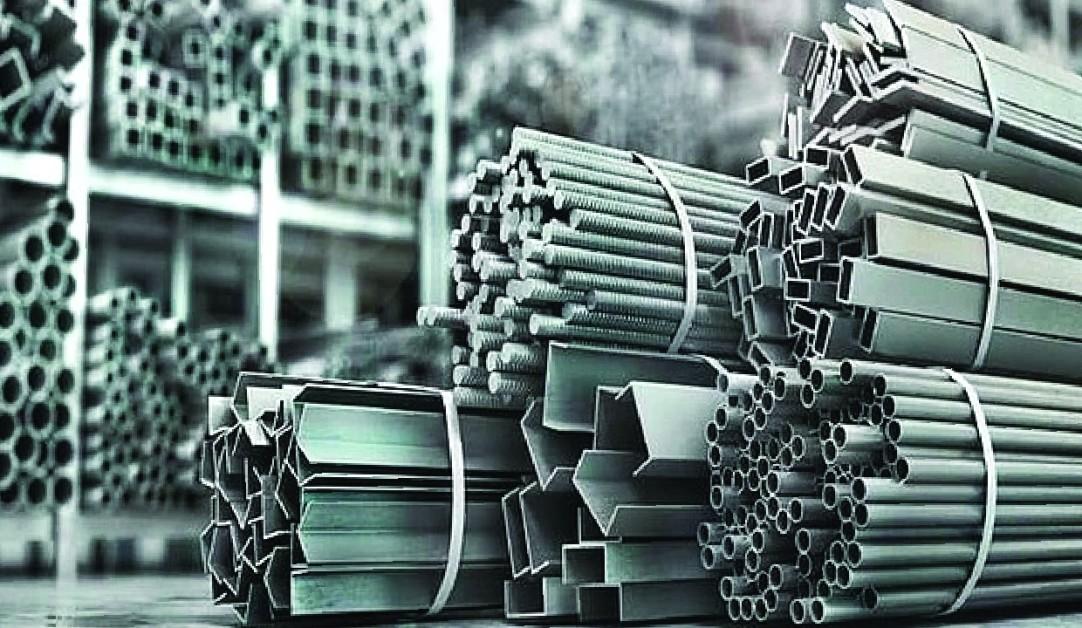
Government Plans ₹5,000 Crore Green Steel Technology Scheme
A new ₹5,000 crore scheme aims to help India's steelmakers, especially smaller secondary producers, adopt clean technologies and cut emissions from one of the country's most carbon-intensive industries.
By Naina, 30th June 2026
The government is planning a ₹5,000 crore green steel technology scheme to promote the adoption of clean technologies in steelmaking and reduce carbon emissions from one of India's most polluting industries. Named the National Strategy for Sustainable Secondary Steel, the scheme is expected to be launched within the next three months and may go to the union cabinet for approval, according to officials. It will cover all steelmakers in the country, but a major share of the funds will be earmarked for secondary producers. The move marks a significant step in India's effort to decarbonise heavy industry while keeping its steel sector globally competitive.
Steel is essential to India's growth, underpinning infrastructure, construction, and manufacturing, but it is also a major source of industrial carbon emissions, largely because of its dependence on coal. As the world's second-largest steel producer races to expand output, cutting the sector's carbon footprint has become both an environmental necessity and a competitive imperative, with export markets increasingly favouring low-carbon products. The scheme is part of a broader green steel push that could reshape how India makes one of its most important materials. Here is what the scheme involves and why it matters.
The Scheme
At its core is a focused financial push. The proposed scheme carries an outlay of ₹5,000 crore and aims to promote the adoption of clean technologies and alternative materials across various steelmaking processes to cut carbon emissions. Officials say it could be launched within three months and may require union cabinet approval. Branded the National Strategy for Sustainable Secondary Steel, it is designed to accelerate the industry's shift toward greener production. While the scheme will cover the entire sector, its design reflects a deliberate focus on the segment of the industry where emissions reductions can be achieved most readily and where support is most needed.
The Secondary Steel Focus
The scheme tilts toward secondary producers. These are the steelmakers that rely on scrap and sponge iron, using electric arc and induction furnaces rather than coal-intensive blast furnaces, and they account for nearly half of India's steel output. A major share of the funds will be earmarked for this segment, which is typically more fragmented and includes many smaller players with less capital to invest in green upgrades. By targeting secondary steel, the government is focusing on a route that is inherently less carbon-intensive and where targeted support can yield significant emissions reductions, while primary producers using blast furnaces will also be eligible.
The Financial Toolkit
The support will come through a mix of financial instruments. Plans for the broader effort include concessional loans, risk guarantees, and other incentives designed to lower the cost and risk of adopting cleaner technologies. Green steel production often requires expensive new equipment and unproven processes, which can deter companies, particularly smaller ones, from investing. By de-risking these investments and improving their economics, the scheme aims to catalyse private capital into the green transition. Officials believe government backing could make firms more willing to undertake large-scale projects involving cleaner fuels, renewable energy, and energy-efficient technologies in steelmaking.
The Emissions Challenge
The scheme addresses a pressing problem. Steel is among the hardest industries to decarbonise because traditional production depends heavily on coal, making the sector a significant contributor to India's industrial carbon emissions. As India pursues a long-term net-zero goal and seeks to balance rapid economic growth with climate commitments, cutting emissions from steel is essential. The challenge is to reduce the carbon footprint without constraining the output the economy needs. Promoting clean technologies, alternative materials, energy efficiency, and cleaner fuels offers a path to lowering emissions per tonne of steel while sustaining the industry's growth.
The Broader Green Steel Mission
The scheme sits within a wider strategy. Alongside it, the steel ministry has been preparing a broader Green Steel Mission that could include a production-linked incentive scheme for green steel, incentives for renewable energy use, and rules requiring government bodies to procure sustainable steel. Officials have considered mandating that a meaningful share of public steel procurement come from green sources, using the government's buying power to create demand. Green hydrogen, as a coal substitute, and research into low-carbon production methods are also priorities. Together, these measures aim to build both the supply of and demand for greener steel.
The Demand Outlook
Demand for green steel is projected to surge. Industry studies estimate that consumption, negligible today, could rise to several million tonnes by 2030 and grow many times over in the following decades, driven by construction, infrastructure, and automobile manufacturing. As the largest consumers increasingly demand low-carbon materials, a domestic green steel industry would let India capture this emerging market rather than cede it. Building capacity early, supported by schemes like the one planned, positions Indian steelmakers to meet rising domestic and global demand for sustainable products, turning decarbonisation from a cost into a commercial opportunity.
The Global Context
The push has a strong international dimension. Steel markets worldwide are shifting toward sustainability, and major economies are introducing carbon-related trade measures that could penalise high-emission imports. A carbon border levy in key export markets, for instance, could disadvantage carbon-intensive Indian steel, making greener production a matter of competitiveness, not just compliance. As the world's second-largest steel producer, India has both a large stake in global steel trade and an opportunity to position itself as a supplier of sustainable steel. Aligning its industry with global decarbonisation trends is essential to protecting and expanding its export markets.
The Challenges
Significant hurdles remain. Green steel technologies, including green hydrogen-based production, are still maturing and often costlier than conventional methods, and scaling them requires abundant, affordable renewable energy and green hydrogen that India is still building. The secondary steel sector's fragmentation, with many small players, complicates the rollout of support and the adoption of new technologies. Financing the transition at scale, well beyond the initial scheme, will be a major task. Ensuring that incentives translate into actual emissions cuts, rather than just capacity announcements, will require careful design, monitoring, and sustained policy commitment over many years.
The Road Ahead
The planned ₹5,000 crore green steel technology scheme signals India's intent to decarbonise a critical but carbon-heavy industry while keeping it competitive. By focusing support on secondary producers and pairing it with a broader mission spanning incentives, procurement, and green hydrogen, the government is attempting to build both the supply of and demand for sustainable steel. The scheme's real impact will depend on its final design, the speed of approval and rollout, and whether it can catalyse the private investment and technology adoption needed. If executed well, it could help India align industrial growth with its climate goals and emerge as a leader in green steel.
Frequently Asked Questions
What is the green steel technology scheme?
It is a planned government scheme with an outlay of ₹5,000 crore, named the National Strategy for Sustainable Secondary Steel, to promote the adoption of clean technologies and alternative materials in steelmaking and reduce carbon emissions.
When will the scheme launch?
Officials say it is expected to be launched within the next three months and may require approval from the union cabinet before implementation.
Who will the scheme benefit most?
While it covers all steelmakers, a major share of the funds will be earmarked for secondary producers, who use scrap and sponge iron in electric arc and induction furnaces and account for nearly half of India's steel output.
What support will it provide?
The broader effort is expected to include financial tools such as concessional loans, risk guarantees, and incentives to lower the cost and risk of adopting cleaner technologies, alongside measures like green procurement and renewable energy use.
Why is decarbonising steel important?
Steel is a major source of industrial carbon emissions due to its reliance on coal. Cutting these emissions is vital for India's net-zero goals and for keeping its steel competitive as global markets increasingly demand low-carbon products.
 Related News
POST A COMMENT (0)
All Comments (0)
Replies (0)