





By Naina, 28th May 2026
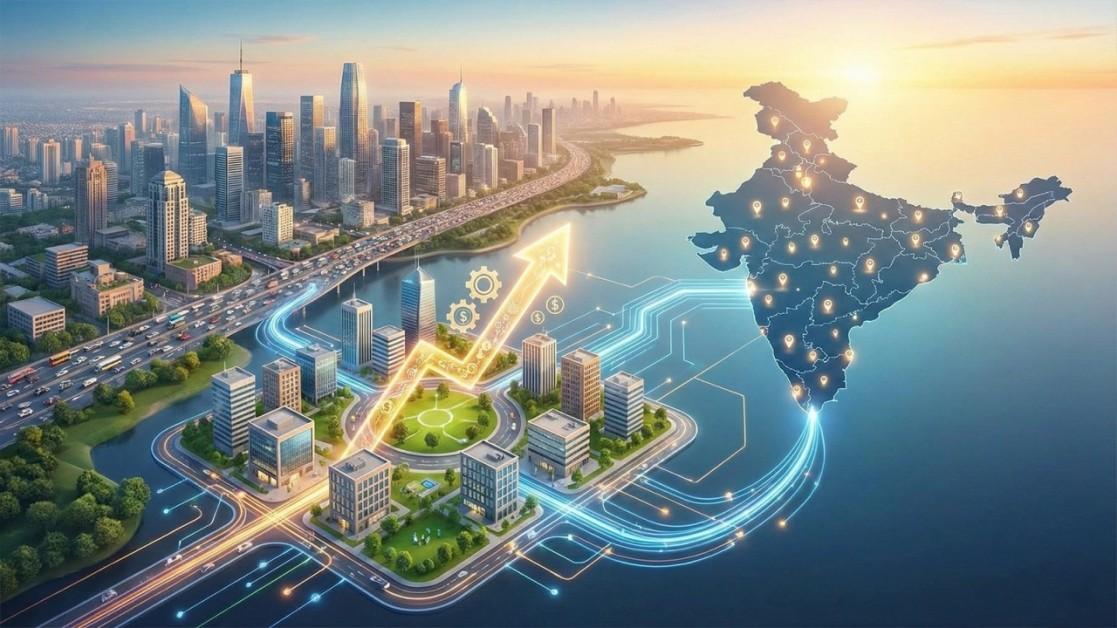
A profound geographic transformation is reshaping India's startup ecosystem, and its principal beneficiaries are the cities that earlier generations of Indian entrepreneurship largely overlooked. For most of the modern history of Indian technology entrepreneurship, the assumption was straightforward and unchallenged: building a startup of consequence meant relocating to Bengaluru, Mumbai or Delhi-NCR. These three metropolitan centres attracted the bulk of venture funding, hosted the principal concentrations of technical talent and became the default launchpads for ambitious founders. That assumption has become progressively inadequate to capture the reality of 2026. According to the Press Information Bureau, over 51 percent of the approximately 200,000 startups recognised by the Department for Promotion of Industry and Internal Trade now come from Tier-2 and Tier-3 cities, a structural shift that funding patterns are beginning to mirror. Founders are now launching consequential startups from Jaipur, Indore, Coimbatore, Kochi, Lucknow and a growing list of additional cities that earlier generations of Indian entrepreneurship treated as peripheral participants at best.
What sits beneath these figures is a deeper transformation in where and how Indian companies are being built. The combination of significant cost advantages, the return of skilled technical talent to their home cities, the dramatic improvement in physical and digital infrastructure, the proliferation of state-led startup missions and incentive programmes, and the broader maturation of the Indian startup ecosystem has produced conditions in which the Tier-2 cities are no longer merely talent back-offices for the metros but are increasingly central to the nation's technology growth story. The Inc42 investor survey of 2025 found that 45 percent of investors identified Hyderabad as the next major epicentre of India's startup revolution, followed by Pune at 20 percent and Jaipur at 10 percent, while more than 56 percent of investors viewed Tier-2 and Tier-3 purchasing power as the next consumer growth engine. The decisions being made now, by the founders building companies in these emerging cities, by the state governments competing to attract entrepreneurial activity and by the investors increasingly looking beyond the established metros, will define the geographic architecture of Indian entrepreneurship for the next generation.
The Structural Shift
The shift of entrepreneurial activity toward Tier-2 cities represents one of the most consequential structural changes in the Indian startup ecosystem. The fact that over half of DPIIT-recognised startups now come from Tier-2 and Tier-3 cities, with the Press Information Bureau citing a figure exceeding 51 percent, represents a fundamental change from the metro-dominated ecosystem of earlier years. The significance of this shift extends beyond the raw numbers. It reflects a broader maturation of the Indian startup ecosystem, in which the assumption that consequential companies must be built in the established metros has been progressively dismantled.
The drivers of this structural shift have been well documented. The cost advantage has been the single most consequential factor. Office rents in cities such as Coimbatore, Indore and Kochi are 30 to 50 percent lower than in Mumbai or Bengaluru, and residential prices follow a similar pattern, making relocation attractive for both companies and employees. Flexible office space in Tier-2 cities delivers savings of up to 50 percent compared to metro markets. The combination of lower operating costs, lower living costs and the broader affordability of building and operating businesses in Tier-2 cities has produced a compelling economic case for founders seeking to build companies with smaller teams and lower burn rates.
The talent dimension has been equally consequential. Cities such as Indore and Coimbatore have increasingly attracted skilled graduates who prefer staying closer to home, creating strong local talent pools while helping startups build competitive teams without paying metro-level salaries. The return of technical talent to their home cities, driven by the broader shift toward remote and hybrid work, the rising quality of life in Tier-2 cities and the broader maturation of the local startup ecosystems, has progressively addressed the talent constraint that historically limited entrepreneurial activity outside the metros. The combination of returning talent and the strong local talent pools produced by the engineering and technical institutions in these cities has built the talent foundation that consequential entrepreneurship requires.
The infrastructure dimension has been one of the most significant changes distinguishing 2026 from earlier predictions of a Tier-2 boom. The supporting infrastructure is real this time. Indore, Kochi, Coimbatore, Jaipur and Lucknow have entered 2026 with stronger commercial pipelines than they have had in over a decade. Metro projects, expressway expansions and improved last-mile connectivity have removed the friction that once made smaller cities a hard sell to global occupiers. Most modern IT parks in these cities have exclusive electrical grids and multiple fibre-optic line backups to guarantee high uptime for operations on a global scale. The combination of physical connectivity through metro and expressway projects and digital connectivity through modern IT park infrastructure has progressively dissolved the infrastructure barriers that historically limited entrepreneurial activity outside the metros.
The Jaipur Story
Jaipur has emerged as one of the most consequential Tier-2 startup hubs in India. The city recorded over 5,000 new company incorporations in 2025, including approximately 500 active startups, with some sources citing over 700 startups in the Jaipur Techno Hub, making it one of the largest incubation spaces in the country. The city has produced several consequential startups, including CarDekho, DealShare and Minimalist, indicative of Jaipur's increasing contribution to the e-commerce, fintech and digital services categories. The combination of incubators, universities and government programmes has supported the rapid growth of the Jaipur startup ecosystem in recent years.
The infrastructure supporting Jaipur's startup ecosystem has been significant. Mahindra World City provides the backbone of the city's IT market, supporting IT and tech operations and giving firms seeking affordable operations in northern India a strategic advantage through its proximity to Delhi. The state-backed iStart programme in Rajasthan has provided matching funds of up to 25 lakh rupees under the BHAMASHAH Techno Fund, along with rent reimbursements and green incentives. The Rajasthan Government has issued the Rajasthan Global Capability Centre Policy 2025 to foster innovation, enhance infrastructure and create a skilled workforce, reflecting the broader state-level competition to attract entrepreneurial activity. Active companies in Jaipur include GirnarSOFT, HabileLabs, Akeo, Electro IT Solutions and a growing list of additional players across multiple categories.
The broader impact of Jaipur's startup growth has extended into the city's real estate market. The growth of the startup ecosystem has driven rising demand in the Jaipur residential market, with property prices high in established areas such as C-Scheme and MI Road, ranging between 6,000 and 10,000 rupees per square foot, while emerging areas such as Jagatpura and Ajmer Road offer lower prices ranging between 3,500 and 5,500 rupees per square foot. Property prices in Jaipur are expected to rise by approximately 8 to 12 percent over 2026 and 2027, reflecting the broader economic impact of the startup ecosystem growth on the city's economy. The city's positioning as a hub for fintech and e-commerce startups, combined with its proximity to Delhi and its access to the Mahindra World City infrastructure, has established Jaipur as one of the most consequential Tier-2 startup hubs in northern India.
The Indore Engine
Indore has rapidly developed into one of the most consequential high-tech startup hubs in central India. The city is supported by the Super Corridor parks and a yearly influx of approximately 20,000 STEM graduates, providing both the infrastructure and the talent foundation that consequential entrepreneurship requires. The city has built a startup ecosystem supporting more than 300 high-tech startups, benefiting from Madhya Pradesh's Startup Policy 2019 and 2022, which provides seed funds of up to 10 crore rupees, pre-seed prizes, complete incubator growth support and MSME incentives, enabling prototype development and scaling opportunities.
Indore's distinctive positioning has been built on several foundations. The city's identity as India's cleanest city has been leveraged to attract the IT campuses of major companies. The presence of both an Indian Institute of Technology and an Indian Institute of Management has given Indore first-class institutions, providing an intellectual environment for advanced research that few comparable Tier-2 cities can match. The city has drawn large technology firms including TCS, Infosys, IBM, Cognizant and Accenture, in addition to startups, adding credibility to its emergence as an IT destination. The combination of premier educational institutions, the presence of major technology firms and the broader startup ecosystem has established Indore as one of the most consequential central Indian technology hubs.
The industrial dimension of Indore's growth has been particularly significant. The Indore industrial region has developed a land bank of 6,500 hectares, with 125 industrial units in 2025 alone receiving land allocation of 1,285 hectares, involving investments in the range of 21,695 crore rupees and expected to create over 66,000 employment opportunities. The city has enhanced its connectivity and broader appeal through the Indore Metro and Smart City projects, making the city more attractive for both business operations and residential investment. The combination of the industrial expansion, the startup ecosystem growth and the broader infrastructure development has positioned Indore as one of the most rapidly growing startup and technology centres in central India.
The Coimbatore Model
Coimbatore has transformed itself into a prominent hub for both hardware manufacturing and software services, representing a distinctive model among the Tier-2 startup hubs. More than 250 startups operate out of the city's TIDEL Park, supported by a workforce of over 43,000 tech professionals. The city's startup count has jumped dramatically from 271 in 2020 to 1,350 in 2024, representing roughly 15 percent of Tamil Nadu's overall startup ecosystem. This remarkable growth trajectory has established Coimbatore as one of the most consequential Tier-2 startup hubs in southern India.
The foundations of Coimbatore's startup ecosystem have been distinctive. The city's multiple engineering colleges not only supply a steady pool of skilled manpower but also contribute to the city's broader positioning as a centre for both hardware and software innovation. The city's moderate weather and well-developed technology parks have played a crucial role in retaining employees for longer periods, addressing one of the persistent challenges of building consequential teams outside the metros. The state-backed Coimbatore Innovation and Business Incubator, operating under the Department of Science and Technology's NIDHI-TBI programme, provides grants, entrepreneurship-in-residence programmes and prototype development support, supporting the broader ecosystem growth.
The distinctive feature of the Coimbatore model has been its combination of hardware manufacturing and software services capability. While most Tier-2 startup hubs have concentrated on software and digital services, Coimbatore's industrial heritage and engineering talent have enabled the city to build credible capability across both hardware manufacturing and software services. The combination of the city's engineering colleges, its industrial heritage, its well-developed technology parks and the broader supportive ecosystem has established Coimbatore as a distinctive model among the Tier-2 startup hubs, demonstrating that these cities can build differentiated capabilities rather than simply replicating the software-services model of the metros.
The Lucknow Ascent
Lucknow has emerged as a fast-growing North Indian startup hub, hosting approximately 1,700 to 1,800 active startups. The city's growth has been supported by the StartInUP policy of the state of Uttar Pradesh, which offers sustenance allowances of up to 15,000 rupees per month, seed funding, marketing support, prototype funding and a 100-incubator plan across the state. Active players in the Lucknow ecosystem include Arficus, Webllisto Technologies, Brainsmiths Labs and a growing list of additional companies across multiple categories.
The Uttar Pradesh state policy framework has been one of the most consequential drivers of Lucknow's startup ecosystem growth. The StartInUP policy's combination of direct financial support through sustenance allowances and seed funding, the broader marketing and prototype support and the ambitious 100-incubator plan across the state has reflected the broader state-level competition to attract entrepreneurial activity. The strategic significance of Uttar Pradesh, as India's most populous state with one of the largest consumer markets in the country, has positioned Lucknow as a consequential hub for startups seeking to serve both the local Uttar Pradesh market and the broader North Indian region.
The broader significance of Lucknow's ascent reflects the pattern of state governments competing aggressively to attract entrepreneurial activity. The combination of the StartInUP policy, the broader infrastructure development and the strategic positioning of Lucknow within the large Uttar Pradesh consumer market has established the city as one of the most consequential emerging startup hubs in North India. The continued development of the Lucknow ecosystem, supported by the state policy framework and the broader maturation of the city's startup infrastructure, has positioned the city among the most rapidly growing Tier-2 startup hubs in the country.
The Broader Constellation
The Tier-2 startup transformation has extended well beyond the leading cities. Kochi, Ahmedabad, Chandigarh-Mohali-Panchkula, Surat, Bhubaneswar, Nagpur and Patna have all emerged as consequential participants in the broader Tier-2 startup ecosystem. Kochi has built a strong startup ecosystem anchored on its IT infrastructure and the broader Kerala technology ecosystem. Ahmedabad has emerged as a significant hub, leading the Tier-2 flex workspace market with a 22.7 percent share of Tier-2 flex stock. The Chandigarh-Mohali-Panchkula tricity region has built a credible startup ecosystem serving the broader North Indian region. Surat, Bhubaneswar, Nagpur and Patna have all built emerging startup ecosystems supported by their respective state policy frameworks and infrastructure development.
The investor recognition of these emerging hubs has been significant. The Inc42 investor survey of 2025 identified Hyderabad as the next major epicentre of India's startup revolution, with 45 percent of investors holding this view, followed by Pune at 20 percent and Jaipur at 10 percent. While Hyderabad and Pune occupy a position between the established metros and the Tier-2 cities, their prominence in the investor survey reflects the broader recognition that consequential entrepreneurial activity is increasingly being built beyond the traditional Bengaluru-Mumbai-Delhi triangle. The broader investor view that Tier-2 and Tier-3 purchasing power represents the next consumer growth engine, held by more than 56 percent of surveyed investors, has reflected the rising recognition that these cities represent not just locations for building companies but significant consumer markets in their own right.
The sectoral composition of the Tier-2 startup ecosystem has been diverse. From AI-driven SaaS to industrial automation, deep tech and Global Capability Centre-led innovation, startups in these cities are increasingly building consequential capabilities across multiple categories. The cities have built leadership across technology, edtech, fintech and AI through their IT parks and state schemes. The broader diversification of the Tier-2 startup ecosystem beyond the consumer internet and services categories that characterised the early Indian startup ecosystem has reflected the broader maturation of these emerging hubs.
The Commercial Real Estate Dimension
The growth of the Tier-2 startup ecosystem has been closely linked to the broader transformation of commercial real estate in these cities. Cushman and Wakefield's Q1 2026 office report noted that pan-India office vacancies have tightened to a five-year low of 14.7 percent, pushing more occupiers to seek alternatives beyond the established metros. Office leasing in Tier-2 cities nearly doubled year-on-year in FY25, according to industry consultants tracking the commercial real estate market. The combination of the tightening metro office market and the cost advantages of Tier-2 cities has accelerated the migration of commercial activity toward the emerging hubs.
The flexible workspace dimension has been particularly consequential. As of February 2026, Tier-2 cities host more than 575 flexible workspace centres, covering roughly 8.8 million square feet, close to 29 percent of India's total flex centres. Ahmedabad leads with a 22.7 percent share of Tier-2 flex stock, followed by Kochi, Indore, Jaipur and Coimbatore, with cities such as Bhubaneswar, Lucknow and Agra catching up quickly. The rise of flexible workspace in Tier-2 cities has provided startups with the operational flexibility and cost advantages that early-stage companies require, while the broader expansion of commercial real estate has supported the growth of the broader startup ecosystem.
A quieter trend riding alongside physical leasing has been the rise of compliance-grade virtual offices. The combination of physical office leasing, flexible workspace expansion and the rise of compliance-grade virtual offices has provided the full range of operational infrastructure that startups require, supporting the broader migration of entrepreneurial activity toward the Tier-2 cities. The strategic significance of this commercial real estate transformation extends beyond the immediate operational benefits, reflecting the broader maturation of the Tier-2 cities as credible locations for building and operating consequential businesses.
The Risks and the Frictions
Several risks warrant clear recognition. The first is the funding-access dimension. Despite the structural shift in where startups are being founded, access to funding remains significantly more limited in Tier-2 cities than in the established metros. The concentration of venture capital in Bengaluru, Mumbai and Delhi-NCR, the limited presence of investors in the Tier-2 cities and the broader challenge of accessing capital from outside the established metros remain significant constraints on the development of the Tier-2 startup ecosystem. While funding patterns are beginning to mirror the geographic shift in where startups are founded, the funding-access gap remains one of the principal challenges facing founders building companies in the Tier-2 cities.
The second risk is the specialised-talent dimension. While the Tier-2 cities have built strong local talent pools, access to specialised talent in the most advanced categories remains more limited than in the established metros. The depth of specialised talent in frontier technology categories, the broader networks of experienced operators and the concentration of senior technical and business talent remain greater in the metros. The strategic challenge of accessing specialised talent, particularly for startups building in the most advanced technology categories, remains a significant constraint on the development of the Tier-2 startup ecosystem.
The third risk is the infrastructure-maturity dimension. While the infrastructure supporting the Tier-2 cities has improved dramatically, the maturity of the broader startup infrastructure, including the depth of the incubator and accelerator ecosystem, the breadth of the supporting professional services and the broader institutional infrastructure that consequential entrepreneurship requires, remains less developed than in the established metros. The continued development of the broader startup infrastructure in the Tier-2 cities will be central to sustaining the growth of these emerging ecosystems.
The fourth risk is the sustainability dimension. The growth of the Tier-2 startup ecosystem has been supported significantly by state policy frameworks and incentive programmes. The risk that these policy frameworks could weaken, that the incentive programmes could be reduced or that the broader state-level support could decline has emerged as a consideration. The sustainability of the Tier-2 startup growth, beyond the period of active state policy support, will depend on whether these ecosystems can build self-sustaining momentum that does not depend entirely on continued state intervention.
The Direction of Travel
The emergence of Tier-2 cities as India's next startup hubs represents one of the most consequential structural transformations in the Indian startup ecosystem. The combination of significant cost advantages, the return of skilled technical talent, the dramatic improvement in physical and digital infrastructure, the proliferation of state-led startup missions and the broader maturation of the Indian startup ecosystem has produced conditions in which over half of DPIIT-recognised startups now emerge from Tier-2 and Tier-3 cities. The implications run through every dimension of the Indian startup ecosystem, of the broader distribution of economic activity across the country and of the geographic architecture of Indian entrepreneurship.
For India specifically, the present moment carries significant opportunity. The geographic broadening of entrepreneurial activity beyond the established metros has the potential to distribute the economic benefits of the startup ecosystem more broadly across the country, to tap the talent and entrepreneurial energy of cities that earlier generations of Indian entrepreneurship overlooked and to build a more resilient and more broadly distributed startup ecosystem. The continued development of the Tier-2 startup hubs, supported by the state policy frameworks, the improving infrastructure and the broader maturation of these ecosystems, has the potential to be one of the most consequential dimensions of the broader Indian economic transformation.
The longer-term implications extend beyond the immediate startup activity. The emergence of the Tier-2 cities as consequential startup hubs is progressively reshaping the broader distribution of economic activity across India, reducing the concentration of economic opportunity in the established metros and building economic dynamism across a broader range of cities. The strategic significance of this transformation, for the broader balance of economic development across India, for the distribution of economic opportunity and for the broader resilience of the Indian economy, has been substantial. The Tier-2 cities are no longer peripheral participants in the Indian startup story. They have become central to the nation's technology growth narrative.
The decisions being made now, by the founders building companies in these emerging cities, by the state governments competing to attract entrepreneurial activity, by the investors increasingly looking beyond the established metros and by the broader ecosystem supporting the Tier-2 transformation, will define the geographic architecture of Indian entrepreneurship for the next generation. The transformation has begun. The structural change is real, with over half of DPIIT-recognised startups now emerging from Tier-2 and Tier-3 cities. The cost advantages are compelling, the talent is increasingly available, the infrastructure is real this time and the state policy frameworks have matched the moment. The Tier-2 cities of India have emerged as the next frontier of Indian entrepreneurship, and their continued development will reshape the geographic architecture of the Indian startup ecosystem for the generation to come.
The story of Indian entrepreneurship is no longer confined to Bengaluru, Mumbai and Delhi. It is increasingly being written in Jaipur, Indore, Coimbatore, Lucknow, Kochi and a growing constellation of cities that have emerged from the periphery to the centre of the nation's technology growth story. The big ideas no longer require a metro pin code. The next chapter of Indian entrepreneurship is being written, in real time, in the Techno Hub of Jaipur, in the Super Corridor parks of Indore, in the TIDEL Park of Coimbatore and in the IT parks of the broader constellation of emerging Tier-2 hubs. The geographic transformation of Indian entrepreneurship has emerged as one of the most consequential dimensions of the broader Indian economic story, and its continued development will reshape where and how Indian companies are built for the generation to come.
 Related News
POST A COMMENT (0)
All Comments (0)
Replies (0)