





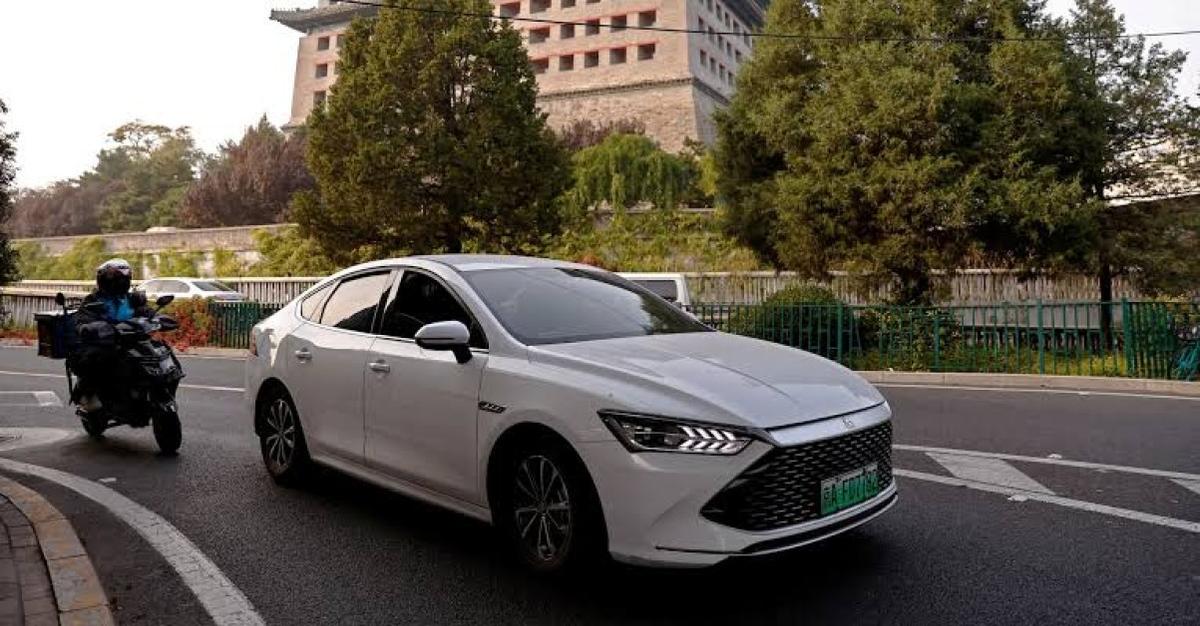
China-Linked EV Technology Continues to Influence India's Auto Industry
Through components, joint ventures, and technology transfers, Chinese electric-vehicle know-how keeps flowing into India's carmakers and wider auto sector — even as New Delhi tightens scrutiny and pushes for self-reliance.
By Naina, 1st July 2026
China-linked electric-vehicle technology continues to influence India's auto industry, shaping the components, partnerships, and strategies of Indian carmakers as the sector accelerates its shift toward electrification. Despite efforts to build domestic capability and tighten scrutiny of Chinese involvement, India's automakers remain reliant on Chinese batteries, parts, and know-how, which flow into the industry through imports, joint ventures, and technology transfers. This persistent influence is helping drive India's electric transition and keep vehicles affordable, while raising strategic questions about dependence on a rival. The result is an auto industry whose future is being shaped, in part, by technology originating across the border, even as policymakers seek greater autonomy.
The dynamic reflects China's global dominance in electric mobility and the practical difficulty of building an EV industry without it. China leads the world in batteries, components, and the critical minerals that underpin electric vehicles, making it an almost unavoidable partner for any country scaling up EV production. For India, the challenge is to harness Chinese technology to speed its transition while steadily reducing its exposure. Here is how China-linked EV technology continues to shape India's auto industry, and the balance New Delhi is trying to strike between access and autonomy.
The Ongoing Dependence
India's reliance on Chinese technology has proved durable. China controls the majority of global battery-cell manufacturing and critical-mineral processing, and India continues to import a large share of its lithium-ion batteries and key components from its neighbour. Even as domestic manufacturing expands, Chinese supply remains cheaper and more readily available, keeping Indian automakers dependent for the cells and parts at the heart of electric vehicles. This ongoing dependence is not easily unwound, as building comparable capacity takes years and heavy investment. For now, Chinese technology remains embedded in the supply chains that Indian carmakers rely on to produce electric and hybrid vehicles.
The Joint Venture Channel
Partnerships remain a key conduit for Chinese know-how. Indian companies have entered joint ventures and technology-sharing arrangements with Chinese automakers and battery firms, allowing them to access advanced designs, manufacturing expertise, and proven electric-vehicle platforms. A prominent example is the tie-up between an Indian conglomerate and a Chinese automaker operating a popular electric brand in India, which produces vehicles locally using Chinese technology. Such arrangements let Indian firms accelerate their electric offerings without developing everything from scratch. These ventures embed Chinese engineering into India's auto industry, making technology transfer, rather than imports alone, an increasingly important route through which Chinese influence flows into Indian carmakers.
The Cost Factor
Affordability keeps Chinese technology central. Cells and components from leading Chinese producers remain significantly cheaper than Indian-made equivalents, reflecting China's scale, vertical integration, and years of research and development. For a price-sensitive market like India, where the cost of electric vehicles is a major barrier to adoption, this cost advantage is difficult to ignore. Indian automakers face pressure to keep prices competitive, and Chinese technology helps them do so, even as government incentives aim to close the gap for domestic producers. The economics of electric mobility therefore continue to draw Indian carmakers toward Chinese batteries and parts, reinforcing the technology's influence across the sector.
The Security Scrutiny
Chinese involvement faces careful vetting. India has treated Chinese investment in strategic sectors, including automobiles and electric vehicles, with caution on security grounds, subjecting proposals to close, case-by-case scrutiny. A major Chinese automaker's plan to build a plant in India was rejected in 2023, and subsequent proposals have faced careful review. This reflects the tension at the heart of the relationship: India wants the technology, capital, and jobs that Chinese firms can bring, but is wary of deepening strategic dependence on a geopolitical rival. Balancing these competing pressures shapes which Chinese players can participate in India's auto industry and under what conditions, keeping the influence both significant and contested.
The Policy Recalibration
India's stance has shifted toward a controlled opening. Having tightened rules on investment from neighbouring countries earlier in the decade, India has more recently eased some restrictions, paving the way for Chinese investment in selected areas, including battery manufacturing, under defined conditions. Industry groups have welcomed the move as a way to bring in capital, technology, and supply-chain integration to accelerate electric mobility, while urging safeguards against over-dependence. The recalibration reflects a pragmatic acknowledgement that building a competitive auto and EV industry is difficult without Chinese technology, opening a controlled door that allows access while attempting to manage the associated strategic risks.
The Push for Self-Reliance
India is simultaneously racing to reduce its dependence. Through production-linked incentives and support for domestic battery and component manufacturing, the government is encouraging Indian and foreign firms to build local capacity, though progress toward self-sufficiency has been gradual. India is also investing in alternative battery chemistries that rely less on scarce critical minerals, and in indigenous research and intellectual property. The aim is to capture the benefits of electrification while building an auto industry less exposed to any single country. This drive for self-reliance runs in parallel with continued reliance on Chinese technology, creating a dual strategy of using external know-how today while working to supplant it over time.
The China Squeeze
Complicating matters, China is tightening its own controls. Even as India seeks access to Chinese technology, Beijing has moved to restrict exports of electric-vehicle and battery technologies and to curb shipments of critical minerals, seeking to preserve its dominance. These measures directly affect India's auto industry, making it harder to secure the equipment, materials, and expertise needed to scale up production and reduce costs. Restrictions on rare-earth materials, essential for electric-vehicle motors, are a particular concern. China's willingness to leverage its technological lead underscores the risks of dependence and adds urgency to India's efforts to develop domestic alternatives and diversify its sources of supply.
The Global Backdrop
India's situation mirrors a wider global reckoning. Facing overcapacity and price wars at home, Chinese automakers have expanded abroad, prompting many countries to impose tariffs or require local production in exchange for market access. India, like others, must weigh the benefits of affordable Chinese technology against protecting its domestic industry and managing strategic exposure. At the same time, India sees opportunity in building its own automotive and electric-vehicle capabilities for domestic use and export, including to markets where it may compete with Chinese firms. This global context shapes how India navigates Chinese influence, balancing openness with the ambition to become a competitive auto power in its own right.
The Road Ahead
China-linked EV technology is likely to continue shaping India's auto industry for years, as dependence, cost, and geopolitics pull in competing directions. India's task is to use Chinese technology and investment to accelerate its electric transition while steadily building domestic capability and safeguarding strategic interests. The controlled opening to Chinese investment, the drive for local manufacturing, and bets on new battery technologies all reflect this balancing act. How effectively India manages the tension between access and autonomy will determine whether its auto industry remains reliant on its neighbour or emerges as a self-sufficient, globally competitive force. This is analysis, not investment advice.
Frequently Asked Questions
How does China-linked EV technology influence India's auto industry?
Through imports of batteries and components, joint ventures with Chinese automakers and battery firms, and technology transfers. Chinese technology remains embedded in the supply chains Indian carmakers use to build electric and hybrid vehicles.
Why do Indian automakers rely on Chinese technology?
China dominates global battery and component manufacturing and critical-mineral processing, and its technology is cheaper and more available than Indian-made alternatives. For a price-sensitive market, this cost advantage makes Chinese technology hard to avoid.
How is India responding to this dependence?
India has tightened security scrutiny of Chinese investment while recently easing some restrictions under controlled conditions. It is also promoting domestic manufacturing, alternative battery chemistries, and indigenous research to reduce reliance over time.
Why is Chinese investment in autos scrutinised?
India treats Chinese involvement in strategic sectors with caution on security grounds, having rejected a major Chinese plant proposal in 2023. It seeks the technology and jobs but is wary of deepening dependence on a geopolitical rival.
What challenges does India face?
Balancing access to affordable Chinese technology with strategic autonomy, coping with China's export curbs on EV technology and critical minerals, building domestic capacity, and competing globally, all while keeping electric vehicles affordable for consumers.
 Related News
POST A COMMENT (0)
All Comments (0)
Replies (0)