





Centre Pushes Forward Major Manufacturing and Investment Reforms
From expanded incentives and liberalised FDI to faster clearances and tax reforms, the government is advancing a coordinated push to make India a global manufacturing hub — even as implementation and import dependence pose tests.
By Naina, 1st July 2026
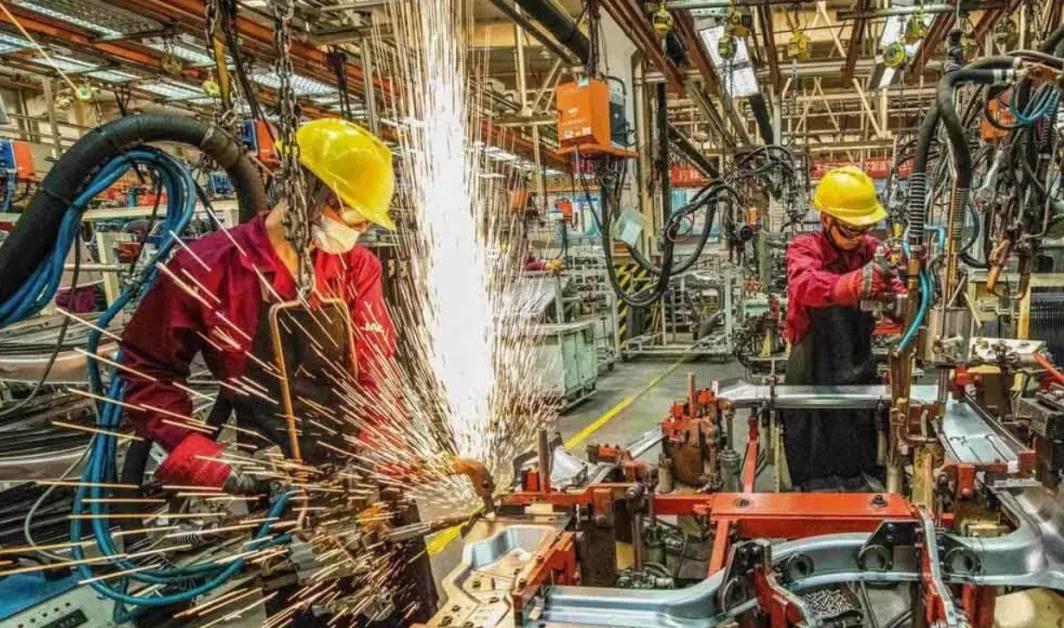
The Centre is pushing forward major manufacturing and investment reforms, advancing a coordinated agenda to strengthen India's industrial base and attract global capital. Through a mix of production incentives, liberalised foreign investment rules, faster regulatory clearances, and tax and export reforms, the government aims to raise manufacturing's share of the economy, create jobs, and position India as a leading destination for companies diversifying their supply chains. The push spans a flagship manufacturing mission, expanded incentive schemes, easier foreign-investment norms, and an overhaul of special economic zones. Framed as part of India's Manufacturing Decade, the reforms seek to turn shifting global supply chains and strong growth into durable industrial gains.
The timing is deliberate. As global firms look to diversify beyond traditional manufacturing hubs and India targets becoming a far larger economy, the government is racing to remove bottlenecks in land, capital, approvals, and skills that have long constrained industry. The reforms build on a decade of the Make in India campaign, with fresh measures announced in recent budgets and policy decisions. Yet challenges remain, from implementation gaps to dependence on imported components. Here is what the Centre's manufacturing and investment reform push involves, the results so far, and the obstacles that will determine whether India realises its industrial ambitions.
The Reform Thrust
The push is broad and coordinated. At its centre is a national manufacturing mission announced in a recent budget, which sets ambitious targets to lift manufacturing's share of the economy toward 25 percent, create over a hundred million jobs, and sharply expand merchandise exports in the coming decade. Around it sit a web of measures: production incentives, liberalised foreign-investment rules, faster clearances, tax reforms, and infrastructure and logistics upgrades. The government has explicitly framed the next decade as India's Manufacturing Decade, aiming to capitalise on companies diversifying supply chains. This coordinated approach, pairing incentives with regulatory and infrastructure reform, marks a concerted effort to make industry a primary engine of growth.
The PLI Backbone
Production-linked incentives anchor the strategy. The scheme covers 14 key sectors, from electronics and pharmaceuticals to telecom and textiles, with a total incentive outlay of nearly ₹2 lakh crore, and rewards companies for incremental production and investment rather than simply subsidising them. This performance-based design is meant to attract serious manufacturers, including global firms, and drive genuine scale-up. The government has expanded related schemes, including one targeting electronics components, reflecting a shift toward higher-value, technology-intensive manufacturing. Incentive disbursements are flowing across sectors, and the scheme is credited with helping transform electronics, where India has become the world's second-largest mobile phone maker with booming exports.
The FDI Liberalisation
Opening up to foreign capital is a core pillar. The government has progressively liberalised foreign direct investment across sectors, permitting full foreign ownership in areas like space and insurance, and easing rules in defence, pharmaceuticals, and others. A bilateral investment treaty with the United Arab Emirates aims to boost investor confidence, while a recent amendment eased long-standing restrictions on investment from land-bordering countries, allowing small non-controlling stakes through the automatic route with a defined processing timeline. The government has set a target of roughly $100 billion in annual FDI in the coming years. These reforms seek to channel global capital and technology into Indian manufacturing and strategic industries.
The Fast-Track Clearances
Speeding up approvals is a growing focus. The government has identified around 40 sub-sectors, including semiconductors, rare-earth processing, printed circuit boards, renewable-energy equipment, advanced batteries, aerospace components, and electric-mobility technologies, for accelerated clearances and policy support. A fast-track approval mechanism aims to simplify regulatory processes, improve coordination between central ministries and state governments, and speed up land allocation and infrastructure for investors. Policymakers believe quicker, more predictable approvals are essential to compete with rival manufacturing destinations such as Vietnam, Thailand, and Mexico. By reducing bureaucratic friction, the government hopes to convert investment interest into actual factories and jobs on the ground.
The Budget and Tax Reforms
Fiscal reforms reinforce the push. Recent budgets have introduced tax incentives, rationalised customs duties, and simplified export procedures to improve the ease of doing business and integrate India more deeply into global value chains. Targeted measures, such as duty-free inputs and extended export timelines for labour-intensive industries like footwear and leather, aim to boost competitiveness and employment. These build on earlier structural reforms, including a unified goods and services tax and corporate tax cuts, that streamlined the business environment. Together, the fiscal measures lower costs and compliance burdens for manufacturers, complementing the incentive and investment reforms with a more favourable tax and trade framework.
The Strategic Sectors
High-technology sectors are a priority. The government is channelling major support into semiconductors through a dedicated programme that has approved multiple projects, including chip fabrication and advanced packaging, backed by large investments and marquee foreign entrants. It is also targeting rare-earth processing, advanced chemistry cell batteries, aerospace, and electric mobility, aiming to build domestic capabilities in areas critical to future industries and to reduce import dependence. This focus on strategic, value-added manufacturing reflects a shift from low-cost assembly toward higher-value production and deeper domestic value addition. Securing these sectors is central to India's ambition of becoming a resilient, self-reliant manufacturing power rather than merely an assembly base.
The Early Results
The reforms are showing tangible gains. Foreign direct investment into manufacturing has surged over the past decade, reaching around $165 billion cumulatively and accounting for roughly a fifth of total inflows. Electronics has been the standout, with India becoming a leading mobile-phone producer and electronics exports climbing sharply. Industrial production has been expanding, and manufacturing purchasing-manager surveys have signalled healthy activity, while manufacturing has drawn the largest share of private corporate capital expenditure. These indicators suggest the policy push is gaining traction. Yet manufacturing's share of the overall economy has remained stubbornly around 17 percent, well below the government's targets, underscoring the distance still to travel.
The Challenges
Significant obstacles remain. Implementation gaps, including delays in incentive disbursement and uneven performance across sectors, have tempered results. A deeper concern is dependence on imported components, particularly from China, as many products assembled under incentive schemes rely on Chinese inputs, potentially locking in rather than reducing import reliance, an issue now also entangled in a trade dispute. Skill shortages, the need for millions of trained technicians, and intense competition from other manufacturing hubs add to the difficulty. Land, power, and logistics costs remain hurdles. Bridging the gap between policy ambition and industrial reality will require sustained execution, deeper supply chains, and continued reform over many years.
The Road Ahead
The Centre's manufacturing and investment reforms represent a determined bid to make industry a cornerstone of India's growth. The combination of incentives, liberalised investment, faster clearances, and fiscal reform reflects a comprehensive strategy aligned with the goal of a far larger economy by 2047. Early results, especially in electronics and rising manufacturing investment, are encouraging, but the persistent gap between targets and the sector's actual share signals how much remains to be done. Success will hinge on execution: delivering incentives effectively, deepening domestic supply chains, building skills, and sustaining reform. If India can, the Manufacturing Decade could transform its economy and its place in global supply chains.
Frequently Asked Questions
What manufacturing and investment reforms is the Centre pushing?
A coordinated agenda including a national manufacturing mission, production-linked incentives across 14 sectors, liberalised foreign investment rules, fast-track clearances for strategic sectors, tax and customs reforms, and an overhaul of special economic zones.
What is the PLI scheme?
The Production-Linked Incentive scheme rewards companies in 14 key sectors for incremental production and investment, with a total outlay of nearly ₹2 lakh crore. It is performance-based, paying incentives only when firms deliver additional output.
How is India liberalising foreign investment?
The government has permitted full foreign ownership in sectors like space and insurance, eased rules in defence and pharmaceuticals, signed an investment treaty with the UAE, and relaxed restrictions on investment from land-bordering countries, targeting around $100 billion in annual FDI.
What results have the reforms delivered?
Manufacturing FDI has surged to around $165 billion cumulatively, electronics production and exports have boomed with India becoming a top mobile-phone maker, and industrial activity has grown, though manufacturing's share of the economy remains around 17 percent, below targets.
What are the main challenges?
Implementation gaps and incentive-disbursement delays, dependence on imported components especially from China, skill shortages, competition from rivals like Vietnam and Mexico, and high land, power, and logistics costs.
 Related News
POST A COMMENT (0)
All Comments (0)
Replies (0)