





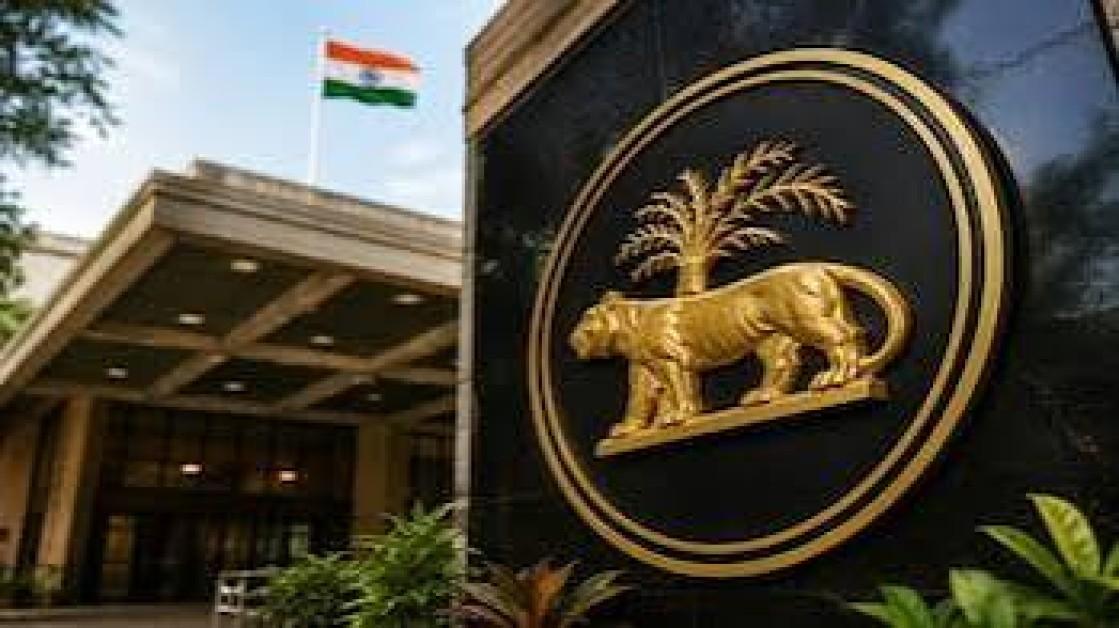
Former ISRO Chairman S Somanath Appointed Non-Official Director on RBI Central Board
Former Indian Space Research Organisation Chairman S Somanath has been appointed as a non-official director on the Central Board of the Reserve Bank of India, bringing one of India's most prominent engineering and space-technology leaders into the country's highest central-bank governance body.
The central government nominated Somanath to the RBI Central Board for a four-year term from the date of notification of his appointment or until further orders, whichever is earlier.
His appointment adds deep experience in engineering, technology, large-scale institutional management and strategic national programmes to the RBI's board at a time when India's financial system is becoming increasingly shaped by digital payments, artificial intelligence, cybersecurity and technology-driven financial infrastructure.
Somanath previously served as Chairman of ISRO and Secretary of the Department of Space, leading the organisation during a landmark period for India's space programme.
S Somanath Joins RBI’s Central Board

The appointment brings Somanath into the Reserve Bank's central governance structure as a non-official director.
The RBI Central Board oversees the affairs of India's central bank and provides broad direction on institutional governance and policy administration.
While monetary-policy decisions are handled through the statutory Monetary Policy Committee framework, the Central Board has a wider role covering the Reserve Bank's operations and governance.
Appointment Is for Four Years
Somanath has been nominated for a four-year term.
The tenure begins from the date specified in the government's notification and continues for four years or until further orders, whichever occurs earlier.
The appointment reflects the government's ability under the Reserve Bank of India Act to nominate directors with expertise and experience considered valuable to the central bank.
RBI Central Board Has Broad Governance Role
The Reserve Bank of India sits at the centre of the country's financial system.
Its responsibilities include:
banking regulation,
currency management,
foreign-exchange reserves,
financial stability,
payments oversight,
and monetary policy implementation.
The Central Board therefore operates within an institution whose decisions affect almost every part of the Indian economy.
Non-Official Directors Bring Outside Expertise
Non-official directors can broaden the range of expertise represented within central-bank governance.
They may come from areas extending beyond traditional banking and economics.
This can be valuable because modern financial systems increasingly intersect with:
technology,
industry,
cybersecurity,
digital infrastructure,
and data.
Somanath's engineering background gives the board expertise from a field very different from conventional finance.
Somanath Led ISRO During Chandrayaan-3
Somanath became ISRO Chairman in January 2022.
His tenure included one of the most significant achievements in India's space history: the successful Chandrayaan-3 mission.
India successfully soft-landed the Vikram lander near the lunar south-polar region in August 2023.
The achievement made India the fourth country to successfully perform a soft landing on the Moon.
Chandrayaan-3 Strengthened India’s Global Space Position
The mission demonstrated India's ability to execute sophisticated space projects with significant domestic engineering capabilities.
It also increased international attention on India's expanding space ecosystem.
Somanath became one of the most publicly recognised figures associated with the mission.
His leadership experience involved coordinating complex technical teams operating under demanding reliability requirements.
Aditya-L1 Was Another Major Mission During His Tenure
Somanath also led ISRO during the Aditya-L1 mission.
The spacecraft was designed to study the Sun from the Sun-Earth L1 point.
It entered its intended halo orbit in January 2024.
The mission expanded India's scientific capabilities beyond lunar exploration into dedicated solar observation.
Gaganyaan Programme Advanced Under His Leadership
India's human-spaceflight programme also progressed during Somanath's tenure.
Gaganyaan represents one of ISRO's most ambitious projects.
Human spaceflight demands extremely high standards of:
safety,
systems engineering,
risk management,
and mission reliability.
Experience managing such programmes can provide useful perspectives on institutional risk and complex infrastructure.
Engineering Expertise Adds Different Perspective to RBI
Central banking has traditionally been dominated by economics, finance and public administration.
Technology has changed that environment.
Modern central banks increasingly supervise financial systems dependent on enormous digital networks.
Somanath's appointment therefore comes at a time when engineering and financial infrastructure are becoming more closely connected.
India’s Banking System Is Becoming Technology Infrastructure
Banking today is not simply a network of branches.
It increasingly operates through:
mobile applications,
payment networks,
cloud infrastructure,
APIs,
and automated risk systems.
Millions of transactions can move through these systems every minute.
Operational resilience therefore becomes as important as traditional financial risk management.
Digital Payments Have Changed RBI’s Responsibilities
India has experienced extraordinary growth in digital payments.
UPI has become a central component of everyday commerce.
The RBI regulates and oversees a broader payments ecosystem that also includes:
cards,
bank transfers,
wallets,
and settlement systems.
As transaction volumes increase, technological reliability becomes increasingly important.
Financial Infrastructure Requires Engineering Discipline
A spacecraft and a national payment network are obviously different systems.
But both involve complex infrastructure where failure can have serious consequences.
Large technical systems require:
redundancy,
testing,
failure analysis,
and contingency planning.
Somanath's experience managing mission-critical engineering programmes may therefore offer a distinctive perspective within central-bank governance.
Cybersecurity Is Growing Central-Bank Priority
Banks are major targets for cyberattacks.
The financial system faces threats involving:
ransomware,
data theft,
payment fraud,
and infrastructure disruption.
As banking becomes more digital, cybersecurity becomes increasingly connected to financial stability.
The RBI has consequently strengthened technology and cyber-risk requirements across regulated institutions.
AI Creates New Governance Questions
Artificial intelligence is also entering financial services rapidly.
Banks are experimenting with AI for:
customer service,
fraud detection,
credit assessment,
and internal productivity.
These technologies create opportunities but also introduce risks.
AI Models Need Strong Oversight
Financial institutions need to understand:
how models make decisions,
what data they use,
and how failures are identified.
AI can produce errors at enormous scale when deployed across millions of customers.
Central banks therefore need increasingly sophisticated understanding of technology risk.
Digital Lending Has Expanded Regulatory Complexity
India's digital-lending market has grown rapidly.
Consumers can obtain loans through applications with minimal physical interaction.
This has expanded financial access but also created regulatory challenges involving:
customer protection,
data,
and lending practices.
The RBI has introduced rules aimed at creating greater transparency and accountability.
Technology expertise can become increasingly valuable as these business models evolve.
Fintech Is Reshaping Traditional Banking
Indian fintech companies have transformed:
payments,
consumer lending,
wealth management,
and insurance distribution.
Banks now compete and collaborate with technology companies.
The regulatory challenge is to encourage innovation while maintaining financial stability.
That requires understanding both financial models and underlying technology.
RBI Is Exploring Digital Currency
The Reserve Bank is also conducting pilots involving the digital rupee, India's central bank digital currency.
CBDCs combine monetary infrastructure with sophisticated digital architecture.
Their development raises questions involving:
payments,
privacy,
cybersecurity,
and financial-system design.
Technology-focused perspectives therefore have growing relevance to central-bank governance.
Operational Resilience Has Become Global Priority
Financial regulators worldwide are increasingly concerned about technology failures.
A major outage at a bank, cloud provider or payment processor can disrupt millions of transactions.
This creates systemic risk even when no institution is financially insolvent.
Financial Stability Now Includes Digital Stability
Traditional financial stability focused heavily on:
capital,
liquidity,
and credit risk.
Modern stability also requires resilient technology infrastructure.
That expands the expertise central banks need.
Somanath Has Extensive Institutional Leadership Experience
Beyond individual space missions, Somanath managed one of India's most technically sophisticated public institutions.
ISRO operates:
launch centres,
research laboratories,
satellite programmes,
and international partnerships.
Managing such an organisation requires more than engineering expertise.
It involves:
budget allocation,
project governance,
procurement,
human resources,
and long-term strategic planning.
He Previously Led Vikram Sarabhai Space Centre
Before becoming ISRO Chairman, Somanath served as Director of the Vikram Sarabhai Space Centre.
VSSC is one of ISRO's principal research and development centres.
It plays a major role in launch-vehicle development.
This gave Somanath extensive experience managing complex engineering programmes before taking charge of the entire space agency.
He Also Led Liquid Propulsion Systems Centre
Somanath previously headed ISRO's Liquid Propulsion Systems Centre.
The organisation develops propulsion technologies used in launch vehicles and spacecraft.
His career therefore spans both technical engineering and senior institutional management.
That combination differentiates him from many conventional corporate or financial-sector board members.
Risk Management Connects Space and Finance
Spaceflight requires extensive risk assessment.
Engineers need to identify possible failure modes before launch.
Financial regulators operate differently but face a comparable conceptual challenge.
They must identify vulnerabilities before those vulnerabilities become crises.
Prevention Is More Effective Than Crisis Response
A failed spacecraft cannot simply be repaired after launch.
Similarly, systemic financial failures can become extremely costly once they spread.
Strong governance therefore emphasises:
testing,
scenario analysis,
and contingency planning.
These principles are relevant across both disciplines.
Systems Thinking Could Be Valuable
Large financial systems consist of interconnected components.
Banks connect to payment networks.
Payment networks connect to merchants.
Banks connect to markets.
Markets connect internationally.
A problem in one component can spread.
Engineering disciplines often focus heavily on understanding how interconnected systems behave.
That perspective can complement conventional economic analysis.
RBI Oversees an Increasingly Complex Financial System
India's financial sector has expanded dramatically.
Banks coexist with:
NBFCs,
fintech companies,
payment firms,
and digital platforms.
Financial products increasingly move across institutional boundaries.
Regulators therefore need to understand interconnected risks.
Cloud Computing Adds New Concentration Risk
Banks increasingly use external technology providers.
Cloud infrastructure can improve efficiency.
But dependence on a small number of providers creates concentration risk.
If one major technology platform experiences disruption, several financial institutions could potentially be affected simultaneously.
This is becoming an important issue for regulators worldwide.
Quantum Computing Could Eventually Affect Banking Security
Somanath's scientific and engineering background may also be relevant as financial institutions prepare for longer-term technological shifts.
Quantum computing could eventually challenge some existing cryptographic systems.
Banks and regulators therefore need to prepare well before such technology becomes commercially mature.
Financial infrastructure is increasingly shaped by developments outside conventional banking.
Satellite Technology Already Supports Finance
Space infrastructure itself plays a role in financial systems.
Satellites support:
communications,
navigation,
and connectivity.
These services can enable banking and digital payments in areas where terrestrial infrastructure is limited.
India's expanding satellite ecosystem could therefore contribute indirectly to financial inclusion.
Rural Connectivity Can Expand Financial Access
Digital banking requires connectivity.
Improved communication infrastructure allows customers in remote regions to access:
payments,
bank accounts,
and financial services.
Satellite communications may eventually supplement terrestrial networks in difficult geographic areas.
This creates another intersection between space technology and finance.
Appointment Reflects Broader Definition of Governance Expertise
Modern institutions increasingly require boards with multidisciplinary expertise.
Financial organisations cannot rely exclusively on bankers.
Technology can now create systemic financial risks.
Cyberattacks can disrupt payments.
AI can influence lending decisions.
Cloud outages can interrupt banking services.
The expertise required for financial governance is therefore becoming broader.
RBI Board Is Different From Monetary Policy Committee
Somanath's appointment should not be confused with membership of the Monetary Policy Committee.
The MPC is responsible for setting India's policy repo rate to achieve the inflation target.
The RBI Central Board has a broader governance role.
This distinction is important when interpreting the appointment.
Appointment Does Not Mean Somanath Sets Interest Rates
Interest-rate decisions are taken by the six-member Monetary Policy Committee.
The MPC includes RBI representatives and external members.
Somanath's role as a Central Board director does not automatically make him an MPC member.
His responsibilities relate to the wider governance framework of the central bank.
Central Board Also Reviews RBI Operations
The Central Board deals with the Reserve Bank's institutional affairs.
This can include oversight relating to:
accounts,
operations,
and administrative matters.
The board also provides broader guidance within the statutory framework governing the RBI.
Technology Spending Will Become Increasingly Important
The RBI and regulated financial institutions invest heavily in digital infrastructure.
These investments need to be evaluated not only on cost but on:
reliability,
security,
and scalability.
Engineering expertise can help boards ask different questions about such projects.
Financial Regulators Need Technical Talent
Regulators globally face competition with private technology companies for skilled professionals.
Understanding modern financial systems increasingly requires knowledge of:
software,
cybersecurity,
and data science.
Somanath's appointment does not solve that challenge alone, but it symbolically reinforces the importance of technical expertise in financial governance.
India’s Financial Infrastructure Is Becoming Global Reference Point
India's digital public infrastructure has attracted international attention.
UPI is increasingly connected with payment systems outside India.
As these networks become more internationally integrated, resilience becomes even more important.
Failures could affect cross-border transactions.
Governance therefore needs to evolve alongside technological scale.
Space Programme Offers Lessons in Indigenous Technology
ISRO developed many technologies domestically under resource constraints.
India's financial system faces a related strategic question around technological self-reliance.
Banks depend on:
software,
hardware,
and cybersecurity systems.
Developing strong domestic capabilities can reduce strategic dependence.
Somanath's experience with indigenous technology programmes may contribute a useful perspective to these discussions.
Innovation Must Be Balanced With Reliability
Financial technology companies often prioritise rapid product development.
Regulators prioritise stability.
The challenge is finding the correct balance.
Space engineering faces a similar tension.
Innovation is necessary.
But reliability cannot be sacrificed.
This philosophy could be particularly relevant as India's fintech sector continues expanding.
Somanath’s Appointment Broadens His Public-Service Role
Somanath completed his tenure as ISRO Chairman in January 2025.
His appointment to the RBI Central Board gives him another role within a major national institution.
It also represents an unusual transition from space-sector leadership into central-bank governance.
The move demonstrates how expertise developed in one strategic national institution can potentially be applied across another.
India Increasingly Needs Cross-Disciplinary Leadership
The boundaries between sectors are disappearing.
Banking intersects with software.
Automobiles intersect with semiconductors.
Energy intersects with digital infrastructure.
Space technology intersects with communications and navigation.
Public institutions therefore increasingly benefit from leaders capable of thinking across sectors.
Businesses Should Watch RBI’s Technology Direction
For Indian businesses, Somanath's appointment does not immediately change banking regulation.
But the broader trend is important.
The RBI is operating in an environment where technology governance is becoming central to financial regulation.
Companies should expect continued attention to:
cybersecurity,
digital payments,
data governance,
and operational resilience.
Banks Face Increasing Technology Accountability
Financial institutions can no longer treat technology failures as purely IT problems.
A major outage can become a regulatory issue.
Boards and senior management therefore need direct accountability for technology resilience.
This trend is likely to strengthen as India's financial system becomes increasingly digital.
Fintech Companies Also Face Higher Expectations
The same applies to fintech businesses.
Rapid customer growth needs to be matched by:
security,
governance,
and reliable infrastructure.
Regulators increasingly expect technology companies operating within financial services to meet standards comparable with established institutions.
Engineering Perspective Could Strengthen Resilience Debate
The most interesting aspect of Somanath's appointment is not simply that a former space scientist has joined a financial institution.
It is what that appointment represents.
Modern financial stability increasingly depends on engineered systems.
Those systems need:
redundancy,
failure planning,
and rigorous testing.
These are areas where aerospace and space programmes have accumulated decades of expertise.
Conclusion
The appointment of former ISRO Chairman S Somanath as a non-official director on the Reserve Bank of India's Central Board brings one of India's most experienced engineering and technology leaders into the governance structure of the country's central bank.
Somanath will serve for four years from the date of his appointment or until further orders, whichever is earlier.
His arrival comes as the RBI's responsibilities extend increasingly into technology-intensive areas including digital payments, cybersecurity, fintech regulation, artificial intelligence and digital currency infrastructure.
Somanath's background is unconventional for central banking, but that is precisely what makes the appointment noteworthy.
He led ISRO during landmark programmes including Chandrayaan-3 and Aditya-L1 and brings decades of experience managing complex, mission-critical engineering systems.
The appointment does not place him on the Monetary Policy Committee or give him direct responsibility for setting interest rates.
Instead, it broadens the expertise available within the RBI's Central Board.
As India's financial system becomes more dependent on sophisticated digital infrastructure, central-bank governance increasingly requires more than traditional economic and banking expertise.
Technology resilience is becoming financial resilience.
Somanath's transition from India's space programme to the RBI Central Board reflects that changing reality.
 Former ISRO Chairman S Somanath Joins RBI Central Board as Non-Official Director FAQs
POST A COMMENT (0)
All Comments (0)
Replies (0)