





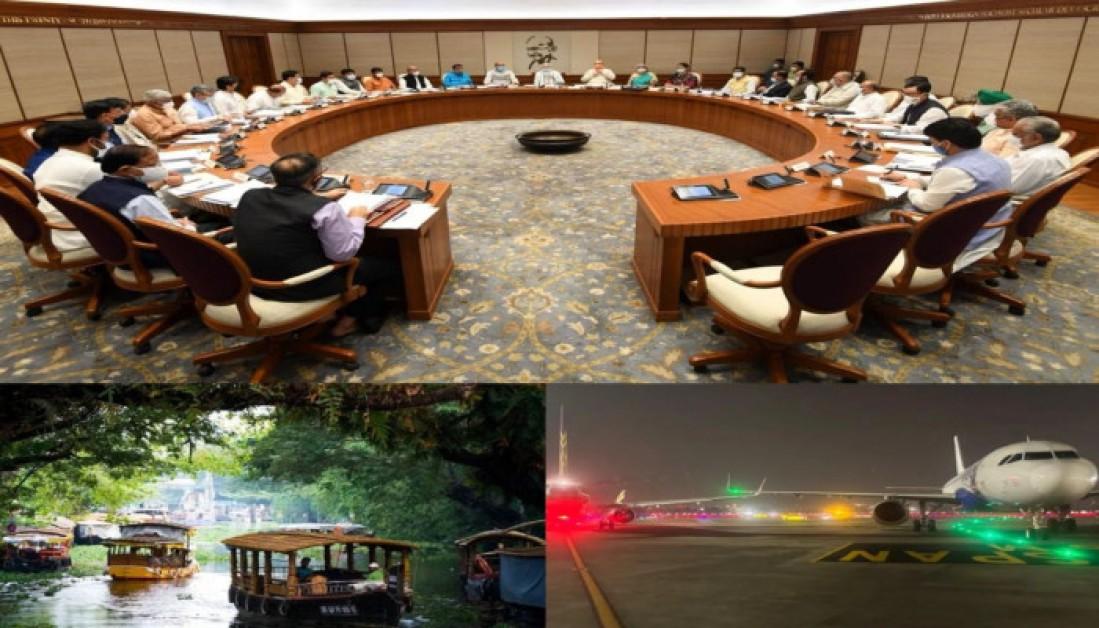
Cabinet Pushes Infrastructure and Manufacturing Agenda to Boost Economic Growth and Investment
The Union Cabinet is continuing to prioritize infrastructure development and manufacturing expansion as part of India's long-term economic strategy. Increased investment in transport networks, industrial infrastructure, logistics, and domestic manufacturing is expected to improve productivity, attract private investment, and strengthen India's position as a global manufacturing hub.
The government's focus on capital expenditure and industrial development reflects its objective of supporting sustainable economic growth while creating employment opportunities and improving the ease of doing business.
Why Infrastructure and Manufacturing Matter

Infrastructure and manufacturing are among the most important drivers of economic development. Better connectivity and stronger industrial capacity help businesses reduce costs, improve efficiency, and expand production.
The government's strategy focuses on:
- Expanding transport infrastructure
- Strengthening manufacturing capabilities
- Improving logistics efficiency
- Encouraging private investment
- Supporting industrial innovation
- Creating employment opportunities
- Enhancing export competitiveness
These priorities are intended to support long-term economic resilience and industrial growth.
Infrastructure Development Remains a Priority
Infrastructure investment continues to play a central role in India's development agenda.
Key areas include:
- National highways
- Railways
- Ports
- Airports
- Urban infrastructure
- Industrial corridors
- Power transmission
- Renewable energy infrastructure
- Digital connectivity
- Logistics parks
Modern infrastructure can reduce transportation costs, improve supply chain efficiency, and support faster movement of goods across the country.
Manufacturing Expansion
The government is working to strengthen domestic manufacturing across several strategic sectors.
Priority industries include:
- Electronics
- Automobiles
- Pharmaceuticals
- Defence manufacturing
- Renewable energy equipment
- Chemicals
- Engineering goods
- Textiles
- Food processing
- Semiconductors
A stronger manufacturing ecosystem can increase domestic production while supporting exports and reducing dependence on imports.
Focus on Capital Expenditure
Public capital expenditure remains a key policy tool for stimulating economic activity.
Higher investment in infrastructure can:
- Generate employment
- Improve productivity
- Encourage private-sector participation
- Expand industrial capacity
- Strengthen regional development
- Increase long-term economic output
Government spending on infrastructure also creates demand across industries such as steel, cement, construction equipment, engineering, and financial services.
Logistics and Supply Chain Improvements
Improving logistics is essential for enhancing India's competitiveness.
Government initiatives aim to:
- Reduce freight costs
- Improve multimodal transportation
- Modernize warehousing
- Increase port efficiency
- Digitize logistics operations
- Strengthen last-mile connectivity
Efficient logistics can help businesses deliver products faster while reducing operational expenses.
Impact on Businesses
Manufacturing Companies
Manufacturers may benefit from improved infrastructure, better logistics, and stronger industrial ecosystems that support production expansion.
Construction and Engineering
Construction companies, engineering firms, and infrastructure developers may see increased opportunities through government-led capital expenditure.
Logistics and Transportation
Improved roads, railways, ports, and logistics parks can reduce transit times and improve supply chain reliability.
MSMEs
Micro, small, and medium enterprises may benefit from improved industrial infrastructure, easier market access, and stronger manufacturing supply chains.
Export-Oriented Businesses
Enhanced infrastructure and manufacturing capabilities can improve export competitiveness by lowering logistics costs and increasing production efficiency.
Employment Generation
Infrastructure and manufacturing investments are expected to create employment across multiple sectors.
Potential areas of job creation include:
- Construction
- Manufacturing
- Engineering
- Transportation
- Warehousing
- Technology
- Renewable energy
- Industrial services
These investments may also stimulate indirect employment through supplier networks and ancillary industries.
Private Investment Opportunities
Government infrastructure spending can encourage additional private-sector investment.
Areas likely to attract investment include:
- Industrial parks
- Warehousing
- Renewable energy
- Data centres
- Smart manufacturing
- Logistics infrastructure
- Urban development
- Technology-enabled manufacturing
Public-private collaboration can accelerate project execution and improve long-term economic outcomes.
Challenges Ahead
Despite strong policy support, several challenges remain.
Project Execution
Timely implementation remains essential for achieving infrastructure and manufacturing goals.
Land and Regulatory Approvals
Large-scale projects require efficient land acquisition and regulatory clearances.
Financing
Sustained funding from both public and private sectors will be necessary to support long-term infrastructure development.
Global Economic Conditions
External factors such as commodity prices, geopolitical developments, and international demand may influence investment decisions and export performance.
Outlook
India is expected to continue expanding infrastructure and manufacturing capacity through higher capital expenditure, policy reforms, and investment promotion. Continued improvements in logistics, industrial infrastructure, and ease of doing business could strengthen India's competitiveness, attract global manufacturers, and support long-term economic growth.
Businesses are likely to monitor future Cabinet decisions, infrastructure announcements, manufacturing incentives, and industrial policy initiatives as the government's development agenda progresses.
Conclusion
The Cabinet's continued emphasis on infrastructure and manufacturing reflects a long-term strategy to strengthen India's economic foundation. By improving connectivity, expanding industrial capacity, encouraging investment, and creating employment, these initiatives have the potential to enhance productivity and support sustainable growth. Successful implementation and continued policy support will be critical to realizing these objectives and strengthening India's role in the global economy.
 Cabinet Pushes Infrastructure and Manufacturing Agenda for Growth FAQs
POST A COMMENT (0)
All Comments (0)
Replies (0)