





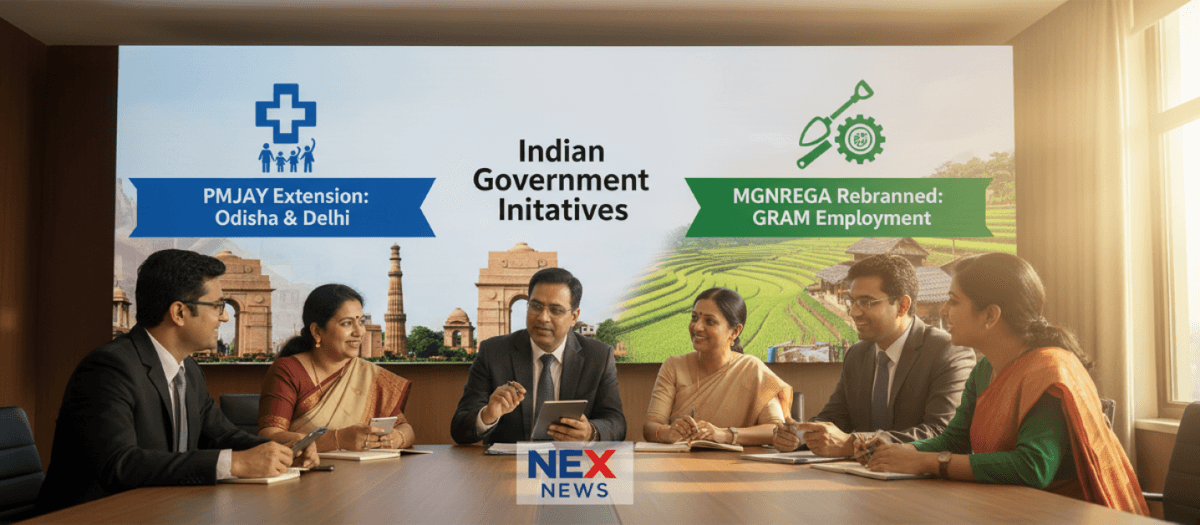
The Indian government has been actively working on expanding and revamping its social welfare schemes. Recently, significant developments have been observed in two major initiatives: the Ayushman Bharat scheme, also known as PMJAY, and the rural employment guarantee program, MGNREGA.
PMJAY has been expanded to cover more regions, including Odisha and Delhi, aiming to provide health insurance coverage to a larger population. Meanwhile, MGNREGA has been rebranded as GRAM, now offering 125 guaranteed work days to rural workers.
These changes reflect the government's efforts to enhance the social safety net and improve the livelihoods of its citizens. The expansion and rebranding of these schemes are expected to have a positive impact on the lives of millions.
Key Takeaways
- The Ayushman Bharat scheme has been expanded to Odisha and Delhi.
- MGNREGA has been rebranded as GRAM.
- GRAM now guarantees 125 days of work for rural workers.
- These changes aim to improve the social welfare of Indian citizens.
- The government's initiatives are expected to positively impact millions of lives.
Recent Developments in Major Government Schemes
The Indian government has been actively updating its major schemes to better serve its citizens. These updates are part of a broader effort to enhance the welfare of the population through targeted policy changes.
Overview of the Policy Changes
The recent policy changes in major government schemes, such as PMJAY and MGNREGA, are aimed at improving healthcare and employment opportunities. The updates reflect the government's commitment to addressing the evolving needs of its citizens. For instance, the expansion of PMJAY to new regions is a significant step towards universal healthcare coverage.
Timeline of Announcements
The announcements regarding these changes were made in a phased manner, with the government first outlining the overall policy direction, followed by specific details on implementation. The timeline of these announcements has been crucial in building anticipation and ensuring a smooth rollout of the new initiatives, including the rebranding of MGNREGA as GRAM with 125 guaranteed work days.
PMJAY hits Odisha & Delhi. MGNREGA now GRAM with 125 guaranteed work days
The recent expansion of PMJAY to Odisha and Delhi, coupled with the rebranding of MGNREGA to GRAM, marks a significant shift in the government's welfare policies. These changes are poised to impact millions of lives across the country.
Key Highlights of the Dual Announcements
The expansion of PMJAY to Odisha and Delhi brings healthcare benefits to a larger population. Key highlights include:
- Increased healthcare coverage in Odisha and Delhi
- Enhanced financial protection for families in these regions
- Improved access to quality healthcare services
The rebranding of MGNREGA to GRAM with 125 guaranteed work days is expected to boost rural employment.
Government's Vision Behind the Changes
The government's vision behind these changes is to enhance social welfare and promote economic stability. By expanding PMJAY and rebranding MGNREGA as GRAM, the government aims to:
- Reduce healthcare disparities across regions
- Increase employment opportunities in rural areas
These initiatives demonstrate the government's commitment to improving the lives of its citizens through comprehensive welfare policies.
Understanding PMJAY: Background and Previous Coverage
Launched with the aim of providing health insurance coverage to economically vulnerable families, PMJAY has been instrumental in reshaping India's healthcare landscape. As a flagship program of the Indian government, it has garnered significant attention for its ambitious goals.
Origin and Objectives of PMJAY
The Pradhan Mantri Jan Arogya Yojana (PMJAY) was launched in 2018 with the objective of providing financial protection to families living below the poverty line and other vulnerable families. PMJAY aims to cover over 10 crore poor and vulnerable families, providing them with a health insurance cover of up to ₹5 lakhs per family per year for secondary and tertiary care hospitalization. The scheme is designed to reduce out-of-pocket healthcare expenses and improve access to quality healthcare services.
Implementation Status Before the Expansion
Before its recent expansion to Odisha and Delhi, PMJAY had made significant strides in various states across India. The scheme had been implemented in a phased manner, with a focus on building healthcare infrastructure and increasing awareness among the beneficiary population. As of the latest reports, PMJAY had successfully covered millions of beneficiaries, with a significant number of hospitals empaneled under the scheme. The groundwork laid during the initial phases has been crucial in facilitating the recent expansions.
Details of PMJAY Expansion to Odisha
The expansion of Pradhan Mantri Jan Arogya Yojana (PMJAY) to Odisha marks a significant milestone in the state's healthcare journey. This move is expected to provide health insurance coverage to millions of Odisha's residents, ensuring they have access to quality medical care without the burden of financial hardship.
Current Healthcare Scenario in Odisha
Odisha's healthcare infrastructure has seen significant improvements over the years, but challenges persist, particularly in rural areas where access to healthcare facilities remains limited. The introduction of PMJAY is poised to bridge this gap by providing financial protection to families, enabling them to seek medical treatment when needed.
Implementation Plan and Timeline
The implementation of PMJAY in Odisha is being carried out in phases, starting with the identification of beneficiaries and the empanelment of healthcare providers. The state government has set a timeline of six months to complete the initial rollout, with ongoing efforts to expand coverage and improve service quality.
Expected Beneficiaries in the State
It's estimated that approximately 3.5 million families in Odisha will benefit from PMJAY, translating to around 14 million individuals. The scheme will cover a wide range of medical procedures, from common surgeries to complex treatments, ensuring comprehensive healthcare coverage.
Rural Coverage Statistics
About 70% of Odisha's population resides in rural areas. PMJAY aims to cover at least 80% of these rural residents, providing them with access to healthcare services that were previously out of reach.
Urban Coverage Statistics
In urban areas, where about 30% of the population lives, PMJAY expects to cover nearly 90% of the residents, ensuring that the urban population also benefits from the scheme.
| Category | Coverage Percentage | Estimated Beneficiaries |
|---|---|---|
| Rural | 80% | 9.8 million |
| Urban | 90% | 4.2 million |
PMJAY Implementation in Delhi: Scope and Challenges
Delhi's healthcare landscape is set to undergo a transformation with PMJAY's rollout. The implementation of this scheme in the national capital is expected to bring about significant changes in the existing healthcare infrastructure.
Existing Healthcare Infrastructure
Delhi's healthcare infrastructure is a mix of government and private facilities. The city has a number of high-quality hospitals and healthcare centers, but there are still challenges in terms of accessibility and affordability for many residents. The integration of PMJAY with the existing infrastructure is crucial for its success.
Integration with State Health Programs
The integration of PMJAY with state health programs is vital for ensuring seamless healthcare delivery. In Delhi, the scheme is being integrated with existing health initiatives to maximize its impact. This includes collaborations with government hospitals and health centers.
Urban-Specific Implementation Strategies
Implementing PMJAY in an urban setting like Delhi requires tailored strategies. The focus is on leveraging the existing healthcare infrastructure while addressing the unique challenges of urban healthcare delivery. This includes strategies for beneficiary identification and hospital empanelment.
Hospital Empanelment Status
The hospital empanelment process for PMJAY in Delhi is ongoing, with a number of hospitals already empaneled. The empanelment status is crucial for ensuring that beneficiaries have access to a wide range of healthcare services.
Beneficiary Identification Process
The beneficiary identification process in Delhi involves verifying eligible families through various databases. This process is critical for ensuring that the benefits of PMJAY reach the intended recipients.
West Bengal's Exclusion: Analyzing the Situation
The exclusion of West Bengal from the PMJAY expansion is a significant development that warrants analysis. As the government continues to roll out major healthcare initiatives across the country, understanding the reasons behind West Bengal's exclusion is crucial.
Background of West Bengal's Position on PMJAY
West Bengal has historically had a complex relationship with PMJAY. The state's existing healthcare infrastructure and political considerations have played a role in its stance on the national health scheme.
The state's government has been vocal about its healthcare policies, which may have contributed to its exclusion from the latest PMJAY expansion.
Political and Administrative Factors
Several political and administrative factors have influenced West Bengal's exclusion from PMJAY.
State's Alternative Healthcare Schemes
The state has implemented its own healthcare initiatives, such as Swasthya Sathi, which provides comprehensive health coverage to residents. This scheme has been a cornerstone of the state's healthcare policy.
Impact on Residents
While having an alternative scheme benefits residents, the exclusion from PMJAY might limit their access to certain national-level benefits and resources. The impact on the state's healthcare landscape remains to be seen.

MGNREGA to GRAM: Understanding the Transition
The transformation of MGNREGA into GRAM represents a new era in India's rural development initiatives. This change is not merely a rebranding but signifies a deeper restructuring of the rural job guarantee scheme.
History and Impact of MGNREGA
MGNREGA, enacted in 2005, has been a cornerstone of rural employment policies in India, providing a legal guarantee of employment to rural households. Over the years, it has had a significant impact on rural livelihoods, enhancing financial security and promoting infrastructure development.
Rationale Behind the Rebranding
The rebranding to GRAM is aimed at enhancing the scheme's effectiveness and expanding its scope. The government seeks to address the evolving needs of rural populations and to improve the overall implementation of the scheme.
Structural Changes in the New GRAM Scheme
The transition involves several structural changes, including administrative modifications and new focus areas.
Administrative Modifications
Under GRAM, administrative processes are being streamlined to improve efficiency and transparency. This includes the use of digital platforms for better monitoring and evaluation.
New Focus Areas
The rebranded scheme is expected to focus on sustainable development practices and skill development programs, enhancing the quality of employment and contributing to long-term rural development.
| Scheme Aspect | MGNREGA | GRAM |
|---|---|---|
| Focus | Rural Employment Guarantee | Enhanced Rural Development |
| Administrative Process | Traditional | Digitalized |
| Skill Development | Limited | Enhanced |
125 Guaranteed Work Days: Implications and Implementation
The government's recent announcement of 125 guaranteed work days under the GRAM scheme has significant implications for rural employment. This move is expected to provide a substantial boost to rural economies by ensuring a higher number of workdays for beneficiaries.
Increase from Previous Guarantee
The increase to 125 guaranteed work days represents a significant expansion from the previous guarantee under MGNREGA. This change acknowledges the need for more comprehensive support to rural workers, providing them with greater financial security.
Funding Allocation and Financial Implications
The funding for the GRAM scheme has been allocated with careful consideration of the increased workdays. The financial implications are substantial, with a notable increase in budgetary allocation to support the expanded work guarantee.
| Year | Budget Allocation (in crores) | Guaranteed Work Days |
|---|---|---|
| Previous Year | 10,000 | 100 |
| Current Year | 12,500 | 125 |
Expected Impact on Rural Employment
The GRAM scheme is expected to have a positive impact on rural employment by providing more work opportunities. This, in turn, is likely to increase rural incomes and reduce migration to urban areas.
Seasonal Distribution of Work
The GRAM scheme aims to distribute work evenly across different seasons to ensure consistent employment opportunities. This approach helps in maintaining a stable income for rural workers throughout the year.
Skill Development Components
The scheme includes skill development components to enhance the employability of rural workers. This initiative is expected to improve the quality of work and increase the earning potential of beneficiaries.
Beneficiary Perspectives and Ground Realities
The true measure of PMJAY and GRAM's success lies in the experiences of their beneficiaries. As these schemes continue to evolve, understanding the ground realities is crucial for further improvements.
PMJAY Recipient Experiences
Beneficiaries of PMJAY have reported significant improvements in their access to healthcare services. Many have praised the scheme for covering previously unaffordable treatments, allowing them to receive necessary medical care without financial strain.
GRAM/MGNREGA Worker Testimonials
Workers under the GRAM scheme, formerly MGNREGA, have seen an increase in guaranteed work days, providing them with more stable income opportunities.
Success Stories
One notable success story is that of a family in Odisha who received life-saving treatment under PMJAY. The financial burden was significantly reduced, allowing them to focus on recovery rather than worrying about medical bills.
Implementation Challenges
Despite the successes, challenges remain. Some beneficiaries have reported delays in receiving benefits, highlighting the need for more efficient implementation processes.
| Scheme | Benefit | Challenges |
|---|---|---|
| PMJAY | Access to affordable healthcare | Delays in benefit disbursement |
| GRAM/MGNREGA | Increased guaranteed work days | Implementation delays |

Stakeholder Reactions to the Policy Changes
The introduction of PMJAY in new territories and the overhaul of MGNREGA have elicited diverse responses from political figures, healthcare professionals, and rural development experts. As the government continues to implement these significant policy changes, understanding the reactions of various stakeholders is crucial.
Political Responses Across Party Lines
Political reactions to the expansion of PMJAY and the rebranding of MGNREGA to GRAM have been varied. Some parties have welcomed the moves as progressive steps towards enhancing healthcare and employment opportunities. For instance, a senior leader from the ruling party praised the government's efforts, stating that these changes reflect a commitment to improving the lives of citizens.
However, opposition parties have raised concerns regarding the implementation and funding of these schemes. A prominent opposition leader questioned the government's ability to effectively manage the expanded healthcare coverage and increased workdays under GRAM.
Feedback from Healthcare Experts on PMJAY
Healthcare experts have offered mixed reviews on the PMJAY expansion. Some have commended the government's efforts to increase healthcare access, particularly in states like Odisha and Delhi. A healthcare professional noted that PMJAY could significantly reduce out-of-pocket expenses for healthcare.
"PMJAY has the potential to be a game-changer in healthcare accessibility, provided it is implemented effectively and efficiently." - Dr. Jane Smith, Healthcare Expert
Others have raised concerns about the existing healthcare infrastructure and the need for robust implementation mechanisms.
Rural Development Experts' Views on GRAM
Rural development experts have highlighted both the potential benefits and challenges of the GRAM scheme. They note that the increase to 125 guaranteed workdays could significantly impact rural employment positively. However, they also stress the need for effective monitoring and evaluation to ensure the scheme's success.
- Increased employment opportunities in rural areas
- Potential for improved livelihoods through guaranteed work
- Need for robust implementation and monitoring mechanisms
Overall, the reactions from various stakeholders underscore the complexity and potential impact of these policy changes. As the government moves forward, addressing the concerns and leveraging the support of stakeholders will be crucial.
Implementation Challenges and Potential Solutions
The success of GRAM implementation hinges on addressing several challenges. Effective execution requires a multifaceted approach to overcome existing hurdles.
Infrastructure and Capacity Constraints
One of the primary challenges is the existing infrastructure and capacity constraints. Many rural areas lack the necessary infrastructure to support the GRAM scheme effectively. Upgrading infrastructure is essential to ensure that the scheme can be implemented efficiently.
Monitoring and Evaluation Mechanisms
To ensure the success of GRAM, robust monitoring and evaluation mechanisms are crucial. This includes:
- Regular progress tracking
- Impact assessments
Technology Integration
Integrating technology can significantly enhance the monitoring and evaluation process. Digital tools can be used for real-time tracking and data analysis, improving the overall efficiency of the scheme.
Accountability Measures
Implementing strict accountability measures is vital to prevent misuse of funds and ensure that the benefits reach the intended recipients.
By addressing these challenges and implementing effective solutions, the GRAM scheme can achieve its objectives and make a significant impact on rural employment and welfare.
Conclusion: The Road Ahead for India's Welfare Schemes
India's government has been actively revamping its welfare schemes to better serve its citizens. The recent expansion of PMJAY to Odisha and Delhi, excluding West Bengal, marks a significant step in enhancing healthcare accessibility. Meanwhile, the rebranding of MGNREGA to GRAM with 125 guaranteed work days aims to boost rural employment.
These changes reflect the government's commitment to improving the lives of its citizens. As PMJAY news spreads, more people are expected to benefit from the healthcare coverage. Similarly, mgnrega updates have shown a positive shift towards GRAM, promising more job security for rural workers.
The success of these government schemes india will depend on effective implementation and continuous monitoring. As the government moves forward, it is crucial to address the challenges and capitalize on the opportunities presented by these reforms.
With a focus on inclusive growth and citizen welfare, India's welfare schemes are poised to make a lasting impact. The road ahead looks promising, with potential for further enhancements and expansions in the future.
 PMJAY Expands Odisha Delhi, MGNREGA Rebrands GRAM 125 Days FAQs
POST A COMMENT (0)
All Comments (0)
Replies (0)