





By Naina, 23rd May 2026
The transition from cash economies to real-time digital payment nations has become the single most visible structural transformation in the global financial system. For most of the past century, the architecture of consumer payments was anchored in physical currency, supplemented in advanced economies by cheques, credit cards and debit cards processed through batch-clearing networks that took hours or days to settle. That architecture has now collapsed in major segments of the world economy and is being replaced by instant, account-to-account, mobile-mediated payment systems that settle in seconds and operate at population scale. According to ACI Worldwide's annual benchmark, global real-time payments transactions reached 266.2 billion in 2023, expanding at a year-on-year growth rate of approximately 42 percent, and the trajectory has continued to accelerate through 2025 and into 2026. India alone accounted for forty-nine percent of all real-time transactions worldwide, followed by Brazil at fourteen percent, Thailand at eight percent, China at seven percent and South Korea at three percent. The geographic concentration of leadership in emerging markets, rather than in the historical centres of financial innovation, is one of the defining features of the present cycle.
The implications of this transition are running through every layer of the global economy. Consumer behaviour has shifted. Merchant economics have shifted. Banking-system revenue pools have shifted. Tax-collection capability has shifted. Monetary-policy transmission has shifted. The cross-border architecture of trade and remittance has begun to shift. The transformation is not a technology story alone. It is an economic, regulatory and geopolitical story that will define how money moves through the world economy for the next generation.
The Indian Reference Architecture
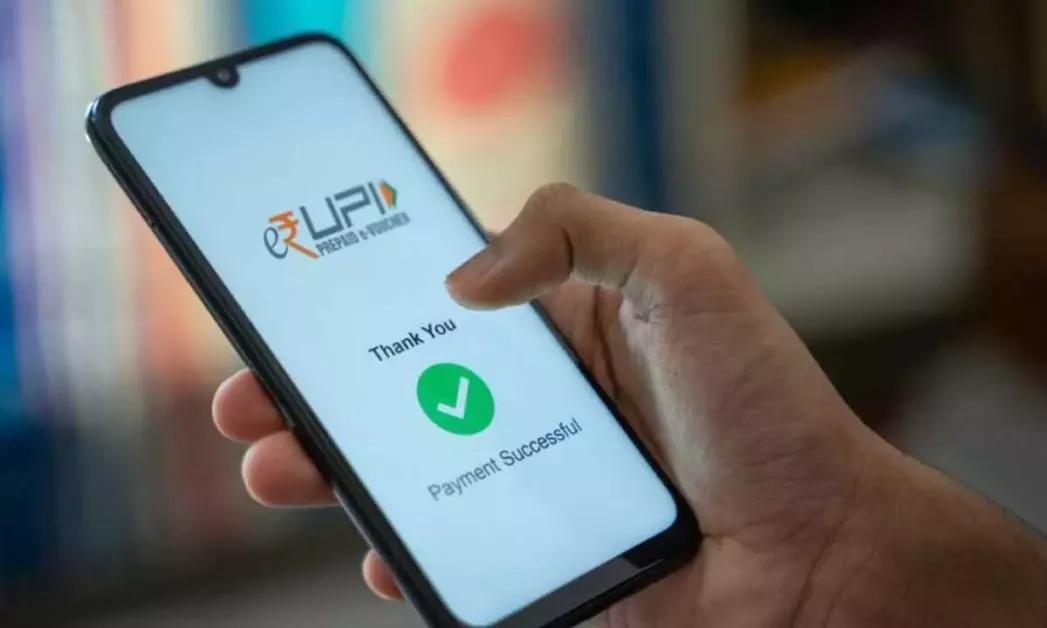
The Unified Payments Interface of India has become the global reference architecture for what a real-time payment system can achieve at population scale. Launched on the 11th of April 2016 with twenty-one participating banks and processing just 373 transactions in its first month, UPI completed its tenth year in April 2026 as the world's largest real-time payments platform. In the financial year 2025-26, the system processed approximately 24,162 crore transactions — a roughly 12,000-fold increase from its first month of operation. Daily transaction volumes now average approximately 66 crore, with an average daily value of approximately 86,000 crore rupees. Monthly transaction volumes crossed two thousand crore in August 2025 and reached an all-time high of 2,264 crore in March 2026. The platform processes nearly 100 million transactions daily, a volume that no other real-time payment network globally has approached.
The architecture's reach is now near-total within India. UPI commands approximately 85 percent of India's retail digital payment volume, with the network expanded from the original 21 banks to more than 703 participating institutions covering public, private, cooperative and payments banks. The depth of penetration reaches from large enterprises and government services through to roadside vendors and small retailers in tier-three and tier-four towns. Average transaction size has dropped to approximately 1,293 rupees in December 2025, signalling that the system has moved well beyond high-value transfers and is now the dominant rail for small-ticket everyday commerce. Person-to-merchant transactions accounted for sixty-three percent of UPI volume in May 2025, against thirty-seven percent for person-to-person, demonstrating that the platform has displaced cash in the retail commercial layer where it previously dominated.
The International Monetary Fund's recognition of UPI as the world's largest retail fast-payment system in its 2025 report on retail digital payments has reinforced India's position. UPI now accounts for approximately forty-eight to forty-nine percent of all instant transactions worldwide. The system's extension into twelve countries through bilateral arrangements, including the United Arab Emirates, Singapore, France, Bhutan, Nepal, Sri Lanka and Mauritius, has begun to position UPI as cross-border payments infrastructure rather than a purely domestic Indian system. The Reserve Bank of India's stated objective is to make UPI the default settlement rail for non-resident Indian remittances and for inbound tourism payments before the end of the current calendar year.
The technological roadmap continues to expand. UPI Autopay, the recurring-payments capability, is projected to drive approximately one billion daily transactions by 2026-27, supporting the rapid growth of subscription commerce, utility billing and instalment-based purchases. UPI Circle, launched in late 2025, has introduced full delegation that allows up to five secondary users with defined monthly limits, opening the platform to older parents, students and household staff who previously could not independently transact. Aadhaar face authentication, real-time PIN reset, biometric authorisation and the new Reserve Pay layer for higher-value contextual transactions are all in various stages of rollout. Domestic card schemes including RuPay are now linked into the UPI system, allowing real-time transactions to draw directly on credit limits. EBANX research projects that domestic card volumes will expand at a compound annual rate of approximately 23 percent through 2028, outpacing UPI's own 15 percent growth rate and significantly outpacing international cards at 6 percent.
The Brazilian Counterpart
Brazil's Pix has emerged as the second most consequential real-time payment system globally and, in some respects, the more disruptive in its market. Launched in November 2020 by the Banco Central do Brasil, Pix had onboarded more than 70 million users within two years and is projected to contribute approximately 37.9 billion US dollars to Brazilian GDP in 2026, equivalent to roughly two percent of the country's economic output. In 2025, Pix became the most-used payment method for online shopping in Brazil, ending the long-standing dominance of cards. EBANX data shows that 42 percent of the total value of Brazilian purchases were paid through Pix in 2025, edging out cards at 41 percent for the first time. The system's projected compound annual growth rate of approximately 18 percent through 2028 will widen the gap further: by then, Pix is forecast to account for 50 percent of Brazilian transactions against 36 percent for cards.
The Brazilian system has differentiated itself through rapid functional evolution. Pix Automático, the recurring-transactions capability launched in 2025, has extended the platform from one-off transfers into more complex commerce models, including subscriptions, instalment plans and B2B payments. The Conecta GOV interoperability platform has integrated Pix with approximately one thousand public services, generating estimated administrative savings of 800 million US dollars. The new national identity card, anchored to the taxpayer registration number, has consolidated Brazil's digital-identity infrastructure in a way that complements rather than competes with the payment layer.
The combined achievement of UPI and Pix has produced a recognisable category in development economics. Both systems demonstrate that a public-good approach to payments infrastructure — open protocols, central-bank stewardship, public-private collaboration and deliberate exclusion of monopoly rents — can deliver financial-inclusion outcomes at speeds and at scales that purely private-sector models have not matched. Their influence on policymakers in dozens of emerging-market jurisdictions is now visible in concrete adoption of similar architectures.
Europe's Mandated Transition
Europe's path has been different. The European Union's Instant Payments Regulation, passed in February 2024, mandates that all banks and payment-service providers in the eurozone offer instant payments to retail and business customers at the same price as standard credit transfers. The regulation effectively forces a transition that the European banking system would have resisted on commercial grounds, and is expected to drive instant-payments volume across the Single Euro Payments Area to account for approximately thirteen percent of all electronic payments in Europe by 2028, up from eight percent in 2023. SEPA Instant Payments, the underlying rail, is now available across all 27 European Union member states and several adjacent jurisdictions, with continuing investment in cross-border interoperability with the United Kingdom, Switzerland and Norway.
The European approach demonstrates a critical principle: in markets where commercial banks have established profitable payment franchises that depend on slower settlement, regulatory mandate is often the only viable path to instant-payment adoption. The contrast with India and Brazil, where central-bank initiative was matched by an absence of dominant pre-existing card economies, has been instructive for policymakers globally.
The American Path: FedNow and Real-Time Payments
The United States has been a relative latecomer to real-time payments at the consumer level. The Federal Reserve's FedNow service, launched in July 2023, joined The Clearing House's earlier Real-Time Payments network to provide two parallel instant-payment rails. Adoption has accelerated through 2024 and 2025, with the FedNow service now connecting more than a thousand participating financial institutions and processing rapidly rising daily volumes. North American real-time payments growth is projected at a compound annual rate of approximately 27 percent through 2028, the fastest growth among advanced economies.
The American story is complicated by the entrenched position of credit and debit cards, which generate significant fee income for the country's largest banks. Adoption of instant payments has consequently been more focused on B2B use cases, payroll, supplier payments and disbursements than on the consumer-to-merchant transactions that have driven adoption in India and Brazil. The growing adoption of regulated stablecoins under the GENIUS Act framework adds a parallel rail that may, in some segments, substitute for or complement traditional real-time payment networks. The American architecture is therefore evolving into a multi-rail system in which traditional cards, the Automated Clearing House, FedNow, The Clearing House's Real-Time Payments network and regulated stablecoins all coexist, with different use cases gravitating to different rails.
The Middle East and Africa Surge
The Middle East has emerged as the fastest-growing real-time payments market globally. Saudi Arabia, the United Arab Emirates, Bahrain, Kuwait, Oman and Qatar now operate active real-time payment schemes, with regional transaction volumes projected to expand from approximately 855 million in 2023 to 3.0 billion by 2028 at a compound annual growth rate of approximately 29 percent. The Saudi National Payments Company, the Central Bank of the United Arab Emirates and their regional counterparts have built systems that draw deliberately on both UPI and Pix design principles while adapting them to local market structures and to the specific requirements of high-value remittance corridors.
Africa's payment transformation has run on a different but equally significant track. Mobile money, pioneered by M-Pesa in Kenya in 2007, has matured into a continent-wide infrastructure that now serves more than 700 million accounts across Sub-Saharan Africa. M-Pesa, MTN MoMo, Airtel Money and a long list of regional operators have together built a payment infrastructure that has functionally replaced cash for the majority of African transactions in many countries. Real-time interoperability between mobile-money networks, between mobile money and bank accounts, and increasingly across national borders, has been the central frontier of the past three years. The Pan-African Payment and Settlement System, launched under the African Continental Free Trade Area framework, is now operational across approximately fifteen countries and is positioned to become the African counterpart of UPI for cross-border continental commerce.
Southeast Asia and the Regional Linkup
Southeast Asia has built its own real-time payments architecture, with Thailand's PromptPay, Singapore's PayNow, Malaysia's DuitNow, Indonesia's BI-FAST and the Philippines' InstaPay and PESONet collectively providing instant-payments capability across the region. The bilateral linking of these systems, beginning with the Singapore-Thailand connection of PayNow and PromptPay in 2021, has expanded into a multi-country framework that allows residents of one country to make payments in another using only the recipient's mobile number or national identifier. The strategic implication is that intra-ASEAN payments are being progressively decoupled from the dollar-based correspondent banking system that historically intermediated them.
The Asia-Pacific region as a whole is projected to see more than 351.5 billion real-time transactions annually by 2028, at a compound annual growth rate of approximately 14 percent. Four of the world's top five real-time payment markets by volume are located in the region. The scale and speed of this transition have reset global expectations of what is possible.
The Economic Implications
The economic implications of the cash-to-digital transition flow through several distinct channels. The first is financial inclusion. Real-time payment systems, particularly those built on the public-good model, have dramatically expanded access to formal financial services for previously excluded populations. The World Bank Global Findex data shows that the share of adults globally with an account at a financial institution rose from 51 percent in 2011 to approximately 76 percent in 2021, with the largest gains concentrated in countries that built real-time payment infrastructure. The associated benefits — access to credit, ability to save formally, capacity to receive government transfers and resilience to economic shocks — represent some of the most significant welfare gains of the past decade.
The second channel is merchant economics. The replacement of cash with digital payments reduces the operating costs of small merchants, who no longer need to manage physical currency, reduce the risk of theft and provide change for cash transactions. The same digitisation creates a transaction record that can be used to build credit histories, support lending to micro-enterprises and improve inventory management. In India, the growth of UPI has been the principal enabler of the small-business lending innovations that have transformed access to working capital for micro-merchants over the past five years.
The third channel is tax efficiency. The migration of transactions from cash to digital rails dramatically improves the visibility of economic activity to tax authorities. The Goods and Services Tax administration in India, the tax authorities in Brazil and a growing list of emerging-market revenue agencies have used digital-payments data to identify under-reported business activity, to expand the tax base and to reduce the share of economic activity that operates outside the formal economy. Estimates of the long-term tax-revenue uplift associated with real-time payment adoption range from one to three percent of GDP in countries with previously high informality.
The fourth channel is monetary-policy transmission. Real-time payment systems generate near-instantaneous data on consumer spending, business activity, regional economic patterns and inflation dynamics. Central banks in countries with mature real-time payment infrastructure now have access to economic indicators with a timeliness and granularity that was inconceivable a decade ago. The Reserve Bank of India and the Banco Central do Brasil have both publicly used UPI and Pix data, respectively, to inform monetary-policy decisions and to monitor financial-stability conditions. The implication is that monetary policy in countries with mature digital-payment infrastructure can become more responsive and more granular than in countries that lack it.
The Risks and Frictions
Several risks warrant clear attention. The first is concentration. The very efficiency of single-network platforms creates systemic risk if the network experiences an outage. UPI has experienced periodic interruptions, each of which has produced visible disruption to Indian retail activity. Pix has experienced similar incidents. The design of resilient real-time payment infrastructure, with appropriate redundancy and fallback mechanisms, is one of the central operational challenges of the present generation.
The second risk is fraud. The same speed, convenience and ubiquity that make real-time payments valuable also make them attractive to fraudsters. India has documented significant rises in UPI-related fraud, including impersonation scams, fake merchant requests and social-engineering attacks targeting older users. Brazil, the Philippines, Nigeria and the United Kingdom have all reported parallel fraud-pattern increases. Regulatory responses, including delayed settlement for high-value transactions, enhanced verification requirements and consumer-education programmes, have helped but have not eliminated the problem. The fraud arms race between system operators and bad actors will continue indefinitely.
The third risk is exclusion of the most vulnerable populations. The transition to digital payments has produced gains for the broad majority but has also created friction for elderly users, for populations with limited literacy or technology access, and for communities in areas with unreliable telecommunications infrastructure. The persistence of meaningful cash use is not a failure of the digital transition. It is a necessary feature for the segment of the population that cannot, for legitimate reasons, transact digitally. Policy frameworks that preserve cash access while encouraging digital adoption have proved more durable than those that have aggressively pushed for cash elimination.
The fourth risk is geopolitical. Real-time payment systems are critical national infrastructure, and their operation depends on a small number of technology providers, data-centre operators and telecommunications networks. The sanctions response to Russia's invasion of Ukraine demonstrated how international payment infrastructure can be weaponised, and emerging economies have responded by building domestic alternatives and by accelerating cross-border linkages that bypass the historically dollar-centric architecture. The BRICS CBDC linkage proposal, the Pan-African Payment and Settlement System, the ASEAN cross-border linkages and the UPI internationalisation programme are all components of a broader strategic shift away from a single-rail global payments system.
The Direction of Travel
The cash-to-digital transition is not a single event. It is a multi-decade transformation that will continue to play out across every major economy through the rest of the present decade. The countries that built early infrastructure — India, Brazil, China, Thailand, Indonesia, Kenya, Nigeria and a growing list — have established structural advantages in financial inclusion, in the efficiency of small-business finance, in tax administration and in monetary-policy capability that will compound over time. The countries that are now in the regulatory or implementation phase, including most of Europe, the Gulf and parts of Africa and Latin America, will close part of the gap but will continue to operate at lower levels of intensity than the leading systems. The countries that have not yet committed to the transition will fall progressively further behind on a range of development indicators that depend on payment-system modernisation.
For India specifically, the present moment is of particular significance. The combination of UPI's domestic dominance, its ten-year track record, its credibility with international regulators, its planned international expansion and the broader Digital Public Infrastructure framework within which it sits has positioned the country as the global reference point for the cash-to-digital transition. The export of UPI components, of the broader DPI methodology and of the institutional approach that underpins them has become a significant element of Indian economic diplomacy. The strategic value of being the country whose payment system is studied, copied and adopted by others is meaningful, both in commercial terms and in terms of broader international standing.
The cash economy of the twentieth century is being dismantled. The real-time digital payment infrastructure of the twenty-first century is being built. The transition is uneven, contested and incomplete. But its direction is unambiguous, and the countries that lead it will define the architecture of the global financial system for the next generation. The question is no longer whether the world will move to real-time digital payments. The question is which countries will own the rails on which that world runs, which will be participants on rails built by others, and which will have failed to make the transition altogether. The answers being shaped now, in central banks, in technology councils and in the operational decisions of payment networks, will determine the answer for decades to come.
 Related News
POST A COMMENT (0)
All Comments (0)
Replies (0)