





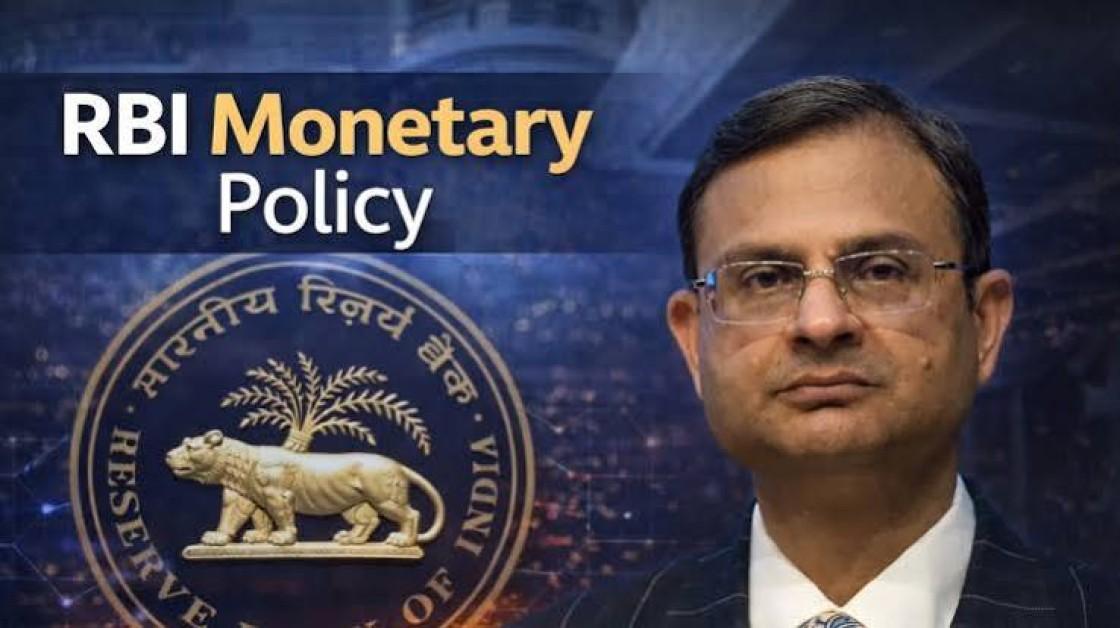
RBI Keeps Monetary Policy Unchanged Amid Global Uncertainty
The Reserve Bank of India (RBI) has maintained its monetary policy settings, choosing to leave the benchmark repo rate unchanged as policymakers balanced resilient domestic economic conditions against persistent global uncertainties. The Monetary Policy Committee (MPC) reiterated its commitment to maintaining price stability while supporting sustainable economic growth and preserving financial system stability.
The policy decision comes as central banks around the world continue to navigate inflation risks, geopolitical tensions, volatile commodity prices and shifting global financial conditions. Against this backdrop, the RBI opted for policy continuity while reaffirming that future decisions will remain dependent on incoming economic data.
RBI Maintains Policy Stability

The central bank retained its existing monetary policy framework.
Key policy highlights include:
-
Repo rate unchanged
-
Existing policy stance maintained
-
Continued focus on inflation management
-
Support for sustainable economic growth
-
Financial stability prioritised
-
Orderly liquidity management
-
Data-driven policy approach
-
Flexible response to evolving conditions
The RBI emphasised that maintaining macroeconomic stability remains central to its policy objectives.
Inflation Continues to Receive Close Attention
Containing inflation remains a key priority for the central bank.
Important indicators include:
-
Consumer Price Index (CPI)
-
Core inflation
-
Food inflation
-
Fuel prices
-
Commodity markets
-
Inflation expectations
-
Supply-side developments
-
Imported inflation
The RBI stated that inflation risks remain manageable but continue to require close monitoring.
Domestic Growth Remains Resilient
The central bank expressed confidence in India's economic fundamentals.
Key growth drivers include:
-
Private consumption
-
Manufacturing activity
-
Services sector expansion
-
Infrastructure investment
-
Government capital expenditure
-
Credit growth
-
Urban demand
-
Business investment
These factors continue to support India's medium-term growth prospects.
Liquidity Conditions Remain Supportive
The RBI reaffirmed its commitment to ensuring orderly financial market conditions.
Areas of focus include:
-
Banking system liquidity
-
Money market operations
-
Credit availability
-
Policy transmission
-
Deposit growth
-
Financial market stability
-
Government securities market
-
Banking sector resilience
Stable liquidity conditions help support lending and broader economic activity.
Global Risks Continue to Influence Policy
The RBI acknowledged that external developments remain an important source of uncertainty.
Key global risks include:
-
Geopolitical tensions
-
Crude oil price volatility
-
Global inflation
-
Major central bank policies
-
Currency market movements
-
Commodity prices
-
International capital flows
-
Global economic slowdown
These factors continue to shape the domestic policy environment.
Financial Markets Assess the Policy Outlook
Investors are evaluating the implications of the RBI's decision across asset classes.
Key market indicators include:
-
Sensex and Nifty performance
-
Government bond yields
-
Banking stocks
-
Foreign portfolio investment
-
Rupee movements
-
Money market rates
-
Corporate borrowing costs
-
Market liquidity
The RBI's forward guidance remains an important driver of investor sentiment.
Banking Sector Benefits From Policy Continuity
Banks continue assessing the impact of stable policy settings.
Key areas include:
-
Credit growth
-
Lending rates
-
Deposit mobilisation
-
Net interest margins
-
Treasury performance
-
Asset quality
-
Funding costs
-
Capital allocation
A stable policy environment supports long-term planning across the banking industry.
Risks to Monitor
Investors should continue monitoring:
-
Inflation trends
-
Crude oil prices
-
Global interest-rate developments
-
Foreign capital flows
-
Government bond yields
-
Currency movements
-
Fiscal policy
-
Corporate earnings
-
Geopolitical developments
-
Global economic growth
These variables could influence future monetary policy decisions.
What Investors Should Watch
Key indicators include:
-
RBI policy guidance
-
Inflation forecasts
-
GDP growth projections
-
Liquidity measures
-
Banking sector performance
-
Government bond yields
-
Foreign portfolio investment
-
Rupee exchange rate
-
Corporate earnings
-
Future MPC communications
These metrics will help investors assess the outlook for India's economy and financial markets.
Outlook
The RBI's decision to keep monetary policy unchanged reflects confidence in the resilience of the domestic economy while recognising the need to remain cautious amid global uncertainty. Stable inflation, healthy economic growth and orderly financial conditions provide a supportive backdrop, but policymakers remain alert to external risks.
Future monetary policy decisions are expected to remain data-dependent, with inflation dynamics, economic activity and global developments continuing to guide the RBI's approach.
Conclusion
By maintaining its monetary policy settings, the RBI has reinforced its commitment to balancing inflation control with sustainable economic growth during a period of heightened global uncertainty.
The policy continuity provides stability for businesses, consumers and financial markets while preserving flexibility to respond to future economic developments. Investors will continue monitoring inflation, growth indicators, global commodity prices, capital flows and future RBI communications for signals on the direction of monetary policy.
 RBI Keeps Monetary Policy Unchanged Amid Global Uncertainty FAQs
POST A COMMENT (0)
All Comments (0)
Replies (0)