





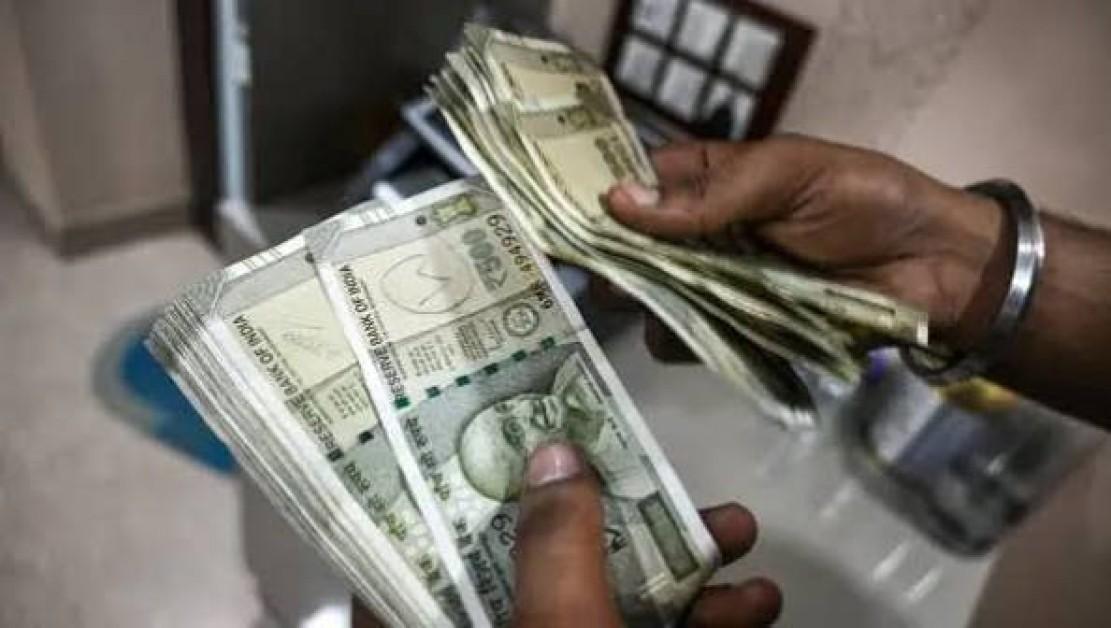
Indian Rupee Slips Toward 95.5 per Dollar as Traders Report Fresh RBI Intervention
The Indian rupee weakened toward 95.5 against the US dollar on Monday, August 17, as elevated crude oil prices and persistent dollar demand kept pressure on the domestic currency. The rupee slipped to around 95.49 per dollar in early trading before state-run banks sold dollars, an action traders said was most likely conducted on behalf of the Reserve Bank of India. The latest intervention follows repeated RBI activity in the foreign exchange market as policymakers seek to contain excessive volatility without committing to a fixed exchange-rate level.
Rupee Weakens Toward 95.5 Against the Dollar

The currency entered the new trading week under pressure after ending the previous session at around 95.4250 per dollar.
Rupee Touches Around 95.49 in Early Trade
The rupee weakened to approximately 95.49 against the dollar during early trading on Monday.
Market participants had expected the currency to open under pressure following developments over the weekend and continued concerns surrounding global energy prices.
The weakness extends a challenging period for the rupee, which has been trading around historically low levels against the US currency.
However, the movement remained relatively contained compared with some of the sharper declines experienced earlier in 2026.
That limited volatility reflects the strong presence of the RBI in the foreign exchange market.
Traders have become increasingly cautious about aggressively betting against the rupee because the central bank has demonstrated its willingness to intervene when movements become disorderly.
State-Run Banks Sell Dollars
State-owned banks were seen offering dollars as the rupee weakened, according to currency traders.
Market participants interpreted those transactions as likely intervention conducted on behalf of the RBI.
Central bank intervention generally involves selling dollars and purchasing rupees.
Additional dollar supply can temporarily reduce pressure on the domestic currency.
The RBI does not usually disclose its intervention activity in real time, meaning traders infer central bank action from transactions conducted through state-run banks and subsequent official foreign-exchange data.
The latest activity follows frequent intervention over recent sessions.
RBI Has Increased Its Presence in the Forex Market
The central bank has maintained a significant presence as the rupee faces persistent external pressure.
Intervention Is Aimed at Containing Volatility
The RBI does not operate a fixed exchange-rate regime.
The rupee is market determined, while the central bank can intervene when it believes movements are excessively volatile or disorderly.
This distinction is important.
Intervention does not necessarily mean policymakers are attempting to permanently defend 95.5 or another specific exchange rate.
Instead, dollar sales can prevent abrupt currency moves from destabilising markets or encouraging speculative momentum.
The RBI has intervened frequently over the past week, according to market participants.
This activity appears to have contributed to the rupee remaining within a relatively narrow trading range despite substantial external pressures.
Traders Become More Cautious About Shorting Rupee
Repeated intervention can influence market behaviour even without permanently changing the currency's fundamental direction.
Traders betting on rupee depreciation face the risk that sudden RBI dollar sales will push the currency sharply higher.
That can make large speculative positions less attractive.
The effect can reduce volatility because participants become reluctant to test levels where they believe the central bank may intervene.
Recent trading patterns demonstrate this dynamic.
Despite geopolitical uncertainty and elevated crude oil prices, the rupee's movements have remained relatively controlled.
This gives the RBI another mechanism for stabilising expectations beyond the direct financial impact of selling dollars.
Elevated Crude Oil Prices Remain a Major Pressure
India's dependence on imported energy makes global oil prices one of the most important variables affecting the rupee.
Brent Crude Trades Near $89 a Barrel
Brent crude futures were trading at approximately $88.8 per barrel on Monday, up around 0.3%.
Oil prices have remained elevated amid continuing uncertainty surrounding conflict in the Middle East.
For India, higher crude prices have direct implications for foreign-exchange demand.
The country imports the overwhelming majority of the crude oil it consumes.
Indian refiners therefore need significant quantities of dollars to pay international suppliers.
When oil prices rise, the dollar requirement associated with those imports generally increases.
This can create additional demand for the US currency and consequently put downward pressure on the rupee.
Higher Oil Can Widen India's Trade Deficit
The impact extends beyond daily currency-market demand.
Expensive energy imports can increase India's overall import bill.
If imports grow substantially faster than exports, the merchandise trade deficit can widen.
India's merchandise trade deficit had already expanded to approximately $31.98 billion in July.
A persistently wider trade deficit can affect the current account and increase the economy's requirement for foreign capital.
Strong foreign investment inflows can offset some of this pressure.
When capital flows weaken simultaneously with higher oil prices, the rupee becomes more vulnerable.
Importer Hedging Adds to Dollar Demand
Companies that need dollars for future payments are also influencing the currency market.
Importers Protect Against Further Rupee Weakness
Indian companies importing oil, machinery, electronics, chemicals and other goods frequently have future dollar obligations.
When businesses expect the rupee to weaken, they may hedge those obligations earlier.
This involves securing dollars or using derivatives to protect against adverse currency movements.
The strategy reduces uncertainty for individual companies.
However, when many importers hedge simultaneously, it can increase near-term dollar demand.
That additional demand can itself put pressure on the rupee.
Periods of currency weakness can therefore create a feedback mechanism in which expectations of further depreciation encourage more hedging.
Exporters Can Provide Counterbalancing Dollar Supply
Exporters create the opposite flow.
Indian companies receiving dollars from international customers eventually convert some of those earnings into rupees.
Their dollar sales can support the domestic currency.
Timing matters significantly.
If exporters expect the rupee to weaken further, they may delay conversion of overseas earnings where regulations and commercial requirements permit.
Importers, meanwhile, may accelerate dollar purchases.
This imbalance can amplify currency weakness.
RBI intervention can counteract some of these short-term market dynamics by providing additional dollar liquidity.
RBI Shortens FCNR(B) Swap Facility Window
Another factor influencing Monday's market sentiment was the RBI's decision to bring forward the deadline for a special foreign-exchange facility.
Deadline Moves Forward to August 31
The RBI has decided to close its discounted foreign-exchange swap facility associated with eligible Foreign Currency Non-Resident Bank deposits earlier than originally planned.
Banks can now access the facility for qualifying overseas deposits raised through August 31 rather than September 30.
The central bank cited the encouraging response to the programme and resulting foreign-exchange inflows.
The measure had been introduced to encourage banks to attract more foreign-currency deposits from non-resident Indians.
Those inflows helped increase dollar availability and strengthen the RBI's capacity to manage pressure on the currency.
Bringing the deadline forward indicates that the programme has attracted significantly more funds than initially anticipated.
Measures Have Attracted Nearly $57 Billion
RBI measures aimed at encouraging foreign-currency inflows have drawn close to $57 billion.
This represents a substantial addition to India's external liquidity.
The inflows have helped rebuild the central bank's foreign-exchange buffer following periods of heavy intervention.
However, the earlier closure of the facility created some near-term uncertainty.
Market participants had expected the programme to remain available for another month.
Ending it earlier could reduce the amount of additional foreign currency entering through this channel after August.
This contributed to weaker sentiment toward the rupee at the start of Monday's session.
Forex Reserves Give RBI Significant Intervention Capacity
India continues to maintain one of the world's largest foreign-exchange reserve buffers.
Reserves Rise to Around $707 Billion
India's foreign-exchange reserves had climbed to approximately $707 billion through August 7, reaching a four-month high.
The reserve increase provides the RBI with substantial capacity to intervene when necessary.
Foreign-exchange reserves include foreign currency assets alongside gold and other reserve components.
When the RBI sells dollars in the spot market, foreign currency assets can decline.
Large reserves therefore provide greater flexibility during periods of market stress.
They can also strengthen confidence among international investors because they demonstrate India's ability to meet external financing requirements.
RBI Has Previously Used Heavy Dollar Sales
The central bank has demonstrated that it is prepared to intervene aggressively when market conditions become disorderly.
In late July, bankers estimated that RBI dollar sales across the spot and offshore non-deliverable forward markets reached several billion dollars during particularly intense intervention.
That activity came as the rupee approached record lows.
The central bank's approach appeared designed not only to supply dollars but also to change trader expectations.
Since then, market participants have treated potential RBI intervention as an important constraint on aggressive rupee-selling positions.
The larger reserve buffer accumulated through recent foreign-currency inflows provides additional capacity for this strategy.
Middle East Uncertainty Keeps Currency Traders Cautious
Geopolitical developments remain an important external risk for Indian financial markets.
India Is Particularly Sensitive to Energy Disruptions
Conflict affecting major oil-producing regions can influence India through both commodity prices and global risk sentiment.
A significant disruption to crude supply can raise energy prices quickly.
Higher oil prices increase India's import bill and can contribute to domestic inflation.
Geopolitical uncertainty can also encourage international investors to move capital toward perceived safe-haven assets such as the US dollar.
That can weaken emerging-market currencies broadly.
The rupee can therefore face simultaneous pressure from higher import costs and a stronger global preference for dollar assets.
Currency Markets Are Watching Oil Closely
For Indian currency traders, crude oil has consequently become one of the most closely monitored indicators.
A sustained decline in Brent prices could provide meaningful relief for the rupee.
Conversely, another sharp increase could intensify importer dollar demand and worsen expectations for India's external balance.
The relationship is not perfectly linear because capital flows and global dollar movements also matter.
Nevertheless, India's high dependence on imported crude makes oil a particularly powerful macroeconomic variable.
Rupee Volatility Has Declined Despite Market Pressure
One of the most notable features of recent trading has been the relatively limited movement in the currency.
RBI Activity Keeps Rupee Within Narrow Range
The rupee traded within a roughly 30-paise range during the previous week despite volatile global conditions.
Its movement on Monday was also limited.
Such stability would be unusual given the combination of elevated oil prices, geopolitical uncertainty and importer demand.
Market participants attribute much of the reduced volatility to the RBI's persistent intervention.
By selling dollars at multiple levels, the central bank can prevent one-way market positioning from gaining momentum.
The result is a currency that can continue weakening gradually while avoiding abrupt declines.
Lower Volatility Can Help Businesses
Currency stability has practical advantages for Indian companies.
Businesses engaged in international trade need to manage exchange-rate risk.
Sharp rupee movements can rapidly change import costs and export revenues.
A relatively orderly market gives companies more time to adjust hedging positions and pricing.
Banks also benefit from lower volatility because extreme currency movements can increase financial-market risks.
The RBI's intervention strategy therefore has implications extending beyond the headline exchange rate.
Weaker Rupee Has Mixed Impact on Indian Businesses
Currency depreciation creates winners and losers across the economy.
Import-Dependent Companies Face Higher Costs
Businesses dependent on imported raw materials or equipment can experience rising costs when the rupee weakens.
Oil marketing companies and airlines are particularly sensitive because major expenses are linked to international energy prices.
Electronics, chemicals and machinery businesses can also face higher costs.
Companies may attempt to pass these increases to consumers.
Their ability to do so depends on competition and demand conditions.
If businesses cannot raise prices, currency depreciation can reduce profit margins.
A combination of higher commodity prices and a weaker rupee can be especially challenging because both effects increase the domestic cost of imports.
Exporters Can Gain a Revenue Advantage
A weaker rupee can benefit exporters earning revenue in dollars while incurring a large share of costs in India.
Information technology services provide a prominent example.
Pharmaceutical, textile and other exporters can also benefit depending on their cost structures and hedging policies.
The advantage is not automatic.
Many exporters import inputs or hedge their foreign-currency exposure, which can reduce the immediate benefit.
Nevertheless, currency depreciation can improve international price competitiveness for some Indian businesses.
The overall corporate impact therefore varies significantly by sector.
Inflation and Monetary Policy Remain Important
Persistent currency weakness can eventually influence the domestic inflation outlook.
Depreciation Can Increase Imported Inflation
A weaker rupee increases the local-currency price of imported goods when dollar prices remain unchanged.
Energy is particularly important because fuel costs can affect transportation, manufacturing and agriculture.
Imported machinery, electronics and industrial materials can also become more expensive.
If businesses pass those costs to consumers, currency depreciation can contribute to inflation.
The magnitude depends on the scale and duration of the currency movement.
Temporary fluctuations generally have less impact than sustained depreciation.
This gives the RBI another reason to prevent disorderly currency moves.
Markets Await Further RBI Signals
Currency traders are also monitoring the RBI's broader monetary-policy outlook.
Minutes from the central bank's latest policy meeting are due this week and could provide additional insight into policymakers' assessment of inflation and economic conditions.
Interest-rate expectations influence currency markets because they affect the relative returns available to investors holding rupee assets.
Higher Indian yields can attract capital under some conditions, while expectations of lower rates can reduce that support.
However, global risk sentiment and oil prices currently remain particularly important influences on the rupee.
Near-Term Rupee Range Remains Closely Watched
Market participants expect central bank intervention to continue influencing trading conditions.
Traders See RBI as Important Barrier Against Sharp Weakness
Currency traders have become increasingly aware that the RBI can intervene at multiple points during the trading session.
This reduces confidence in large directional bets against the rupee.
Some market participants expect the currency to remain around the 95.00-95.50 range in the near term, although geopolitical and commodity developments can quickly alter expectations.
The RBI's actions will remain critical.
If the central bank continues supplying dollars aggressively, volatility could remain subdued even if underlying depreciation pressure persists.
Oil and Capital Flows Will Determine Direction
The longer-term direction of the rupee cannot be determined by intervention alone.
Oil prices, India's trade balance, foreign portfolio investment, direct investment and global dollar conditions will ultimately influence the currency.
RBI dollar sales can smooth volatility and prevent disruptive market movements.
They cannot permanently offset sustained deterioration in external fundamentals without consuming reserves.
Conversely, stronger foreign inflows or lower oil prices could allow the rupee to stabilise without heavy intervention.
The coming weeks will therefore provide an important test of whether recent pressure begins to ease or remains persistent.
Conclusion
The Indian rupee's move toward 95.5 per dollar on August 17 highlights the continuing pressure created by elevated crude oil prices, importer demand and geopolitical uncertainty. The currency weakened to around 95.49 in early trading before state-run banks sold dollars, with traders attributing the activity to fresh RBI intervention.
The central bank's repeated presence has helped keep volatility unusually contained despite difficult external conditions. Foreign-exchange reserves of around $707 billion and substantial inflows generated through recent policy measures provide the RBI with significant capacity to continue smoothing disruptive movements.
However, intervention can manage volatility more effectively than it can change underlying economic forces. The rupee's next major direction will depend on oil prices, foreign capital flows, India's external balance and global dollar conditions, making the 95-per-dollar region a closely watched area for businesses, investors and policymakers.
 Indian Rupee Nears 95.5 as RBI Intervention Returns FAQs
POST A COMMENT (0)
All Comments (0)
Replies (0)