





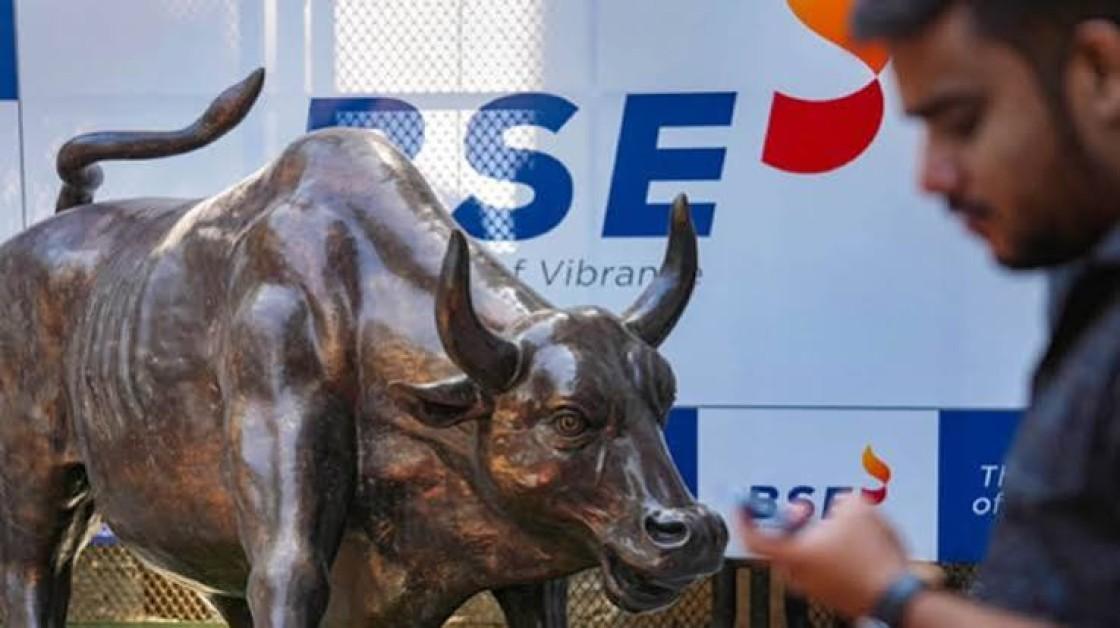
India’s Equity Fundraising Approaches $10 Billion in August, Putting Market on Track for Record Month
India is heading toward what could become its strongest August on record for equity fundraising, with companies and shareholders completing nearly $10 billion of equity-market transactions during the month.
The surge is particularly significant because it is occurring despite relatively weak performance in the broader secondary equity market.
A powerful domestic investor base, continuing mutual-fund inflows, retail participation and renewed foreign interest have allowed India's primary market to absorb a substantial pipeline of new shares.
The August fundraising wave includes initial public offerings, institutional placements and secondary share sales, demonstrating that India's capital markets are increasingly capable of supporting large transactions even when benchmark indices are under pressure. (Outlook Business)
Nearly $10 Billion of Equity Deals Have Been Priced

Equity deals priced during August are approaching the $10 billion mark.
That puts the market on course for a record month for the period and highlights the increasing depth of India's domestic capital pool.
For companies, strong demand means equity financing remains available for:
expansion,
debt reduction,
acquisitions,
and balance-sheet strengthening.
For existing shareholders, active markets provide opportunities to monetise stakes through secondary transactions.
August Activity Extends India’s Primary-Market Boom
India has emerged as one of the world's most active equity-issuance markets.
The current fundraising cycle is broader than a temporary IPO rush.
Capital is being raised through several channels, including IPOs and institutional transactions.
That matters because a diversified fundraising market is generally more resilient than one dependent entirely on new listings.
Domestic Liquidity Is Driving the Market
One of the most important forces behind the fundraising boom is India's growing domestic investor base.
Mutual funds, insurers and retail investors now represent a much larger source of equity demand than they did during earlier market cycles.
This provides issuers with a deeper domestic pool of capital.
It also reduces the extent to which Indian fundraising depends exclusively on foreign institutional investors. (www.narendramodi.in)
Mutual Fund Flows Are Transforming Capital Markets
Systematic investment plans have created a recurring flow of household savings into mutual funds.
Unlike opportunistic foreign capital, these investments arrive regularly.
Asset managers need to deploy that money.
New IPOs and institutional offerings provide additional opportunities to allocate capital.
This creates a structural connection between household financialisation and corporate fundraising.
Household Savings Are Moving Toward Financial Assets
Indian household wealth has traditionally been concentrated heavily in:
property,
gold,
bank deposits,
and physical assets.
That structure is gradually changing.
More households are participating in:
mutual funds,
equities,
retirement products,
and other financial instruments.
As the pool of domestic financial savings grows, India's capital markets gain greater capacity to finance businesses directly.
Retail Investors Are Now Important Market Participants
Digital brokerages and easier access to demat accounts have dramatically expanded direct equity participation.
Retail investors increasingly participate in IPOs alongside institutional buyers.
This creates another demand pool for issuers.
However, strong retail participation can also increase speculative behaviour when investors focus excessively on short-term listing gains.
Foreign Investors Are Showing Renewed Interest
Domestic investors are not the only source of demand.
Foreign participation in India's primary market is also showing signs of recovery.
That is important because international institutions can provide substantial capital for larger offerings.
A combination of domestic and foreign demand allows Indian companies to execute transactions that would have been considerably more difficult in earlier market cycles. (www.narendramodi.in)
Primary Markets Can Remain Strong During Index Weakness
One of the most interesting features of the current market is the divergence between fundraising activity and secondary-market performance.
India's benchmark indices have struggled during 2026 compared with several Asian markets.
Yet primary issuance remains extremely active.
This shows that investors can distinguish between the overall market and individual companies.
A weak index does not necessarily mean investors are unwilling to fund attractive businesses.
New Issuance Is Competing With Existing Stocks
There is nevertheless a trade-off.
Money invested in IPOs and placements cannot simultaneously be invested elsewhere.
A heavy issuance calendar can therefore draw liquidity away from existing listed companies.
Abakkus Investment Managers recently warned that the IPO wave could absorb a substantial portion of available investment capital and potentially limit a broader market recovery. (Reuters)
Capital Absorption Is Becoming a Key Market Question
The important question is no longer simply whether India can generate enough IPOs.
It is whether investors can absorb them without weakening the rest of the equity market.
If ₹100 enters an investor's portfolio and ₹50 is allocated to newly issued shares, only ₹50 remains available for existing securities.
At sufficient scale, this can affect secondary-market valuations.
Strong IPO Pipeline Tests Market Depth
A deep capital market should be capable of financing new companies without creating excessive disruption elsewhere.
August is therefore becoming an important test of India's financial-market development.
Nearly $10 billion of transactions within one month represents substantial supply.
The ability of investors to absorb it provides evidence of how much India's capital base has expanded.
24 Companies Listed During August
According to market data cited in reports on the fundraising surge, 24 companies had listed during August, with 20 trading above their IPO prices.
That relatively strong post-listing performance helps sustain investor confidence.
When recent IPO investors generate gains, demand for subsequent offerings can increase.
This creates a positive fundraising cycle. (Outlook Business)
Strong Listings Can Reinforce IPO Demand
IPO markets are highly influenced by recent experience.
When new listings consistently trade above their offer prices, investors become more willing to participate in upcoming deals.
That allows issuers to:
raise more capital,
price offerings more confidently,
and accelerate IPO schedules.
But the cycle can reverse quickly if new listings begin producing widespread losses.
Listing Gains Should Not Replace Fundamental Analysis
Strong market conditions can encourage investors to treat IPOs as short-term trading opportunities.
That creates risk.
A successful IPO investment ultimately depends on:
business quality,
valuation,
growth,
cash flow,
and governance.
Subscription numbers and grey-market premiums cannot replace fundamental analysis.
Large Companies Are Increasingly Comfortable Raising Equity
Strong investor demand gives corporate boards greater flexibility.
Companies can use equity issuance instead of relying exclusively on debt.
This can be particularly valuable when financing:
large capital-expenditure programmes,
acquisitions,
or rapid expansion.
Equity does not require fixed interest payments, although issuing new shares dilutes existing ownership.
Equity Funding Can Strengthen Balance Sheets
A company with excessive debt may use an equity issue to repay borrowings.
This can lower:
interest costs,
leverage,
and refinancing risk.
A stronger balance sheet can then support future investment.
For capital-intensive Indian companies, access to equity can therefore materially improve financial flexibility.
IPOs Allow Private Investors to Exit
Fundraising markets also provide liquidity for existing shareholders.
Private-equity funds, venture-capital firms and promoters can sell part of their holdings through:
offers for sale,
block transactions,
or IPOs.
This recycling mechanism is essential.
Investors who realise returns from older investments can deploy capital into newer businesses.
Strong Exit Markets Help Startup Funding
The connection between IPOs and private capital is important.
Venture-capital and private-equity investors commit money with the expectation that successful investments can eventually be sold.
A healthy IPO market creates an exit route.
That can make investors more willing to fund private companies years before they become publicly traded.
India’s Startup Ecosystem Benefits From Public-Market Access
A growing number of technology and consumer businesses are considering Indian listings.
Successful public-market exits can demonstrate that companies do not necessarily need overseas exchanges to access substantial capital.
This strengthens India's domestic financial ecosystem.
It also gives Indian retail and institutional investors greater access to companies that previously remained private for longer.
QIPs Provide Faster Capital-Raising Route
Qualified institutional placements allow listed companies to raise equity from institutional investors without undertaking a full public offering.
They can be particularly useful when market conditions are favourable.
Companies can raise substantial amounts relatively quickly.
Strong institutional demand therefore supports not only IPO activity but also capital raising by already-listed businesses.
Block Deals Add Another Dimension
Large shareholders frequently use block transactions to sell stakes.
These deals do not necessarily inject fresh capital into the company itself.
But they improve market liquidity and allow:
promoters,
private-equity funds,
and strategic investors
to monetise holdings.
Strong demand for large blocks indicates institutional confidence in India's equity market.
Investment Banks Benefit From Fundraising Boom
A record issuance environment creates substantial business for investment banks.
Banks earn fees for:
underwriting,
book building,
advisory,
and transaction execution.
Law firms, auditors and market consultants also benefit.
A sustained equity boom therefore supports a large capital-markets services ecosystem.
Stock Exchanges Benefit From More Listed Companies
More listings increase the breadth of India's public market.
Additional companies create:
trading activity,
market-data demand,
and investment opportunities.
Over time, a larger listed universe can improve sector representation and make Indian capital markets more attractive to global investors.
SEBI’s Regulatory Framework Remains Critical
Rapid fundraising requires strong investor protection.
The Securities and Exchange Board of India plays a central role in regulating:
disclosures,
offer documents,
market conduct,
and intermediaries.
As issuance volumes rise, regulatory quality becomes even more important.
Poor-quality offerings can damage confidence across the entire IPO market.
Valuation Discipline Will Be Tested
Strong demand can encourage issuers to seek higher valuations.
That creates one of the biggest risks in an IPO boom.
A good company can still be a poor investment if shares are sold at an excessively expensive valuation.
Investors therefore need to distinguish between business quality and offering price.
Promoters Have Incentive to Maximise Pricing
Companies naturally want to raise as much money as possible while issuing the fewest shares.
Existing shareholders selling stakes also prefer higher prices.
Investors want the opposite.
They need enough valuation upside to compensate for risk.
Book-building is the mechanism through which these competing interests meet.
Excessive Pricing Can Break IPO Momentum
An IPO cycle can weaken when too many companies price aggressively.
If investors repeatedly suffer post-listing losses, participation declines.
Issuers then need to:
reduce valuations,
delay offerings,
or withdraw transactions.
Maintaining reasonable pricing is therefore important for the sustainability of the current fundraising cycle.
SME IPOs Add Another Layer of Activity
India's SME exchanges have also become increasingly active.
Smaller companies now have greater access to public equity than in previous decades.
This can help fund expansion.
However, SME shares generally carry greater:
liquidity risk,
volatility,
and governance risk.
The segment therefore requires particularly careful investor analysis.
Recent Listings Show Both Outcomes
The market is already demonstrating that IPO performance is not uniform.
Some companies have delivered substantial listing premiums.
Others have debuted below their issue prices.
This is healthy in one sense because it demonstrates that the market is differentiating between issuers.
An IPO boom in which every company automatically receives a premium would increase concerns about speculative excess.
Domestic Institutions Provide Market Stability
Mutual funds and insurers generally invest with longer horizons than short-term traders.
Their expanding role can therefore improve market resilience.
When foreign investors sell during periods of global risk aversion, domestic institutions can sometimes absorb part of that supply.
This has become an increasingly important feature of India's equity market.
Foreign Capital Still Matters
Domestic liquidity does not make international investors irrelevant.
Foreign institutions bring:
large pools of capital,
global valuation comparisons,
and institutional scrutiny.
Their participation is particularly valuable for billion-dollar offerings.
The strongest capital market combines both domestic depth and international access.
Strong Capital Markets Reduce Dependence on Banks
Historically, Indian companies depended heavily on bank financing.
Equity markets provide another route.
This reduces concentration of corporate financing within the banking system.
A diversified financial system can allocate capital more efficiently across different types of businesses.
Equity Is Particularly Useful for Growth Companies
Young companies may have limited collateral or predictable cash flows.
Debt can therefore be expensive or unavailable.
Equity investors can tolerate greater uncertainty in exchange for ownership upside.
Deep public markets make it easier for growth businesses to finance expansion without taking excessive leverage.
Infrastructure Companies Can Also Use Equity
India's enormous infrastructure ambitions require substantial capital.
Banks cannot finance everything.
Companies operating in:
energy,
transport,
digital infrastructure,
and manufacturing
can use public equity alongside debt.
This broadens the pool of capital available for India's investment cycle.
Record Fundraising Can Support Economic Expansion
When capital markets function efficiently, savings move toward productive investment.
Companies can use equity proceeds to:
build factories,
hire employees,
develop products,
and expand distribution.
This connects financial-market activity with the real economy.
The quality of capital allocation, however, remains crucial.
Raising Money Is Not the Same as Creating Value
A company can raise billions and still destroy shareholder value.
The important question is what management does with the money.
Investors should eventually evaluate:
return on invested capital,
earnings growth,
and cash generation.
A record fundraising month is positive for market development, but it does not guarantee successful corporate investment.
Large Issuance Could Pressure Secondary Markets
The biggest near-term concern is liquidity competition.
India's secondary market is already facing challenges from global uncertainty and elevated crude prices.
A large supply of new shares can further dilute investor attention.
This could limit the ability of benchmark indices to rally even if corporate earnings improve. (Reuters)
Global Markets Remain an Important Risk
Indian equity fundraising does not operate in isolation.
International conditions can change rapidly.
Important external variables include:
US interest rates,
global bond yields,
oil prices,
geopolitical risk,
and foreign fund flows.
A sharp global risk-off event could slow issuance activity quickly.
Oil Prices Are Particularly Important for India
India imports most of the crude oil it consumes.
Higher energy prices can affect:
inflation,
corporate margins,
the rupee,
and government finances.
Elevated crude therefore represents a broader risk to equity-market sentiment.
The current fundraising boom is occurring despite those pressures, which makes the strength of primary-market demand particularly notable.
Capital Inflows Are Supporting Financial Conditions
India has also experienced strong capital inflows in recent months.
Foreign-exchange reserves reached approximately $716.9 billion by August 14, a six-month high, following sustained inflows associated partly with RBI measures designed to strengthen the balance of payments. (Reuters)
Healthy external liquidity can improve investor confidence even when global conditions remain uncertain.
India’s Financial System Is Becoming More Market-Oriented
The deeper structural story extends beyond August.
India is gradually developing a financial system in which:
households invest through funds,
institutions allocate capital,
companies issue securities,
and investors trade those securities through increasingly sophisticated markets.
This reduces dependence on traditional bank deposits and loans as the primary channels connecting savings with investment.
Domestic Capital Is Becoming Strategic Advantage
Large domestic savings provide India with something increasingly valuable: the ability to finance more of its own corporate growth.
Foreign capital remains useful.
But a country that can support large equity offerings through domestic institutions is less vulnerable to sudden changes in international risk appetite.
That represents a significant evolution in India's financial architecture.
Record August Could Become New Benchmark
If current deal activity continues through the end of the month, August 2026 could establish a new benchmark for Indian equity fundraising.
The significance would extend beyond the headline dollar amount.
It would demonstrate that India's market can absorb large volumes of equity across multiple transaction types even during a challenging year for benchmark indices. (Outlook Business)
Conclusion
India's equity capital market is approaching $10 billion in fundraising during August, putting the country on course for a potentially record month and underscoring the growing depth of its domestic investment ecosystem.
The surge is being supported by powerful structural forces: recurring mutual-fund inflows, expanding retail participation, institutional demand and signs of returning foreign interest.
The performance of recent IPOs has also supported sentiment, with 20 of 24 August listings reported to be trading above their issue prices. (Outlook Business)
But the fundraising boom also creates challenges.
New share supply competes with existing stocks for capital, aggressive IPO valuations could weaken investor returns, and global risks remain capable of disrupting issuance.
The long-term significance therefore lies not simply in whether August crosses the $10 billion threshold.
The more important development is that India's domestic capital pool has become deep enough to finance increasingly large equity transactions while reducing the market's historical dependence on foreign money.
If that trend persists, it could fundamentally reshape how Indian companies finance expansion over the coming decade.
 India Equity Fundraising Nears $10 Billion as August Heads for Record Month FAQs
POST A COMMENT (0)
All Comments (0)
Replies (0)