





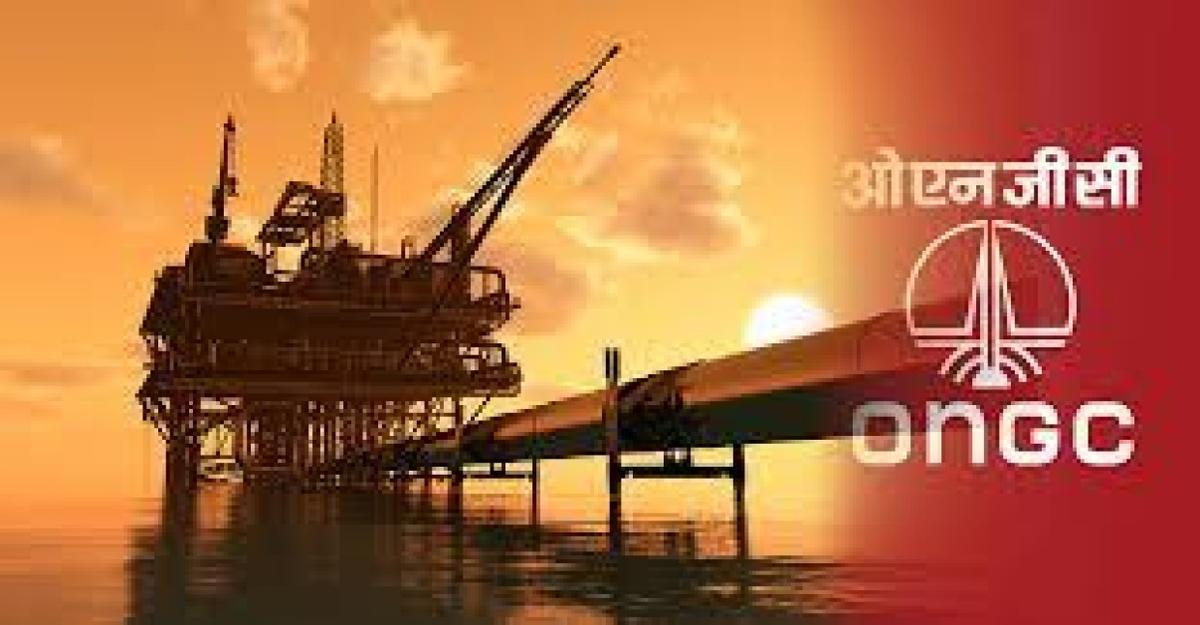
ONGC Holds Q1 FY27 Earnings Call Today as Investors Track Oil and Gas Production
Oil and Natural Gas Corporation is holding its Q1 FY27 earnings call today, putting the state-owned energy producer's oil and natural gas production, realisations, capital expenditure and major development projects in focus for investors.
The interaction provides management with an opportunity to discuss the company's June-quarter performance and outline expectations for production growth during the remainder of FY27.
For investors, the most important issue is whether ONGC can sustain and expand output from mature fields while new developments contribute incremental volumes.
Oil and Gas Production Remains Central

Production is one of the most important operating indicators for an upstream energy company.
ONGC's earnings depend heavily on the amount of crude oil and natural gas it produces, alongside the prices realised for those volumes.
Investors will therefore closely track management commentary on:
-
Crude oil production
-
Natural gas production
-
New field output
-
Mature field performance
-
Production guidance
-
Operational efficiency
A sustained increase in production can improve revenue visibility even when commodity prices remain volatile.
KG Basin Production Remains Important
ONGC's Krishna-Godavari basin developments remain a key component of its strategy to increase domestic hydrocarbon production.
Deepwater projects are technically complex and require substantial investment, but successful ramp-up can provide meaningful incremental volumes.
Investors will watch for updates on:
-
Well commissioning
-
Production ramp-up
-
Infrastructure availability
-
Output stability
-
Future development phases
The pace at which new projects reach targeted production levels could materially influence ONGC's medium-term growth trajectory.
Mature Fields Require Continuous Investment
ONGC operates several fields that have been producing hydrocarbons for decades.
Production from mature reservoirs naturally declines over time unless companies undertake interventions to maintain output.
These can include:
-
Enhanced oil recovery
-
Additional drilling
-
Reservoir management
-
Well stimulation
-
Infrastructure upgrades
-
Redevelopment projects
Maintaining production from existing assets while bringing new fields online is therefore a critical operational challenge.
Crude Oil Prices Influence Earnings
ONGC's financial performance remains closely connected to international crude oil prices.
Higher crude prices can increase upstream realisations, while lower prices can reduce revenue and profitability.
Key variables include:
-
Brent crude prices
-
Global supply
-
OPEC+ policy
-
Geopolitical developments
-
Global demand
-
Currency movements
Commodity-price volatility means production growth becomes particularly valuable because it provides an operating lever that management can influence more directly.
Natural Gas Realisations Also Matter
Natural gas represents another important part of ONGC's portfolio.
The economics of gas production depend on applicable pricing mechanisms, production costs and the characteristics of individual fields.
Higher domestic gas output can also support India's broader energy-security objectives by reducing dependence on imported fuels.
Investors will therefore seek management commentary on both gas volumes and price realisations.
Energy Security Strengthens ONGC’s Strategic Role
India imports a substantial share of the crude oil it consumes.
Increasing domestic production can help reduce exposure to international supply disruptions and foreign-exchange costs.
ONGC therefore plays a strategic role extending beyond its financial performance.
Higher domestic production can contribute to:
-
Energy security
-
Lower import dependence
-
Supply diversification
-
Foreign-exchange savings
-
Industrial stability
This makes ONGC's production trajectory relevant to both investors and policymakers.
Capital Expenditure Remains Key Indicator
Oil and gas exploration requires sustained investment.
ONGC's capital expenditure supports:
-
Exploration
-
Development drilling
-
Production infrastructure
-
Offshore platforms
-
Pipelines
-
Enhanced recovery
-
New projects
Investors will watch whether the company remains on track with its FY27 spending plans and whether capital deployment is generating adequate production growth.
Exploration Determines Future Reserves
Existing oil and gas fields eventually decline, making exploration essential for long-term sustainability.
ONGC needs to continually identify new reserves capable of replacing hydrocarbons extracted from existing fields.
Exploration activity can involve:
-
Seismic surveys
-
Geological analysis
-
Exploratory drilling
-
Appraisal wells
-
Deepwater exploration
Successful discoveries can create long-term value, but exploration also carries substantial geological and financial risk.
Offshore Operations Remain Critical
A significant portion of ONGC's production comes from offshore fields.
Offshore operations require specialised:
-
Drilling rigs
-
Platforms
-
Subsea equipment
-
Support vessels
-
Pipelines
-
Safety systems
Operational reliability is therefore essential because unplanned shutdowns can quickly affect production.
Management commentary on offshore maintenance and project execution will be closely monitored.
Production Growth Can Improve Operating Leverage
Oil and gas companies typically have substantial fixed infrastructure costs.
When production rises, those costs can be spread across larger volumes.
This can potentially improve operating leverage.
However, the benefit depends on factors including:
-
Production costs
-
Field economics
-
Commodity prices
-
Taxes
-
Development expenditure
Investors therefore need to evaluate production growth alongside profitability rather than focusing on volumes alone.
Rupee Movement Can Affect Financial Performance
International crude oil is generally priced in US dollars.
Currency movements can therefore influence ONGC's rupee-denominated realisations.
A weaker rupee can increase the domestic value of dollar-linked revenue, although currency movements can also affect imported equipment and other costs.
Foreign-exchange trends remain one of several external variables influencing earnings.
Dividend Outlook Remains Important
ONGC has historically attracted income-focused investors because of its dividend payouts.
Future distributions depend on factors including:
-
Profitability
-
Cash flow
-
Capital expenditure
-
Commodity prices
-
Balance-sheet requirements
Investors may seek greater clarity on how management intends to balance shareholder distributions with investment in future production.
ONGC Videsh Adds International Exposure
ONGC also participates in international oil and gas projects through ONGC Videsh.
Overseas assets provide geographic diversification and exposure to hydrocarbon resources outside India.
However, international operations can also introduce:
-
Geopolitical risk
-
Currency exposure
-
Regulatory uncertainty
-
Sanctions risk
-
Project-specific challenges
Performance across these assets can therefore influence consolidated results.
Refining Exposure Adds Another Earnings Dimension
ONGC's broader group exposure includes downstream refining businesses.
Refining economics differ from upstream production because profitability depends on refining margins rather than crude oil prices alone.
This creates some diversification across the energy value chain.
Investors evaluating consolidated performance therefore need to consider both upstream and downstream conditions.
New Energy Investments Remain in Focus
Like other major global energy companies, ONGC is expanding its exposure to lower-carbon businesses.
Potential growth areas include:
-
Renewable energy
-
Green hydrogen
-
Energy storage
-
Low-carbon fuels
The challenge is allocating capital toward emerging energy businesses while continuing to invest sufficiently in oil and gas production required to meet current energy demand.
Energy Transition Creates Long-Term Capital Allocation Challenge
India's energy demand is expected to continue expanding even as renewable energy capacity increases.
ONGC therefore needs to manage two priorities simultaneously:
-
Maintaining domestic hydrocarbon production.
-
Building capabilities in emerging energy technologies.
Capital allocation between these areas will increasingly influence the company's long-term strategy.
Investors Will Track Project Timelines
Large upstream projects frequently involve complex development schedules.
Delays can increase costs and postpone expected production.
Investors will therefore look for updates on:
-
Project commissioning
-
Drilling schedules
-
Production milestones
-
Cost overruns
-
Contractor performance
-
Infrastructure completion
Consistent project execution can strengthen confidence in management's production guidance.
Operating Costs Are Important
Higher production does not automatically translate into stronger profits if costs rise significantly.
ONGC must manage expenditure across:
-
Drilling
-
Offshore services
-
Maintenance
-
Employee costs
-
Equipment
-
Transportation
Cost discipline becomes particularly important when crude prices weaken.
Global Oil Market Remains Volatile
ONGC operates within a global commodity market affected by rapidly changing conditions.
Oil prices can respond to:
-
Middle East developments
-
OPEC+ decisions
-
US production
-
Chinese demand
-
Global economic growth
-
Inventory levels
These factors remain outside ONGC's control, reinforcing the importance of production efficiency and disciplined capital expenditure.
Domestic Gas Demand Provides Opportunity
India's expanding economy creates substantial long-term demand for natural gas across:
-
Fertilisers
-
City gas distribution
-
Power
-
Refining
-
Industry
Higher domestic production could allow ONGC to capture part of this demand while supporting India's objective of increasing gas within the national energy mix.
Earnings Call Guidance Could Influence the Stock
Management commentary during earnings calls can be as important to investors as reported quarterly numbers.
Markets often react to changes in expectations surrounding:
-
Production guidance
-
Capital expenditure
-
Project timelines
-
Costs
-
Commodity realisations
-
Dividends
Any meaningful revision to management expectations could therefore influence ONGC shares.
What Investors Should Watch
The Q1 FY27 earnings call puts several indicators in focus:
-
Crude oil production
-
Natural gas production
-
KG Basin ramp-up
-
Production guidance
-
Crude realisations
-
Gas realisations
-
Capital expenditure
-
Exploration activity
-
Project commissioning
-
Dividend outlook
Production guidance for the remainder of FY27 will be particularly important in assessing the company's growth trajectory.
Outlook
ONGC's near-term outlook will depend on its ability to increase production while navigating volatile international energy prices.
New projects offer the potential to offset natural declines from mature fields, while continued investment in exploration remains essential for future reserve replacement.
At the same time, ONGC is gradually positioning itself for India's longer-term energy transition.
The Q1 FY27 earnings call should therefore provide investors with important signals on how management intends to balance production growth, capital expenditure, shareholder returns and future energy investments.
Conclusion
ONGC's Q1 FY27 earnings call puts the company's core production strategy firmly in focus as investors assess whether new oil and gas projects can deliver sustainable volume growth.
The company's ability to increase domestic production is important not only for earnings but also for India's broader energy-security objectives.
Investors will closely monitor updates on the KG Basin, mature-field performance, capital expenditure, exploration and production guidance.
While global crude prices will continue influencing profitability, ONGC's long-term investment case will depend heavily on operational execution, reserve replacement and disciplined capital allocation across both traditional hydrocarbons and emerging energy businesses.
 ONGC Q1 FY27 Earnings Call Puts Oil and Gas Production, Revenue and Growth Outlook in Focus FAQs
POST A COMMENT (0)
All Comments (0)
Replies (0)