





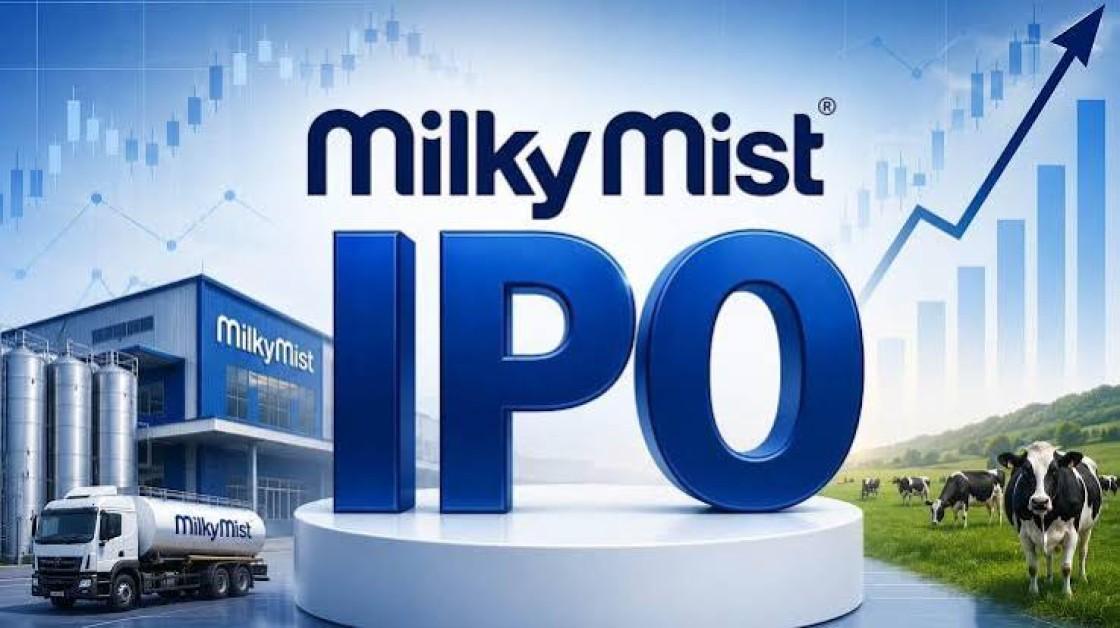
Milky Mist Dairy Food IPO Moves Toward Allotment After Strong Public Subscription
Milky Mist Dairy Food's initial public offering has moved into the allotment stage following the completion of public bidding, bringing investors closer to knowing whether they have received shares in the dairy company's market debut. The ₹1,553 crore IPO attracted strong demand during its subscription period from August 11 to August 13, with the overall issue subscribed about 56 times by the final day. Attention now shifts to share allocation ahead of the company's scheduled stock market listing, marking an important milestone for India's value-added dairy sector.
Milky Mist Dairy Food IPO Draws Strong Investor Demand

The response to the public offering demonstrates significant investor interest in a consumer-focused dairy company with an established portfolio of value-added products.
IPO Receives Heavy Subscription on Final Day
Milky Mist Dairy Food's IPO received strong demand across the bidding period, with the overall issue subscribed approximately 56 times by the close of the final day.
The level of subscription means investor applications substantially exceeded the number of shares available through the public issue.
Heavy oversubscription generally reduces the probability of receiving shares, particularly within categories where demand significantly exceeds the available allocation.
The final allotment will determine how shares are distributed among successful applicants according to applicable regulatory procedures.
Investors who do not receive an allocation will have their blocked application funds released according to the IPO settlement process.
Successful applicants will receive shares in their demat accounts before trading begins.
Anchor Investors Committed ₹465 Crore Before Opening
Institutional interest was visible even before the IPO opened to public investors.
Milky Mist raised approximately ₹465 crore from anchor investors ahead of the subscription period.
Anchor participation allows qualified institutional investors to receive shares before the public issue opens and is often closely watched as an early indicator of institutional appetite.
The company allocated more than 3.32 crore shares to anchor investors at ₹140 per share, the upper end of the IPO price band.
Strong anchor participation was followed by substantial demand during the public subscription period.
The combination provided Milky Mist with significant institutional and broader market interest ahead of its planned listing.
Milky Mist IPO Is Valued at ₹1,553 Crore
The public offering combines fresh capital for the company with a smaller secondary share sale by existing shareholders.
Fresh Issue Accounts for Most of the Offering
Milky Mist's IPO totals approximately ₹1,553 crore.
The offering includes a fresh issue of about ₹1,428 crore, meaning the majority of capital raised through the transaction will go directly to the company.
The remaining approximately ₹125 crore represents an offer for sale by existing shareholders.
This structure differs from IPOs dominated by secondary sales, where most proceeds are received by existing investors rather than the company.
For Milky Mist, the large fresh issue provides substantial capital that can be invested back into the business.
The transaction follows a reduction from the company's earlier IPO plans after it completed a pre-IPO investment transaction involving a Temasek-linked investor.
IPO Price Band Was Set at ₹133 to ₹140
Milky Mist priced its IPO between ₹133 and ₹140 per share.
At the upper end of the price band, the offering implied a company valuation of approximately ₹10,778 crore.
The valuation places Milky Mist among the more significant publicly traded dairy businesses in India once the listing is completed.
Investors evaluating the offering have had to balance the company's growth and position in value-added dairy products against valuation, regional concentration and competitive risks.
The strong subscription response indicates substantial demand at the offered price range.
Actual market valuation after listing will ultimately depend on how the shares trade once they become freely available on the exchanges.
IPO Proceeds Will Support Manufacturing Expansion
Milky Mist intends to use the fresh capital to strengthen its manufacturing capabilities and financial position.
Manufacturing Investment Supports Future Growth
Dairy manufacturing requires substantial investment in processing plants, refrigeration, quality-control systems, logistics and cold-chain infrastructure.
These requirements become particularly important for companies focused on value-added products.
Unlike basic liquid milk, products such as cheese, paneer, yogurt, butter and ice cream require specialised manufacturing and temperature-controlled distribution.
Milky Mist intends to use part of its IPO proceeds to support manufacturing expansion.
Additional capacity could allow the company to increase production as it expands its geographic distribution and product portfolio.
Higher manufacturing scale can also improve operating efficiency when facilities achieve stronger utilisation.
The success of these investments will depend on whether consumer demand grows sufficiently to absorb additional production capacity.
Debt Repayment Could Strengthen the Balance Sheet
Another portion of the fresh issue proceeds is intended for debt repayment.
Reducing borrowings can lower finance costs and strengthen a company's balance sheet.
This can provide greater flexibility to invest in expansion without simultaneously carrying excessive financial leverage.
For public-market investors, debt reduction can improve the quality of future earnings if lower interest expenses translate into stronger net profitability.
A healthier balance sheet can also improve a company's ability to manage commodity-price fluctuations or periods of weaker consumer demand.
The combination of manufacturing investment and debt reduction gives Milky Mist a dual objective for the IPO proceeds: increasing future growth capacity while strengthening financial resilience.
Milky Mist Has Built a Value-Added Dairy Portfolio
The company's public-market proposition differs from traditional dairy businesses heavily dependent on basic milk sales.
Product Portfolio Extends From Paneer to Ice Cream
Milky Mist manufactures a broad portfolio of dairy and food products.
Its categories include paneer, cheese, curd, butter, ghee, yogurt, ice cream and ultra-high-temperature products.
The company has also expanded into adjacent categories including frozen foods, ready-to-eat and ready-to-cook products and chocolates.
Value-added products can offer stronger margins than commoditised liquid milk because branding, processing and product differentiation influence pricing.
However, they also require stronger manufacturing capabilities and reliable cold-chain distribution.
Milky Mist's ability to build a recognised brand around these categories has become central to its growth strategy.
The IPO provides additional resources to scale this model further.
Company Has Strong Presence in Southern India
Milky Mist has historically built its strongest market presence across South India.
A substantial portion of company revenue continues to come from the southern region.
This provides strong brand recognition in established markets but also creates geographic concentration risk.
Expanding distribution into other regions represents a significant opportunity.
The company has already increased its national retail presence, with products available across hundreds of thousands of outlets.
A broader distribution network could reduce dependence on individual regional markets and provide a larger addressable consumer base.
However, national expansion also requires investment in marketing, logistics, cold storage and distributor relationships.
Financial Growth Strengthens the IPO Story
Milky Mist entered the public offering after reporting strong growth in revenue and profitability.
Revenue Increased Significantly in FY26
The company reported revenue of approximately ₹3,138 crore for the financial year ended March 2026, representing growth of around 34% from the previous year.
Strong revenue expansion reflects increasing consumer demand and wider distribution of the company's dairy portfolio.
For investors, maintaining this growth rate after listing will be an important performance indicator.
As companies become larger, sustaining rapid percentage growth becomes progressively more difficult.
Milky Mist will need to expand existing product categories while entering new geographic markets and potentially developing additional products.
Manufacturing investment funded through the IPO could support this strategy.
Profitability Improved Sharply
Milky Mist's profit increased substantially during FY26, reaching approximately ₹127 crore.
The improvement demonstrates operating leverage as revenue expanded.
Profitability is particularly important in the dairy industry because companies must manage volatile milk procurement costs alongside processing, packaging, transportation and refrigeration expenses.
Value-added products can provide better margins, but competitive pricing and raw-material inflation remain important risks.
Public-market investors will therefore monitor whether Milky Mist can continue increasing profits while investing heavily in geographic and manufacturing expansion.
Margin stability could become one of the key measures used to evaluate the company following its listing.
Temasek Investment Added Institutional Backing Before IPO
Milky Mist strengthened its institutional shareholder base shortly before launching the public offering.
Temasek-Linked Investor Completed Pre-IPO Investment
A subsidiary linked to Singapore investment company Temasek invested in Milky Mist through a pre-IPO transaction.
The overall transaction was valued at approximately ₹482 crore and included both primary investment and a secondary purchase from the company's promoters.
The deal gave the Temasek-linked investor a meaningful stake before the public offering.
Institutional investment before an IPO can provide additional validation of a company's business model and valuation.
It can also allow the company to reduce the amount of capital required from the public issue.
Milky Mist subsequently trimmed the size of its IPO from its earlier proposed structure.
Promoter Ownership Will Decline After Listing
The IPO and pre-IPO transactions will reduce the proportion of the company owned by its promoters.
This is a normal consequence of raising external equity capital.
The promoters will nevertheless retain a substantial ownership position after the public offering.
High promoter ownership can align management with long-term shareholder outcomes, although public investors also expect strong governance and appropriate treatment of minority shareholders.
Once listed, Milky Mist will operate under significantly greater disclosure requirements.
Quarterly financial results, material business developments and corporate governance practices will receive regular scrutiny from investors and analysts.
India's Dairy Market Offers Significant Growth Potential
Milky Mist's IPO provides investors with exposure to a large consumer market undergoing gradual formalisation.
Value-Added Dairy Products Are Expanding
India is one of the world's largest producers and consumers of dairy products.
A significant portion of the market has historically operated through local and unorganised supply networks.
Organised companies have increasingly expanded their presence through packaged products, modern retail and stronger cold-chain infrastructure.
Value-added categories including cheese, yogurt, paneer and premium dairy products represent particularly important growth areas.
Urbanisation, changing diets and greater demand for convenience can support consumption in these categories.
Companies with established brands and distribution networks could benefit from this transition.
Milky Mist's strategy is closely aligned with this shift toward organised and value-added dairy consumption.
Competition Remains Intense
The opportunity also attracts significant competition.
Milky Mist competes with established dairy companies and cooperative brands as well as regional businesses.
Large competitors can benefit from extensive milk procurement networks, national distribution and substantial marketing budgets.
Regional companies may compete aggressively on price and local customer relationships.
Milky Mist must therefore continue differentiating its portfolio while expanding distribution efficiently.
Maintaining product quality will also be critical because dairy businesses depend heavily on consumer trust.
The company's post-IPO performance will show whether it can translate its strong regional position into broader national scale.
Allotment and Listing Become the Next Key Events
With public subscription completed, investors are now focused on the final stages of the IPO process.
Share Allotment Determines Successful Applications
The allotment process determines which investors receive Milky Mist shares and how many shares are allocated.
Because the issue was heavily oversubscribed, not every applicant will receive shares.
Allocation rules differ between investor categories and follow regulatory requirements governing public offerings.
Once allotment is finalised, successful applicants should see shares credited to their demat accounts.
Funds blocked for unsuccessful applications are released according to the settlement timetable.
Investors should rely on official exchange, registrar and banking channels when checking allocation rather than responding to unsolicited requests for personal or financial information.
Stock Market Listing Is the Final IPO Stage
After allotment and settlement are completed, Milky Mist shares are scheduled to begin trading on the BSE and NSE.
Listing creates the first market-determined valuation for the company after its IPO.
The opening price can be above, below or close to the issue price depending on investor demand and overall market conditions.
Short-term listing performance, however, is only one measure of IPO success.
Long-term shareholders will focus more closely on revenue growth, profitability, market expansion, capital allocation and execution of the manufacturing investments funded through the offering.
Conclusion
The Milky Mist Dairy Food IPO has moved toward allotment after attracting substantial demand during its three-day public subscription period. With the ₹1,553 crore offering subscribed around 56 times, investor attention is now shifting from bidding to share allocation and the company's stock market debut.
The IPO gives Milky Mist significant fresh capital to expand manufacturing and reduce debt while providing public investors with exposure to India's growing value-added dairy market.
Strong subscription provides an encouraging start, but the company's longer-term public-market performance will depend on execution. Milky Mist must use its new capital efficiently, expand beyond its core southern markets and sustain profitable growth as competition across India's organised dairy industry intensifies.
 Milky Mist Dairy Food IPO Moves Toward Share Allotment FAQs
POST A COMMENT (0)
All Comments (0)
Replies (0)