





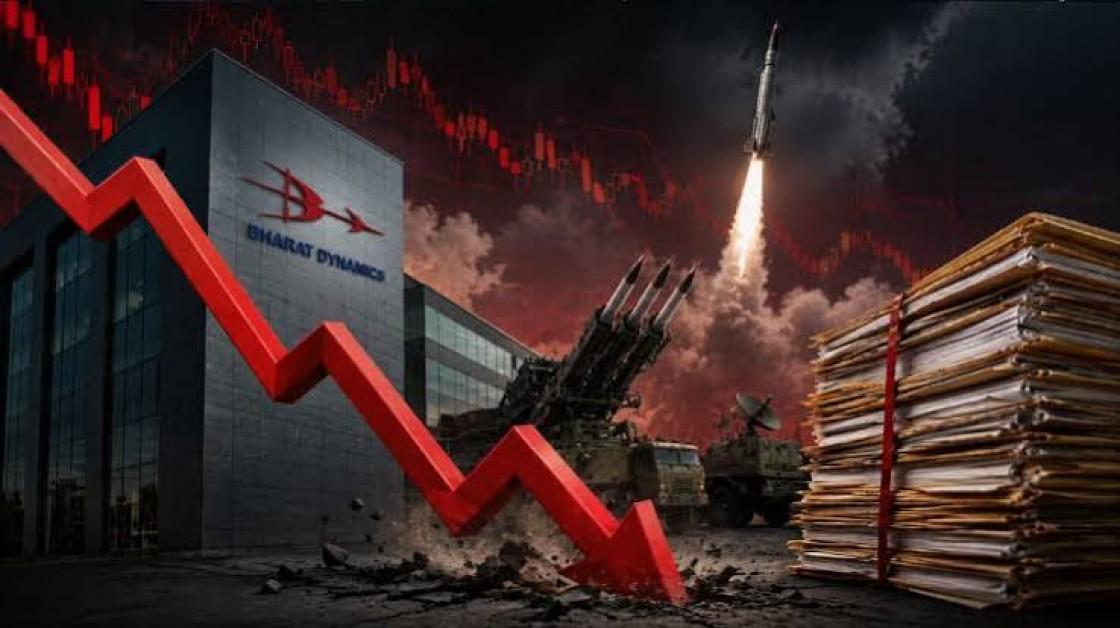
Bharat Dynamics Holds Q1 FY27 Earnings Call Today With Defence Order Execution in Focus
Bharat Dynamics Limited is holding its Q1 FY27 earnings call today, putting the state-owned defence manufacturer's order execution, production ramp-up, margins and missile programme pipeline in focus as investors assess its growth outlook.
The earnings interaction comes at a time when India's defence manufacturing ecosystem is benefiting from higher domestic procurement, localisation initiatives and a growing policy emphasis on reducing dependence on imported military equipment.
For Bharat Dynamics, the central question is how quickly its substantial order pipeline can be converted into production, revenue and cash flow while maintaining execution discipline across strategically important missile and weapon-system programmes.
Defence Order Execution Takes Centre Stage

Bharat Dynamics operates in a sector where order books can extend over several years because defence contracts typically involve complex production schedules, testing requirements and delivery milestones.
Investors will therefore focus closely on the pace of order execution rather than looking only at headline order values.
Key areas likely to attract attention include:
-
Production schedules
-
Delivery timelines
-
Revenue conversion
-
New contracts
-
Manufacturing capacity
-
Supply-chain availability
-
Operating margins
-
Capital expenditure
Faster execution can improve revenue visibility and allow the company to absorb new orders without creating excessive delivery backlogs.
Bharat Dynamics Holds Strategic Position in Defence Manufacturing
Bharat Dynamics is one of India's key manufacturers of guided missile systems and associated defence equipment.
The company's portfolio covers technologies and programmes serving different requirements of India's armed forces.
Its strategic capabilities include areas involving:
-
Surface-to-air missile systems
-
Anti-tank guided missiles
-
Air-to-air systems
-
Underwater weapons
-
Launchers
-
Countermeasure systems
-
Missile components
These capabilities place Bharat Dynamics within a specialised segment of India's defence-industrial ecosystem.
Missile Manufacturing Requires Long Production Cycles
Defence manufacturing differs substantially from conventional industrial production.
Missile systems require multiple stages involving:
-
Precision manufacturing
-
Electronics integration
-
Propulsion systems
-
Guidance technologies
-
Testing
-
Quality certification
-
Customer acceptance
These requirements can make production cycles longer and more complex.
Revenue recognition can therefore depend heavily on the completion of contractual milestones and deliveries.
Order Book Provides Long-Term Revenue Visibility
A substantial defence order book can provide companies with relatively strong visibility compared with many cyclical manufacturing businesses.
Government defence contracts are generally linked to multi-year procurement programmes.
For Bharat Dynamics, a healthy order pipeline can support:
-
Production planning
-
Capacity investment
-
Supplier contracts
-
Workforce requirements
-
Revenue visibility
However, the value of an order book ultimately depends on timely execution.
Indian Defence Procurement Supports Domestic Manufacturers
India has been steadily increasing its emphasis on domestic defence procurement.
Policies encouraging indigenous production aim to reduce reliance on imported weapons while developing a stronger domestic industrial base.
This creates opportunities for companies such as Bharat Dynamics across:
-
New missile programmes
-
Replacement demand
-
Ammunition
-
Upgrades
-
Maintenance
-
Export orders
Greater localisation can also expand opportunities for private-sector suppliers supporting major defence manufacturers.
Make in India Strengthens Defence Manufacturing Ecosystem
The government's Make in India strategy has become particularly important within defence.
Domestic manufacturing can provide several strategic benefits:
-
Lower import dependence
-
Greater supply security
-
Domestic intellectual property
-
Skilled employment
-
Export opportunities
-
Stronger industrial capabilities
Bharat Dynamics is positioned to participate in this structural expansion because missile systems represent an area where domestic technological capabilities have been developed over several decades.
DRDO Collaboration Remains Important
Bharat Dynamics has historically worked closely with the Defence Research and Development Organisation on missile programmes.
This relationship connects defence research with large-scale manufacturing.
The process can broadly involve:
Research and Development → Testing → Armed Forces Approval → Production → Deployment
Bharat Dynamics plays an important role in converting defence technologies into manufactured systems that can be supplied at operational scale.
Akash Programme Remains Significant
The Akash surface-to-air missile system represents an important indigenous defence programme.
Systems such as Akash can create sustained production opportunities through:
-
Initial procurement
-
Additional orders
-
Replacement requirements
-
Upgrades
-
Export opportunities
Investors will monitor developments around existing and future missile programmes because large contracts can materially influence Bharat Dynamics' revenue pipeline.
Anti-Tank Missile Portfolio Adds Diversification
Anti-tank guided missiles represent another important area within Bharat Dynamics' product portfolio.
Demand can come from requirements across different branches of the armed forces.
A diversified missile portfolio can reduce dependence on any single programme and improve utilisation across manufacturing facilities.
However, each weapon programme carries its own delivery schedules and technical requirements.
Exports Represent Long-Term Growth Opportunity
India has been seeking to expand defence exports as domestic manufacturers develop globally competitive systems.
Bharat Dynamics could benefit if Indian missile and weapon systems gain wider acceptance among international customers.
Potential export advantages include:
-
Competitive pricing
-
Proven technology
-
Government-to-government relationships
-
Growing Indian defence diplomacy
-
Expanding manufacturing capacity
Export orders can diversify revenue beyond domestic procurement and potentially improve economies of scale.
Export Execution Requires Regulatory Coordination
Defence exports are more complex than conventional manufactured goods.
Transactions may require:
-
Government approvals
-
End-user certification
-
Export licences
-
Security clearances
-
Diplomatic coordination
As a result, export order conversion can take considerable time even after commercial interest emerges.
Investors should therefore distinguish between potential export opportunities and firm executable orders.
Production Capacity Becomes Critical
A growing order book requires sufficient manufacturing capacity.
Bharat Dynamics must ensure that facilities can handle increased demand without creating bottlenecks.
Capacity expansion can involve investment in:
-
Production lines
-
Testing facilities
-
Automation
-
Precision equipment
-
Quality systems
-
Storage infrastructure
Efficient capacity utilisation can improve operating leverage as production volumes increase.
Supply Chain Remains an Execution Variable
Missile manufacturing depends on a specialised network of component suppliers.
Inputs can include:
-
Electronics
-
Sensors
-
Precision components
-
Propulsion materials
-
Guidance systems
-
Specialised metals
Delays in even a small number of critical components can affect the delivery of an entire weapon system.
Supply-chain localisation therefore has both economic and strategic importance.
MSMEs Can Benefit From Defence Manufacturing Growth
India's defence manufacturing ecosystem extends well beyond large public-sector companies.
Small and medium enterprises can supply:
-
Machined components
-
Electronics
-
Assemblies
-
Materials
-
Engineering services
-
Testing equipment
As Bharat Dynamics increases production, domestic suppliers can potentially benefit from higher procurement requirements.
This creates a broader industrial multiplier from defence spending.
Margins Depend on Product Mix
Investors will also closely monitor profitability.
Operating margins can vary depending on:
-
Product mix
-
Contract structure
-
Production volume
-
Raw-material costs
-
Employee expenses
-
Execution efficiency
A quarter containing a larger proportion of higher-value missile deliveries may produce different profitability from one dominated by lower-margin programmes.
Quarterly margin movements therefore need to be evaluated alongside the underlying delivery mix.
Working Capital Is Important in Defence Contracts
Defence manufacturing can require substantial working capital because companies may purchase components and perform production well before receiving final customer payments.
Important variables include:
-
Inventory
-
Receivables
-
Customer advances
-
Milestone payments
-
Supplier credit
Efficient working-capital management can strengthen cash flow even when reported revenue is growing rapidly.
Customer Advances Can Support Production
Large defence contracts may include advance payments that help manufacturers fund production.
Advances can reduce the amount of working capital companies need to finance independently.
The timing and structure of such payments can therefore influence Bharat Dynamics' cash position and balance-sheet requirements.
Capital Expenditure Supports Future Growth
As India's missile procurement requirements expand, Bharat Dynamics may need to invest in additional manufacturing and testing capacity.
Capital expenditure can support:
-
New production facilities
-
Modernisation
-
Automation
-
Testing infrastructure
-
Digital manufacturing
-
Research capabilities
Investors will want to understand whether planned capex aligns with expected order growth and delivery schedules.
Technology Development Remains Essential
Defence technology evolves rapidly.
Missile systems increasingly require improvements across:
-
Range
-
Accuracy
-
Guidance
-
Sensors
-
Electronic countermeasures
-
Network integration
Maintaining technological relevance therefore requires continued collaboration with research organisations and investment in manufacturing capabilities.
Geopolitical Environment Supports Defence Spending
Global geopolitical tensions have increased the strategic importance of defence preparedness.
Countries are strengthening military inventories and reassessing supply-chain dependencies.
For India, this reinforces the case for domestic production of critical weapon systems.
Bharat Dynamics could therefore benefit from both replacement demand and expansion of India's defence capabilities.
Defence Indigenisation Can Reduce Import Dependence
Missiles and precision weapon systems have historically represented areas where countries can become dependent on foreign suppliers.
Domestic production provides greater control over:
-
Availability
-
Maintenance
-
Upgrades
-
Spare components
-
Future development
This strategic value makes indigenous missile manufacturing an important part of India's defence policy.
Order Inflows Will Be Closely Watched
While execution determines near-term revenue, new order inflows determine future visibility.
Investors will monitor potential contracts across:
-
Missile systems
-
Anti-tank weapons
-
Air-defence systems
-
Underwater weapons
-
Export programmes
Large new contracts can extend revenue visibility several years into the future.
Defence Stocks Face High Expectations
Indian defence stocks have attracted substantial investor interest as government procurement and localisation have expanded.
Higher valuations can create greater expectations for:
-
Revenue growth
-
Order inflows
-
Margins
-
Execution
-
Cash generation
Companies therefore need to deliver operating performance capable of supporting investor expectations.
Quarterly Results Can Be Uneven
Defence manufacturing revenues can fluctuate significantly between quarters because deliveries are linked to project milestones.
A weak individual quarter does not necessarily indicate deterioration in long-term demand.
Similarly, unusually strong quarterly revenue may reflect the timing of large deliveries rather than a permanently higher run rate.
Investors should therefore evaluate performance across longer periods.
What Investors Should Watch
Bharat Dynamics' Q1 FY27 earnings call puts several indicators in focus:
-
Order book
-
Order execution
-
New order inflows
-
Revenue guidance
-
Operating margins
-
Production capacity
-
Export pipeline
-
Working capital
-
Capital expenditure
-
Missile programme deliveries
Management commentary on execution schedules will be particularly important for assessing the pace of revenue conversion during FY27.
Outlook
Bharat Dynamics remains positioned within one of the most strategically important segments of India's expanding defence manufacturing ecosystem.
Domestic procurement, indigenisation and export ambitions provide a potentially strong long-term demand environment.
The company's ability to benefit from that opportunity will depend on converting orders into deliveries efficiently while expanding capacity and maintaining supply-chain reliability.
Today's earnings call should provide investors with greater clarity on how management expects production and execution to develop through the remainder of FY27.
Conclusion
Bharat Dynamics' Q1 FY27 earnings call brings defence order execution into focus as investors assess the company's ability to convert a strong missile and weapon-system pipeline into revenue and cash flow.
India's emphasis on domestic defence manufacturing provides a supportive structural environment, while opportunities across missile systems, localisation and exports could strengthen the company's long-term growth prospects.
However, defence manufacturing involves complex production schedules, specialised supply chains and milestone-based deliveries, making execution the central variable for investors.
Management's guidance on order conversion, production capacity, margins, exports and future contracts will therefore be critical in determining how Bharat Dynamics' FY27 growth story develops.
 Bharat Dynamics Q1 FY27 Earnings Call Puts Defence Order Execution and Growth Outlook in Focus FAQs
POST A COMMENT (0)
All Comments (0)
Replies (0)