





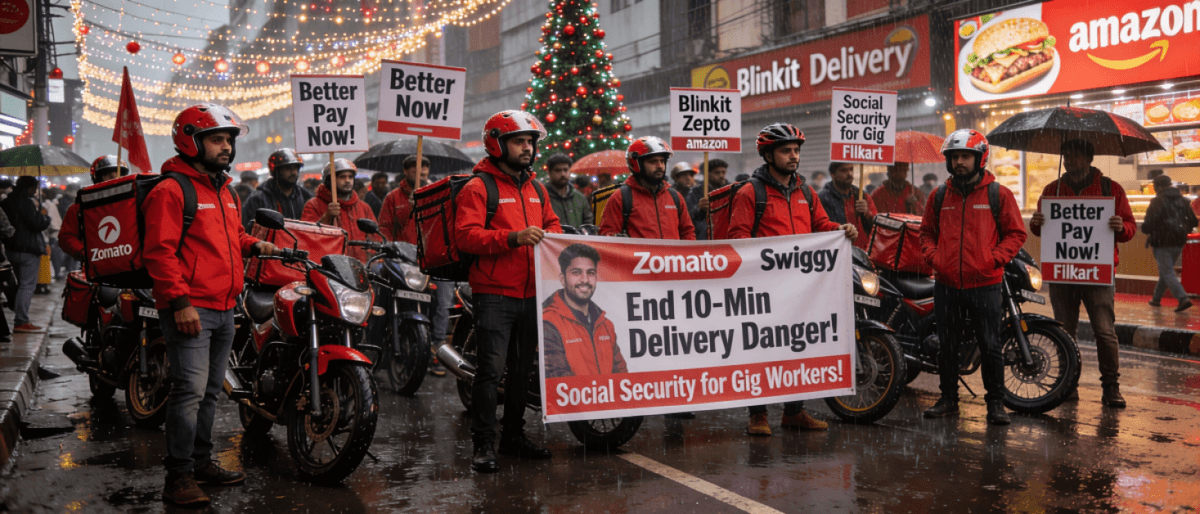
Delivery personnel from prominent food delivery platforms have announced a nationwide strike on December 25 and 31. The strike aims to address pressing concerns regarding fair compensation and worker safety.
The decision to strike comes as a response to ongoing disputes between delivery workers and platform management. Workers are demanding better pay structures and enhanced safety measures while on duty.
This strike is significant as it highlights the growing tensions between gig economy workers and the companies they work for. The outcome of this strike could have far-reaching implications for the industry.
Key Takeaways
- Delivery workers at major platforms like Zomato and Swiggy are on strike.
- The strike is scheduled for December 25 and 31.
- Primary demands include fair pay and improved safety.
- The strike reflects growing tensions in the gig economy.
- The outcome could impact the industry significantly.
The Nationwide Strike Announcement
A nationwide strike by gig workers associated with major food delivery platforms is scheduled for December 25 and 31. This strike aims to bring attention to the grievances of gig workers regarding pay, safety, and working conditions.
Key Dates and Participation Details
The strike is planned for two significant dates: December 25, Christmas Day, and December 31, New Year's Eve. These dates were chosen to maximize impact, as they are typically busy days for food delivery services.
Expected Turnout Across Major Cities
Major cities such as Delhi, Mumbai, Bengaluru, and Chennai are expected to see significant participation from gig workers. The turnout is anticipated to be high, given the widespread dissatisfaction among workers.
Coordination Methods Among Workers
Workers are coordinating their efforts through social media groups and informal worker collectives. These platforms enable them to share information, plan logistics, and ensure a unified response.
Strike Organization and Leadership
The strike is being organized by informal worker collectives and unions that represent the interests of gig workers. These groups have been instrumental in mobilizing workers and articulating their demands.
Role of Informal Worker Collectives
Informal worker collectives play a crucial role in the strike by providing a platform for workers to voice their grievances and coordinate their actions.
Digital Mobilization Strategies
Digital mobilization strategies, including the use of social media and messaging apps, have been key to spreading awareness and organizing the strike.
| City | Expected Turnout |
|---|---|
| Delhi | High |
| Mumbai | High |
| Bengaluru | Moderate |
| Chennai | High |
Zomato, Swiggy gig workers strike Dec 25/31 over pay, safety
Delivery workers at Zomato and Swiggy are planning a strike on December 25 and 31 over pay disputes and safety issues. This strike aims to bring attention to the core demands of the gig workers, primarily focusing on revisions to the pay structure and improvements in safety protocols.
Core Demands of Striking Workers
The striking workers have two main demands:
- Revision of the current pay structure to ensure fair compensation
- Implementation of improved safety protocols to protect workers
Pay Structure Revision Requests
Gig workers argue that the current pay structure is not sustainable due to rising fuel costs and vehicle maintenance expenses. They are requesting a revision to ensure that their earnings are fair and reflective of their operational costs.
Safety Protocol Improvements
Safety is a significant concern for gig workers, who often face risks on the road. They are demanding better safety protocols, including insurance coverage and support in case of accidents.
https://www.youtube.com/watch?v=VBv2nAoj2Z0
Timing Strategy Behind Holiday Strike Dates
The strike dates, December 25 and 31, are strategically chosen during peak holiday seasons when demand for food delivery services is typically high.
Impact of Peak Demand Periods
By striking during peak demand periods, the workers aim to maximize the impact on the companies. The high demand during holidays means that the absence of a significant number of workers will be felt more acutely by the platforms.
Visibility and Public Awareness Goals
The strike also aims to increase visibility and public awareness about the issues faced by gig workers. By choosing high-profile strike dates, the workers hope to garner more public support and pressure the companies to address their concerns.
The Gig Economy Landscape in India
India's gig economy has witnessed significant growth with the rise of food and quick commerce platforms. This growth has been driven by increasing consumer demand for quick and convenient delivery services.
Growth of Food and Quick Commerce Platforms
The food delivery and quick commerce sector has seen a substantial expansion in recent years. Major players like Zomato, Swiggy, Zepto, and Blinkit have dominated the market.
Market Size and Expansion Trends
The market size of the food delivery sector in India has grown exponentially, with projections indicating continued expansion. This growth is fueled by increasing urbanization and changing consumer preferences.
Competitive Dynamics Between Platforms
The competitive landscape is intense, with platforms competing on delivery times, commission rates, and customer service. This competition has led to innovative services and better customer experiences.
Current Working Conditions for Delivery Partners
Delivery partners are the backbone of these platforms, and their working conditions are crucial to the success of the business.
Typical Earnings and Hours
Typically, delivery partners earn between ₹15,000 to ₹25,000 per month, depending on the number of hours worked and the platform's incentive structures. Working hours can be long and often include peak hours during meal times.
Algorithm-Based Work Assignment Challenges
The algorithm-based assignment system can be challenging for delivery partners, as it affects their earnings and work availability. Partners often face issues like sudden changes in demand, which can impact their ability to plan their work schedules effectively.
The gig economy landscape in India is complex, with both opportunities and challenges for delivery partners. Understanding these dynamics is crucial for addressing the concerns raised during the Zomato strike and similar events.
Economic Challenges Facing Delivery Workers
Delivery workers in India are facing significant economic challenges, primarily due to rising operational costs and declining earnings. The situation has led to widespread dissatisfaction among workers, culminating in strikes on December 25 and 31.
Rising Fuel and Vehicle Maintenance Costs
The increasing cost of fuel and maintaining vehicles has significantly impacted the earnings of delivery workers.
Impact of Fuel Price Fluctuations
Fuel price fluctuations have a direct impact on the profitability of delivery work. When fuel prices rise, workers see their earnings diminish as they struggle to maintain their vehicles and cover operational costs.
Vehicle Depreciation and Repair Expenses
Vehicle depreciation and repair expenses further erode the take-home pay of delivery workers. The wear and tear on vehicles used for deliveries lead to frequent repairs, adding to the financial strain.

Declining Base Pay and Incentive Structures
The base pay and incentive structures for delivery workers have seen significant changes over time, often to the detriment of the workers.
Changes in Payment Models Over Time
Payment models have evolved, with many platforms shifting towards more complex algorithms that determine earnings. This shift has often resulted in reduced earnings for workers.
Comparison of Earnings Across Platforms
A comparison of earnings across different platforms reveals disparities in how workers are compensated. Some platforms offer better incentives, but the overall trend shows declining real earnings for delivery workers.
The economic challenges faced by delivery workers underscore the need for better pay structures and support systems. As the gig economy continues to grow, addressing these issues will be crucial for the well-being of workers and the sustainability of the industry.
Safety and Protection Concerns
The strike by delivery workers at major food delivery platforms highlights significant safety and protection concerns that have been overlooked for too long. As these workers prepare to strike on December 25 and 31, their demands extend beyond pay to include critical issues related to their safety and well-being on the job.
Accident Risks and Insurance Coverage Issues
Delivery workers face numerous hazards on the job, including traffic accidents and aggressive behavior from customers. The pressure to meet tight delivery deadlines exacerbates these risks.
Traffic Hazards and Delivery Time Pressures
The fast-paced nature of the gig economy, coupled with the pressure to deliver quickly, puts workers at a higher risk of being involved in traffic accidents. This is compounded by factors such as poor road conditions and inadequate lighting in some areas.
Inadequacies in Current Insurance Policies
Current insurance policies often fall short in providing adequate coverage for gig workers. Many policies do not fully address the unique risks faced by these workers, leaving them vulnerable in the event of an accident.
Lack of Social Security Benefits
Beyond immediate safety concerns, gig workers also lack access to essential social security benefits. This includes gaps in health coverage and the absence of retirement and disability protections.
Health Coverage Gaps
Many gig workers lack comprehensive health insurance, leaving them exposed to financial hardship in the event of illness or injury. This is particularly concerning given the physical demands of their job.
Absence of Retirement and Disability Protections
The absence of retirement plans and disability protections further exacerbates the vulnerability of gig workers. Without a safety net, these workers are at risk of financial ruin if they are unable to work due to injury or age.
As the strike highlights these critical issues, it brings attention to the need for improved safety and protection measures for gig workers. Ensuring their well-being is not only a moral imperative but also crucial for the sustainability of the gig economy itself.
Company Responses to Strike Announcements
Major food delivery platforms have responded to the strike announcements with a mix of statements and operational adjustments. As the strike dates, December 25 and 31, approach, companies like Zomato, Swiggy, Zepto, and Blinkit are taking steps to address the concerns raised by their delivery workers.
Statements from Zomato and Swiggy
Zomato and Swiggy, two of the largest food delivery companies in India, have released official statements in response to the strike. Zomato has acknowledged the workers' demands, stating that they are committed to improving the working conditions and pay for their delivery partners.
Zomato's Position on Worker Demands
According to Zomato's statement, they are reviewing their compensation structure to ensure it is fair and competitive. They have also expressed a willingness to engage in dialogue with the striking workers to understand their concerns better.
Swiggy's Response and Contingency Plans
Swiggy, on the other hand, has announced contingency plans to minimize disruptions to their service during the strike. They have stated that they are working on enhancing their operational capacity to meet customer demands despite the strike.
Positions of Zepto and Blinkit
Zepto and Blinkit, newer entrants in the quick commerce space, have also responded to the strike announcements. Their approaches reflect the competitive landscape and the need to maintain service levels.
Zepto's Approach to Worker Concerns
Zepto has emphasized its commitment to worker welfare, stating that they are open to discussions with their delivery partners. They have highlighted their efforts to provide a safe and supportive working environment.
Blinkit's Stance and Operational Adjustments
Blinkit has outlined operational adjustments to mitigate the impact of the strike. They are focusing on optimizing their logistics and supply chain to ensure uninterrupted service to their customers.
The responses from these companies indicate a varied approach to addressing worker concerns and maintaining operational continuity. As the strike dates approach, the impact of these measures on the workers and the companies' operations will become clearer.
"The strike is a significant event for the gig economy in India, highlighting the need for better worker protections and fair compensation."
Legal and Regulatory Framework
As gig economy platforms expand, India's legal framework is adapting to address worker concerns. The current legal and regulatory landscape for gig workers in India is complex and evolving.
Current Status of Gig Worker Protections in India
The existing labor laws and their applicability to gig workers are subjects of ongoing debate. Currently, gig workers are not covered under traditional labor laws, which has led to a lack of social security benefits and protections.
Existing Labor Laws and Applicability
India's labor laws have historically been designed for traditional employment arrangements, leaving gig workers in a gray area. Key laws include:
- The Code on Wages, 2019
- The Industrial Relations Code, 2020
- The Social Security Code, 2020
These laws are being amended to include gig workers, but the process is ongoing.
Recent Court Rulings on Gig Work
Recent court rulings have played a significant role in shaping the legal landscape for gig workers. For instance, the Supreme Court has acknowledged the need for better protections for gig workers, prompting the government to consider new regulations.
Proposed Policy Changes and Government Position
The government has proposed several policy changes to address the concerns of gig workers. These include draft legislation aimed at providing social security benefits and improving working conditions.
Draft Legislation Under Consideration
The Social Security Code, 2020, is a significant step towards providing social security benefits to gig workers. The code proposes to:
- Provide accident insurance for gig workers
- Establish a social security fund for gig workers
- Regulate the working conditions of gig workers
State vs. Central Government Approaches
There is a divergence in the approaches of state and central governments towards regulating gig work. While the central government is focusing on national-level legislation, some states are taking proactive steps to regulate gig economy platforms.
This divergence highlights the complexity of the issue and the need for a coordinated approach to address the challenges faced by gig workers in India.
Public and Consumer Reactions
The strike by gig workers on December 25 and 31 has sparked a significant reaction from the public and consumers. As news of the strike spread, social media platforms were flooded with discussions and debates about the gig economy and the challenges faced by delivery workers.
Social Media Response to Strike Announcement
Social media users took to various platforms to express their support for the striking workers. Hashtags like #SwiggyGigWorkersStrike and #Dec25Strike trended on Twitter, with many users sharing their personal experiences with gig workers and expressing solidarity.
Support Campaigns and Hashtags
- Campaigns were launched to support the striking workers, including fundraising initiatives and awareness drives.
- Hashtags were used to mobilize public support and create a unified voice for the gig workers.
Customer Solidarity Initiatives
Some customers showed their solidarity by refusing to order food on the strike days, while others initiated petitions demanding better working conditions for gig workers.
Impact on Platform Reputation and User Behavior
The strike had a noticeable impact on the reputation of the platforms involved.

Some users began to question the treatment of gig workers by these companies.
Changes in Ordering Patterns
There was a reported decline in orders on the strike days, with some customers opting for alternative dining options or cooking at home.
Long-term Brand Perception Effects
The strike may have long-term effects on how consumers perceive these brands. Companies that are seen as not supporting their workers may face a backlash, potentially losing customer loyalty.
Conclusion: The Future of Gig Work in India's Digital Economy
The nationwide strike by delivery workers at Zomato, Swiggy, Zepto, and Blinkit on December 25 and 31 has brought to the forefront the pressing issues faced by gig workers in India's digital economy. The "zomato strike" and "dec 31 strike" have not only disrupted services but also highlighted the need for better pay, safety, and protections for these workers.
As the gig economy continues to grow, with platforms like Zomato and Swiggy leading the way, the working conditions of delivery partners have become a critical concern. The strike has underscored the economic challenges faced by these workers, including rising fuel costs and declining base pay.
The future of gig work in India will likely be shaped by the responses of companies, governments, and consumers to the demands of striking workers. As the landscape evolves, it is clear that the issues raised by the "zomato strike" and other similar actions will continue to have a significant impact on the digital economy.
 Gig Strike Dec 25/31: Zomato Pay/Safety Demands FAQs
POST A COMMENT (0)
All Comments (0)
Replies (0)