





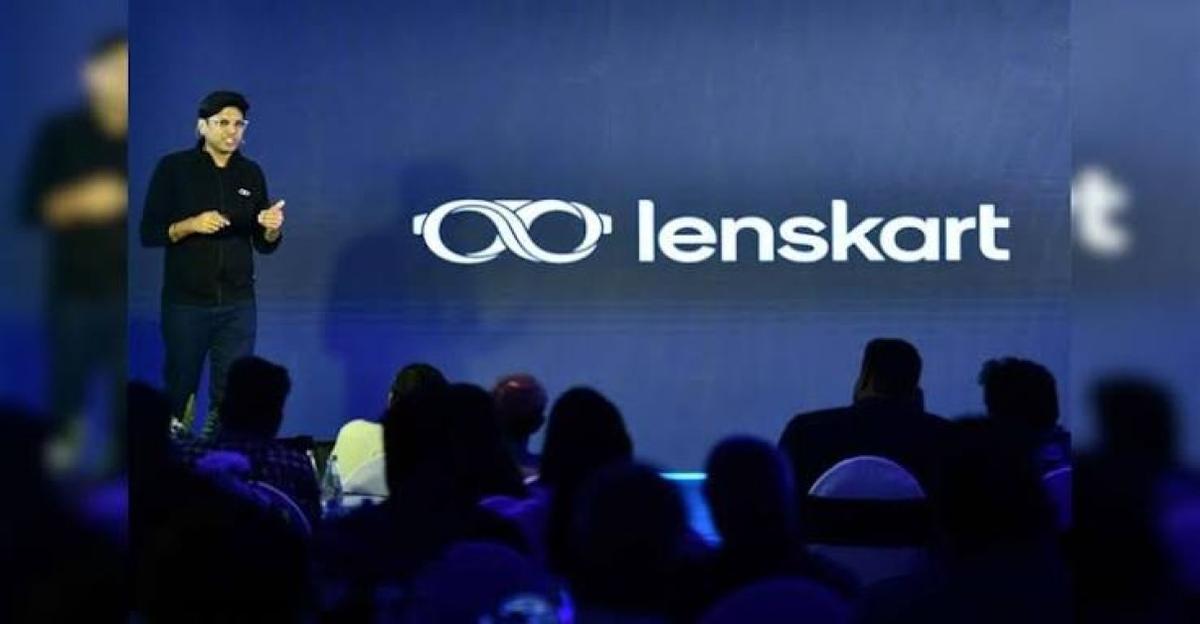
SoftBank Sells Around 2.6% Lenskart Stake for ₹2,888 Crore Through Open-Market Transactions
Japanese technology investor SoftBank Group has sold approximately 2.58% of Lenskart Solutions for ₹2,887.87 crore through open-market transactions, marking its second major reduction in the eyewear company's holding since the expiry of the lock-in period for pre-IPO investors.
SoftBank's affiliate SVF II Lightbulb (Cayman) Ltd sold 4.5 crore Lenskart shares through 22 transactions at an average price of ₹641.75 per share on August 24, 2026.
The transaction reduces SoftBank's stake in Lenskart from 9.86% to approximately 7.28%.
The latest monetisation comes less than three months after SoftBank sold another 3.25% of Lenskart for approximately ₹2,873 crore in June, demonstrating a gradual reduction rather than a complete exit from one of its major Indian consumer-technology investments.
SoftBank Sells 4.5 Crore Lenskart Shares

The transaction was executed through SoftBank-affiliated investment vehicle SVF II Lightbulb (Cayman) Ltd.
Exchange block-deal data showed the investor sold:
4.5 crore equity shares.
That represented approximately:
2.58% of Lenskart Solutions' outstanding equity.
The shares changed hands through 22 separate transactions.
Deal Value Reaches ₹2,887.87 Crore
The shares were sold at an average price of approximately:
₹641.75 per share.
At that price, the total transaction value amounted to:
₹2,887.87 crore.
The scale makes the transaction a significant institutional block deal in India's listed consumer-internet market.
SoftBank Stake Falls to 7.28%
Before the latest transaction, SoftBank held approximately 9.86% of Lenskart Solutions.
Following the sale, its ownership declines to around:
7.28%.
SoftBank therefore remains a significant shareholder despite monetising another substantial portion of its investment.
The transaction should consequently be viewed as a partial exit rather than a complete withdrawal.
SoftBank Remains Second-Largest Public Shareholder
Even after reducing its holding, SoftBank remains one of Lenskart's largest public investors.
Platinum Jasmine A 2018 Trust, an investment vehicle associated with Abu Dhabi Investment Authority, remains Lenskart's largest public shareholder with approximately 9.77%.
SoftBank follows with its remaining 7.28% holding.
The continued presence of large global investors illustrates the institutional ownership that Lenskart has attracted during its transition into the public market.
Societe Generale Among Major Buyers
Institutional investors absorbed the shares released through the transaction.
Among the disclosed buyers, Societe Generale ODI purchased approximately 1.07 crore Lenskart shares worth about ₹688.92 crore.
Other domestic and international institutional investors also participated.
This is significant because a large shareholder selling 4.5 crore shares creates substantial supply that needs to be absorbed by the market.
Lenskart Shares Show Limited Reaction
Despite the size of the transaction, Lenskart shares showed relatively limited pressure during the session.
The stock closed on August 24 at approximately:
₹659.70 on the BSE, down around 0.28%.
The relatively modest decline indicates that institutional demand was sufficient to absorb the large block without producing a major disruption in the traded market price.
Block Deal Was Expected Around $300 Million
Ahead of the transaction, market reports indicated that SoftBank Vision Fund's investment vehicle was seeking to sell approximately 2.6% of Lenskart for around $300 million.
The proposed floor price had been set around:
₹635 per share.
That represented approximately a 4% discount to Lenskart's preceding market close.
The final average transaction price of ₹641.75 was above that floor.
Discount Helps Attract Large Institutional Buyers
Large block transactions are commonly executed at a discount to the prevailing market price.
The reason is straightforward.
A buyer purchasing millions of shares simultaneously is committing substantial capital.
The seller may therefore need to provide a pricing incentive.
The discount also allows the transaction to occur without forcing the seller to gradually dispose of shares in the normal market, which could create prolonged downward pressure.
This Is SoftBank's Second Major Lenskart Sale Since June
The August transaction follows another substantial divestment by SoftBank earlier in the financial year.
In June 2026, SoftBank sold approximately:
3.25% of Lenskart for ₹2,873 crore.
That transaction was executed at approximately:
₹508.55 per share.
The latest sale therefore occurred at a significantly higher share price.
Two Recent Sales Have Generated More Than ₹5,700 Crore
Combining the June and August transactions, SoftBank has monetised approximately:
₹5,761 crore
from Lenskart shares in less than three months.
That excludes shares SoftBank had already sold through Lenskart's public offering.
The cumulative monetisation demonstrates the scale of value that SoftBank has realised from its investment.
SoftBank Also Sold Shares During Lenskart IPO
SoftBank had previously monetised approximately ₹1,026 crore of Lenskart shares through the company's November 2025 IPO.
The IPO provided an initial liquidity event.
Once the post-listing lock-in restrictions on pre-IPO shareholders expired, SoftBank gained greater flexibility to sell additional shares through the public market.
The June and August block deals followed that transition.
SoftBank's Aggregate Returns Reach Around 5.7 Times
The latest transaction takes SoftBank's aggregate return from its Lenskart investment to approximately 5.7 times its invested capital, according to reports on the deal.
That makes Lenskart a significant monetisation success within SoftBank's Indian technology portfolio.
Importantly, SoftBank has achieved those returns while still retaining a meaningful 7.28% ownership position.
Its ultimate return could therefore change depending on the future value of the remaining shares.
SoftBank Has Not Fully Exited Lenskart
Large shareholder sales can sometimes be interpreted as a loss of confidence.
That conclusion is not necessarily justified here.
Venture and growth investors typically invest with the expectation of eventually realising returns.
Once a portfolio company becomes publicly traded, block transactions provide a natural mechanism for gradually converting investment gains into cash.
SoftBank's remaining stake indicates that it continues to retain substantial economic exposure to Lenskart.
Partial Exits Are Normal for Technology Investors
Private technology investors generally operate under a different model from strategic corporate owners.
Their objective is to:
invest capital,
support growth,
increase enterprise value,
and eventually return capital to investors.
A public listing provides liquidity that was unavailable when the company was privately held.
Selling shares after an IPO is therefore part of the normal investment lifecycle.
Gradual Selling Can Reduce Market Disruption
SoftBank could theoretically attempt to sell its entire remaining position.
But such a large transaction could place significant pressure on Lenskart's share price.
A phased approach allows the investor to:
monetise gains,
retain upside exposure,
and reduce market impact.
The June and August transactions suggest precisely this type of staged exit strategy.
45-Day Lock-Up Limits Immediate Further Selling
Reports associated with the latest block transaction indicated that the seller would be subject to a 45-day lock-up on further sales of the residual holding.
Such arrangements are often included in block transactions.
They provide buyers with some assurance that another large quantity of shares will not immediately enter the market.
This can reduce concerns about near-term supply overhang.
Lenskart Listed in November 2025
Lenskart's transition into the public market created the liquidity necessary for investors such as SoftBank to monetise their holdings more efficiently.
Before listing, selling a major stake required finding private buyers.
After listing, institutional investors can purchase shares through:
block deals,
bulk transactions,
or normal exchange trading.
This fundamentally changes the liquidity available to early investors.
IPOs Provide Exit Route for Venture Investors
The Lenskart example illustrates one of the most important functions of public markets within the startup ecosystem.
Venture capital and private-equity investors commit money when companies are private.
Those investments may remain illiquid for years.
An IPO eventually allows those investors to convert part of their ownership into cash.
Successful exits then provide capital that can be recycled into new investments.
Lenskart Represents Major Indian Consumer-Tech Success
Lenskart began as an online-focused eyewear business but evolved into a large omnichannel retailer combining:
digital commerce,
physical stores,
technology,
and manufacturing.
That combination distinguishes it from many conventional e-commerce companies.
Its scale has allowed the company to attract major international investors and eventually access public capital markets.
Omnichannel Model Became Central to Lenskart Growth
Eyewear is difficult to sell entirely online.
Consumers often want to:
try frames,
check fit,
and receive eye examinations.
Lenskart therefore expanded aggressively into physical retail while retaining digital capabilities.
The result is an omnichannel model where online and offline channels support each other.
Physical Stores Reduce Online-Only Limitations
A customer may discover a frame online but purchase it in a store.
Another may receive an eye test in a store and later reorder online.
This creates a more integrated customer journey.
The strategy also increases the number of consumer touchpoints available to Lenskart.
Technology Remains Important to Business Model
Despite its physical-store expansion, Lenskart remains heavily technology enabled.
Digital systems can support:
inventory,
customer data,
and supply-chain management.
Technology can also help customers explore products virtually before visiting a store.
This combination of software and physical retail has become increasingly common among modern consumer brands.
Vertical Integration Can Support Margins
Lenskart has invested in manufacturing and supply-chain capabilities rather than operating solely as a marketplace.
Vertical integration can provide greater control over:
product design,
quality,
cost,
and delivery.
It can also allow a retailer to capture economics that would otherwise accrue to external manufacturers or distributors.
Q1 FY27 Results Strengthened Investor Interest
The SoftBank block transaction follows a strong first-quarter performance from Lenskart.
The company reported net profit growth of approximately 182.3% year on year, while revenue increased around 33.6%.
The improvement demonstrated continued business expansion alongside stronger profitability.
That operating backdrop may have helped institutional investors absorb SoftBank's large share sale.
Profitability Is Increasingly Important for Listed Technology Companies
Private-market investors often tolerate losses while companies prioritise growth.
Public-market investors generally place greater emphasis on:
profit,
cash flow,
and operating leverage.
Lenskart's ability to expand profitability therefore becomes increasingly important after listing.
Strong earnings can support valuation even as early investors sell shares.
Large Shareholder Sales Create Supply Overhang
When investors know a major shareholder wants to exit, they may worry about future selling pressure.
This is known as a share overhang.
Even if the company's fundamentals remain strong, expectations of additional supply can temporarily influence valuation.
SoftBank's remaining 7.28% stake means investors may continue watching its future transactions.
Lock-Up Temporarily Reduces Overhang
The reported 45-day lock-up helps limit this concern in the immediate term.
Investors know that the seller cannot simply launch another similar transaction the following day.
Once that period expires, however, the market may again assess whether SoftBank intends to monetise more shares.
Future sales will depend on SoftBank's strategy and market conditions.
Institutional Demand Is Important Signal
The ability to place ₹2,888 crore of shares with institutional buyers is notable.
Large transactions require investors willing to commit substantial amounts of capital.
That demand can indicate confidence in:
the company's growth,
its market liquidity,
and its long-term prospects.
It also broadens institutional ownership.
More Institutional Ownership Can Improve Liquidity
As early investors reduce their holdings, shares become distributed across a wider public-investor base.
That can increase free float.
Higher free float can improve:
daily trading liquidity,
price discovery,
and institutional accessibility.
Over time, this can strengthen the stock's position within public markets.
SoftBank Has Been Monetising Mature Investments
SoftBank has spent recent years balancing new technology investments with efforts to realise gains from mature portfolio companies.
Successful exits generate cash.
That capital can then be used for:
new investments,
balance-sheet management,
or shareholder returns.
Lenskart fits naturally within that broader portfolio-management strategy.
India Remains Important to SoftBank
SoftBank has invested billions of dollars across India's technology ecosystem.
Its portfolio has included businesses across:
e-commerce,
financial technology,
mobility,
and consumer internet.
As more Indian startups reach public markets, SoftBank has gained additional opportunities to realise returns from long-held investments.
Public Markets Are Becoming More Important for Indian Startups
India's startup ecosystem has matured substantially.
A growing number of technology and digital-consumer companies have moved from private venture financing into listed markets.
This transition creates a more complete capital cycle.
Founders can raise growth capital.
Early investors can achieve liquidity.
Public investors can participate in later stages of company development.
Successful Exits Can Encourage Future Venture Investment
Venture capital ultimately depends on exits.
Investors cannot continuously fund private companies without mechanisms for eventually returning money.
Strong IPOs and secondary share sales demonstrate that Indian technology investments can produce liquidity.
That can make international investors more willing to finance the next generation of companies.
Lenskart Sale Demonstrates Secondary-Market Depth
A ₹2,888 crore transaction requires significant market depth.
The fact that the block could be executed while Lenskart's stock experienced only a modest decline indicates the increasing capacity of India's equity markets to absorb large institutional transactions.
This matters as more private investors seek exits from recently listed companies.
Share Price Remains Key to SoftBank's Remaining Return
SoftBank still owns approximately 7.28% of Lenskart.
The value of that position will fluctuate with Lenskart's market price.
If the company continues growing and the share price rises, SoftBank could generate additional returns.
If the stock falls substantially, the value of its remaining investment would decline.
The phased exit therefore preserves both upside and downside exposure.
Future Block Deals Will Be Closely Watched
Once applicable selling restrictions expire, investors will monitor whether SoftBank launches another block transaction.
Factors likely to influence that decision include:
Lenskart's share price,
institutional demand,
and SoftBank's own capital requirements.
Another sale would not necessarily indicate deteriorating business fundamentals.
But it could temporarily increase available share supply.
Lenskart Must Now Deliver as Public Company
SoftBank's investment story is gradually becoming less important than Lenskart's operating performance.
Public investors will increasingly evaluate:
revenue growth,
profitability,
store expansion,
and international growth.
The company's valuation must ultimately be supported by business execution rather than its private-market history.
Eyewear Market Offers Structural Opportunity
India's eyewear market has substantial long-term growth potential.
Demand is supported by:
greater eye-care awareness,
rising incomes,
and organised retail penetration.
Large branded companies can potentially gain share from fragmented independent optical retailers.
Lenskart has positioned itself to benefit from this formalisation.
International Expansion Adds Growth Potential
Lenskart's ambitions extend beyond India.
International markets can increase the company's addressable opportunity.
But overseas expansion introduces additional risks involving:
consumer preferences,
competition,
and execution.
Investors will therefore watch whether international growth generates sustainable returns.
Valuation Will Remain Important
A strong business can still become a poor investment if purchased at an excessive valuation.
Lenskart's share-price performance will therefore depend on the relationship between:
earnings growth,
future expectations,
and market valuation.
Large institutional transactions such as SoftBank's sale help establish additional market-based reference points.
₹641.75 Becomes Important Transaction Benchmark
The average block-deal price of ₹641.75 per share represents a price at which substantial institutional capital was willing to transact.
That does not establish a permanent fair value.
But it provides an important reference point for investors assessing market demand.
Future trading above or below that level will reflect changing expectations.
Conclusion
SoftBank's sale of approximately 2.58% of Lenskart Solutions for ₹2,887.87 crore represents another major step in the Japanese technology investor's gradual monetisation of one of its successful Indian portfolio companies.
Through affiliate SVF II Lightbulb (Cayman) Ltd, SoftBank sold 4.5 crore shares in 22 transactions at an average price of ₹641.75 each, reducing its ownership from 9.86% to approximately 7.28%.
The transaction follows SoftBank's June sale of a further 3.25% stake for ₹2,873 crore, as well as shares worth around ₹1,026 crore monetised through Lenskart's November 2025 IPO.
Together, these exits have enabled SoftBank to realise substantial value while retaining a meaningful stake in the eyewear company. Its aggregate returns from the Lenskart investment have reached approximately 5.7 times invested capital.
For Lenskart, the most notable feature of the transaction is how successfully the market absorbed the supply.
Despite ₹2,888 crore worth of shares changing hands, the stock closed only modestly lower on the day, demonstrating substantial institutional demand.
The transaction therefore represents more than a SoftBank exit.
It illustrates how India's maturing public markets are increasingly providing large-scale liquidity for venture investors while transferring ownership of successful technology companies from early private backers to a broader institutional investor base.
 SoftBank Sells 2.6% Lenskart Stake for ₹2,888 Crore in Block Deal FAQs
POST A COMMENT (0)
All Comments (0)
Replies (0)