





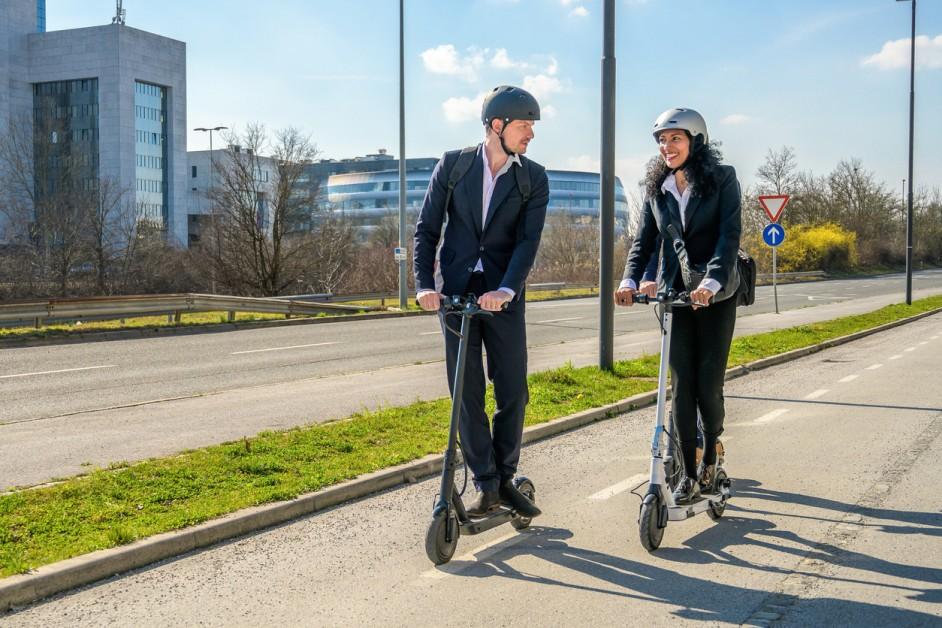
Micromobility Startups: How E-Scooters Are Taking Over City Transport
As urban centers swell and environmental concerns intensify, cities around the globe are turning to a small but powerful solution: micromobility. In 2025, electric scooters—once seen as trendy novelties—have become central to how millions navigate daily life. Micromobility startups are leading the charge, transforming the way people move through congested cities with fast, clean, and affordable electric transport options.
From Los Angeles to Berlin to Bengaluru, e-scooters are no longer just a convenience—they're infrastructure.
What Is Micromobility?
Micromobility refers to small, lightweight vehicles typically used for short-distance travel—often under 10 km. These include:
-
Electric scooters (e-scooters)
-
E-bikes
-
Hoverboards
-
Skateboards
-
Small electric mopeds
Among these, e-scooters have emerged as the most widespread and scalable due to their low cost, ease of use, and minimal parking requirements.
Why E-Scooters Are Winning the Mobility Race
E-scooters have become synonymous with urban convenience for several key reasons:
-
Eco-Friendly Travel: They emit no tailpipe emissions and use minimal electricity, making them perfect for cities battling pollution.
-
Cost-Effective: Shared e-scooter rides often cost a fraction of a cab or car ride.
-
Last-Mile Connectivity: They bridge gaps between public transit and final destinations—solving one of urban transport's biggest challenges.
-
Reduced Congestion: They reduce reliance on private cars for short commutes.
-
Flexible Deployment: Dockless scooters can be parked anywhere, managed via apps, and repositioned easily.
A 2024 study by McKinsey showed that micromobility accounts for 18% of urban trips under 5km in major cities like London, San Francisco, and Seoul.
Micromobility Startups Leading the Charge
Several startups have scaled rapidly across continents, supported by billions in venture capital and growing city partnerships:
-
Bird (USA) – Operating in 250+ cities, with carbon-neutral operations and battery-swap logistics.
-
Tier (Germany) – Offers swappable batteries, helmet-integrated scooters, and partnerships with public transit.
-
Bounce (India) – Provides both dockless e-scooters and monthly subscription models in urban India.
-
VOI (Sweden) – Known for safety-first designs, VOI operates across Europe with strong sustainability metrics.
-
Yulu (India) – Partnered with Indian Railways and metro systems for integrated first- and last-mile connectivity.
These companies are also driving innovation with AI-based fleet management, solar-powered charging stations, and real-time parking enforcement via app integration.
City Planning Meets Micromobility
Cities are not just adapting to e-scooters—they're redesigning themselves around them. Governments and urban planners are:
-
Building dedicated bike and scooter lanes
-
Subsidizing shared mobility to reduce car usage
-
Implementing traffic restrictions and green zones
-
Launching public-private partnerships with startups
In cities like Paris, Barcelona, and New Delhi, micromobility is now part of official urban mobility plans, often integrated into public transit apps and digital ticketing systems.
Challenges and Concerns
Despite rapid adoption, the e-scooter revolution comes with hurdles:
-
Safety Risks: Accidents and injuries have spurred calls for better rider education and helmet mandates.
-
Sidewalk Clutter: Poorly parked scooters often obstruct walkways and create public nuisance.
-
Battery Waste: Frequent charging and short battery lifespans raise environmental concerns.
-
Regulatory Uncertainty: Cities vary widely in rules, and some have banned or limited operations.
To combat this, startups are investing in modular scooter design, recyclable materials, and AI-driven user compliance tools.
The Future: Smart, Connected, and Green
By 2030, analysts predict that micromobility will be a $500 billion global industry, with e-scooters playing a central role. Future developments will likely include:
-
Autonomous self-parking scooters
-
Vehicle-to-infrastructure (V2I) communication
-
Subscription-based commuting models
-
Universal scooter docks at transport hubs
-
Climate impact dashboards for users
Moreover, integration with smart cities will allow traffic flow optimization, real-time pollution reduction, and enhanced safety monitoring through AI and IoT sensors.
Conclusion: A Small Vehicle Making a Big Impact
In 2025, micromobility is more than just a convenience—it’s a critical piece of the urban puzzle. E-scooters are helping cities cut emissions, beat congestion, and reimagine what mobility means in a post-car future.
The revolution is light, electric, and two-wheeled—and it's rolling into your neighborhood faster than you think.
 Related News
POST A COMMENT (0)
All Comments (0)
Replies (0)