





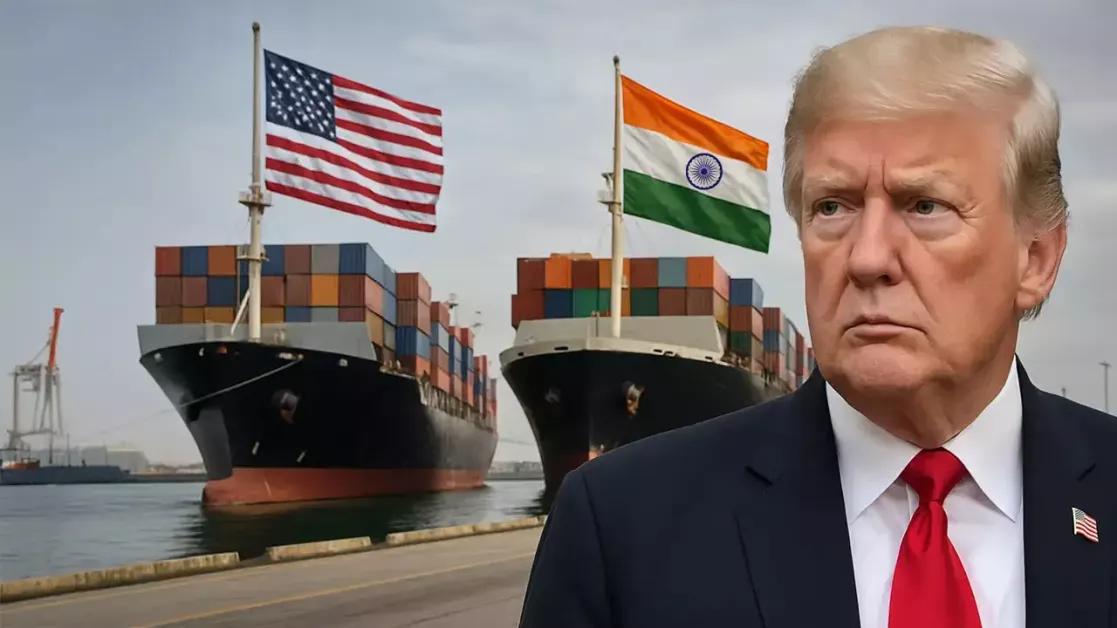
India Braces for Export Hit as US Tariffs Loom
The looming US tariffs are set to have a significant impact on global trade, with India's exports being particularly vulnerable.
The potential export hit is a concern for Indian businesses, as the US is a major trading partner.

As the situation unfolds, Indian exporters are bracing for the impact of US tariffs, which could lead to a significant decline in trade.
Key Takeaways
- The looming US tariffs pose a significant threat to India's exports.
- Indian businesses are concerned about the potential export hit.
- The US is a major trading partner for India.
- The impact of US tariffs could lead to a decline in trade.
- Indian exporters are preparing for the potential consequences.
The Looming Threat: Overview of New US Tariff Proposals
The looming threat of increased US tariffs is causing concern among Indian exporters and policymakers alike. The United States' recent tariff proposals have significant implications for global trade, particularly for countries like India that have substantial trade relationships with the US.
Timeline of Tariff Announcements
The timeline of tariff announcements is crucial for understanding the potential impact on trade. The US government has been announcing new tariff proposals over several weeks, with the most recent being particularly significant. These announcements have created uncertainty in the market, affecting trade dynamics.
The initial announcement was made on [Date], followed by subsequent clarifications and additions on [Date] and [Date]. This staggered approach has kept the trade community on edge, as each new announcement potentially alters the trade landscape.
Sectors and Products Targeted
The new US tariff proposals target a range of sectors and products, many of which are significant to India's export economy. Key areas affected include textiles, technology products, and certain manufactured goods.
The specific products targeted by the tariffs include:
- Textiles and apparel
- IT products and electronics
- Certain machinery and equipment
Understanding which sectors are most at risk is crucial for Indian businesses and policymakers as they navigate these changes.
India Braces for Export Hit as Steep New US Tariffs Loom
New US tariff proposals have sent shockwaves through India's export community, sparking widespread concern about the potential impact on the country's economy. The proposed tariffs, aimed at various Indian exports, could significantly alter the trade dynamics between the two nations.
Immediate Market Reactions
The news of potential US tariffs has led to immediate reactions in India's financial markets. The Indian rupee has experienced volatility, and stock markets have shown signs of nervousness, particularly in sectors heavily reliant on exports.
The impact is already being felt, with some exporters reporting a slowdown in new orders as buyers wait for clarity on the tariff situation. This uncertainty is affecting not just large corporations but also small and medium-sized enterprises (SMEs) that are crucial to India's export growth.
Initial Government Responses
In response to the looming tariffs, the Indian government has begun to explore various mitigation strategies. Officials are engaging in diplomatic efforts to negotiate with US counterparts, aiming to minimize the impact on Indian exports.
To understand the potential economic implications, let's examine a breakdown of India's exports to the US and the sectors most at risk:
| Sector | Export Value (USD Billion) | Percentage of Total Exports |
|---|---|---|
| Textiles and Apparel | 8.5 | 15% |
| IT and Services | 12.0 | 20% |
| Pharmaceuticals | 6.0 | 10% |
The government is also considering support measures for affected industries, including potential financial aid and export incentives. The economic implications of the proposed tariffs are significant, and both the government and the private sector are working to develop strategies to mitigate the impact on India's export sector.
Key Indian Industries in the Crosshairs
As the US tariff proposals take shape, Indian industries are preparing for the worst. The potential tariffs could significantly impact India's export-driven economy, affecting various sectors.
Textiles and Apparel Sector Impact
The textiles and apparel sector, a significant contributor to India's exports, is particularly vulnerable to the proposed US tariffs. With a substantial portion of India's textile exports going to the US, any tariffs imposed could lead to a decline in sales and revenue for Indian textile manufacturers.
Employment Concerns in Manufacturing Hubs
The impact on the textile industry could also lead to employment concerns in manufacturing hubs like Tiruppur and Ludhiana, where thousands of workers are employed.
IT and Services Vulnerability
India's IT and services sector, another major contributor to the country's economy, is also at risk. While the proposed tariffs are primarily focused on goods, any retaliatory measures from India could impact US service exports, potentially affecting the Indian IT sector.
Pharmaceutical Exports Concerns
The pharmaceutical sector is another area of concern. India is a significant exporter of pharmaceuticals to the US, and any tariffs or regulatory hurdles could impact this trade. This could have implications not only for Indian manufacturers but also for the availability of affordable medicines in the US.
The potential impact of US tariffs on Indian industries highlights the complex and interconnected nature of global trade. As the situation develops, Indian industries will need to adapt and strategize to mitigate the effects of any tariffs imposed.
Economic Stakes: Quantifying the Potential Damage
With US tariffs on the horizon, India's economic concerns are mounting. The impact of these tariffs will be far-reaching, affecting various sectors of the Indian economy.
Export Volume at Risk
The US is one of India's largest trading partners, and a significant portion of India's exports are destined for the US market. Tariffs imposed by the US could lead to a decline in India's exports, potentially affecting industries such as textiles, IT services, and pharmaceuticals. This decline could have a ripple effect throughout the economy.

GDP and Growth Implications
The imposition of US tariffs on Indian goods could have significant implications for India's GDP and economic growth. A decline in exports could lead to reduced economic activity, potentially slowing down GDP growth.
Regional Economic Disparities
The impact of US tariffs will not be uniform across India. Regions with a high concentration of export-oriented industries, such as the southern states, may be more severely affected. This could exacerbate regional economic disparities, with some regions experiencing more significant economic challenges than others.
Currency Valuation Effects
The imposition of tariffs could also have implications for the valuation of the Indian rupee against the US dollar. A decline in exports could lead to a decrease in foreign exchange earnings, potentially affecting the currency's value. This, in turn, could have broader economic implications, including higher import costs and inflation.
Historical Context: Previous US-India Trade Tensions
To fully comprehend the current trade tensions, it's essential to examine the historical backdrop of US-India trade relations. The relationship has been marked by various periods of tension, with previous disputes offering valuable lessons for the current situation.
GSP Removal and Its Aftermath
In 2019, the US revoked India's Generalized System of Preferences (GSP) benefits, citing India's failure to provide adequate market access to US goods and services. This move had significant implications for Indian exports, particularly in sectors such as textiles and engineering goods.
The loss of GSP benefits resulted in increased tariffs on Indian products, making them less competitive in the US market. According to a report, the removal of GSP benefits affected around $5.6 billion worth of Indian exports to the US.
Recent Dispute Resolution Attempts
In recent years, both countries have made efforts to resolve trade disputes through negotiations. The US and India have engaged in several rounds of talks to address issues related to market access, intellectual property, and other trade-related concerns.
"The US and India have a strong trade relationship, and we're committed to working together to resolve our differences," said a US Trade Representative.
A comparison of the trade tensions and resolution attempts between the US and India over the years is summarized in the following table:
| Year | Event | Impact |
|---|---|---|
| 2019 | GSP benefits revoked | $5.6 billion Indian exports affected |
| 2020 | Trade talks initiated | Temporary tariff relief for some Indian products |
| 2022 | New US tariffs proposed | Potential significant impact on Indian exports |
Understanding these historical trade tensions and dispute resolution attempts provides valuable context for the current situation, highlighting the need for continued diplomatic efforts to mitigate the impact of the looming US tariffs on Indian exports.
Strategic Response: India's Options on the Table
With the threat of new US tariffs, India must now consider a range of strategic options to protect its export interests. The country's response will be crucial in mitigating the potential economic damage and maintaining its position in the global trade landscape.
Diplomatic Channels and Negotiations
India's first line of defense is likely to be diplomatic negotiations with the US. By engaging in dialogue, India aims to resolve trade disputes amicably and avoid the escalation of tariffs. Diplomatic efforts can help in understanding the US concerns and finding mutually beneficial solutions.
WTO Complaint Possibilities
If diplomatic efforts fail, India may consider filing a complaint with the World Trade Organization (WTO). This step involves legal proceedings against the US for imposing unfair tariffs. The WTO provides a platform for resolving trade disputes between member countries, and India's action could potentially lead to the tariffs being lifted or modified.
Retaliatory Measures Consideration
As a last resort, India may consider retaliatory measures against the US. This could involve imposing tariffs on certain US goods imported into India. Retaliation is a sensitive step and could escalate trade tensions, but it is an option to counterbalance the impact of US tariffs on Indian exports.
| Strategic Option | Description | Potential Impact |
|---|---|---|
| Diplomatic Negotiations | Engaging in dialogue with the US to resolve trade disputes | Positive: Mutually beneficial solutions; Negative: May not yield immediate results |
| WTO Complaint | Filing a legal complaint against the US for unfair tariffs | Positive: Potential lifting or modification of tariffs; Negative: Lengthy legal process |
| Retaliatory Measures | Imposing tariffs on US goods imported into India | Positive: Counterbalances US tariffs; Negative: Escalates trade tensions |

In conclusion, India's strategic response to the looming US tariffs involves a careful evaluation of diplomatic negotiations, WTO complaint possibilities, and retaliatory measures. Each option carries its pros and cons, and the chosen strategy will significantly impact India's trade relations and economic stability in the face of global trade uncertainty.
Broader Geopolitical Implications
The looming US tariffs on India are not just a trade issue but have significant geopolitical ramifications. As trade tensions escalate, the implications extend beyond economic concerns, affecting strategic alliances and global political dynamics.
Impact on Indo-Pacific Strategy
The Indo-Pacific Strategy, a key component of US foreign policy in the region, could be influenced by the trade tensions between the US and India. A strong partnership is crucial for the success of this strategy, which aims to promote stability and security in the region. Trade disputes could undermine this cooperation, potentially emboldening adversaries in the region.
China Factor in US-India Relations
The role of China is pivotal in US-India relations, particularly in the context of trade and security. As the US and India navigate their trade differences, the China factor becomes increasingly significant. The US expects India to stand firm against China's growing economic and military influence, while India seeks to balance its relations with both nations without compromising its strategic interests.
"The US-India relationship is critical in countering China's rise, but trade tensions could complicate this dynamic."
Business Adaptations: How Indian Companies Are Preparing
In anticipation of steep US tariffs, Indian companies are diversifying their supply chains and exploring new markets. This proactive approach aims to mitigate the potential economic implications of the tariffs and ensure business continuity.
Diversifying Supply Chains
Indian companies are focusing on supply chain diversification efforts to reduce their dependence on any single market. This involves:
- Identifying alternative suppliers
- Renegotiating contracts
- Investing in logistics and distribution networks
By diversifying their supply chains, Indian businesses can minimize the risk associated with US tariffs and maintain a competitive edge.
Market Reorientation Strategies
To counterbalance the potential loss from reduced exports to the US, Indian companies are adopting market reorientation strategies. This includes:
- Exploring new markets in Europe and Asia
- Enhancing product offerings to meet local demands
- Establishing local partnerships
These strategies enable Indian businesses to expand their global footprint and reduce their reliance on the US market.
Investing in Technology and Innovation
Indian companies are also investing heavily in technology and innovation to improve their competitiveness. This involves:
- Adopting advanced manufacturing technologies
- Developing new products and services
- Enhancing digital capabilities
By leveraging technology and innovation, Indian businesses can not only mitigate the impact of US tariffs but also position themselves for long-term growth.
Expert Analysis: Economic Forecasts and Predictions
The impending US tariffs on Indian exports have sparked a flurry of economic forecasts and predictions among experts. As the situation continues to unfold, understanding the potential economic implications is crucial for stakeholders across various industries.
Short-term Outlook
In the short term, Indian exporters are likely to face significant challenges due to the increased tariffs. This could lead to a decline in export volumes, potentially affecting the overall GDP growth. Economists predict a 2-3% reduction in export growth in the immediate aftermath.
Medium-term Projections
Over the medium term, Indian businesses are expected to adapt by diversifying their export markets and enhancing their competitiveness. However, the transition period may be marked by volatility in trade figures and potential job losses in sectors heavily reliant on US exports.
Long-term Structural Impacts
In the long term, the imposition of US tariffs could lead to structural changes in India's economy. There may be a shift towards domestic consumption and investments in sectors less dependent on international trade. The table below summarizes the potential long-term impacts.
| Sector | Short-term Impact | Long-term Impact |
|---|---|---|
| Textiles and Apparel | High | Moderate |
| IT and Services | Moderate | Low |
| Pharmaceuticals | High | High |
The expert analysis underscores the need for Indian businesses and policymakers to navigate the challenges posed by the US tariffs. By understanding the potential economic implications and adapting strategies accordingly, India can mitigate the adverse effects and capitalize on emerging opportunities in the global trade landscape.
The Path Forward: Navigating Trade Uncertainty
As India braces for export hit as steep new US tariffs loom, the country's trade tensions with the US are expected to escalate. To navigate this uncertainty, India must adopt a multi-faceted approach that involves diplomatic efforts, strategic business adaptations, and a reorientation of its export markets.
India can explore diplomatic channels to negotiate with the US, potentially resolving trade disputes through bilateral talks or by seeking support from other countries. The government can also consider filing a complaint with the World Trade Organization (WTO) to address the tariffs imposed by the US.
Indian businesses can mitigate the impact of the tariffs by diversifying their supply chains, investing in technology and innovation, and reorienting their market strategies to focus on other regions. By adopting these measures, India can reduce its dependence on the US market and minimize the effects of the trade tensions.
Ultimately, India's ability to navigate the trade uncertainty will depend on its capacity to adapt and innovate. By leveraging its strengths in areas like IT and pharmaceuticals, India can capitalize on emerging opportunities and maintain its position as a significant player in global trade.
FAQ
What are the new US tariffs, and how will they affect India's exports?
The new US tariffs refer to the increased duties imposed by the US government on certain imported goods, including those from India. The tariffs are likely to make Indian exports more expensive and less competitive in the US market, potentially leading to a decline in export volumes and revenue.
Which Indian industries are most vulnerable to the US tariffs?
The Indian industries that are likely to be most affected by the US tariffs include textiles and apparel, IT and services, and pharmaceuticals. These sectors are significant contributors to India's exports and have a substantial presence in the US market.
How will the US tariffs impact India's economy, and what are the potential GDP implications?
The US tariffs are expected to have a negative impact on India's economy, potentially leading to a decline in GDP growth. The exact impact will depend on various factors, including the extent of the tariffs, the response of Indian exporters, and the overall state of the global economy.
What are India's options in responding to the US tariffs, and what are the potential consequences of each?
India has several options in responding to the US tariffs, including diplomatic negotiations, filing a complaint with the WTO, and considering retaliatory measures. Each of these options has its pros and cons, and the choice will depend on a careful analysis of the potential consequences and the overall trade policy objectives.
How are Indian companies preparing for the potential impact of the US tariffs?
Indian companies are adapting to the potential impact of the US tariffs by diversifying their supply chains, reorienting towards other markets, and investing in technology and innovation. These efforts are aimed at mitigating the negative impacts and capitalizing on emerging opportunities.
What are the broader geopolitical implications of the US tariffs on India, and how might they influence the trade tensions?
The US tariffs on India are part of a larger geopolitical dynamic, involving the US, India, and other countries, including China. The trade tensions are likely to be influenced by these geopolitical factors, including the Indo-Pacific strategy and the role of China in US-India relations.
 Related News
POST A COMMENT (0)
All Comments (0)
Replies (0)