





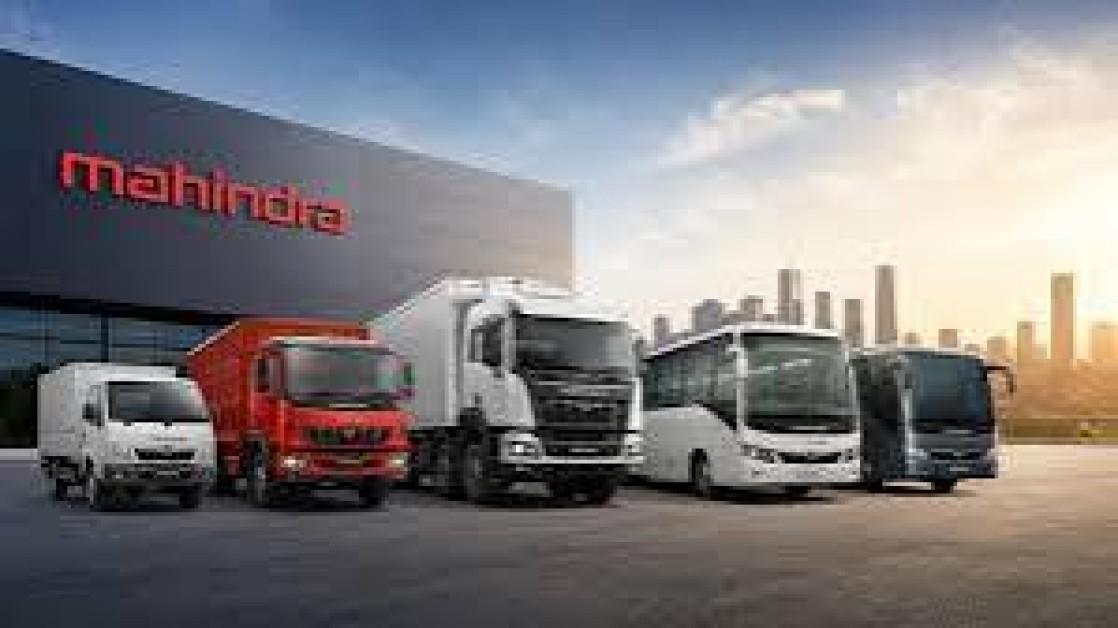
Mahindra to Sell Truck and Bus Division to SML Mahindra for ₹525 Crore
Mahindra & Mahindra plans to transfer its truck and bus division to SML Mahindra Limited for ₹525 crore, consolidating a larger portion of the group's commercial vehicle operations under SML Mahindra as it seeks to build a stronger challenger in India's truck and bus market.
The proposed transaction will transfer the business as a going concern through a slump sale, subject to shareholder and other applicable approvals. The deal is expected to become effective on November 1, 2026, according to the companies' regulatory disclosures.
The restructuring follows Mahindra & Mahindra's acquisition of a controlling stake in the company formerly known as SML Isuzu, which was subsequently renamed SML Mahindra. The latest transaction represents the next major step in integrating Mahindra's commercial vehicle strategy around the platform.
Mahindra Values Truck and Bus Division at ₹525 Crore

Under the proposed transaction, SML Mahindra will acquire Mahindra & Mahindra's truck and bus division for a lump-sum consideration of ₹525 crore.
The transaction is structured as a slump sale.
That means the business will be transferred as an operating undertaking rather than Mahindra separately selling each individual asset and liability.
The structure can simplify the transfer of an established operating business containing manufacturing, employees, contracts, inventory and other assets.
Transaction Expected to Take Effect From November 1
Subject to required approvals and completion conditions, the business transfer is expected to become effective from November 1, 2026.
Until the transaction is completed, the truck and bus division remains part of Mahindra & Mahindra.
The announcement therefore represents a proposed restructuring rather than an already completed transfer.
What Mahindra’s Truck and Bus Division Does
Mahindra's truck and bus division operates in the heavier end of India's commercial vehicle industry.
Its portfolio includes trucks and buses serving applications such as:
-
Long-haul transportation
-
Construction
-
Mining
-
Cargo movement
-
Passenger transportation
The business gives Mahindra exposure beyond its better-known light commercial vehicle and pickup operations.
SML Mahindra Creates a New Consolidation Platform
SML Mahindra provides Mahindra with an established commercial-vehicle manufacturing platform.
The company operates in the truck and bus market and has a manufacturing facility in Punjab.
Combining its existing operations with Mahindra's truck and bus division could create a broader commercial-vehicle portfolio within one corporate entity.
The strategic logic is therefore based more on consolidation than withdrawal from the commercial vehicle industry.
Mahindra Is Not Exiting Commercial Vehicles
The ₹525 crore transaction should not be interpreted as Mahindra abandoning the truck and bus market.
Mahindra & Mahindra controls SML Mahindra following its acquisition of the former SML Isuzu.
Transferring the truck and bus business into SML Mahindra effectively moves the operation into another Mahindra-controlled company.
The group remains economically exposed to the business through its ownership of SML Mahindra.
Mahindra Acquired Control of SML Isuzu
The restructuring follows Mahindra & Mahindra's agreement to acquire a controlling stake in SML Isuzu.
Mahindra agreed to purchase 43.96% from Sumitomo Corporation and 15% from Isuzu Motors, giving it a 58.96% controlling stake before the mandatory open-offer process.
The acquisition marked a major expansion of Mahindra's ambitions in the medium and heavy commercial vehicle market.
SML Isuzu Became SML Mahindra
Following Mahindra's acquisition, SML Isuzu was renamed SML Mahindra Limited.
The name change reflects the company's new strategic position within the Mahindra Group.
Moving Mahindra's existing truck and bus operations into SML Mahindra now gives that corporate identity a larger operational role.
Commercial Vehicle Businesses Can Benefit From Scale
Scale matters significantly in the truck industry.
Vehicle manufacturers incur substantial costs involving:
-
Product development
-
Engines and powertrains
-
Manufacturing
-
Dealer networks
-
Spare parts
-
Service infrastructure
-
Financing partnerships
Combining two operations can spread these costs across a larger revenue base.
That can improve competitiveness if integration is executed effectively.
Product Portfolios Could Become More Complementary
SML Mahindra has historically been stronger in certain light and intermediate commercial vehicle segments, particularly buses and specialised vehicles.
Mahindra's truck and bus division adds heavier truck capabilities.
Together, the businesses could potentially cover a broader range of customer requirements.
A wider portfolio can help dealers serve transport customers across multiple vehicle categories.
Dealer Networks Could Create Synergies
Commercial vehicle buyers place considerable importance on service availability.
A truck can generate revenue only when it is operational.
Vehicle downtime therefore has direct financial consequences for fleet owners.
A larger combined dealer and service network could improve:
-
Vehicle sales
-
Maintenance access
-
Spare-parts availability
-
Customer retention
This makes distribution integration one of the potentially important benefits of the transaction.
Spare Parts Are Critical in Commercial Vehicles
After-sales service is especially important in trucking.
Commercial vehicles frequently operate for long hours and cover substantial distances.
Fleet operators therefore evaluate manufacturers based not only on purchase price but also on:
-
Reliability
-
Fuel efficiency
-
Maintenance cost
-
Parts availability
-
Resale value
Building a stronger service ecosystem could improve SML Mahindra's ability to compete with larger manufacturers.
Tata Motors and Ashok Leyland Remain Major Competitors
India's medium and heavy commercial vehicle market has historically been dominated by larger manufacturers, particularly Tata Motors and Ashok Leyland.
Mahindra has been much stronger in pickups and lighter commercial vehicles than in heavy trucks.
The combination with SML Mahindra gives the group an opportunity to strengthen its position further up the commercial-vehicle spectrum.
However, competing at scale will require more than combining assets.
Mahindra Has Ambitious Market-Share Goals
Mahindra has previously indicated that the acquisition of SML Isuzu supports its objective of materially increasing market share in heavier commercial vehicle categories.
The group has targeted approximately 10%-12% market share in the greater-than-3.5-tonne commercial vehicle segment by FY31, with a longer-term ambition of reaching around 20%.
Consolidating the truck and bus business under SML Mahindra could help create the operating platform needed to pursue those targets.
Market Share Requires Sustained Investment
Market-share ambitions in commercial vehicles require substantial investment.
Manufacturers need to continuously develop:
-
New truck platforms
-
Engines
-
Cabins
-
Safety technology
-
Connected systems
-
Alternative powertrains
Dealer expansion and customer financing also require capital.
SML Mahindra will therefore need to invest beyond the initial ₹525 crore business acquisition.
Commercial Vehicles Track Economic Activity
Truck demand is closely connected to the wider economy.
More infrastructure construction can increase demand for tippers and heavy trucks.
Higher manufacturing output can increase freight movement.
Growth in e-commerce and consumption can increase logistics demand.
Commercial vehicles therefore operate as an important link between industrial production and transportation.
Infrastructure Spending Supports Truck Demand
India's continued investment in:
-
Highways
-
Industrial corridors
-
Construction
-
Mining
-
Logistics infrastructure
creates potential demand for commercial vehicles.
Heavy trucks are particularly relevant to bulk transportation and infrastructure-related applications.
This gives Mahindra a long-term strategic reason to strengthen its presence in the segment.
Logistics Formalisation Is Changing Fleet Economics
India's logistics industry has gradually become more organised.
Large fleet operators increasingly evaluate vehicles using total cost of ownership rather than simply initial purchase price.
That puts greater emphasis on:
-
Fuel efficiency
-
Uptime
-
Telematics
-
Maintenance
-
Driver productivity
Manufacturers with strong technology and service capabilities can therefore differentiate themselves even when competing in similar vehicle categories.
Technology Could Become an Important Differentiator
Modern commercial vehicles increasingly incorporate digital technology.
Connected systems can monitor:
-
Fuel consumption
-
Driver behaviour
-
Vehicle location
-
Engine performance
-
Maintenance requirements
These systems can help fleet operators reduce costs.
A consolidated commercial vehicle platform could allow Mahindra to spread technology investments across a larger number of vehicles.
Alternative Fuels Will Shape Future Trucks
Commercial vehicles are also beginning a transition toward alternative powertrains.
Depending on vehicle category and use case, future trucks and buses may increasingly use:
-
Electric powertrains
-
CNG
-
LNG
-
Hydrogen technologies
Heavy commercial vehicle electrification remains more difficult than passenger-car electrification because trucks require high payloads and long operating ranges.
Nevertheless, manufacturers need to prepare for changing emissions and fuel economics.
Bus Market Offers Additional Opportunity
The transaction is not only about trucks.
Buses form an important part of SML Mahindra's business.
Demand can come from:
-
Schools
-
Employee transportation
-
Private operators
-
State transport systems
-
Tourism
India's gradual transition toward cleaner public transportation could create additional opportunities for bus manufacturers.
Electric Buses Are Changing the Market
Electric buses have become one of the fastest-moving areas of commercial vehicle electrification.
Government procurement and urban transport programmes are encouraging deployment across multiple Indian cities.
For SML Mahindra, developing competitive electric-bus offerings could become strategically important over the longer term.
₹525 Crore Is a Business Transfer, Not Fresh Equity
The structure of the transaction is important.
SML Mahindra is acquiring an operating business from Mahindra & Mahindra.
This differs from Mahindra simply investing ₹525 crore as fresh equity.
The consideration is being paid for the transfer of the truck and bus undertaking.
Investors therefore need to evaluate both the acquisition cost and the financial contribution of the business being transferred.
Related-Party Nature Requires Governance Attention
Because Mahindra & Mahindra controls SML Mahindra, the proposed transfer is a related-party transaction.
Such transactions require particular governance attention because the buyer and seller ultimately belong to the same corporate group.
The central issue for minority shareholders is whether the transaction terms are fair to SML Mahindra.
Approvals and applicable corporate-governance processes therefore become important.
Valuation Will Matter to SML Mahindra Shareholders
The ₹525 crore price needs to be evaluated against what SML Mahindra is receiving.
Investors will want to understand:
-
Revenue of the transferred business
-
Assets and liabilities
-
Profitability
-
Working-capital requirements
-
Future investment needs
A low purchase price for a valuable business could benefit SML Mahindra shareholders.
An excessive price could transfer value toward the parent company.
Integration Risk Should Not Be Underestimated
Combining automotive operations can be complex.
Even businesses operating in similar industries may have different:
-
Dealer systems
-
Suppliers
-
Technology platforms
-
Manufacturing processes
-
Corporate cultures
The strategic logic may be straightforward, but actual value creation depends on execution.
Poor integration could delay anticipated cost savings and revenue synergies.
Supplier Consolidation Could Lower Costs
A larger commercial vehicle business may gain stronger purchasing power with suppliers.
Vehicle manufacturing requires large quantities of:
-
Steel
-
Tyres
-
Electronics
-
Axles
-
Braking systems
-
Seats
-
Components
Higher procurement volumes can sometimes improve supplier pricing.
Platform standardisation can generate additional savings.
Common Components Could Improve Efficiency
If SML Mahindra and the transferred business can use common components across multiple models, manufacturing economics could improve.
Shared components reduce:
-
Engineering complexity
-
Inventory
-
Supplier count
-
Spare-parts requirements
However, excessive standardisation can also reduce product differentiation.
The company will need to balance efficiency with customer requirements.
Manufacturing Footprint Could Be Optimised
SML Mahindra operates manufacturing infrastructure in Punjab, while Mahindra's broader automotive operations have facilities across India.
The combined business could evaluate how production is distributed across plants.
Potential optimisation areas include:
-
Capacity utilisation
-
Component sourcing
-
Logistics
-
Vehicle assembly
Any manufacturing restructuring would need to consider workforce, supplier and investment requirements.
Financing Is Essential to Truck Sales
Commercial vehicles are expensive capital assets.
Many buyers depend on financing to purchase them.
Manufacturers therefore benefit from strong relationships with:
-
Banks
-
NBFCs
-
Vehicle financiers
Mahindra Group's broader financial-services ecosystem could potentially support customer financing and improve commercial vehicle distribution.
Resale Value Influences Purchase Decisions
Fleet operators evaluate the expected resale value of a truck when calculating total ownership cost.
A stronger brand and service network can improve used-vehicle demand.
If SML Mahindra successfully strengthens its market position, better resale economics could become another competitive advantage.
Mahindra Brand Could Strengthen Customer Confidence
Mahindra has substantial brand recognition across Indian automotive and agricultural markets.
Extending that brand more strongly into SML's commercial vehicle portfolio could improve visibility among transport operators.
However, brand strength alone will not guarantee market share.
Commercial buyers are highly focused on measurable operating economics.
Heavy Trucks Are a Difficult Market to Disrupt
Commercial vehicle customers can be conservative because an unreliable truck can directly affect business income.
Established manufacturers benefit from:
-
Large installed fleets
-
Extensive workshops
-
Mechanics familiar with their products
-
Strong resale markets
SML Mahindra therefore faces the challenge of building credibility at scale.
That process can take years.
Mahindra’s Existing LCV Strength Provides a Foundation
Mahindra already has a substantial position in India's light commercial vehicle and pickup segments.
That provides existing relationships with:
-
Commercial buyers
-
Dealers
-
Financiers
-
Suppliers
A stronger truck and bus platform could allow Mahindra to serve customers as their fleet requirements grow.
Consolidation Could Simplify Strategic Accountability
Housing the truck and bus business inside a dedicated listed commercial-vehicle company could also make performance easier to evaluate.
Management can potentially focus more directly on:
-
Market share
-
Product development
-
Dealer expansion
-
Profitability
This can create clearer strategic accountability than maintaining the operation as one division within the much larger Mahindra & Mahindra organisation.
SML Mahindra Could Become Mahindra’s Heavy CV Vehicle
The transaction suggests SML Mahindra could increasingly function as the group's principal platform for heavier commercial vehicles.
Mahindra & Mahindra itself remains heavily diversified across:
-
SUVs
-
Pickups
-
Tractors
-
Farm equipment
-
Electric vehicles
Separating heavier trucks and buses into SML Mahindra could create a more specialised management structure.
Minority Shareholders Gain Direct Exposure
Because SML Mahindra is separately listed, its minority shareholders will gain direct exposure to the transferred truck and bus operation.
That creates both opportunity and risk.
If integration produces growth and improved profitability, SML Mahindra could benefit materially.
If the transferred operation requires substantial additional investment without producing adequate returns, minority shareholders would bear part of that cost.
Financial Performance Will Become Key
After the transaction closes, investors will increasingly focus on measurable results.
Important indicators will include:
-
Revenue growth
-
Market share
-
EBITDA margins
-
Cash generation
-
Dealer expansion
-
Product launches
-
Capital expenditure
The ₹525 crore acquisition price is only the beginning of the economic assessment.
What Investors Should Watch Next
The proposed transaction puts several developments in focus:
-
Shareholder approvals
-
Completion conditions
-
November 1 effective date
-
Final business-transfer structure
-
Integration plans
-
SML Mahindra market-share targets
-
Dealer-network consolidation
-
Product launches
-
Profitability of the transferred business
-
Capital expenditure requirements
Execution over the next several years will determine whether the restructuring creates meaningful shareholder value.
Outlook
Mahindra's proposed transfer of its truck and bus division to SML Mahindra represents a strategic consolidation rather than an exit from commercial vehicles.
The ₹525 crore transaction brings Mahindra's heavier truck operations together with an established commercial vehicle manufacturer that the group recently brought under its control.
The combination could create benefits through a broader product portfolio, larger distribution network, procurement scale and stronger commercial focus.
However, India's truck market remains highly competitive, with entrenched manufacturers and customers who place significant weight on reliability, service availability and total cost of ownership.
Conclusion
Mahindra & Mahindra's decision to sell its truck and bus division to SML Mahindra for ₹525 crore marks the next stage of the group's attempt to build a larger commercial vehicle platform.
The proposed slump sale will transfer the business as a going concern and is expected to become effective on November 1, 2026, subject to the required approvals.
Strategically, the transaction consolidates Mahindra's heavier commercial vehicle ambitions inside SML Mahindra following the group's acquisition of control over the former SML Isuzu.
The opportunity is significant. A combined portfolio, stronger dealer network, procurement scale and Mahindra's brand could improve SML Mahindra's competitive position.
But the success of the restructuring will ultimately depend on execution.
For investors, the key question is not simply whether Mahindra can combine two commercial vehicle businesses. It is whether the enlarged SML Mahindra can convert that combination into higher market share, sustainable profitability and stronger returns on capital.
 Mahindra to Sell Truck and Bus Division to SML Mahindra for ₹525 Crore in Business Restructuring FAQs
POST A COMMENT (0)
All Comments (0)
Replies (0)