





India Inc's Expansion Plans: Top Corporate Announcements This Month
From Reliance's sweeping AGM roadmap to record private investment data, India Inc's expansion drive is gathering pace across AI, energy, chips, and manufacturing.
By Naina, 23rd June 2026
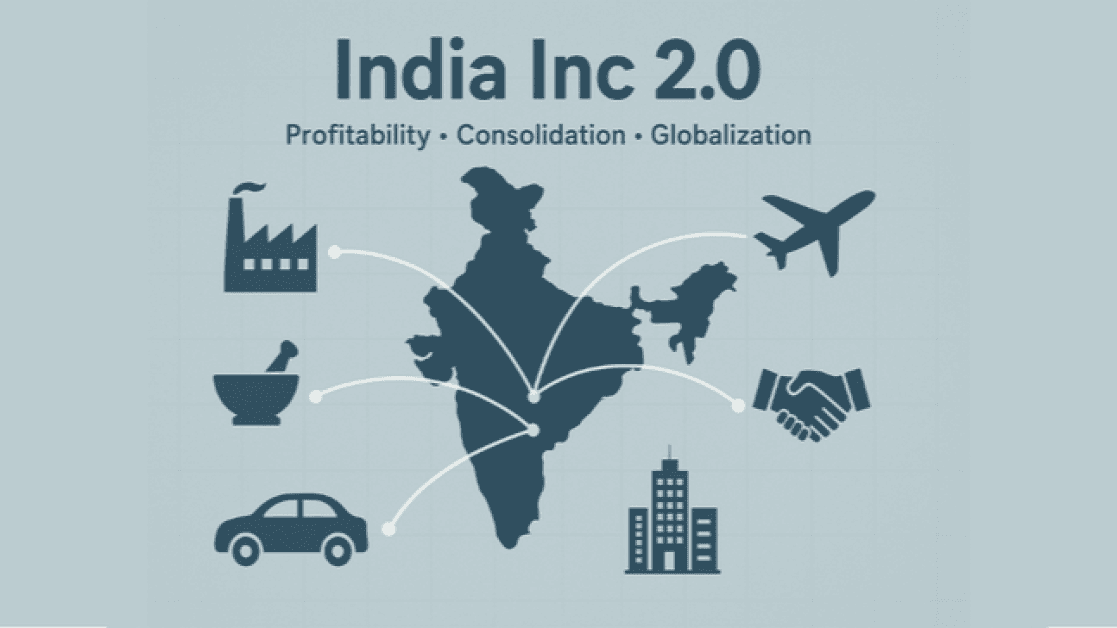
India Inc's expansion plans have moved to the centre of the business conversation this month, led by Reliance's sweeping growth roadmap and fresh data showing private investment at a multi-year high. At its June annual general meeting, Reliance laid out ambitions spanning AI, retail, and new energy, while research released early in the month pointed to a sharp jump in corporate investment announcements. Together, they signal a private sector willing to commit capital again after years of caution. Here are the biggest announcements and the wider wave they reflect.
The picture is not uniform. Government capital spending and a handful of large groups are doing much of the heavy lifting, while broad-based private capex has been slower to revive. Still, the direction is clear: across energy, semiconductors, electric vehicles, and digital infrastructure, India's largest companies are building capacity for the next decade. This roundup separates the standout announcements of the month from the longer-running programs that frame them.
The Capex Momentum
The month's most telling data came from SBI Research, which reported that private investment announcements rose to about ₹56 lakh crore in FY26, up from ₹37 lakh crore the year before. Total investment announcements across the economy have climbed from ₹17 lakh crore in FY19 to ₹80 lakh crore in FY26, with manufacturing the largest contributor. The gross block of more than 5,000 listed companies has expanded from ₹87 lakh crore in March 2022 to an estimated ₹145 lakh crore by March 2026. The numbers suggest investment momentum is building, even if it remains concentrated.
The Reliance Roadmap
The standout corporate announcement of the month was Reliance's. At its 49th AGM on 19 June, the group unveiled a sovereign AI backbone in Jamnagar, a retail network past 20,000 stores, and a clean-energy plan targeting carbon-neutral operations by 2050, alongside the Jio Platforms IPO. Reliance reported record FY26 financials and capital spending of about ₹1.44 lakh crore for the year. The breadth of the roadmap, from Nvidia-powered data centres to green ammonia, made it the clearest single statement of India Inc's expansion ambitions this month.
The Energy and Renewables Push
Energy remains the largest theme in the broader wave. The Adani Group has committed to investing around ₹2 lakh crore a year in greenfield infrastructure, with renewables, transmission, and data centres at the core. Adani Power is pursuing a roughly ₹2 lakh crore plan to lift capacity toward 41.9 GW by FY32, while the group's renewable arm is scaling solar, wind, and green hydrogen under a multi-year program worth tens of billions of dollars. These standing commitments underpin much of the country's projected investment surge.
The Semiconductor Build-Out
India's chip ambitions continue to take physical shape. Tata Electronics is building the country's first commercial fabrication plant in Dholera, Gujarat, in partnership with Taiwan's PSMC, with a special economic zone for the project formally notified earlier this year, while a Tata assembly and test unit is coming up in Assam. Micron's Sanand facility, along with new packaging plants from Kaynes Semicon and others, has turned Gujarat into a semiconductor cluster. Backed by the India Semiconductor Mission, these projects represent one of the most capital-intensive expansion drives in the country.
The EV and Battery Wave
Electric mobility is another magnet for capital. Tata Motors and JLR opened a ₹9,000 crore plant near Ranipet in Tamil Nadu earlier in 2026, while Tata's battery arm, Agratas, is building a 40 GWh gigafactory at Sanand. Reliance is developing its own battery gigafactory designed to scale from 40 GWh toward 100 GWh. Supported by production-linked incentives and state policy, an EV industrial corridor is forming across Tamil Nadu, Gujarat, and Telangana, drawing both domestic leaders and global entrants.
The Forces Driving It
Several forces are pushing the expansion. The FY27 Union Budget raised government capital spending to a record level, aiming to crowd in private investment, while production-linked and design-linked incentives reward domestic manufacturing. Global supply-chain realignment amid West Asia tensions is accelerating India's push into domestic production, defence, and energy security. Strong corporate balance sheets and healthy cash flows give large groups the firepower to fund expansion internally, and policymakers, including the prime minister, have repeatedly urged industry to invest rather than sit on cash.
The Caution Flags
There are reasons for restraint. Manufacturing capacity utilisation has hovered around 75 percent, below the level that typically triggers fresh capacity building, and industrial production growth has been subdued. In recent quarters, companies have also pulled back some announced projects, a reminder that announcements do not always convert into spending. Part of the current wave is debt-financed and concentrated in a few large groups, raising execution and balance-sheet risks. The key test is whether broad-based private capex follows the headline commitments.
What to Watch
India Inc's expansion plans now hinge on conversion. The announcements are large and the policy backdrop supportive, but the real signal will be order inflows, capacity additions, and corporate guidance over the next few quarters. Watch whether the momentum spreads beyond energy, chips, and a handful of conglomerates into wider manufacturing and mid-sized firms. If it does, this month's announcements could mark the start of a durable investment cycle. If not, they will read as ambition waiting on demand. This is analysis, not investment advice.
Frequently Asked Questions
What was the biggest corporate announcement this month?
Reliance's 49th AGM on 19 June was the standout, with a roadmap spanning a sovereign AI backbone in Jamnagar, a 20,000-plus store retail network, a clean-energy plan, and the Jio Platforms IPO.
Is private investment in India actually rising?
Data from SBI Research this month showed private investment announcements at about ₹56 lakh crore in FY26, up from ₹37 lakh crore a year earlier, though the activity remains concentrated in large groups and key sectors.
Which sectors are seeing the most expansion?
Energy and renewables, semiconductors, electric vehicles and batteries, and digital and AI infrastructure are the leading themes, with manufacturing the largest single contributor to new investment.
Which companies are driving the capex wave?
Reliance, the Adani Group, and the Tata Group are among the most active, with large multi-year programs across power, renewables, chips, batteries, and AI.
What could hold the expansion back?
Moderate capacity utilisation, subdued industrial growth, past project pull-outs, and the concentration of spending in a few debt-financed groups all pose risks to a broad-based capex revival.
 Related News
POST A COMMENT (0)
All Comments (0)
Replies (0)