





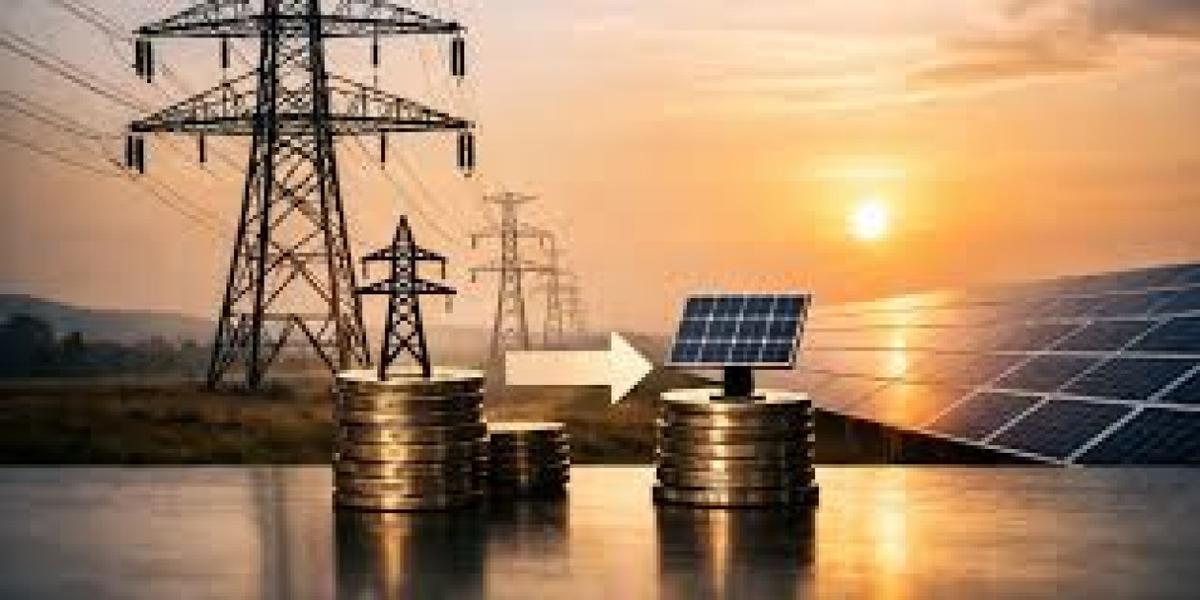
Dilip Buildcon Evaluates InvIT Route to Monetise Renewable-Energy Assets
Dilip Buildcon is evaluating the creation of an Infrastructure Investment Trust, or InvIT, for its renewable-energy portfolio, potentially giving the infrastructure company a new mechanism to monetise operational clean-energy assets and recycle capital into future projects.
The proposed structure is still under evaluation and no final transaction has been announced.
If implemented, the InvIT could allow Dilip Buildcon to transfer eligible renewable-energy assets into a trust structure capable of attracting long-term institutional capital.
For the company, the strategy could unlock capital tied up in operating projects while allowing it to redeploy funds toward new infrastructure and energy opportunities.
The potential move is significant because it would extend an asset-monetisation model already widely used in India's roads and power-transmission sectors into Dilip Buildcon's growing renewable-energy business.
Dilip Buildcon Is Exploring Renewable-Energy Monetisation

Dilip Buildcon has historically been associated primarily with large infrastructure construction projects.
Its activities span areas including:
roads,
highways,
bridges,
tunnels,
mining,
irrigation,
metro infrastructure,
and other engineering projects.
Renewable energy represents an increasingly important diversification opportunity.
As the company's clean-energy portfolio develops, monetising completed projects could become an important source of growth capital.
InvIT Could Unlock Capital From Operating Assets
Renewable-energy projects require substantial investment before they begin generating electricity.
Capital is needed for:
land,
solar modules,
electrical equipment,
transmission connectivity,
engineering,
and construction.
Once a project becomes operational, however, its financial characteristics change.
Instead of consuming large amounts of construction capital, it can begin producing recurring cash flows from electricity sales.
That makes mature assets potentially suitable for an InvIT.
What Is an InvIT?
An Infrastructure Investment Trust is an investment structure designed to hold income-generating infrastructure assets.
An InvIT can own assets such as:
highways,
power-transmission networks,
renewable-energy projects,
and other infrastructure.
Investors purchase units in the trust.
Cash generated by the underlying assets can then be distributed to eligible unitholders under the applicable regulatory framework.
InvITs Separate Development From Ownership Capital
Infrastructure development and long-term infrastructure ownership require different types of capital.
A developer may be willing to take:
construction risk,
execution risk,
and commissioning risk.
Once the project becomes operational, long-term investors may prefer the more predictable cash flows of a mature asset.
InvITs help connect those two investor groups.
Developer Can Build, Monetise and Reinvest
The model can create a recurring capital cycle.
A company can:
develop an infrastructure asset,
bring it into operation,
transfer or monetise it through an InvIT,
receive capital,
and reinvest that money into another project.
This is known as:
capital recycling.
For infrastructure developers, capital recycling can support faster expansion without requiring the parent company to permanently fund every asset it builds.
Renewable Energy Fits InvIT Model
Operational renewable-energy assets can have characteristics attractive to long-term investors.
Solar and wind projects may operate under long-duration power purchase agreements.
Those contracts can provide relatively predictable revenue.
Once construction and commissioning risks decline, the project begins to resemble a long-term yield-generating infrastructure asset.
That makes renewable energy increasingly suitable for investment-trust structures.
Solar Projects Have Long Operating Lives
A utility-scale solar plant can operate for decades.
Once commissioned, the project does not require the same continuous construction expenditure as a new infrastructure project.
Operating costs are relatively predictable.
Revenue can also be visible when electricity is sold under contracted arrangements.
These characteristics can support institutional ownership.
Institutional Investors Seek Long-Duration Assets
Infrastructure investors frequently include:
pension funds,
insurance companies,
sovereign wealth funds,
and specialised infrastructure funds.
These institutions often manage long-term liabilities.
Assets producing recurring cash flows over many years can therefore fit their investment requirements.
An InvIT gives such investors a regulated structure through which they can gain exposure to infrastructure.
Dilip Buildcon Could Reduce Capital Locked in Projects
Without monetisation, a developer's equity remains tied up in an operational asset.
That capital cannot easily be used elsewhere.
An InvIT can release part of it.
For Dilip Buildcon, this could provide additional financial flexibility as it expands its renewable-energy portfolio.
Monetisation Is Different From Exiting Renewable Energy
Moving projects into an InvIT would not necessarily mean Dilip Buildcon is withdrawing from clean energy.
It could indicate the opposite.
Asset monetisation can allow a developer to build more projects because capital from mature assets becomes available for new development.
The relevant question is therefore not simply how many assets the company sells.
It is how effectively the released capital is redeployed.
Renewable Energy Requires Significant Upfront Capital
Clean-energy development is capital intensive.
Developers generally spend most of the required money before a project produces meaningful revenue.
This creates a financing challenge.
Rapid expansion can consume:
equity,
debt capacity,
and working capital.
Asset monetisation provides another source of funding.
InvIT Could Strengthen Balance-Sheet Flexibility
If Dilip Buildcon transfers assets and associated debt into an InvIT structure, the transaction could potentially improve the parent's financial flexibility.
The exact effect would depend on:
valuation,
transaction structure,
debt allocation,
and retained ownership.
Investors would therefore need to examine the final structure rather than assuming all InvIT transactions automatically reduce leverage.
Debt Reduction Could Be One Potential Benefit
Infrastructure companies frequently carry debt because projects require substantial upfront investment.
If monetisation proceeds are used to repay borrowings, interest expenses can decline.
That can improve:
leverage ratios,
cash flows,
and borrowing capacity.
Alternatively, proceeds can be reinvested in new projects.
Management needs to balance those objectives.
Dilip Buildcon Has Experience With Asset Monetisation
Dilip Buildcon is not unfamiliar with monetising infrastructure assets.
Road developers in India have increasingly used structures such as:
asset sales,
and InvITs
to recycle capital.
The company's experience in infrastructure project development can therefore provide a foundation for a similar strategy in renewable energy.
Roads Helped Establish India’s InvIT Market
India's InvIT ecosystem initially gained substantial momentum through road and transmission assets.
Toll roads can generate recurring cash flows.
Transmission lines can earn regulated or contracted revenue.
These predictable cash-flow characteristics made them suitable for investment trusts.
Renewable energy has increasingly joined that category.
Renewable-Energy InvITs Are Growing
As India's solar and wind fleet expands, the number of mature operating assets is increasing.
Developers no longer need to hold every completed project indefinitely.
Institutional investors are increasingly willing to own operational renewable assets.
This is creating a deeper secondary market for clean-energy infrastructure.
India’s Energy Transition Requires Capital Recycling
India has ambitious renewable-energy expansion requirements.
Building hundreds of gigawatts of additional clean-energy capacity requires enormous capital.
Developers cannot finance that entire expansion solely through retained earnings.
Capital needs to move continuously from:
operating projects
into
new construction.
InvITs can help facilitate that movement.
Operational Assets Can Attract Lower-Cost Capital
A project under construction carries uncertainty.
It may face:
delays,
cost overruns,
equipment problems,
or grid-connection issues.
Once the project is operational, many of those risks disappear.
Lower-risk assets can attract investors willing to accept lower returns.
This can reduce the overall cost of infrastructure capital.
Development Capital Can Then Target Higher-Risk Projects
A developer's capital is often most valuable during the early stages of a project.
That is when:
land must be secured,
permits obtained,
equipment ordered,
and construction completed.
Holding a mature project indefinitely may therefore be an inefficient use of scarce development capital.
Monetisation allows developers to focus resources on the next generation of projects.
Power Purchase Agreements Will Matter
The quality of a renewable-energy InvIT depends heavily on the underlying contracts.
Investors will evaluate:
PPA duration,
electricity tariff,
offtaker credit quality,
and payment history.
A solar project with a strong long-term buyer can be significantly more attractive than one exposed to uncertain merchant electricity prices.
Offtaker Risk Remains Important
Even when a renewable project operates successfully, it still needs to be paid for the electricity it generates.
If the buyer delays payments, project cash flows can weaken.
Investors therefore assess the financial health of:
distribution companies,
commercial buyers,
and government counterparties.
The strength of the underlying offtakers will influence InvIT valuation.
Generation Performance Will Also Affect Returns
Solar projects depend on sunlight.
Wind projects depend on wind conditions.
Actual generation can differ from forecasts.
Investors therefore examine:
historical generation,
plant availability,
equipment performance,
and resource estimates.
A diversified portfolio can reduce dependence on one individual project or location.
Geographic Diversification Could Improve InvIT Quality
A renewable portfolio spread across several states can potentially reduce concentration risk.
Weather conditions vary by region.
Grid constraints can also differ.
Holding multiple assets can therefore create more stable aggregate generation.
The eventual composition of any Dilip Buildcon InvIT would be important for investors.
Scale Will Influence Investor Interest
Institutional investors generally prefer platforms large enough to justify extensive due diligence.
A very small InvIT may have:
limited liquidity,
higher relative operating costs,
and lower investor visibility.
A larger diversified renewable portfolio can attract broader institutional participation.
Dilip Buildcon would therefore need sufficient eligible assets to create an economically attractive platform.
Valuation Will Be Critical
The parent company and incoming investors need to agree on the value of the assets transferred.
If the assets are valued too low, Dilip Buildcon may fail to realise adequate value.
If valued too high, InvIT investors may receive unattractive returns.
Independent valuation and transparent assumptions are therefore essential.
Interest Rates Influence InvIT Valuations
InvITs compete with other income-producing investments.
If government bonds offer higher yields, investors may demand higher returns from infrastructure trusts.
That can reduce the price they are willing to pay for assets.
Lower interest rates can have the opposite effect.
The broader bond-market environment therefore influences asset-monetisation economics.
Rising Bond Yields Could Affect Timing
India's debt market has recently experienced pressure as investors demand higher yields from corporate issuers.
That environment matters for InvITs too.
If investors can earn attractive returns from high-quality bonds, an InvIT needs to offer enough additional return to compensate for infrastructure risk.
Dilip Buildcon may therefore evaluate market conditions carefully before launching any transaction.
InvIT Can Provide Alternative to Conventional Bond Borrowing
Companies normally fund growth through:
bank loans,
bonds,
or equity.
An InvIT introduces another route.
Rather than raising more debt at the parent level, the company can monetise existing infrastructure assets.
This can be particularly valuable when bond-market borrowing becomes expensive.
InvIT Can Also Avoid Excessive Parent-Level Equity Dilution
Raising equity directly at the listed parent company increases the number of shares outstanding.
That dilutes existing shareholders.
Asset monetisation can provide capital without necessarily issuing a large amount of new parent-company equity.
However, the economics depend on how much ownership in the InvIT the company retains.
Dilip Buildcon Is Diversifying Beyond Roads
The company's historical identity is closely associated with road construction.
But infrastructure opportunities are broadening.
Renewable energy provides exposure to one of India's fastest-growing capital-investment themes.
Diversification can reduce dependence on individual infrastructure segments.
It can also create new sources of recurring revenue.
EPC Expertise Can Support Renewable Expansion
Dilip Buildcon's core capabilities include large-scale project execution.
Renewable-energy development also requires:
engineering,
procurement,
construction,
project management,
and land coordination.
Some of those skills overlap with traditional infrastructure development.
That can provide established EPC companies with an entry advantage.
Renewable Projects Have Different Economics From Roads
Despite similarities in construction, renewable energy is not identical to highway development.
Electricity projects require specialised expertise involving:
power evacuation,
grid connectivity,
equipment performance,
and energy contracts.
Developers therefore need dedicated technical and commercial capabilities.
Successful diversification requires more than simply transferring construction expertise.
InvIT Could Create Recurring Monetisation Platform
The most strategically important possibility is that the proposed InvIT becomes permanent rather than a one-time transaction.
Dilip Buildcon could potentially:
build projects,
transfer them to the InvIT,
raise new capital,
and repeat the process.
That would create an internal capital-recycling engine.
Several large infrastructure platforms globally operate using similar models.
Sponsor Could Retain Economic Interest
Developers do not necessarily need to sell their entire interest in assets.
A sponsor can retain units in the InvIT.
That allows it to continue participating in future cash flows while bringing external investors into the platform.
The balance between monetisation and retained ownership can be adjusted according to capital requirements.
InvIT Could Eventually Acquire Third-Party Assets
If a renewable InvIT reaches sufficient scale and develops an independent management platform, it may potentially acquire assets beyond those developed by the original sponsor.
That could transform the trust into a broader renewable infrastructure investment vehicle.
Whether Dilip Buildcon pursues such a model would depend on its eventual strategy.
Governance Will Be Closely Watched
InvIT investors need confidence that transactions between the sponsor and trust occur at fair values.
Related-party asset transfers can create potential conflicts.
Strong governance therefore requires:
independent valuation,
transparent disclosures,
and appropriate oversight.
These factors are particularly important when the sponsor remains a major unitholder.
SEBI Framework Provides Regulatory Structure
InvITs in India operate under the regulatory framework established by the Securities and Exchange Board of India.
The framework covers areas including:
asset ownership,
disclosures,
and governance.
This regulatory structure has helped increase institutional acceptance of the asset class.
Public and Private InvIT Structures Are Possible
Infrastructure trusts can be structured for different investor groups.
Some are publicly listed and available to broader market participants.
Others operate privately with institutional investors.
The appropriate structure depends on:
asset scale,
fundraising requirements,
and investor strategy.
Dilip Buildcon has not yet announced the final structure of any potential renewable-energy InvIT.
Final Decision Has Not Been Made
The company is currently evaluating the InvIT route.
That means investors should distinguish between:
strategic consideration
and
a completed transaction.
Important details remain unknown, including:
asset portfolio,
valuation,
fundraising size,
and launch timeline.
These would become clear only if Dilip Buildcon formally proceeds.
Investors Will Watch Capital Allocation
If monetisation occurs, the next question will be what Dilip Buildcon does with the proceeds.
Potential uses could include:
new renewable projects,
debt reduction,
working capital,
and other infrastructure opportunities.
The long-term value of the transaction depends heavily on this allocation.
Renewable Expansion Could Change Dilip Buildcon’s Business Mix
If the company builds a substantial renewable portfolio, its business model could gradually evolve.
Traditional EPC revenue is often project-based.
Ownership of energy assets can create recurring long-term cash flows.
Combining development, EPC and asset ownership can therefore create a different financial profile.
An InvIT would add another layer by separating mature asset ownership from new development.
India’s Renewable Market Creates Long-Term Opportunity
India's rising electricity demand and energy-transition targets require continued expansion of:
solar,
wind,
storage,
and transmission infrastructure.
That creates opportunities across the entire renewable value chain.
Companies capable of developing projects and recycling capital efficiently may be able to scale faster than those that permanently retain every asset.
Asset Monetisation Could Become Core Competitive Advantage
Infrastructure development is ultimately constrained by capital.
Two companies may have similar engineering capabilities.
But the company able to recover invested equity faster can potentially develop more projects with the same initial capital base.
This makes capital recycling a strategic capability rather than merely a financial transaction.
Conclusion
Dilip Buildcon's evaluation of an InvIT for its renewable-energy assets signals how the infrastructure developer could approach the next phase of its clean-energy expansion.
An Infrastructure Investment Trust would allow eligible operating renewable projects to be transferred into a dedicated investment platform capable of attracting long-term institutional capital.
For Dilip Buildcon, the principal advantage would be capital recycling.
Instead of leaving substantial equity permanently tied up in mature solar or other renewable assets, the company could monetise those projects and redeploy the proceeds toward:
new energy capacity,
infrastructure projects,
or balance-sheet strengthening.
The strategy could also provide an alternative funding route at a time when conventional corporate borrowing costs are sensitive to higher bond yields.
However, the InvIT remains under evaluation.
The company has not yet announced a final portfolio, valuation, fundraising size or launch timetable.
Those details will determine the financial significance of any eventual transaction.
If Dilip Buildcon successfully develops a recurring model of building renewable projects, stabilising them, monetising mature assets and recycling capital into new development, the InvIT could become more than a one-time fundraising exercise.
It could become a central financing mechanism supporting the company's transformation from a predominantly traditional infrastructure contractor into a broader infrastructure and renewable-energy development platform.
 Dilip Buildcon Evaluates InvIT Route to Monetise Renewable-Energy Assets in India FAQs
POST A COMMENT (0)
All Comments (0)
Replies (0)