





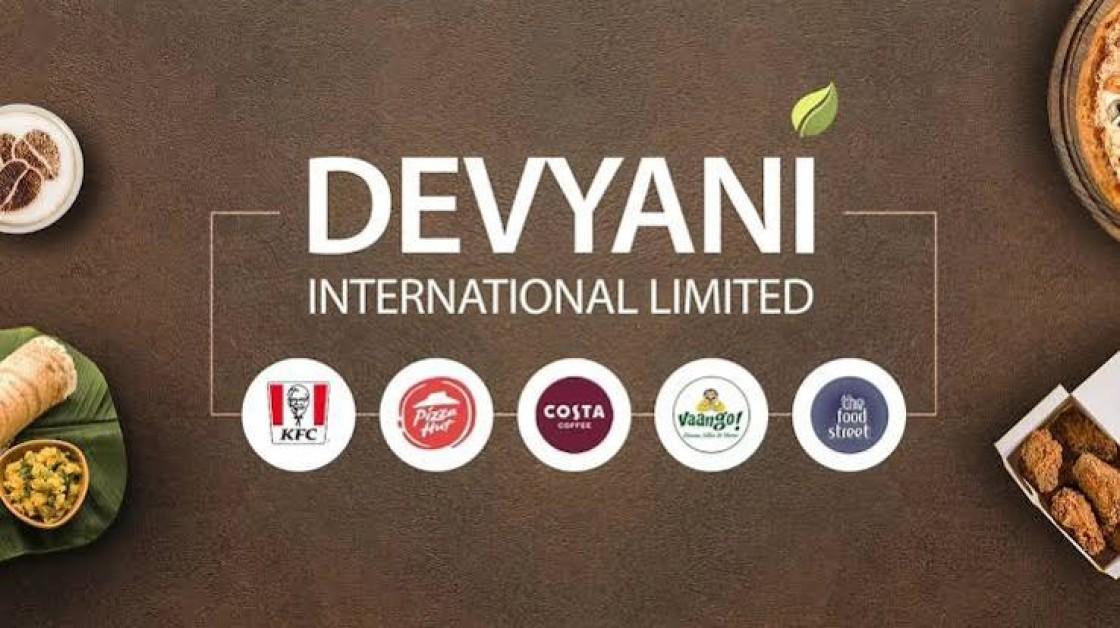
Devyani International and Sapphire Foods Revise Merger After Planned Secondary Share Sale Is Terminated
Devyani International and Sapphire Foods India have revised their proposed merger structure after a planned 18.5% secondary sale of Sapphire Foods shares by promoter Sapphire Foods Mauritius Ltd to Arctic International Pvt Ltd was terminated by mutual agreement.
The cancelled transaction involved approximately 5.95 crore Sapphire Foods shares and had originally been structured as a condition precedent to the amalgamation of Sapphire Foods into Devyani International.
With that sale no longer proceeding, Sapphire Foods Mauritius will now participate in the merger like other Sapphire Foods shareholders and receive Devyani International shares under the existing share-exchange arrangement.
Importantly, the central economics of the merger remain unchanged.
Under the scheme, shareholders of Sapphire Foods will continue to receive:
177 equity shares of Devyani International for every 100 Sapphire Foods shares held.
The revision therefore changes the route through which one major Sapphire shareholder participates in the transaction, rather than altering the fundamental merger ratio.
Original Merger Was Announced in January 2026

The boards of Devyani International and Sapphire Foods approved the proposed amalgamation on:
January 1, 2026.
The scheme provides for Sapphire Foods India to be merged into Devyani International with an appointed date of:
April 1, 2026.
Once completed, Sapphire Foods will cease to exist as a separate listed entity and its shareholders will receive shares in Devyani International.
The Share-Swap Ratio Remains 177 for 100
The merger continues to use the previously announced exchange ratio.
For every:
100 Sapphire Foods shares
a shareholder will receive:
177 Devyani International shares.
The face value of Sapphire Foods shares is ₹2 each, while Devyani shares have a face value of ₹1 each.
The termination of the secondary transaction does not alter this ratio.
What Was the Planned Secondary Sale?
Under the original structure, Sapphire Foods Mauritius Ltd, or SFML, planned to sell:
5,94,55,837 shares
of Sapphire Foods India.
That represented approximately:
18.5% of Sapphire Foods' fully paid-up equity capital.
The buyer was to be:
Arctic International Pvt Ltd.
Completion of that transaction had been linked to the merger as a condition precedent.
The Share Purchase Agreement Has Been Terminated
SFML subsequently informed Sapphire Foods that its share-purchase agreement with Arctic International had been:
terminated by mutual agreement.
The parties reached that decision following commercial discussions.
As a result, the proposed 18.5% secondary transaction will not take place under the original arrangement.
Merger No Longer Depends on the Secondary Sale
Because the sale has been abandoned, Devyani and Sapphire have amended the merger framework.
The secondary transaction has been removed as a condition precedent.
This means the merger can continue through the regulatory and shareholder-approval process without requiring the Arctic transaction to close first.
That simplifies one important dependency within the original structure.
SFML Will Now Receive Devyani Shares
The biggest ownership consequence concerns Sapphire Foods Mauritius.
Instead of selling its Sapphire stake before the merger, SFML will retain its shares and participate in the amalgamation.
It will therefore receive Devyani International equity shares using the same:
177-for-100 exchange ratio
applicable to other Sapphire shareholders.
This increases the amount of Devyani equity that will ultimately be issued to Sapphire's existing shareholder base.
The Merger’s Core Terms Are Otherwise Unchanged
Both companies have emphasised that the cancellation of the secondary transaction does not change the key commercial terms of the amalgamation.
The merger still involves:
Sapphire Foods being absorbed into Devyani,
the same appointed date,
and the same share-exchange ratio.
The revision is therefore principally an ownership and procedural change.
Post-Merger Shareholding Will Change
The cancellation of the pre-merger stake sale changes the expected ownership structure of the enlarged Devyani International.
Based on the revised scheme, Devyani's promoter and promoter-group holding is expected to decline from approximately:
61.37% before the scheme
to around:
41.99% after the merger.
Public shareholding is expected to increase from approximately:
38.63%
to around:
58.01%.
That represents a substantial increase in the public float of the combined company.
Higher Public Float Could Improve Liquidity
Public float refers broadly to shares available to public investors rather than being held by promoters.
A larger free float can potentially improve:
trading liquidity,
institutional participation,
and price discovery.
For large fund managers, liquidity matters because they need to be able to establish and exit significant positions without creating excessive price movement.
Devyani Shares React Positively
Devyani International shares rose as much as approximately:
4%
on August 27 after the revised structure was announced.
The stock reached around:
₹155.36
during the session.
The positive reaction suggests investors viewed the removal of the secondary-sale condition as reducing uncertainty around the merger process.
Market Reaction Does Not Guarantee Completion
The merger is still subject to the required legal and regulatory process.
A positive share-price response does not mean the transaction is complete.
The companies still need to satisfy applicable approvals and procedural requirements before the amalgamation becomes effective.
Stock Exchanges Have Already Reviewed the Scheme
The proposed merger has progressed through the stock-exchange review process.
In June 2026, the National Stock Exchange issued its observation letter following SEBI's review of the draft scheme.
The regulatory process required the companies to provide detailed information about matters including:
shareholding,
valuation,
financial performance,
the proposed secondary transaction,
and pending legal or enforcement proceedings.
CCI Approval Is Also Relevant
The stock-exchange observation process required the merger to remain subject to applicable Competition Commission of India approval.
The companies were also instructed not to file the scheme with the National Company Law Tribunal until the required CCI clearance was received where applicable.
Large corporate combinations often require competition review because regulators need to assess whether the transaction could materially reduce competition.
NCLT Approval Is Required for Amalgamation
Indian corporate mergers structured under Sections 230–232 of the Companies Act generally require National Company Law Tribunal approval.
The NCLT process helps ensure that:
shareholder rights,
creditor interests,
and statutory requirements
are appropriately addressed.
The merger cannot become fully effective merely through agreement between the two boards.
Why Are Devyani and Sapphire Merging?
The strategic rationale is consolidation.
Both companies are among India's largest quick-service restaurant operators.
They have significant exposure to overlapping global restaurant brands and operate large networks across India and other markets.
Combining them can create greater:
scale,
procurement strength,
and operational efficiency.
Both Operate Major Yum! Brands Franchises
Devyani International and Sapphire Foods are major franchise operators of brands associated with Yum! Brands.
Their portfolios include businesses linked to:
KFC,
and Pizza Hut.
Historically, the two companies operated different geographical territories and franchise networks.
The merger brings much of that operating footprint under one listed platform.
Devyani Already Has a Large QSR Portfolio
Devyani is one of India's largest restaurant franchise operators.
Its portfolio extends beyond KFC and Pizza Hut to other food-service concepts across domestic and international markets.
The company has spent years building:
restaurant operations,
supply chains,
real-estate capabilities,
and digital ordering infrastructure.
Sapphire adds another large network to that platform.
Sapphire Foods Also Built Significant Scale
Sapphire Foods developed a substantial quick-service restaurant business across India and other South Asian markets.
Its operating expertise includes:
store development,
food-service operations,
and franchise management.
Combining the two companies could create one of the most significant restaurant platforms in the region.
Procurement Could Become More Efficient
Restaurant companies purchase large quantities of:
chicken,
vegetables,
packaging,
and kitchen equipment.
A larger combined network can negotiate with suppliers at greater scale.
Even relatively small improvements in procurement economics can become material across hundreds or thousands of restaurants.
Supply-Chain Integration Could Reduce Duplication
Operating two large restaurant companies separately can mean maintaining parallel:
warehousing,
distribution,
technology,
and administrative infrastructure.
A merger can create opportunities to consolidate some of those functions.
The potential savings are often described as:
synergies.
Whether those synergies are ultimately realised depends on execution.
Restaurant Real Estate Could Be Optimised
Quick-service restaurant expansion depends heavily on property selection.
Companies need sites offering suitable combinations of:
traffic,
rent,
visibility,
and delivery demand.
A combined business can coordinate expansion more efficiently and potentially avoid unnecessary overlap between locations.
Delivery Has Changed QSR Economics
Food-delivery platforms have transformed restaurant networks.
A store no longer serves only customers walking through the door.
It can also serve a delivery radius around the restaurant.
This makes location planning more data-driven.
The combined company could use a larger customer and operational dataset when deciding where to open future outlets.
Digital Ordering Could Create Additional Synergies
Large restaurant operators increasingly invest in:
apps,
loyalty programmes,
and digital marketing.
A larger customer base can improve the economics of those investments.
Technology costs can be spread across more restaurants and transactions.
Data can also support personalised offers and customer retention.
Larger Scale Could Strengthen Franchise Relationships
International restaurant brands typically want franchise partners capable of:
opening stores quickly,
and maintaining consistent operating standards.
A larger combined company could potentially deploy more capital and management resources across brand expansion.
That may strengthen its position in future franchise negotiations.
The Merger Could Reduce Corporate Duplication
Two listed companies each require their own:
boards,
finance teams,
investor relations,
audit processes,
and listed-company compliance infrastructure.
A single combined entity can potentially eliminate some duplicated corporate costs.
However, integration itself can initially create substantial expenses.
Integration Risk Remains Significant
Combining large restaurant networks is operationally complex.
Management needs to align:
systems,
employees,
suppliers,
leases,
and organisational structures.
Poor integration can delay expected savings.
Successful mergers therefore depend as much on execution after closing as on the financial logic announced beforehand.
Culture Can Matter
Even businesses operating similar brands can develop different internal cultures and operating practices.
Managers may use different:
performance systems,
supplier processes,
and decision structures.
Integration requires choosing which practices to retain.
Organisational disruption can become a risk if the process is poorly managed.
Restaurant-Level Economics Will Remain Key
The merger does not eliminate the fundamental economics of QSR operations.
Investors will continue to focus on metrics such as:
same-store sales growth,
restaurant margins,
and new-store payback periods.
A larger network only creates value if individual restaurants generate attractive returns.
Consumer Demand Remains Competitive
India's food-service market is expanding, but competition is intense.
Customers can choose among:
international QSR chains,
regional restaurant brands,
cloud kitchens,
and independent restaurants.
Delivery platforms make those choices even more visible.
Scale therefore needs to translate into better customer value.
Value Pricing Is Particularly Important
Consumers remain price sensitive.
Restaurant operators need to balance:
menu pricing,
food inflation,
and margins.
Aggressive price increases can weaken customer traffic.
Excessive discounting can damage profitability.
A larger company may have more flexibility to manage this balance through procurement and menu design.
Food Inflation Can Pressure Margins
Key inputs such as:
chicken,
edible oil,
and dairy
can experience significant price volatility.
QSR operators cannot always pass increases immediately to customers.
Greater procurement scale could provide some protection, but commodity inflation remains a structural business risk.
Store Expansion Requires Capital
Restaurant growth requires continuing investment.
Each new location needs:
lease deposits,
fit-outs,
and kitchen equipment.
Combining the companies could allow capital allocation to be managed across a larger restaurant portfolio.
Management can prioritise brands and markets offering the strongest returns.
The Revised Structure Does Not Change Strategic Logic
The termination of the SFML-Arctic secondary sale may appear significant because of the 18.5% stake involved.
But from an operating perspective, it does not alter why Devyani and Sapphire want to merge.
The strategic case remains based on:
scale,
efficiency,
and consolidation.
The change primarily affects how ownership is distributed after completion.
Public Shareholders Become More Important
With public ownership expected to rise materially after the merger, institutional and retail investors would collectively own a larger portion of Devyani.
This could influence:
market liquidity,
and shareholder engagement.
Management of the combined entity would therefore operate with a substantially larger public ownership base.
Lower Promoter Ownership Does Not Mean Loss of Control Automatically
A promoter holding of approximately 41.99% remains substantial.
Promoters can retain effective influence even without owning an absolute majority, depending on the distribution and voting behaviour of other shareholders.
The post-merger governance structure therefore needs to be evaluated in practical rather than purely numerical terms.
SFML Becomes a Devyani Shareholder
Another important consequence is that Sapphire Foods Mauritius will emerge as a shareholder in Devyani International after the merger.
Its economic exposure shifts from:
Sapphire Foods
to:
the combined Devyani platform.
That aligns SFML with the future performance of the merged restaurant business.
Arctic and SFML Could Explore Another Transaction Later
The termination of the current share-purchase agreement does not necessarily prevent the parties from considering another secondary transaction in future.
Any subsequent sale would need to comply with applicable securities laws and regulatory requirements.
For now, however, the original 18.5% pre-merger sale has been removed from the transaction framework.
The Merger Is Still the Main Event
The cancelled sale affects ownership mechanics.
The economically larger event remains the merger itself.
If completed, the combination will bring two major restaurant operators together under Devyani International.
Investors will then focus on whether the enlarged business can deliver:
faster growth,
better margins,
and stronger cash generation.
Conclusion
Devyani International and Sapphire Foods India have revised their merger scheme after the planned 18.5% secondary sale of Sapphire Foods shares by Sapphire Foods Mauritius to Arctic International was terminated by mutual agreement.
The abandoned transaction involved approximately 5.95 crore Sapphire Foods shares and had originally been a condition precedent to the amalgamation.
That condition has now been removed.
Sapphire Foods Mauritius will instead participate directly in the merger and receive Devyani International shares on the same basis as other Sapphire Foods shareholders.
Crucially, the main transaction economics remain unchanged.
Sapphire shareholders will still receive 177 Devyani International shares for every 100 Sapphire Foods shares held.
The biggest impact is therefore on the expected ownership structure of the combined company, with Devyani's promoter and promoter-group stake projected to fall to around 41.99% and public ownership rising to approximately 58.01% after the scheme.
For investors, the revision removes one dependency from the merger process without altering the strategic rationale behind the combination.
The real value of the transaction will ultimately depend not on the cancelled secondary sale, but on whether Devyani can successfully integrate Sapphire's restaurant network and translate greater scale into stronger procurement economics, more efficient expansion, better restaurant-level profitability and sustainable growth across India's highly competitive quick-service restaurant market.
 Devyani and Sapphire Foods Revise Merger After 18.5% Stake Sale Is Scrapped FAQs
POST A COMMENT (0)
All Comments (0)
Replies (0)