





Introduction
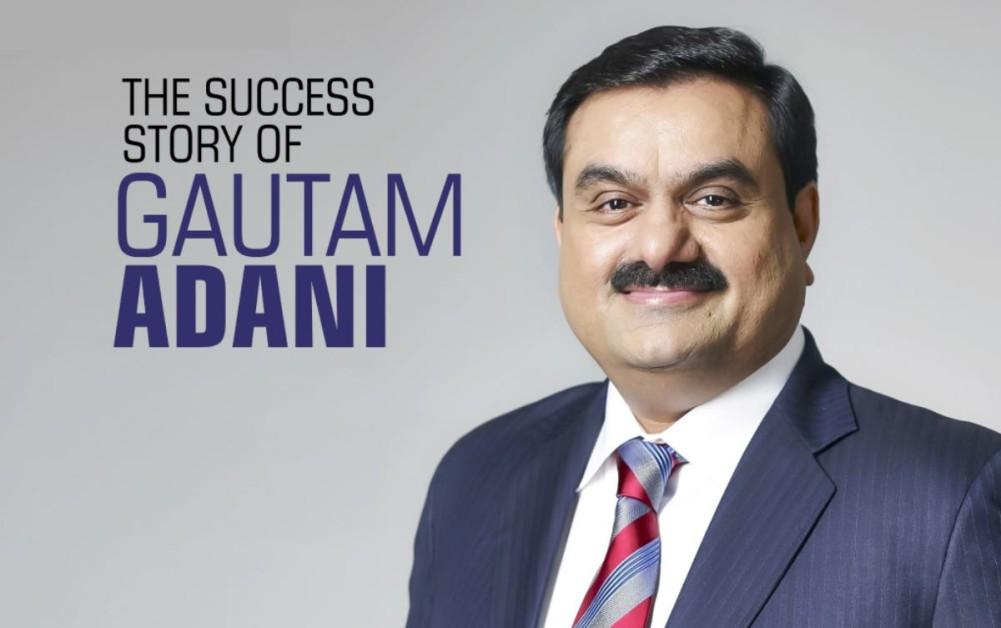
Gautam Shantilal Adani, the Chairman and Founder of the Adani Group, is one of India's most prominent industrialists. His story is one of remarkable ambition, strategic foresight, and resilience. From modest beginnings in Gujarat to becoming a global business leader with interests spanning ports, energy, logistics, airports, data centers, and more, Adani's journey reflects the dynamic transformation of India's economic landscape over the last three decades.
Early Life and Education
Gautam Adani was born on June 24, 1962, in Ahmedabad, Gujarat, into a Gujarati Jain family. His father, Shantilal Adani, was a small textile merchant. The family environment instilled in him the values of hard work and entrepreneurship. Adani attended Sheth Chimanlal Nagindas Vidyalaya in Ahmedabad and later enrolled at Gujarat University for a bachelor’s degree in commerce. However, he dropped out after the second year, choosing practical business experience over academics.
Initial Business Forays
In 1978, at the age of 16, Adani moved to Mumbai to work as a diamond sorter at Mahendra Brothers. He spent a few years in the diamond industry, where he honed his skills in trading and negotiation. In 1981, his elder brother Mansukhbhai Adani bought a plastics unit in Ahmedabad and invited Gautam to manage operations. This marked his entry into global trading through polyvinyl chloride (PVC) imports.
Foundation of Adani Group
In 1988, Gautam Adani founded Adani Exports Ltd. (now Adani Enterprises Ltd.), primarily dealing in agricultural and power commodities. With India's liberalization in 1991, Adani seized the opportunity to expand into infrastructure and energy, sectors that were opening up rapidly. His knack for identifying scalable sectors early contributed to his meteoric rise.
Expansion into Infrastructure and Ports
The major breakthrough came in the mid-1990s when the Gujarat government invited private players to develop the Mundra Port. Adani won the contract and developed it into India’s largest commercial port. Mundra Port became the cornerstone of the Adani Group’s logistics and transport business. The project showcased Adani's ability to handle large-scale infrastructure development and his focus on vertical integration.
Diversification into Energy and Resources
Realizing the growing energy demands of India, Adani expanded into coal trading and power generation. He acquired coal mines in Indonesia and Australia, which fed fuel to Adani Power, a subsidiary focusing on thermal power plants. Adani's entry into the energy sector included building one of India's largest private power plants at Mundra.
His strategy was not just limited to fossil fuels. In recent years, Adani Green Energy has emerged as a leader in renewable energy. With a focus on solar and wind energy, Adani has aligned his business interests with India's goals for sustainable development.
Ventures into Airports and Data Infrastructure
In the late 2010s, the Adani Group entered the aviation sector by bidding for and winning contracts to operate several major Indian airports, including those in Mumbai, Lucknow, and Ahmedabad. With this move, Adani became one of the leading private players in Indian aviation infrastructure.
Simultaneously, Adani entered the data center space through AdaniConneX, a joint venture with EdgeConneX. The company aims to develop and operate hyper-scale data centers across India, tapping into the growing digital economy.
Adani Group's Corporate Structure
Adani Group is a conglomerate of companies that includes:
-
Adani Enterprises (flagship incubator firm)
-
Adani Ports & SEZ (India’s largest private port operator)
-
Adani Power (thermal power generation)
-
Adani Transmission (power transmission)
-
Adani Green Energy (renewables)
-
Adani Total Gas (city gas distribution)
-
Adani Wilmar (FMCG – edible oils)
Each of these companies operates independently under the group’s strategic oversight, enabling focused growth while contributing to the larger ecosystem.
Global Expansion and Strategic Partnerships
Adani’s ambition is not confined to India. He has expanded internationally through investments in Australia (Carmichael coal mines), Sri Lanka (port development), and Africa. His group has also entered joint ventures with global giants like TotalEnergies (France) and EdgeConneX (U.S.) to boost capabilities in clean energy and digital infrastructure.
Challenges and Controversies
Like any powerful business figure, Gautam Adani has faced his share of controversies. In early 2023, a report by Hindenburg Research accused the Adani Group of stock manipulation and accounting irregularities. This led to a sharp decline in the market capitalization of Adani Group companies, wiping out billions in investor wealth.
Adani responded by firmly denying the allegations and issuing a detailed rebuttal. Over the months that followed, the group regained much of its market value and stabilized its operations, with support from institutional investors and strategic divestments.
Recovery and Reputation Rebuilding
Post-crisis, the Adani Group undertook major corporate governance reforms, including debt reduction, increased transparency, and enhanced investor communication. Global firms like GQG Partners and TotalEnergies reaffirmed their confidence through fresh investments.
Adani's ability to bounce back from the crisis reinforced his reputation as a resilient entrepreneur. His return to Forbes’ list of richest individuals and the revival of stock values by late 2024 signified a strong comeback.
Personal Life
Gautam Adani is married to Priti Adani, a dentist by profession and the chairperson of the Adani Foundation, the group’s philanthropic arm. The couple has two sons: Karan Adani, who manages the port and logistics business, and Jeet Adani, involved in the finance and airport divisions.
Adani survived the 2008 Mumbai terrorist attacks, having been present at the Taj Mahal Palace Hotel during the siege. He often refers to the incident as a life-changing experience that strengthened his resolve and perspective on life.
Philanthropy and Social Responsibility
Through the Adani Foundation, the group supports initiatives in education, healthcare, sustainable livelihood, and community infrastructure. In 2022, Adani pledged to donate Rs. 60,000 crore (~$7.5 billion) towards social causes, making it one of the largest philanthropic commitments in Indian history.
Legacy and Vision for India
Gautam Adani's impact on India’s infrastructure and industrial sectors is transformative. From ports to power, and now airports and data centers, his integrated business model supports India’s journey toward becoming a $5 trillion economy.
His vision includes:
-
Making India energy self-sufficient
-
Leading the global clean energy transition
-
Creating world-class logistics and transport ecosystems
-
Digital infrastructure development for the future economy
Conclusion
Gautam Adani's biography is not just the story of a billionaire; it is a story of modern India’s rise on the global stage. His journey from a middle-class background to one of the world’s most influential business leaders embodies risk-taking, resilience, and reinvention.
Despite challenges, Adani continues to power ahead with a futuristic outlook, cementing his legacy as a visionary who redefined the Indian entrepreneurial spirit. His role in shaping infrastructure, energy, and technology in the country ensures that his story will inspire generations to come.
 Related News
POST A COMMENT (0)
All Comments (0)
Replies (0)