





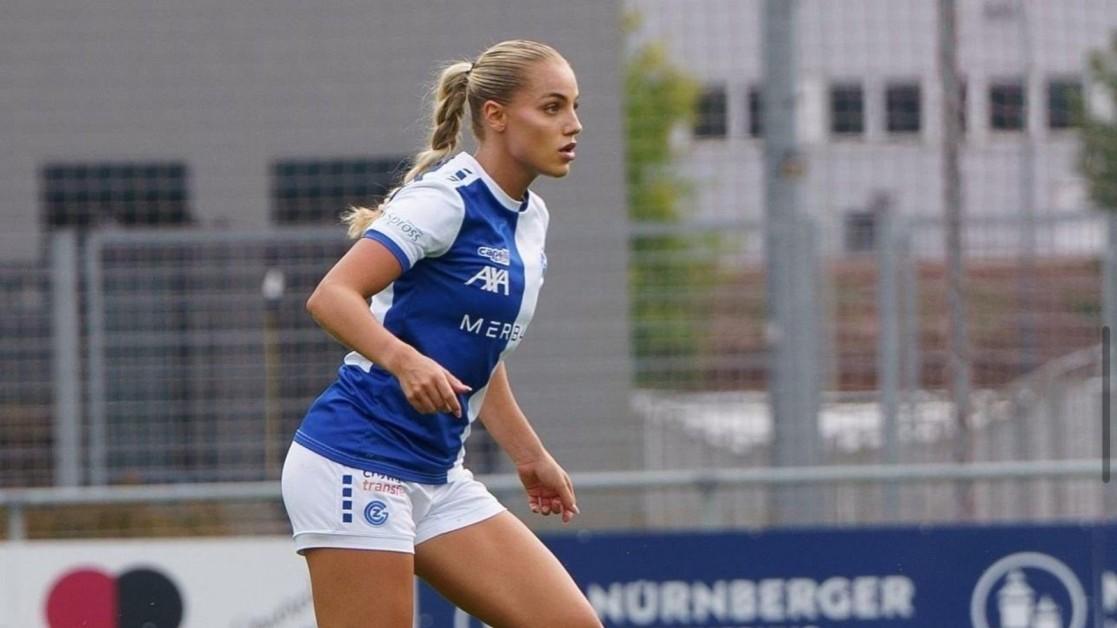
Ana Maria Marković: A Life in Football and Beyond
The Beginning – A Child of Two Worlds
On a crisp autumn day in Split, Croatia, on November 9, 1999, Ana Maria Marković was born. Split, with its blend of ancient history and Mediterranean vibrancy, is a city where passion runs deep — from the chants echoing in football stadiums to the songs sung in seaside cafés. Ana entered the world at the dawn of a new millennium, at a time when Croatian football was still basking in the glow of its 1998 World Cup heroics. Football was already stitched into the very fabric of her homeland, though few could have predicted that this little girl would one day embody its spirit on international fields.
Her parents, a hardworking family rooted in Croatian values, instilled in her both discipline and resilience. Early in her childhood, however, her family made a life-changing decision — they moved to Switzerland, seeking better opportunities and stability.
This shift would shape Ana’s identity in profound ways. She carried with her the Croatian heart and Mediterranean warmth, but she was raised amidst Swiss precision, structure, and opportunity. It was this fusion — the fire of Split and the order of Zürich — that would mold Ana Maria into a footballer with both passion and discipline.
As a child, she didn’t yet dream of global fame. She was just a lively little girl who loved running, chasing balls, and spending hours outdoors. But destiny was already guiding her footsteps.
Discovering the Beautiful Game
In Switzerland, Ana grew up in a world where women’s football was beginning to gain visibility. She was around ten years old when she first realized the joy of kicking a ball was more than just play. At school and in local parks, she would often outpace boys in sprinting races or outsmart them in impromptu matches.
Her inspiration was Cristiano Ronaldo, whom she admired not only for his dazzling skills but for his relentless work ethic. In interviews years later, she would confess how Ronaldo wasn’t just her favorite player — he was a blueprint for what she wanted to be: a complete athlete, a professional, and a role model.
It wasn’t easy. Girls playing football often faced skepticism. In many cultures, even in progressive Switzerland, football was still seen as a “man’s game.” Yet, Ana’s natural speed, technical flair, and competitive fire were undeniable. Coaches began to notice her, and soon she found herself in structured training environments.
Her mother, while protective, was deeply supportive. She made sure Ana balanced studies with sports, insisting on education as the foundation for her future. Her father encouraged her football ambitions, often accompanying her to matches and cheering her on with the same fervor he once reserved for Hajduk Split.
By her teenage years, football wasn’t just a pastime — it was becoming her life’s calling.
The First Clubs – A Swiss Apprenticeship
Ana’s first serious step came when she joined FC Zürich Frauen, one of Switzerland’s most successful women’s football teams. This was her apprenticeship — a time to absorb the basics of professional training, tactics, and team discipline.
At Zürich, Ana began honing the skills that would define her:
-
Explosive pace – defenders found it hard to keep up.
-
Technical dribbling – her Croatian flair showing through in tight spaces.
-
Versatility – able to play wide or as a central forward.
Though young, she stood out not just for her looks, which the media would later amplify, but for her fearless approach. On the pitch, she wasn’t afraid to take risks — a nutmeg here, a burst past two defenders there.
After gaining experience, she made a career-defining move to Grasshopper Club Zürich, a club with a rich history and strong commitment to women’s football. It was here that Ana Maria truly began to emerge from promising youngster to recognizable talent.
Wearing the Red and White – Croatia Calls
Though she grew up in Switzerland, Ana never forgot her Croatian roots. The Croatian language was spoken at home, traditional foods cooked in the kitchen, and summer visits to Split kept her tied to her homeland.
When the Croatian Football Federation noticed her rising profile, they invited her to join the Croatia Women’s National Team. For Ana, this was more than just football — it was a homecoming.
Her debut was emotional. Wearing the red-and-white checkered jersey, the same iconic colors that Modrić and Mandžukić had carried to World Cup glory, Ana felt the weight of history. But she also felt pride. She wasn’t just representing Croatia — she was representing every girl of the diaspora, proving that roots run deeper than borders.
Playing for Croatia also brought challenges. The women’s game in Croatia didn’t enjoy the infrastructure or visibility of its Swiss counterpart. Facilities were limited, support systems smaller, and funding modest. Yet, Ana took it as a mission: she wanted to be part of the generation that would elevate Croatian women’s football to the global stage.
A Star Beyond the Pitch – Beauty, Media, and Identity
By her early twenties, Ana was no longer just a promising footballer. The global media had discovered her. Outlets from Germany to Brazil began labeling her the “most beautiful footballer in the world.”
At first, Ana found the attention overwhelming. She admitted in interviews that while she appreciated compliments, she wanted people to see her as a footballer first, not a model. She feared being reduced to her looks — a danger for many women in sports who often face objectification before recognition.
But Ana decided to embrace the spotlight strategically. She built a strong Instagram presence, amassing over 2 million followers. She showcased not just glamorous pictures but also training clips, matchday content, and motivational posts. By doing so, she controlled her narrative: yes, she was beautiful, but she was also strong, dedicated, and hardworking.
Her confidence inspired countless young girls who saw in her a new kind of role model: someone who could balance femininity with athleticism, grace with grit.
Setbacks and Resilience
Every athlete faces trials, and Ana was no exception. From injuries that temporarily sidelined her, to the mental strain of media scrutiny, she has had to battle obstacles.
One of her toughest periods came when she suffered a ligament injury that kept her away from the game for months. Watching from the sidelines, she admitted, was heartbreaking. But instead of breaking her, it strengthened her resolve. She spent hours in rehab, focused on nutrition, and studied game footage.
When she returned, she was sharper, hungrier, and more determined than ever.
The Role Model – Beyond Football
Ana has increasingly used her platform to advocate for women’s football. She speaks openly about the need for equal recognition, better facilities, and more respect for female athletes.
She has also spoken against the misuse of her image in contexts that objectify women footballers, making it clear that beauty should not overshadow talent and dedication.
Her voice resonates particularly with young Croatian girls who dream of careers in sports but face cultural and systemic barriers. To them, Ana is proof that with resilience, one can rise above expectations and prejudices.
Global Appeal – Brands, Endorsements, and Influence
With fame came opportunities. Ana Maria began receiving brand endorsements, especially from sportswear and lifestyle companies. Yet, she remains selective. She often chooses partnerships that align with her identity as an athlete first.
Her appeal is global:
-
In Croatia, she’s seen as a national treasure.
-
In Switzerland, she’s admired as a homegrown talent.
-
Worldwide, she’s become an icon of women’s football’s growing popularity.
Dreams for the Future
Ana Maria is only in her mid-20s. Her career is still unfolding, with ambitions burning bright. Among her goals:
-
To lead Croatia to its first major women’s tournament qualification.
-
To play in one of Europe’s biggest leagues, perhaps the Women’s Super League in England or Spain’s Primera División.
-
To continue growing as a voice for women in sport.
She also dreams of one day opening academies for young girls, ensuring the next generation has more opportunities than she did.
Legacy in the Making
Ana Maria Marković’s story is still being written. Yet, she already represents something bigger than football:
-
The power of identity — embracing Croatian roots while thriving abroad.
-
The balance of talent and beauty, proving one doesn’t cancel out the other.
-
The resilience of a young woman determined to define herself on her own terms.
As she continues her journey, one truth stands out: Ana Maria Marković is not just playing football; she is changing how the world sees women footballers.
Ana Maria Marković, the Croatian football star playing for Grasshopper Zürich, has become one of the most inspiring young athletes in women’s football. This in-depth biography explores her childhood, career, Croatian identity, media spotlight, challenges, and future ambitions.
FAQ Block
Q1: Who is Ana Maria Marković?
Ana Maria Marković is a Croatian professional footballer who plays as a forward for Grasshopper Club Zürich and the Croatian national women’s team.
Q2: When was Ana Maria Marković born?
She was born on November 9, 1999, in Split, Croatia.
Q3: What position does Ana Maria Marković play?
She plays as a forward/attacker, known for her pace and technical skills.
Q4: Why is Ana Maria Marković famous?
She is known for her footballing talent and media attention, often described as one of the most beautiful footballers, though she emphasizes her identity as an athlete first.
Q5: What are Ana Maria Marković’s future goals?
She aims to help Croatia qualify for major tournaments, play in Europe’s top leagues, and promote women’s football globally.
 Related News
POST A COMMENT (0)
All Comments (0)
Replies (0)