





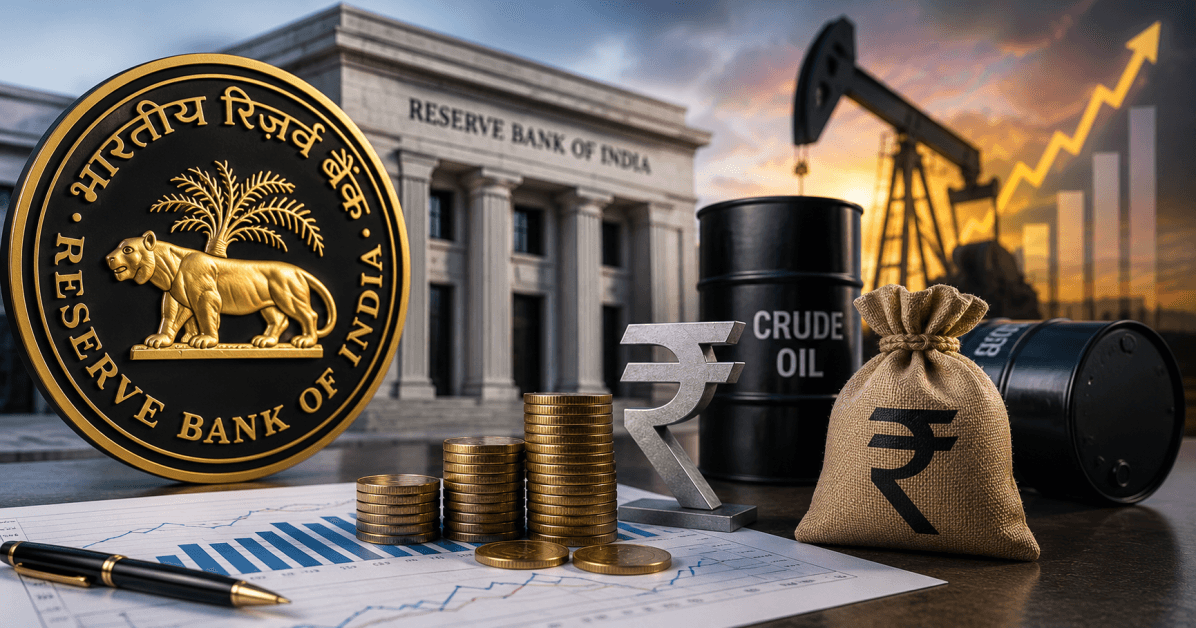
RBI Reviews Banking Sector Liquidity Amid Rising Crude Oil Prices
The Reserve Bank of India (RBI) is closely reviewing liquidity conditions across the banking sector as rising global crude oil prices continue to influence inflation expectations, currency movements, and overall financial market sentiment. Higher energy prices have become an important macroeconomic factor for policymakers because India imports a significant portion of its crude oil requirements, making international price movements a key consideration for inflation and economic stability.
Liquidity management remains one of the RBI's most important responsibilities as it seeks to ensure that the banking system has adequate funds to support credit growth while maintaining financial stability. The central bank regularly assesses liquidity conditions through a range of monetary policy tools and market operations, enabling banks to meet funding requirements without creating excessive inflationary pressures.
Industry experts note that while India's banking sector remains well-capitalised and resilient, global developments such as higher commodity prices, geopolitical uncertainties, and changing capital flows require continuous monitoring. The RBI's data-driven approach allows policymakers to respond to evolving economic conditions while balancing growth, inflation, and financial stability.
Rising Crude Oil Prices Influence the Economy
Crude oil prices play a significant role in India's macroeconomic environment because energy costs affect transportation, manufacturing, logistics, and consumer prices.
Key areas influenced by higher oil prices include:
-
Fuel costs
-
Transportation expenses
-
Manufacturing input costs
-
Logistics and freight charges
-
Consumer inflation
-
Import bills
-
Corporate operating expenses
-
Current account balance
Changes in global oil prices can therefore influence inflation trends and monetary policy expectations.
Liquidity Management Remains a Core RBI Function
Maintaining appropriate liquidity levels helps ensure the smooth functioning of India's financial system.
The RBI regularly monitors:
-
Banking system liquidity
-
Money market conditions
-
Credit availability
-
Deposit growth
-
Lending activity
-
Financial market stability
-
Government securities market
-
Short-term funding requirements
Effective liquidity management supports both financial stability and sustainable economic growth.
Banking Sector Continues to Demonstrate Resilience
India's banking industry has strengthened significantly in recent years through improved balance sheets, stronger capital positions, and better asset quality.
Positive developments include:
-
Higher capital adequacy
-
Improved profitability
-
Stronger deposit mobilisation
-
Healthy credit growth
-
Better risk management
-
Digital banking expansion
-
Enhanced governance standards
-
Improved operational efficiency
These factors provide banks with greater resilience during periods of global economic uncertainty.
Inflation Remains an Important Policy Consideration
Rising energy prices can contribute to broader inflationary pressures across multiple sectors of the economy.
Areas closely monitored include:
-
Food inflation
-
Core inflation
-
Fuel inflation
-
Retail prices
-
Wholesale prices
-
Consumer demand
-
Wage trends
-
Household spending
The RBI continues evaluating these indicators while formulating its monetary policy decisions.
Credit Demand Continues Across Key Sectors
Despite global uncertainties, credit demand remains supported by economic activity across several industries.
Major borrowing segments include:
-
Infrastructure
-
Manufacturing
-
Housing
-
Retail lending
-
Renewable energy
-
Small businesses
-
Agriculture
-
Services sector
Adequate liquidity enables banks to continue supporting productive investment and economic expansion.
Financial Markets Monitor Policy Signals
Investors closely watch RBI communication for indications regarding liquidity conditions and the broader monetary policy outlook.
Financial markets generally monitor:
-
Interest rate expectations
-
Bond market yields
-
Banking liquidity
-
Currency movements
-
Inflation projections
-
Government borrowing
-
Banking sector performance
-
Capital market sentiment
Clear communication from the central bank helps improve market confidence and reduce uncertainty.
Digital Banking Strengthens Financial Stability
Technology continues to improve the efficiency of India's banking system while supporting better liquidity management and customer service.
Key developments include:
-
Digital payments
-
Real-time fund transfers
-
AI-powered risk monitoring
-
Data analytics
-
Cybersecurity enhancements
-
Automated compliance systems
-
Digital lending platforms
-
Mobile banking services
Technology investments continue to strengthen operational resilience across the financial sector.
Challenges Facing the Banking Sector
While the banking system remains fundamentally strong, several external factors continue to require close monitoring.
Global Commodity Price Volatility
Fluctuating oil and commodity prices can influence inflation, business costs, and market sentiment.
Geopolitical Developments
International events may affect trade, investment flows, and financial market stability.
Exchange Rate Movements
Currency fluctuations can influence import costs and inflation dynamics.
Inflation Risks
Persistent price pressures could affect consumer purchasing power and borrowing costs.
Global Financial Conditions
International interest rate movements and capital flows continue to influence domestic financial markets.
Future Outlook
The outlook for India's banking sector remains stable as the RBI continues following a prudent and data-driven approach to liquidity management. Strong bank balance sheets, improving digital infrastructure, and sustained credit demand are expected to support financial sector growth despite external uncertainties.
Key trends expected to shape the outlook include:
-
Continued liquidity monitoring
-
Stable banking system operations
-
Strong credit expansion
-
Improved financial resilience
-
Digital banking innovation
-
Better risk management
-
Continued inflation monitoring
-
Enhanced financial supervision
-
Sustainable lending growth
-
Stronger macroeconomic stability
These developments are expected to support the banking sector while helping the broader economy navigate changing global conditions.
Conclusion
The RBI's continued review of banking sector liquidity reflects its commitment to maintaining financial stability amid rising crude oil prices and evolving global economic conditions. By carefully monitoring liquidity, inflation, and market developments, the central bank aims to ensure that India's financial system remains resilient while supporting sustainable economic growth.
As global energy markets continue to influence inflation and financial conditions, policymakers are expected to remain focused on balancing liquidity management with price stability and long-term economic expansion. India's banking sector, supported by stronger fundamentals and ongoing digital transformation, remains well positioned to manage emerging challenges and support future growth.
 RBI Reviews Banking Sector Liquidity Amid Rising Crude Oil Prices FAQs
POST A COMMENT (0)
All Comments (0)
Replies (0)