





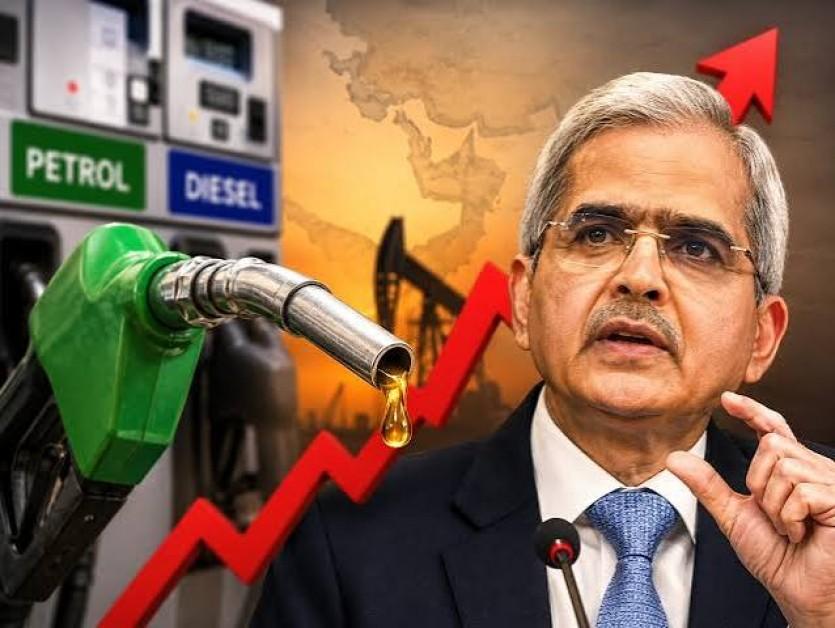
RBI Governor Says Higher Oil Prices Could Trigger Fuel Inflation
Reserve Bank of India (RBI) Governor has cautioned that sustained increases in global crude oil prices could lead to higher fuel inflation, adding to inflationary pressures across the economy. The comments come as policymakers continue monitoring developments in international energy markets, where fluctuations in crude prices remain an important determinant of inflation, household spending and overall economic stability.
As India imports a significant share of its crude oil requirements, movements in global energy prices have a direct influence on transportation costs, manufacturing expenses and consumer prices. Market participants are therefore closely tracking both oil price trends and the RBI's assessment of inflation risks.
Rising Oil Prices Remain a Key Inflation Risk

Global crude oil prices continue to influence India's inflation outlook.
Higher oil prices can affect:
-
Petrol and diesel costs
-
Transportation expenses
-
Manufacturing input costs
-
Logistics charges
-
Consumer prices
-
Industrial production costs
-
Agricultural input expenses
-
Business operating costs
Persistent increases in energy prices can have broader implications for the economy.
Fuel Inflation Impacts Multiple Sectors
Higher fuel costs can spread across several industries through increased operating expenses.
Sectors likely to be affected include:
-
Transportation
-
Logistics
-
Aviation
-
Manufacturing
-
Chemicals
-
Consumer goods
-
Agriculture
-
Retail
Companies may face pressure on profit margins if higher costs cannot be fully passed on to consumers.
RBI Closely Monitors Inflation Trends
Inflation remains one of the central bank's primary policy considerations.
Key indicators under review include:
-
Consumer Price Index (CPI)
-
Core inflation
-
Food inflation
-
Fuel inflation
-
Commodity prices
-
Input costs
-
Inflation expectations
-
Global energy prices
These indicators help shape future monetary policy decisions.
Monetary Policy Expectations Remain Important
Financial markets continue evaluating how inflation risks could influence interest-rate decisions.
Investors are monitoring:
-
Repo rate outlook
-
Liquidity conditions
-
Credit growth
-
Bond yields
-
Currency stability
-
Economic growth
-
Financial market liquidity
-
Policy guidance
The RBI's communication remains a key driver of market expectations.
Businesses Focus on Cost Management
Companies across industries continue adapting to changing energy costs.
Key strategies include:
-
Operational efficiency
-
Energy optimisation
-
Supply chain management
-
Cost control
-
Procurement planning
-
Digital transformation
-
Inventory management
-
Productivity improvements
Managing input costs remains critical during periods of commodity price volatility.
Global Energy Markets Remain Volatile
International oil markets continue responding to multiple economic and geopolitical factors.
Major influences include:
-
Global supply conditions
-
Production decisions
-
Geopolitical developments
-
Shipping disruptions
-
Demand trends
-
Currency movements
-
Inventory levels
-
Economic growth
These variables continue affecting crude oil price movements worldwide.
External Sector Also Faces Pressure
Higher oil prices can influence India's broader macroeconomic position.
Potential impacts include:
-
Import bill
-
Current account deficit
-
Foreign exchange demand
-
Rupee movements
-
Trade balance
-
Fiscal position
-
External financing
-
Investor sentiment
The overall impact depends on the duration and scale of oil price increases.
Financial Markets Monitor Oil Prices
Energy prices remain an important driver of investor sentiment.
Market participants continue tracking:
-
Crude oil benchmarks
-
Inflation expectations
-
Government bond yields
-
Equity market performance
-
Energy sector stocks
-
Currency markets
-
Commodity prices
-
Global economic indicators
Oil price movements often influence both equity and fixed-income markets.
Risks to Monitor
Investors and businesses should continue monitoring:
-
Global crude oil prices
-
Fuel inflation
-
RBI monetary policy
-
Inflation data
-
Geopolitical developments
-
Exchange-rate movements
-
Commodity prices
-
Supply chain disruptions
-
Global economic growth
-
Consumer demand
These factors could influence India's inflation trajectory and broader economic outlook.
What Investors Should Watch
Key indicators include:
-
Crude oil price trends
-
CPI inflation data
-
RBI policy announcements
-
Repo rate decisions
-
Government bond yields
-
Rupee performance
-
Corporate earnings
-
Fuel price movements
-
Foreign investment flows
-
Economic growth indicators
These metrics will provide insight into the evolving inflation outlook and its impact on financial markets.
Outlook
The RBI is expected to remain vigilant as global oil prices continue to influence inflation expectations and macroeconomic stability.
While India's economic fundamentals remain resilient, sustained increases in crude prices could create additional pressure on fuel inflation and business costs. Future policy decisions will likely depend on the balance between inflation risks, economic growth and global market developments.
Conclusion
The RBI Governor's remarks highlight the importance of global crude oil prices in shaping India's inflation outlook. Rising energy costs have the potential to influence fuel prices, production expenses and consumer inflation, making oil markets a key area of focus for policymakers and investors.
As global energy markets remain volatile, businesses and financial markets will continue monitoring inflation data, RBI policy signals and crude oil price movements to assess the broader impact on India's economy.
 RBI Governor Says Higher Oil Prices Could Trigger Fuel Inflation FAQs
POST A COMMENT (0)
All Comments (0)
Replies (0)