





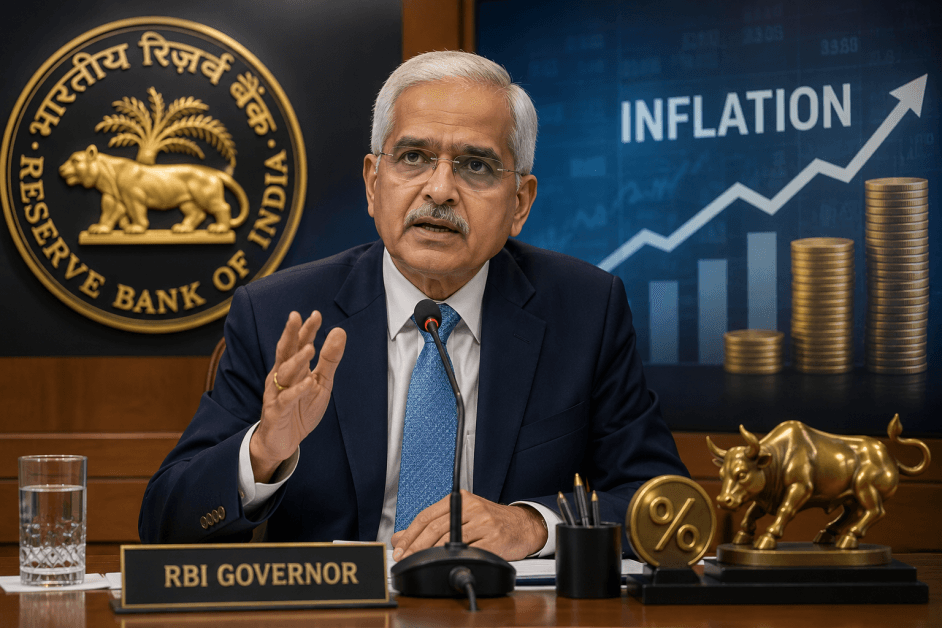
RBI Governor Reiterates Inflation Remains the Central Bank's Top Priority
The Reserve Bank of India (RBI) Governor has reiterated that maintaining price stability and controlling inflation remain the central bank's foremost priority as policymakers continue to balance economic growth with macroeconomic stability. The remarks come amid continued monitoring of domestic inflation trends, global commodity prices, geopolitical developments, and financial market conditions that could influence the country's inflation outlook.
Price stability remains one of the RBI's core objectives because predictable inflation supports consumer confidence, investment activity, business planning, and sustainable economic growth. While India's economy continues to demonstrate resilience across several sectors, policymakers remain focused on ensuring that inflation remains aligned with the central bank's medium-term objectives.
The Governor's comments underscore the RBI's commitment to using monetary policy, liquidity management, and continuous economic assessment to preserve financial stability while supporting long-term growth.
Inflation Control Remains a Core Monetary Policy Objective
Managing inflation continues to be central to the RBI's policy framework, helping maintain purchasing power and broader economic stability.
Key policy objectives include:
-
Maintaining price stability
-
Supporting sustainable economic growth
-
Anchoring inflation expectations
-
Preserving financial stability
-
Strengthening monetary transmission
-
Maintaining market confidence
-
Supporting balanced economic expansion
-
Ensuring macroeconomic resilience
A stable inflation environment helps households and businesses make informed financial and investment decisions.
Global Factors Continue to Influence Inflation
The RBI continues to closely monitor international developments that may affect domestic inflation.
Important global factors include:
-
Crude oil prices
-
Commodity market movements
-
Global food prices
-
Supply chain developments
-
Currency market volatility
-
Geopolitical events
-
International trade conditions
-
Global financial market trends
These external factors can influence import costs and overall price levels within the economy.
Domestic Economic Indicators Remain Under Watch
Alongside global developments, policymakers continue monitoring key domestic indicators that influence inflation dynamics.
Areas of focus include:
-
Food inflation
-
Core inflation
-
Consumer demand
-
Agricultural production
-
Manufacturing activity
-
Wage trends
-
Retail price movements
-
Services sector performance
A comprehensive assessment of these indicators supports informed monetary policy decisions.
Monetary Policy Supports Balanced Growth
While inflation control remains the primary objective, the RBI also seeks to ensure that monetary policy supports sustainable economic expansion.
Policy considerations include:
-
Financial market stability
-
Banking sector liquidity
-
Credit availability
-
Investment environment
-
Consumer confidence
-
Business activity
-
Capital formation
-
Long-term economic resilience
The central bank aims to balance inflation management with conditions that support productive economic growth.
Financial Stability Remains a Key Focus
Beyond inflation management, the RBI continues strengthening the resilience of India's financial system.
Priority areas include:
-
Banking sector stability
-
Liquidity management
-
Financial risk monitoring
-
Digital payment security
-
Capital adequacy
-
Asset quality oversight
-
Market confidence
-
Regulatory supervision
A stable financial system helps ensure the smooth functioning of the broader economy.
Digital Transformation Strengthens Policy Implementation
Technology is playing an increasingly important role in the central bank's operations and financial supervision.
Key initiatives include:
-
Digital payment infrastructure
-
Real-time financial monitoring
-
Data analytics
-
AI-assisted supervisory tools
-
Cybersecurity enhancement
-
Regulatory technology
-
Digital financial inclusion
-
Payment system innovation
These investments improve operational efficiency while supporting financial sector resilience.
Businesses Closely Monitor RBI Policy Signals
Corporate India, financial institutions, and investors continue to monitor central bank communication for indications regarding future policy direction.
Sectors particularly sensitive to monetary policy include:
-
Banking
-
Housing finance
-
Real estate
-
Manufacturing
-
Infrastructure
-
Capital markets
-
Consumer finance
-
Automobile industry
Clear policy communication helps businesses plan investment and financing decisions more effectively.
Challenges Facing Monetary Policymakers
Despite improving economic conditions, policymakers continue to navigate several uncertainties.
Global Economic Volatility
International developments can influence inflation, trade flows, and financial markets.
Commodity Price Fluctuations
Changes in energy and raw material prices remain important inflation drivers.
Weather-Related Risks
Agricultural output and food inflation may be affected by climatic conditions.
Financial Market Movements
Global capital flows and exchange rate volatility require continuous monitoring.
Balancing Growth and Inflation
Maintaining economic expansion while keeping inflation under control remains a key policy challenge.
Future Outlook
The RBI is expected to continue following a data-driven approach while closely monitoring inflation, growth, and financial stability indicators. Future policy decisions are likely to depend on evolving domestic economic conditions and developments in the global economy.
Key trends expected to shape the policy outlook include:
-
Continued focus on inflation control
-
Stable monetary policy framework
-
Data-driven policy decisions
-
Strong financial sector oversight
-
Improved monetary transmission
-
Growth-supportive reforms
-
Digital financial innovation
-
Inflation expectation management
-
Liquidity optimisation
-
Enhanced macroeconomic stability
These priorities are expected to reinforce confidence in India's monetary policy framework while supporting long-term economic development.
Conclusion
The RBI Governor's reaffirmation that inflation remains the central bank's top priority highlights the continued emphasis on maintaining price stability as the foundation for sustainable economic growth. By carefully monitoring domestic and global developments, the RBI aims to preserve macroeconomic stability while supporting investment, employment, and financial resilience.
As inflation dynamics evolve and economic conditions change, businesses, investors, and financial markets will continue to closely follow the RBI's policy stance and future monetary policy decisions.
 RBI Governor Reiterates Inflation Remains the Central Bank's Top Priority FAQs
POST A COMMENT (0)
All Comments (0)
Replies (0)