Smartphone PLI Scheme Exceeds Targets as Local Value Addition Climbs
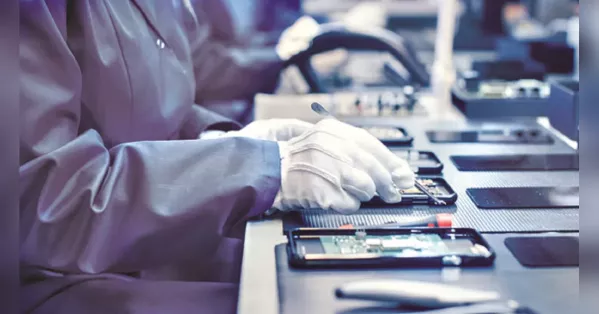
India's smartphone PLI scheme has closed its five-year run with production and export numbers well above target, cementing the country's position as the world's second-largest mobile phone manufacturer. The 32 companies approved under the programme delivered cumulative production of Rs 11.01 lakh crore and exports of Rs 6.27 lakh crore, led by Apple's contract makers, Samsung, and Dixon Technologies. Local value addition has risen alongside the output surge. Yet how much economic value India actually retains from every device it ships is now the central question, as New Delhi finalises a successor scheme designed to reward depth over volume.
Smartphone PLI Scheme Delivers Beyond Its Targets
The programme's final scorecard shows India's flagship industrial policy outperforming on the metrics tied to payouts, with one notable shortfall on the employment front.
Production and Exports Outrun Estimates
Beneficiary companies invested Rs 17,519 crore cumulatively and generated production worth Rs 11.01 lakh crore over the scheme's life, exceeding the original commitments. Exports proved the standout metric. Cumulative shipments reached Rs 6.2 lakh crore by February 2026, beating the Rs 4.87 lakh crore target by 27 per cent. The wider industry transformation is stark. Annual mobile phone production more than doubled from Rs 2.14 lakh crore in FY20 to Rs 5.5 lakh crore in FY25, while yearly exports grew roughly eightfold over the same period to touch Rs 2 lakh crore. India, a net importer of handsets as recently as 2014, is now a net exporter with more than 300 manufacturing units in operation.
Jobs and Incentive Payouts in Focus
Employment was the one monitored target the scheme missed. Direct job creation reached 1.85 lakh, around 8 per cent below the 2 lakh goal set at launch. The broader picture is stronger: industry estimates suggest mobile phone manufacturing now supports close to 12 lakh direct and indirect jobs across the country. On the fiscal side, the scheme carried a budget of Rs 34,193 crore over five years, but total payouts are estimated at closer to Rs 20,000 crore. The bulk of those incentives is flowing to Apple's contract manufacturers Tata Electronics and Foxconn, along with Samsung and Dixon Technologies, the four companies that scaled fastest against their annual commitments.
How the Incentive Structure Worked
Launched in April 2020, the scheme paid eligible manufacturers an incentive of 4 to 6 per cent on incremental production, provided they also met annual investment thresholds. Those two parameters were mandatory for payouts. Exports, direct employment, and local value addition were monitored by the government but never binding, a design choice that shaped corporate behaviour throughout the cycle. Companies optimised for output and shipments, where the money was, rather than for localisation. The programme concluded at the end of March 2026, and the gap between the budgeted amount and actual disbursements reflects both unmet targets by some smaller players and the conservative structure of annual eligibility tests.
Local Value Addition: Progress and the Gap
The headline achievement masks a more nuanced story about how much of each phone's value is actually created inside India.
From Import Hub to 20% Domestic Value
Government and industry estimates place domestic value addition in electronics manufacturing at 18 to 20 per cent today, a level officials describe as a significant improvement built over the past decade of policy support. Measured against the scheme's own window, however, the gain is modest. Value addition in smartphones stood at 15 to 20 per cent when the programme launched, against a stated ambition of 35 to 40 per cent by FY26. That percentage target was missed by a wide margin. The absolute picture is more flattering: because production doubled and exports scaled eightfold, the rupee value of work done inside India has multiplied several times over, even as the domestic share of each device moved only gradually.
Why Components Still Cap the Gains
The constraint is structural. High-value components such as chipsets, display assemblies, and camera modules remain overwhelmingly imported, and together they account for 55 to 60 per cent of a smartphone's bill of materials. Geopolitics compounded the challenge. After the 2020 Galwan border clashes, Press Note 3 effectively barred Chinese component makers, who dominate the global supply chain, from establishing operations in India either independently or through joint ventures. Apple, the scheme's biggest beneficiary, had to abandon plans to transplant its established Chinese supplier ecosystem. Instead, the company spent three years building a network of roughly 40 domestic and non-Chinese suppliers, a slower route that lifted output but restrained localisation.
Lessons From China and Vietnam
Global precedent suggests India's sequencing may be less a failure than a phase. China's gross value addition in mobile devices sits at 38 to 40 per cent even after more than two decades of ecosystem building, and the country still imports several hundred billion dollars' worth of components annually. Research by the Indian Council for Research on International Economic Relations, conducted with the Indian Cellular and Electronics Association, found that China and Vietnam both built manufacturing scale first and pursued domestic value addition later, once volumes made local component plants viable. Thailand attempted both simultaneously and lost ground to Vietnam. Device makers argue India should now consolidate scale through exports and domestic demand while the supplier base matures.
Global Brands Anchor India's Manufacturing Rise
The scheme's results carry weight far beyond New Delhi, reshaping sourcing decisions for the world's largest electronics brands and their investors.
Apple's Vendors Outperform Commitments
Apple has been the programme's defining success story. Its three India vendors, Foxconn, Pegatron, and Tata Electronics, assembled iPhones worth Rs 1,94,800 crore in FY24, a full 45 per cent above their PLI commitments for that year. The group exceeded targets on five of the six parameters the government tracks, including incremental production, exports, and investment, and crossed its 77,000 direct jobs milestone ahead of schedule. Value addition was the lone laggard, with Apple's vendors trailing the monitored benchmark. Even so, the iPhone maker's scale-up turned India into a meaningful node in its global manufacturing map and validated the incentive model for other multinationals watching from the sidelines.
Samsung and Dixon Broaden the Base
The programme's gains extend beyond a single anchor client. Samsung, which operates one of its largest mobile phone factories globally in India, ranks among the scheme's top incentive recipients and has kept the country central to its export strategy. Dixon Technologies, the homegrown electronics manufacturing services player, has emerged as the domestic champion of the policy, assembling devices for a widening roster of global and Indian brands. This diversity matters. A manufacturing ecosystem anchored by one company remains fragile; one spread across American, Korean, Taiwanese, and Indian players gives the supply base resilience and gives policymakers evidence that the model can outlast any single corporate relationship.
China-Plus-One Gives India an Opening
The timing of India's scale-up aligns with the deepest supply chain rethink in a generation. As global companies diversify production beyond traditional bases, India is positioning itself as a reliable alternative, and a stronger domestic component ecosystem is seen as the key to cutting lead times, lowering costs, and ensuring supply stability. The cost mathematics remain unforgiving. Apple's India vendors face an estimated 10 to 12 per cent cost disadvantage against Chinese operations, only partly offset by the PLI incentive itself. That gap explains why manufacturers lobbied hard for continued support and why the government's next moves are being watched closely from Cupertino to Seoul.
What Comes Next: PLI 2.0 and the Components Push
With the original cycle concluded, attention shifts to a redesigned incentive architecture aimed squarely at depth rather than scale.
PLI 2.0 Ties Incentives to Local Sourcing
The government is preparing a successor mobile phone scheme, widely referred to as PLI 2.0, with a reported outlay of about 5 billion dollars to keep export momentum intact. The critical design change: financial incentives are set to be linked directly to domestic value-addition targets rather than production volumes alone. Officials have floated an ambition of more than 55 per cent local value addition over time, and the Expenditure Finance Committee has pushed for stronger localisation provisions in the final structure. Industry experts caution that such thresholds are demanding and will take years to reach, but they argue ambitious targets are exactly what forces ecosystem development.
ECMS Draws Bigger Bets Than Planned
The components leg of the strategy is already oversubscribed. The Electronics Component Manufacturing Scheme, launched in April 2025, has attracted investment commitments of Rs 1.15 lakh crore against an original target of Rs 59,350 crore. Responding to that demand, the government raised the scheme's outlay from Rs 22,919 crore to Rs 40,000 crore in the latest Budget, and 75 applications have been approved across 12 states. The scheme targets exactly the categories India imports today: printed circuit boards, camera modules, passive components, sub-assemblies, and the capital equipment needed to make them. As these plants come online, they are expected to feed directly into the next phase of smartphone localisation.
Tariffs and Costs: The Competitiveness Test
Incentives alone will not settle the contest with Vietnam and China. Over the past year, the government reduced import duties on several mobile phone inputs, including printed circuit board assemblies, parts of camera modules, and USB cables, after industry warned that India risked pricing itself out of export markets. Policy analysts also caution against uniform localisation mandates in PLI 2.0. India can move quickly in printed circuit board assemblies, battery packs, and some camera modules, while complex segments such as display assemblies and semiconductor packaging need a longer runway. A calibrated structure that rewards both assemblers and component makers is emerging as the consensus design principle.
The Road Ahead for India's Electronics Ambition
The smartphone PLI scheme has done what few industrial policies anywhere achieve: it beat its own production and export targets and pulled a meaningful slice of the global electronics supply chain toward India. The unfinished business is depth. With local value addition at 18 to 20 per cent and the priciest components still imported, the real economic prize lies in the next phase, which is precisely where PLI 2.0 and the components scheme now aim. For global brands weighing their China-plus-one options, and for investors tracking the world's fastest-scaling electronics hub, the coming five years will determine whether India graduates from assembling the world's phones to genuinely building them.