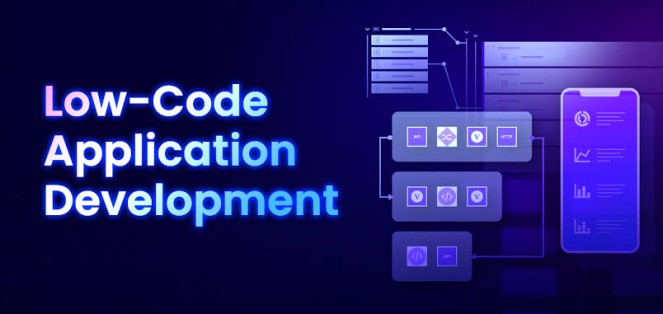
What Is Low-Code Development? How It Works, Benefits and Business Applications
Low-code development is a software development approach that uses visual development tools, drag-and-drop components, and pre-built templates while still allowing developers to write custom code when needed. It enables organizations to build applications faster than traditional programming while maintaining the flexibility to create advanced features and integrate with enterprise systems.
Low-code platforms are widely used for enterprise applications, workflow automation, customer portals, mobile apps, and digital transformation initiatives.
What Is Low-Code Development?
Low-code development is a method of building software applications using visual tools combined with limited custom programming to accelerate development.
How Low-Code Development Works
Low-code platforms provide visual designers where developers assemble user interfaces, workflows, databases, and business logic using drag-and-drop components. For features beyond the platform's built-in capabilities, developers can write custom code, create integrations, or extend application functionality through APIs and software development kits (SDKs).
Many low-code platforms also include built-in deployment, security, testing, monitoring, and cloud hosting capabilities.
Why Low-Code Development Matters
Businesses often need to develop applications quickly while adapting to changing market demands. Low-code development reduces coding effort, shortens development cycles, and allows professional developers to focus on more complex business requirements.
Key Components of Low-Code Platforms
Several technologies support low-code development.
Visual Development Environment
Developers create applications using drag-and-drop interfaces and visual design tools.
Reusable Components
Pre-built forms, dashboards, charts, authentication modules, and templates accelerate development.
Workflow Automation
Business processes can be designed visually without extensive programming.
Database Integration
Many platforms connect easily with cloud databases, enterprise systems, and external data sources.
Custom Code Extensions
Developers can add custom functionality when advanced business requirements arise.
Common Applications of Low-Code Development
Low-code platforms support a wide range of business solutions.
Enterprise Applications
Organizations build internal business systems, employee portals, and operational software.
Customer Relationship Management (CRM)
Businesses customize CRM solutions to match their workflows.
Business Process Automation
Companies automate approvals, document management, reporting, and operational tasks.
Mobile Applications
Developers create cross-platform business and customer applications.
Customer Portals
Organizations build self-service portals for customers, partners, and suppliers.
Data Dashboards
Interactive reporting and business intelligence dashboards can be developed rapidly.
Benefits of Low-Code Development
Low-code development provides numerous advantages.
Faster Development
Applications can be delivered significantly faster than with traditional software development.
Greater Flexibility
Developers can combine visual tools with custom programming for advanced functionality.
Lower Development Costs
Organizations reduce coding effort and shorten project timelines.
Improved Collaboration
Business users and developers can work together more effectively during application design.
Easier Maintenance
Reusable components and centralized management simplify updates and long-term support.
Challenges of Low-Code Development
Despite its benefits, low-code development has several considerations.
Platform Dependence
Applications may rely on the capabilities and long-term support of the chosen platform.
Licensing Costs
Enterprise low-code platforms often involve subscription or licensing fees.
Performance Considerations
Highly complex or performance-intensive applications may require more traditional development approaches.
Learning Curve
Developers still need to understand application architecture, integrations, security, and business logic.
Low-Code vs. No-Code Development
Although similar, these approaches serve different audiences.
Low-Code Development
- Designed primarily for professional developers and technical teams.
- Allows custom programming for advanced functionality.
- Suitable for enterprise applications and complex integrations.
No-Code Development
- Designed for users with little or no programming experience.
- Relies almost entirely on visual tools.
- Best suited for simpler applications and business workflows.
Organizations often use both approaches depending on project complexity and available technical expertise.
Best Practices for Low-Code Development
Organizations should follow these recommendations.
Plan Application Architecture
Design scalable data models, workflows, and integrations before development begins.
Use Reusable Components
Standardize common features to simplify maintenance and future development.
Secure Applications
Implement authentication, authorization, encryption, and role-based access controls.
Test Thoroughly
Validate functionality, performance, integrations, and security before deployment.
Monitor Performance
Track application usage, response times, and resource consumption to optimize performance.
Future of Low-Code Development
Low-code development continues to evolve through Artificial Intelligence, generative AI, cloud-native architectures, intelligent automation, and API-first development. AI-powered low-code platforms increasingly generate application interfaces, workflows, database structures, and business logic from natural language instructions. As organizations accelerate digital transformation, low-code platforms are expected to become a central part of enterprise software development strategies.
Conclusion
Low-code development is transforming software creation by combining visual development tools with the flexibility of custom programming. By reducing development time, lowering costs, and enabling faster innovation, low-code platforms help organizations deliver enterprise applications more efficiently while maintaining the ability to build complex, scalable solutions. As AI and cloud technologies continue to advance, low-code development will play an increasingly important role in modern software engineering.