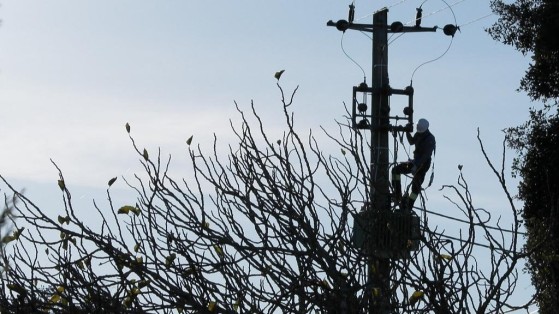
Punjab Electricity Workers’ Protest Enters Third
Day, Disrupting Services Across the State
The state of Punjab is currently witnessing a large-scale disruption in its electricity services as workers and pensioners of the power sector have entered the third consecutive day of their protest. With nearly 80% of the workforce participating, the movement has grown into one of the most significant demonstrations in the recent history of Punjab’s electricity sector. The strike is set to continue through August 14 and 15, with no signs of resolution unless urgent dialogue between the protesting unions and the government takes place.
Introduction
Electricity is the lifeline of any modern economy, powering industries, homes, schools, hospitals, and public infrastructure. When its supply is interrupted, the repercussions are immediate and far-reaching. In Punjab, this reality is being felt acutely as thousands of electricity workers and pensioners have walked off the job, leading to severe disruptions in service delivery across urban and rural areas. The ongoing protest is not just about wages—it is a multifaceted movement aimed at securing the rights, dignity, and economic well-being of the workers who keep Punjab’s electricity network running.
The current agitation is the culmination of years of unresolved grievances, including the regularization of temporary staff, implementation of equal pay for equal work, and timely clearance of pension arrears. The workers, backed by multiple unions, argue that the state’s electricity department has systematically overlooked their demands, forcing them into industrial action as a last resort.
Early Days of the Protest
The seeds of this protest were sown months, if not years, ago. For years, Punjab’s electricity workers have been operating under challenging conditions, often with temporary contracts, stagnant wages, and inconsistent benefits. Temporary employees in the power sector frequently endure precarious job security, despite performing the same duties as permanent staff. Pensioners, on the other hand, have been struggling to receive their dues on time, with arrears piling up and causing financial stress for retirees.
Repeated representations to the state government, the Punjab State Power Corporation Limited (PSPCL), and related authorities have failed to produce tangible results. Unions claim that their calls for dialogue have often been met with vague promises or outright delays. The result is a deep sense of frustration that has now erupted into a full-scale industrial action.
On the first day of the protest, electricity offices, substations, and customer service centers saw a sharp decline in staff attendance, with many facilities operating at minimal capacity. As the strike entered its second day, the impact began to spread, with routine maintenance work, meter readings, and new connections all being delayed. By the third day, large parts of Punjab began experiencing disruptions, with power cuts affecting both urban centers and rural areas.
Demands of the Workers and Pensioners
The demands fueling this protest are rooted in both immediate needs and long-term structural reforms in Punjab’s electricity sector. The main demands include:
-
Regularization of Temporary Staff
Thousands of workers in the Punjab electricity sector are employed on temporary, contractual, or daily-wage terms. Despite serving the department for years, they remain outside the ambit of permanent employment benefits, such as job security, pension, and paid leave. Workers argue that their contribution is indispensable to the functioning of the electricity grid, and thus, they deserve regularization. -
Equal Pay for Equal Work
The principle of equal pay for equal work is enshrined in Indian labor laws and supported by Supreme Court judgments. However, electricity workers allege that this principle is not being implemented in Punjab’s power sector. Contract workers performing identical duties as permanent staff are reportedly paid significantly less, leading to widespread dissatisfaction. -
Clearance of Pension Arrears
Pensioners in the sector claim that arrears stretching back months, and in some cases years, remain unpaid. For retired employees who depend on these pensions for their livelihood, such delays have a direct and distressing impact on their quality of life. -
Better Working Conditions
Apart from wage-related demands, workers have also raised concerns about safety protocols, training opportunities, and adequate staffing to reduce workload pressures. -
Non-Privatization Assurance
Some unions have expressed fears that the state may move towards privatizing parts of the electricity sector, which could lead to job losses and erosion of worker rights. They demand written assurances that privatization will not be pursued without consulting worker representatives.
Scale of the Protest
This strike is notable for the sheer scale of participation—reports indicate that about 80% of the workforce is on mass leave. The movement involves both current employees and retirees, making it a rare show of intergenerational solidarity within the sector.
Public utility strikes often carry the potential for large-scale inconvenience, and this protest is no different. Power cuts have been reported in several districts, with both scheduled and unscheduled outages affecting homes, businesses, and essential services. Urban centers like Ludhiana, Amritsar, and Jalandhar have seen load-shedding, while rural areas—often more vulnerable to supply disruptions—have faced extended outages.
The protest also has symbolic weight: by withdrawing their labor en masse, workers are demonstrating the indispensable role they play in the state’s economic and social infrastructure.
Government Response
The Punjab government has so far maintained a cautious stance. Official statements have acknowledged the workers’ right to protest but have also emphasized the need to ensure uninterrupted electricity supply, especially in the run-up to Independence Day celebrations on August 15. The government has reportedly initiated back-channel talks with union leaders but has not yet made any public commitments on the core demands.
PSPCL, in its communication, has appealed to workers to return to duty, citing the inconvenience caused to the public. It has also warned that prolonged disruptions could have financial repercussions for the corporation and, by extension, for the workers themselves.
Public Reaction
The public’s response to the protest is mixed. Many sympathize with the workers’ grievances, recognizing the long-standing issues of wage disparity and delayed pensions. However, there is also frustration among residents and business owners who have been left without reliable power supply. In rural areas, where alternative power sources like generators are scarce, the impact is particularly harsh.
Some sections of the public have urged the government to swiftly address the workers’ demands to avoid further disruption, while others have criticized the unions for using public inconvenience as a bargaining tool.
Economic Impact
The economic consequences of the protest are significant. Power cuts disrupt industrial production, especially in Punjab’s manufacturing hubs, which rely heavily on uninterrupted electricity for machinery and processing. The agricultural sector, which is in the midst of critical irrigation cycles, is also at risk if outages affect water pump operations.
Small businesses, already strained by inflationary pressures, face losses when refrigeration, lighting, and machinery cannot operate. In the service sector, from retail to healthcare, outages hinder daily operations and customer service.
If the strike continues beyond mid-August, analysts warn of compounding losses, with ripple effects on the state’s economy.
The Road Ahead
Resolution of this standoff will require meaningful dialogue between the government and worker representatives. Quick fixes or temporary arrangements may restore services in the short term, but without addressing the root causes—such as contractualization, wage disparity, and pension delays—the likelihood of future strikes remains high.
Experts suggest that reforms in the electricity sector must balance fiscal prudence with worker welfare. A sustainable solution could involve phased regularization of temporary staff, better enforcement of equal pay laws, and a transparent mechanism for pension disbursement.